Making coffee while camping is one of life’s simple pleasures. The smell of fresh coffee blending with the cool morning air, the sound of the fire crackling, and the quiet nature around you—these moments make camping unforgettable. But making good coffee outdoors can be tricky. There’s no fancy machine, no reliable kitchen, and sometimes, limited water or gear. Still, you can enjoy great coffee with the right methods and a bit of planning.
In this guide, you’ll learn practical ways to brew coffee while camping, including tips, gear comparisons, and expert advice to make every cup rich and satisfying—even in the wilderness.
Planning Your Camp Coffee: What Really Matters
Before packing your coffee gear, think about what matters most for your camping trip. Ask yourself:
- How much space and weight can you carry?
- How many cups will you make each day?
- What kind of coffee do you like—strong, mild, espresso?
- Will you have access to clean water and heat?
Many campers forget about water quality. If your water tastes bad, your coffee will too. Always carry a filter if you’re unsure. Also, consider the brewing method. Some methods need extra equipment or time. Knowing your preferences and limits helps you choose the best approach.
Essential Coffee Brewing Methods For Camping
There are several ways to make camp coffee. Each has pros and cons. Here are the most popular methods, including tips and what you need.
1. Cowboy Coffee
This is the classic, no-gear method. You only need coffee grounds, water, and a pot.
- Boil water over your campfire or stove.
- Remove from heat. Add coffee grounds (about 2 tablespoons per cup).
- Stir and let sit for 3-5 minutes. The grounds settle at the bottom.
- Pour carefully to avoid grounds.
Pros: Simple, fast, no equipment.
Cons: Can be gritty; not for everyone.
2. French Press
A portable French press is a favorite for campers who want richer coffee.
- Add coarse coffee grounds to the press (1 tablespoon per cup).
- Pour in hot water, stir, and let steep for 4 minutes.
- Press down the plunger and pour.
Pros: Smooth, strong coffee; easy to use.
Cons: Bulky; needs cleaning; glass models can break.
3. Pour-over
Lightweight pour-over devices are great for backpackers.
- Place a filter in the device over your mug.
- Add coffee grounds (1–2 tablespoons per cup).
- Pour hot water slowly in circles.
Pros: Clean taste; lightweight; easy to pack.
Cons: Needs filters; slower process.
4. Aeropress
The AeroPress is popular for its versatility and easy cleanup.
- Add coffee and water, stir, and press through the filter.
- Makes espresso-style or regular coffee.
Pros: Fast; compact; good for strong coffee.
Cons: Needs special filters; can feel fiddly.
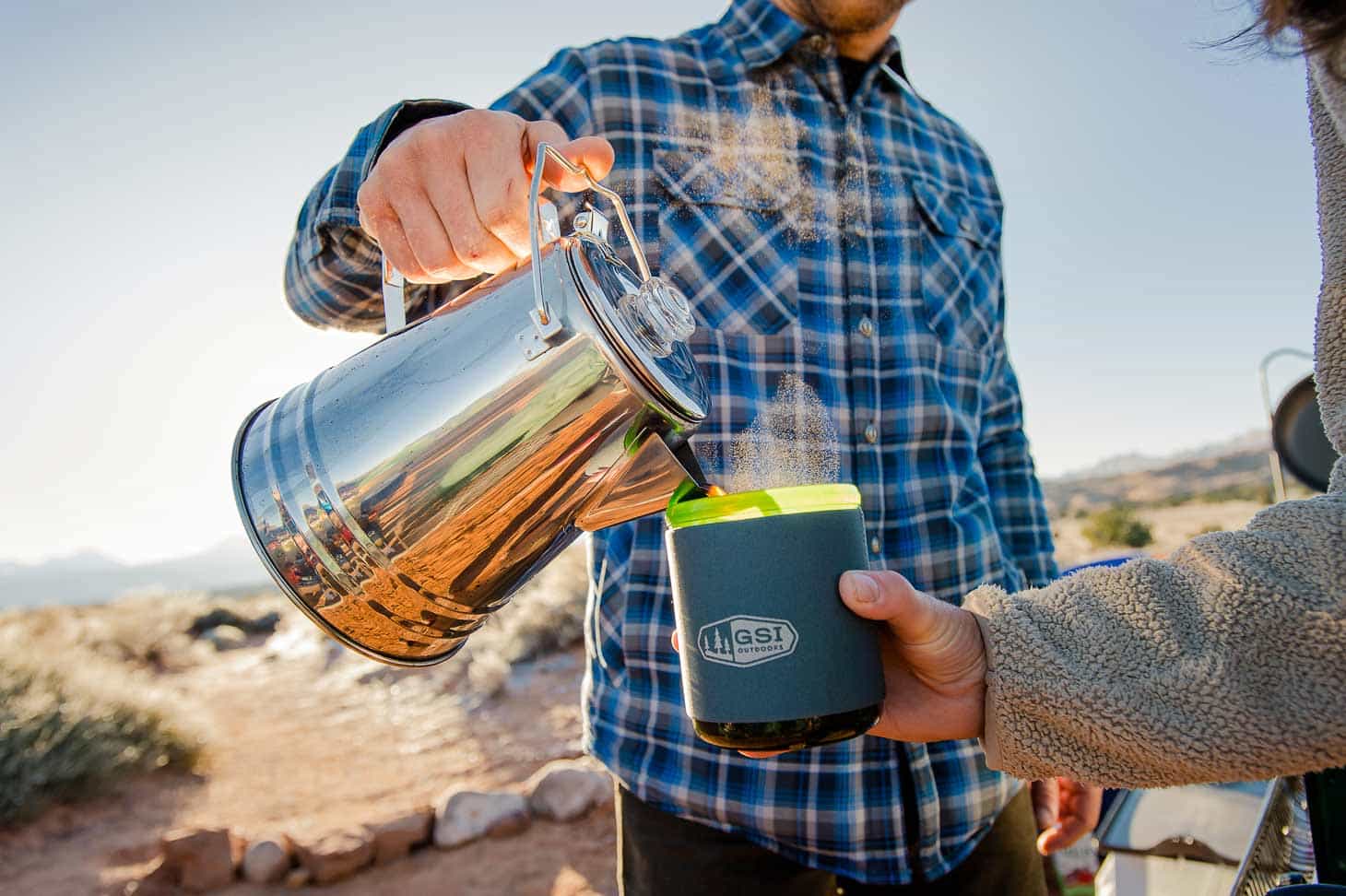
5. Percolator
Perfect for larger groups and car camping.
- Fill with water and coffee grounds (1–2 tablespoons per cup).
- Heat until coffee percolates.
Pros: Makes several cups; classic taste.
Cons: Heavy; takes longer.
6. Instant Coffee
For ultra-light hikers or emergencies.
- Mix instant coffee powder with hot water.
Pros: No equipment; quick.
Cons: Not as tasty; limited options.

Credit: bellmanespresso.com
Comparing Coffee Gear For Camping
Choosing the right gear depends on your camping style. Here’s a comparison of popular brewing devices:
| Method | Weight | Ease of Use | Cleanup | Coffee Quality |
|---|---|---|---|---|
| Cowboy Coffee | None | Easy | Simple | Moderate |
| French Press | Medium | Easy | Needs cleaning | Rich |
| Pour-Over | Light | Easy | Minimal | Clean |
| AeroPress | Light | Medium | Easy | Strong |
| Percolator | Heavy | Medium | Medium | Classic |
| Instant Coffee | None | Very easy | None | Weak |
Beginners often miss the importance of cleanup. In remote campsites, you may need to pack out used coffee grounds and filters. Choose methods that match your waste plan.
You can also read: Best Coffee Makers for Camping
Step-by-step: Brewing Coffee Outdoors
Let’s break down the process for making coffee while camping, no matter the method.
Step 1: Heat Your Water
Most methods need hot water. You can boil water using:
- Campfire
- Camping stove
- Portable electric kettle (if you have power)
Heat water just below boiling (about 200°F) for best taste. If you don’t have a thermometer, let water boil, then cool for 30 seconds.
Step 2: Measure Your Coffee
Use fresh coffee beans if possible. Grind before leaving home or bring a manual grinder. For each cup, use 1–2 tablespoons of coffee grounds. This ratio gives balanced flavor.
Step 3: Brew Using Your Chosen Method
Follow the method details above. For French press or pour-over, let coffee steep for 3–4 minutes. For percolators, watch until the coffee is dark.
Step 4: Enjoy And Clean Up
Always clean your gear after brewing. If camping in sensitive areas, pack out used grounds and filters. Some campsites allow you to scatter grounds, but always check rules.
Credit: www.freshoffthegrid.com
Coffee Supplies Checklist For Campers
Here’s a quick checklist to help you prepare:
- Coffee beans or grounds
- Grinder (manual or electric)
- Coffee maker (French press, pour-over, etc.)
- Filters (if needed)
- Pot or kettle for boiling water
- Clean water
- Mug or thermos
- Spoon or stirrer
- Container for used grounds
Many campers forget a mug or clean water. Always double-check before leaving.
Tips For Better Camp Coffee
Making coffee outdoors is not just about the method. Here are some tips to improve your brew:
- Use filtered water. Bad water ruins good coffee. Bring a filter if needed.
- Grind beans just before brewing. Fresh ground coffee tastes better.
- Pre-heat your mug. Pour hot water in the mug before coffee to keep your drink warm longer.
- Use the right coffee-to-water ratio. Too much coffee makes it bitter; too little makes it weak.
- Try single-origin beans. They offer unique flavors, even outdoors.
- Clean your gear. Residue affects taste.
- Experiment with brewing time. Steep longer for stronger coffee.
- Keep coffee airtight. Moisture and air spoil beans quickly.
- Pack light for hiking. Choose methods with minimal gear if you’re backpacking.
- Practice at home first. Test your gear and method before your trip.
A common mistake is forgetting to practice. Don’t try a new method for the first time at camp.
Comparing Coffee Quality: Camp Vs Home
Is camp coffee really different from home? Here’s a quick comparison:
| Factor | Camp Coffee | Home Coffee |
|---|---|---|
| Water Quality | Variable | Consistent |
| Bean Freshness | Depends on storage | Easy to keep fresh |
| Brewing Control | Limited | Precise |
| Atmosphere | Scenic, outdoor | Comfortable, indoor |
| Cleanup | Can be difficult | Easy |
Sometimes, the outdoor atmosphere makes even simple coffee taste special.
Safety And Environmental Tips
When making coffee outdoors, respect the environment and stay safe.
- Use a camp stove if open fires are banned.
- Never dump coffee grounds in streams or lakes.
- Pack out all waste, including filters.
- Store coffee and food safely to avoid attracting animals.
- Use biodegradable soaps to clean equipment.
Over 60% of campers report that coffee is one of their top morning rituals. Still, many forget proper waste management. Protect nature for future trips.

Credit: www.oars.com
Advanced Coffee Ideas For Campers
If you want to take your camp coffee to the next level, try these ideas:
- Bring a small milk frother for cappuccino.
- Add spices like cinnamon or nutmeg.
- Try cold brew for hot days: Steep grounds in cold water overnight.
- Make “coffee bags” by filling filters and tying them, like tea bags.
- Use a portable espresso maker for strong shots.
These ideas can turn basic camp coffee into something memorable. For more advanced tips, visit Outside Online, which offers expert advice for outdoor coffee lovers.
Frequently Asked Questions
How Do I Keep Coffee Hot While Camping?
Use an insulated mug or thermos. Pre-heat your mug by filling it with hot water before brewing. This keeps coffee warm longer and prevents heat loss.
What Is The Best Coffee Method For Backpacking?
Pour-over and instant coffee are best for backpackers. They are lightweight and take up little space. AeroPress is also a good option if you want stronger coffee and don’t mind carrying a bit more gear.
Can I Use River Or Lake Water For Coffee?
You can, but always filter or boil water first to remove bacteria and dirt. Unfiltered water may taste bad or cause illness. A portable filter is a smart investment for campers.
How Do I Clean My Coffee Gear Outdoors?
Use biodegradable soap and minimal water. Wipe equipment with a clean cloth. For remote sites, pack out all waste, including grounds and filters. Never dump coffee waste in nature.
What Is Cowboy Coffee And Is It Safe?
Cowboy coffee is made by mixing grounds directly into hot water and letting them settle. It’s safe if you use clean water and fresh grounds. The taste is strong and sometimes gritty, but many campers enjoy its simplicity.
Making coffee while camping is both an art and a ritual. With a bit of planning, the right gear, and practical tips, you can enjoy delicious coffee in any outdoor setting. Whether you prefer cowboy coffee or a French press, the best cup is the one that fits your adventure.
Enjoy the process, respect nature, and make every morning in the wild a little brighter with a fresh brew.