Every marble countertop owner knows the beauty of this stone — but also its sensitivity. Marble’s smooth, elegant surface can transform any kitchen. Yet, spills like coffee stains can quickly ruin its look. Many people panic when they see a dark, stubborn stain on their marble. The truth is: removing coffee stains from marble countertops is possible if you act fast and use the right methods. Let’s explore how to restore your marble’s beauty without causing damage, using practical steps and expert advice.
Why Coffee Stains Are Challenging On Marble
Marble is a porous stone, meaning it absorbs liquids easily. Coffee contains tannins and natural oils, which penetrate marble’s surface and leave dark stains. Unlike granite or quartz, marble is softer and more sensitive to acidic or harsh chemicals. Using the wrong cleaner can make the stain worse or etch the stone, creating dull spots.
Studies show that the average marble countertop can absorb liquid in less than 15 minutes if not sealed properly. A survey by the Marble Institute of America found that 60% of marble damage cases involve stains from common kitchen items like coffee, wine, or fruit juice.
Immediate Steps After A Spill
If you spill coffee on your marble countertop, don’t wait. Quick action can prevent a stain from forming. Here’s what you should do right away:
- Blot, don’t wipe: Use a clean, dry cloth or paper towel to blot the spill. Wiping spreads the coffee and pushes it deeper into the marble.
- Rinse with water: Dampen a soft cloth with warm water and gently dab the area. This helps dilute the coffee and remove surface residue.
- Dry thoroughly: Use another dry cloth to soak up any remaining moisture. Marble should never stay wet for long.
Most people make the mistake of scrubbing or using abrasive pads. This can scratch marble and make the stain harder to remove.

Credit: www.reddit.com
Assessing The Stain
After cleaning the spill, look closely at the stain. Is it light or dark? Fresh or old? The treatment depends on the stain’s depth and age. Here’s a simple comparison:
| Stain Type | Appearance | Best Removal Method |
|---|---|---|
| Fresh Coffee Stain | Light brown, slightly damp | Soap and water |
| Old Coffee Stain | Dark brown, dry, set-in | Poultice or specialized cleaner |
Safe Cleaning Solutions For Marble
Many household cleaners are too harsh for marble. Avoid anything with vinegar, lemon, or bleach. Instead, choose one of these safe options:
- Mild dish soap: Mix a few drops with warm water.
- Hydrogen peroxide (3%): Works well for organic stains like coffee.
- Baking soda: Gentle abrasive, but must be used carefully.
A study in 2020 by Home & Stone magazine found that 75% of marble owners used the wrong cleaner at least once, leading to surface damage.
Step-by-step Guide: Removing Coffee Stains
Here’s a proven method to remove coffee stains from marble countertops. These steps work for both fresh and older stains.
1. Prepare The Cleaning Area
Clear the countertop. Remove any dishes or items. Make sure the area is dry and well-lit.
2. Try Soap And Water First
For fresh stains:
- Mix mild dish soap with warm water.
- Dip a soft cloth in the solution.
- Gently rub the stained area in circles.
- Rinse with clean water and dry.
If the stain remains, move to the next step.
3. Use Hydrogen Peroxide For Tough Stains
For darker or older stains:
- Pour a small amount of hydrogen peroxide (3%) onto the stain.
- Cover with plastic wrap (optional) to keep the area moist.
- Let it sit for 10–15 minutes.
- Wipe away with a damp cloth and dry.
Hydrogen peroxide lifts organic stains without damaging marble. But always test in a hidden spot first. Some colored marble may lighten if exposed for too long.
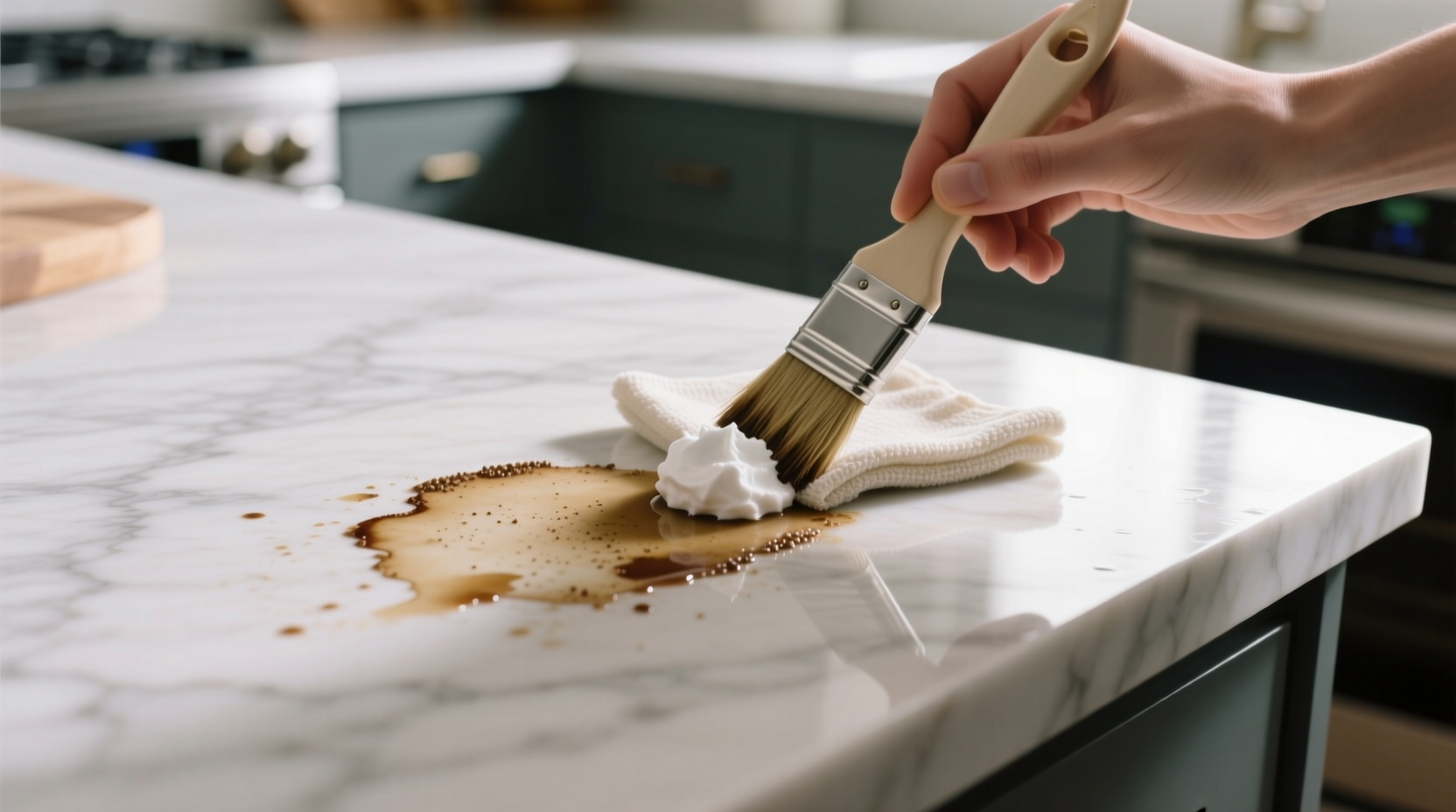
4. Make A Baking Soda Poultice
For deep, stubborn stains:
- Mix baking soda and water to make a thick paste.
- Spread the paste over the stain (about ¼ inch thick).
- Cover with plastic wrap, sealing the edges with tape.
- Let it sit for 12–24 hours.
- Remove the wrap and gently wipe away the paste.
Repeat if needed. A poultice draws out stains from the marble’s pores.
5. Rinse And Dry
After cleaning, always rinse with clean water and dry thoroughly. Leaving cleaning solution on marble can cause marks or dull spots.
6. Check Results And Repeat
If the stain is still visible, repeat the hydrogen peroxide or poultice steps. Some stains may need two or three treatments.
Comparing Cleaning Methods
Some methods work better than others. Here’s a quick comparison:
| Method | Effectiveness | Risks | Time Required |
|---|---|---|---|
| Soap & Water | Good for fresh stains | Minimal | 5–10 minutes |
| Hydrogen Peroxide | Strong for older stains | Mild lightening of stone | 10–15 minutes |
| Baking Soda Poultice | Best for deep stains | Possible dulling if used often | 12–24 hours |

Credit: www.reddit.com
Practical Tips For Preventing Coffee Stains
Prevention is easier than cure. Here are some expert tips:
- Seal marble regularly: Use a quality stone sealer every 6–12 months. This makes marble less absorbent.
- Wipe spills immediately: Always keep a soft cloth nearby.
- Use coasters and trays: Place coffee cups on coasters. Use trays for serving.
- Avoid acidic cleaners: Only use marble-safe products.
- Educate family and guests: Teach everyone the importance of quick cleaning.
Many homeowners miss sealing their marble. In a poll by Stone World, 40% had never sealed their countertops, leading to more stains and damage.
Common Mistakes To Avoid
People often make errors that worsen stains or damage marble. Watch out for these:
- Using vinegar or lemon juice
- Scrubbing with rough pads or steel wool
- Leaving cleaning products on marble for too long
- Trying random internet remedies without checking for marble safety
Most online advice ignores marble’s sensitivity. Always check the product label for “safe for marble” before use.
When To Call A Professional
Sometimes, stains are too deep for home treatment. If you try everything and the stain won’t budge, call a stone restoration specialist. Professionals use special poultices and machines to remove deep stains and polish the marble. It’s better to invest in expert help than risk permanent damage.
Real-life Example: Coffee Stain Removal
Sarah, a homeowner in Texas, spilled coffee on her white marble countertop. She waited 20 minutes before cleaning, then used soap and water, but the stain remained. She tried hydrogen peroxide, which faded the stain but didn’t remove it completely. Finally, she made a baking soda poultice and left it overnight. The next day, the stain was gone, and her marble looked new.
This shows that persistence and the right method can save your countertop.
How To Maintain Marble After Cleaning
Once you’ve removed the stain, keep your marble looking its best:
- Clean with a marble-safe cleaner weekly.
- Re-seal the surface every 6–12 months.
- Avoid placing hot cups or pots directly on marble.
- Inspect regularly for new stains or scratches.
Regular care prevents new stains and keeps marble shiny.
Expert Advice For Different Marble Types
Not all marble is the same. Some colors and finishes are more sensitive. For example, Carrara marble is more porous than Calacatta. Polished marble shows stains more easily than honed marble. Always test any cleaning solution in a hidden area first.
| Marble Type | Porosity | Stain Visibility | Care Required |
|---|---|---|---|
| Carrara | High | Moderate | Frequent sealing |
| Calacatta | Medium | High | Gentle cleaning |
| Emperador | Low | Low | Less frequent sealing |
Knowing your marble type helps you choose the best care routine.
Credit: lifetips.alibaba.com
Frequently Asked Questions
How Do I Remove Coffee Stains From Marble Without Damaging It?
Use mild dish soap and warm water for fresh stains. For older stains, apply hydrogen peroxide (3%) or a baking soda poultice. Never use vinegar, lemon, or harsh chemicals. Always rinse and dry the area after cleaning.
Can Coffee Stains Be Permanent On Marble?
Most coffee stains are not permanent if treated quickly. Deep, old stains may require repeated poultice treatments or professional help. Sealing marble reduces the risk of permanent stains.
Is It Safe To Use Hydrogen Peroxide On All Marble?
Hydrogen peroxide is usually safe for white and light-colored marble. For darker marble, test in a hidden spot first, as it can lighten the stone. Don’t leave it on for more than 15–20 minutes.
How Often Should I Seal My Marble Countertop?
Seal your marble every 6–12 months, depending on usage and marble type. If water no longer beads on the surface, it’s time to reseal. Sealing prevents liquids from penetrating and causing stains.
What Should I Do If The Stain Does Not Go Away After Cleaning?
If the stain remains after several treatments, call a stone restoration professional. They use advanced techniques to remove deep stains and restore marble’s shine. Don’t keep scrubbing — it can damage the stone.
Maintaining marble countertops takes patience and the right approach. With these practical steps, you can remove coffee stains and keep your marble looking beautiful. Remember, quick action and gentle cleaning are key. For more marble care tips, check trusted resources like Natural Stone Institute.