Cleaning your kitchen after handling raw meat is more than just wiping surfaces. It’s about protecting your health and your family. One of the most important steps is sanitizing your cutting board. If you skip this, bacteria can spread to other foods, leading to illness. Even people who wash their boards often miss key steps.
In this guide, you’ll learn exactly how to sanitize a cutting board after raw meat, whether it’s wood, plastic, or bamboo. You’ll discover why simple cleaning isn’t enough, and how to avoid common mistakes. Let’s make your kitchen safer, step by step.
Why Sanitizing Cutting Boards Matters
Many people think rinsing with soap is enough. But raw meat—especially chicken, beef, and pork—can leave dangerous bacteria like Salmonella and E. coli. These germs survive on surfaces, sometimes for hours or days. According to the Centers for Disease Control and Prevention (CDC), foodborne illnesses cause about 48 million illnesses in the US every year. A major source? Cross-contamination from kitchen tools like cutting boards.
Sanitizing isn’t just for restaurants. Even at home, it helps prevent stomach problems, fevers, and more serious health risks. Children, elderly, and people with weak immune systems are most at risk. That’s why every home cook should know the right way to sanitize.
Types Of Cutting Boards: Wood Vs. Plastic Vs. Bamboo
Not all cutting boards are equal. Some are easier to sanitize, and some need special care.
| Material | Sanitizing Difficulty | Durability | Common Use |
|---|---|---|---|
| Wood | Medium | Long-lasting | Vegetables, bread, meat |
| Plastic | Easy | Shorter | Raw meat, fish |
| Bamboo | Medium | Long-lasting | Vegetables, meat |
Plastic boards are easiest to sanitize and can go in the dishwasher. Wooden boards need more care because bacteria can hide in tiny grooves. Bamboo boards act like wood, but are harder and resist scratches. Each type needs a different approach, which we’ll cover next.
What Happens When You Don’t Sanitize Properly
When you skip proper sanitizing, bacteria stay on your board. This can lead to cross-contamination. For example, if you cut salad vegetables on the same board after meat, germs move to your food. The USDA warns that improper cleaning is a top cause of food poisoning at home.
In one study, 40% of home kitchens had unsafe bacteria levels on their cutting boards. Even if boards look clean, invisible germs can survive. Mold and odors also build up over time, especially on wood.
Step-by-step: How To Sanitize A Cutting Board After Raw Meat
Sanitizing isn’t complicated, but each step matters. Here’s how to do it right:
1. Remove Meat Residue Immediately
After you finish cutting meat, scrape off any leftover bits. Use a paper towel, not your hand. Don’t let meat juices dry—they are harder to remove and let bacteria multiply.
2. Wash With Hot, Soapy Water
Use hot water (not just warm) and dish soap. Scrub both sides of the board with a stiff brush or sponge. Pay extra attention to grooves and scratches. Rinse well.
Why hot water? It helps break down fat and protein, making cleaning more effective.
3. Rinse Thoroughly
After washing, rinse the board under running water. This removes soap and any loosened particles. Many people skip this step, but soap residue can affect the next sanitizing steps.
4. Apply A Sanitizing Solution
You need more than soap. Choose one:
- Diluted bleach: Mix 1 tablespoon of unscented liquid bleach with 1 gallon of water.
- Hydrogen peroxide: Use 3% solution, undiluted.
- White vinegar: Can kill some bacteria, but is less effective than bleach.
For best results, use bleach for plastic boards and hydrogen peroxide for wood and bamboo.
Pour or spray your solution onto the board. Let it sit for at least 1 minute. This gives the sanitizer time to kill germs.
5. Rinse Again
After sanitizing, rinse the board with clean water. This removes chemical residue. If you use bleach, this step is very important to avoid taste and odor.
6. Dry Completely
Drying is often forgotten. Bacteria love moisture. Stand the board upright or use a clean towel. Never stack wet boards. Let wood and bamboo air dry fully—don’t use heat, which can crack them.
7. Extra Step For Dishwasher-safe Boards
If your board is plastic and labeled dishwasher-safe, run it through a hot cycle. The heat kills even more germs. Do not put wood or bamboo in the dishwasher—they can warp or crack.
Special Tips For Wood Cutting Boards
Wood boards need special care. Here are some tips:
- Don’t soak wood boards in water. This causes swelling and cracks.
- Use hydrogen peroxide instead of bleach. Bleach can damage wood.
- Oil your board monthly with food-grade mineral oil to keep it from drying out.
- If your board smells, rub it with coarse salt and a lemon. Let sit 5 minutes, then rinse.
- For deep cleaning, sand lightly with fine sandpaper, wipe, and re-oil.
Wood boards last longer if you sanitize them well. They’re safer for food, but only if you maintain them.
Common Mistakes When Sanitizing Cutting Boards
Even careful cooks make mistakes. Here are the most common:
- Only using soap: Soap removes dirt, but doesn’t kill all bacteria.
- Not drying fully: Moisture lets bacteria grow back.
- Skipping rinsing: Sanitizer residue can affect taste and safety.
- Using wrong sanitizer: Bleach can damage wood; vinegar isn’t strong enough.
- Using old boards: Deep scratches and grooves trap bacteria. Replace boards with heavy damage.
- Mixing raw and cooked foods: Never cut cooked food on a board used for raw meat, even after cleaning.
- Letting boards sit after meat: Clean immediately—waiting lets germs multiply.
How Often Should You Sanitize?
Sanitize your board every time after cutting raw meat. If you use it for vegetables or bread, normal washing is enough. For boards used daily, sanitize at least once per week, even if you don’t cut meat.
If you see stains, odors, or deep scratches, sanitize and consider replacing. Many home cooks keep boards too long. A cutting board should last 1–5 years, depending on material and care.
Can You Use Natural Cleaners?
Some people prefer natural cleaners. Vinegar and baking soda help remove odors and some bacteria, but they’re not as strong as bleach or hydrogen peroxide. Lemon juice is too weak for dangerous germs.
If you use natural cleaners:
- Always follow with a rinse.
- Don’t rely on them after raw meat—use a real sanitizer.
- Use them for daily maintenance, not for post-meat cleaning.
When To Replace Your Cutting Board
A board isn’t meant to last forever. Replace your board if:
- It has deep grooves or cracks.
- It smells bad, even after cleaning.
- The surface is rough or uneven.
- It’s stained beyond cleaning.
Damaged boards trap bacteria, making sanitizing harder. For safety, plastic boards should be replaced every 2–3 years, wood every 4–5 years with good care.
Do You Need Separate Boards For Meat And Vegetables?
Using separate boards is smart. It’s easier to prevent cross-contamination. Many chefs use color-coded boards:
| Color | Recommended Use |
|---|---|
| Red | Raw meat |
| Green | Vegetables |
| Blue | Fish |
| Yellow | Poultry |
| White | Bakery/dairy |
Even at home, using two boards (one for meat, one for everything else) makes cleaning easier and keeps food safer.
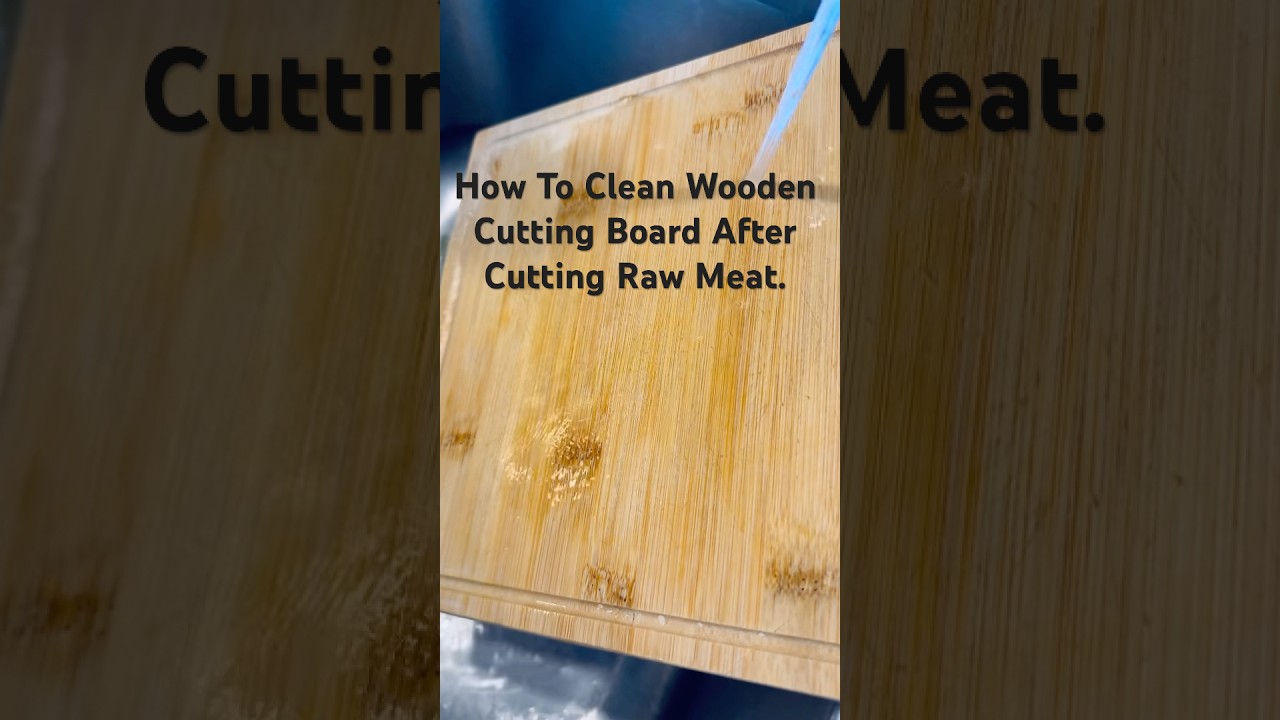
Credit: www.youtube.com
Data: Cutting Board Bacteria Levels
It’s easy to underestimate how dirty a cutting board can get. Studies show that after cutting raw chicken, a board can have up to 1 million bacteria per square inch. After sanitizing, that number drops to under 100. Proper cleaning makes a huge difference.
In one kitchen test, boards washed with soap only still had bacteria present in 30% of samples. Boards sanitized with bleach had zero bacteria in 95% of samples.
How To Store Cutting Boards After Sanitizing
Storing your board correctly is part of sanitizing. Always dry completely first. Stand boards upright or hang them. Don’t store boards flat if they’re damp. For wood, store away from heat and sunlight to prevent cracking.
If you have multiple boards, keep meat boards separate from others. Label or color-code if possible.
Sanitizing Frequency: Quick Reference
Here’s a handy guide for how often to sanitize different boards:
| Use Type | Sanitizing Frequency |
|---|---|
| After raw meat | Every use |
| Vegetables only | Weekly |
| Mixed use | Daily |
| Visible stains/smells | Immediately |
Advanced Tips: What Professionals Do
Chefs and food safety experts follow strict rules. Here’s what they do differently:
- Sanitize boards after every use, not just after meat.
- Use high-temperature dishwashers for plastic boards.
- Replace boards often—sometimes every 6 months.
- Keep a food-safe sanitizer spray nearby for quick cleaning.
- Mark boards by color or label.
You don’t need to be a chef to use these tips. They help keep your kitchen safer.
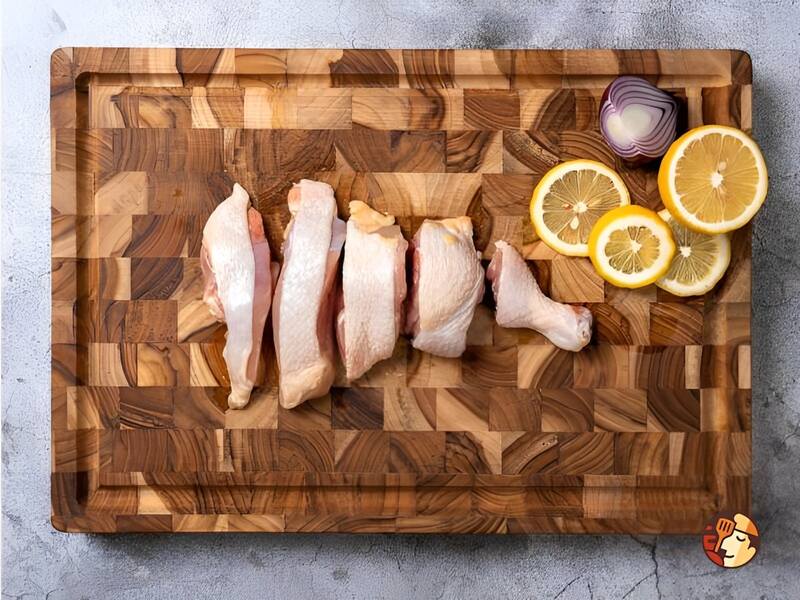
Credit: en.chefstudio.vn
Can You Use Bleach Safely At Home?
Yes, but you must dilute it. Never use pure bleach—it’s unsafe and damages boards. Use 1 tablespoon per gallon of water. Always rinse after. Don’t use bleach on wood, bamboo, or boards with decorative finishes.
Hydrogen peroxide is a safer option for wood. It kills bacteria and doesn’t leave strong odors.
Sanitizing Cutting Boards In Restaurants
Restaurants follow strict rules. The FDA Food Code requires sanitizing after each use, with approved chemicals. Boards are replaced often. Plastic boards are run through dishwashers; wood boards are sanitized by hand.
Even home cooks can follow these practices. It’s about safety, not just cleanliness.
Real-life Examples: Preventing Illness
Many foodborne illness cases begin with kitchen mistakes. In one case, a family got sick after using a board for meat, then salad. They only washed with soap, not sanitizer. The illness lasted a week.
Another example: A chef avoided bleach for wood boards and used hydrogen peroxide. His boards stayed odor-free and lasted longer.
These stories show that simple changes can make a big difference.
Extra Insight: Why Bleach Isn’t Always Best
Most guides recommend bleach, but it’s not perfect. Bleach can damage wood, and the odor lingers. Hydrogen peroxide is safer for wood and kills germs just as well. For plastic, bleach is ideal, but always rinse well.
Some home cooks use boiling water. While it kills germs, it can warp boards and isn’t as effective as chemical sanitizers.
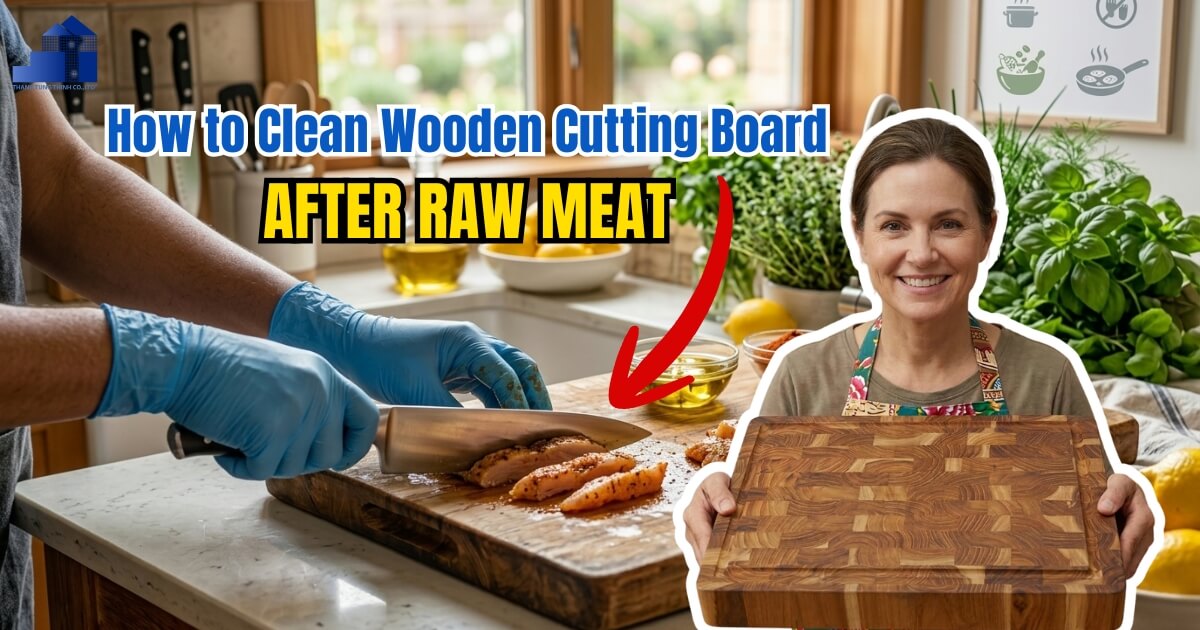
Credit: thanhtungthinh.com
How To Avoid Over-sanitizing
Too much sanitizing can damage boards, especially wood. If you sanitize after every use, use gentle cleaners like hydrogen peroxide or vinegar for daily cleaning, and reserve bleach for occasional deep cleaning.
Oiling wood boards helps protect them from damage caused by frequent sanitizing.
How To Deal With Odors And Stains
Cutting boards sometimes smell after meat. To fix this:
- Sprinkle coarse salt and rub with lemon.
- Let sit, then rinse.
- For stubborn odors, use baking soda paste.
Stains can be removed by sanding lightly or using hydrogen peroxide. Avoid harsh chemicals on wood.
Extra Care For Bamboo Boards
Bamboo is harder than wood, but still needs care:
- Don’t soak bamboo boards.
- Use hydrogen peroxide or vinegar for sanitizing.
- Oil monthly to prevent cracking.
Bamboo boards resist scratches, making them safer for food. They last longer if cared for.
Quick Checklist: After Cutting Raw Meat
Here’s a fast summary:
- Remove meat bits.
- Wash with hot, soapy water.
- Rinse.
- Apply sanitizer (bleach for plastic, hydrogen peroxide for wood/bamboo).
- Wait 1 minute.
- Rinse again.
- Dry fully.
- Store upright.
Following these steps keeps your kitchen safer.
How To Sanitize Multiple Boards Quickly
If you cook for a group, you may use several boards. To sanitize quickly:
- Set up a sanitizing station: One sink for washing, one for rinsing, one for sanitizing.
- Use a spray bottle for sanitizer.
- Air-dry boards upright.
- Rotate boards to avoid delays.
Restaurants use this system for speed and safety.
Useful Products For Sanitizing
Some products make sanitizing easier:
- Sanitizer sprays: Food-safe, easy to use.
- Stiff brushes: Clean grooves well.
- Dishwasher-safe boards: Save time.
- Food-grade mineral oil: Protects wood and bamboo.
Choose products based on your board type.
Are Antibacterial Boards Worth It?
Some boards claim to be antibacterial. They use chemicals or special surfaces to reduce germs. However, you still need to clean and sanitize. No board is germ-free after raw meat.
Research shows that antibacterial boards reduce bacteria by about 30% compared to normal boards. But proper cleaning is still needed.
Can You Use A Microwave To Sanitize?
Microwaving a damp board can kill germs, but only for small plastic boards. Never microwave wood—it can crack. Microwave sanitizing is not as reliable as chemical methods.
What To Do If Someone Gets Sick
If you suspect foodborne illness:
- Clean and sanitize all boards, knives, and surfaces.
- Replace old boards.
- See a doctor if symptoms are severe (fever, vomiting, blood in stool).
Food safety is about prevention, but know how to act if illness happens.
Useful External Resource
For more information on safe food handling and sanitizing, visit the FDA’s Food Safety Guide.
Frequently Asked Questions
How Long Should Sanitizer Stay On The Board?
Let sanitizer sit for at least 1 minute. This gives it enough time to kill bacteria. Longer is fine, but one minute is the minimum.
Can I Use Vinegar Instead Of Bleach?
Vinegar kills some bacteria, but is not strong enough for dangerous germs like Salmonella. Use bleach or hydrogen peroxide for meat boards.
Is It Safe To Put Wood Boards In The Dishwasher?
No. The heat and water can warp and crack wood. Wash and sanitize wood by hand.
How Do I Know If My Board Is Dishwasher-safe?
Check the label or manufacturer’s instructions. Most plastic boards are safe; wood and bamboo usually are not.
How Often Should I Oil My Wood Or Bamboo Board?
Oil once per month with food-grade mineral oil. This keeps the board from drying and cracking.
Sanitizing your cutting board after raw meat is one of the easiest ways to protect your health. With simple steps and the right products, you can keep your kitchen safe and your food tasting great. Remember: clean, sanitize, dry, and store. Small actions make a big difference.