Seasoning a cast iron wok is more than just a cooking ritual—it’s the key to unlocking its full potential. If you’ve recently bought a new wok or inherited one that’s lost its shine, learning to season it properly will help you cook with less sticking, resist rust, and build up that beautiful, natural nonstick surface.
While the process can look confusing at first, seasoning a cast iron wok is simple and rewarding once you understand the steps. Let’s explore how to do it right, why it matters, and how to avoid common mistakes that can hold you back from wok mastery.
Why Seasoning A Cast Iron Wok Matters
A new cast iron wok comes with a dull, sometimes gray surface. This is just raw iron, which is very reactive and will rust quickly if exposed to moisture. Seasoning creates a protective layer on your wok by bonding oil to the metal through heat. This layer—often called the “patina”—is what gives well-used woks their slick, black surface. A good seasoning means:
- Food won’t stick as much, making stir-frying easier.
- Your wok is protected from rust and corrosion.
- Flavors improve with use, as the patina develops.
- Cleanup is faster and simpler.
Many beginners miss that factory-seasoned woks still need home seasoning to be truly nonstick. Also, using the wrong oil or rushing the process can result in uneven coating or sticky residue.
What You Need Before You Start
Before starting, gather these items:
- Raw cast iron wok (unseasoned or lightly pre-seasoned)
- Soap (for initial cleaning only)
- Non-metal scrubber or sponge
- High-smoke-point oil (like grapeseed, flaxseed, canola, or peanut oil)
- Paper towels or lint-free cloth
- Tongs (to hold paper towels)
- Stovetop or oven
- Ventilation (open windows or turn on exhaust fan)
Oil Comparison For Seasoning
Not all oils are equal for seasoning. Here’s how popular options compare:
| Oil | Smoke Point (°F) | Flavor | Durability of Coating |
|---|---|---|---|
| Flaxseed oil | 225 | Neutral | Very hard, durable |
| Grapeseed oil | 420 | Light | Strong, reliable |
| Canola oil | 400 | Neutral | Good, easy to use |
| Peanut oil | 450 | Slightly nutty | Good, stable |
Flaxseed oil forms the hardest coating but is more expensive and can flake if over-applied. Grapeseed and canola oil are affordable and work well for most people.
Credit: www.youtube.com
Step-by-step Guide To Seasoning A Cast Iron Wok
Getting a perfect patina isn’t magic, but attention to detail makes a big difference. Here’s how to do it:
1. Wash And Dry Thoroughly
Start by washing your new wok with warm water and a small amount of soap. This is the only time you should use soap on cast iron, and it removes the manufacturer’s protective coating or any residual oil. Scrub the inside and outside with a non-metal sponge. Rinse well and dry immediately with a towel. Put the wok on low heat for a few minutes to evaporate any last drops of water. Remember, any water left behind can cause rust fast.
2. Apply A Thin Layer Of Oil
Pour a small amount of your chosen oil onto a paper towel. Rub it over every surface—inside, outside, and even the handle—until the wok looks shiny but not greasy. Wipe away any extra oil with a clean towel. Too much oil is a common mistake: it can create a sticky or uneven coating instead of a smooth one.
3. Heat The Wok To Bond The Oil
There are two main ways to heat-season a wok: on the stovetop or in an oven.
Stovetop Method
- Place the wok over high heat. Gas stoves are ideal, as flames can reach up the sides, but electric stoves work too.
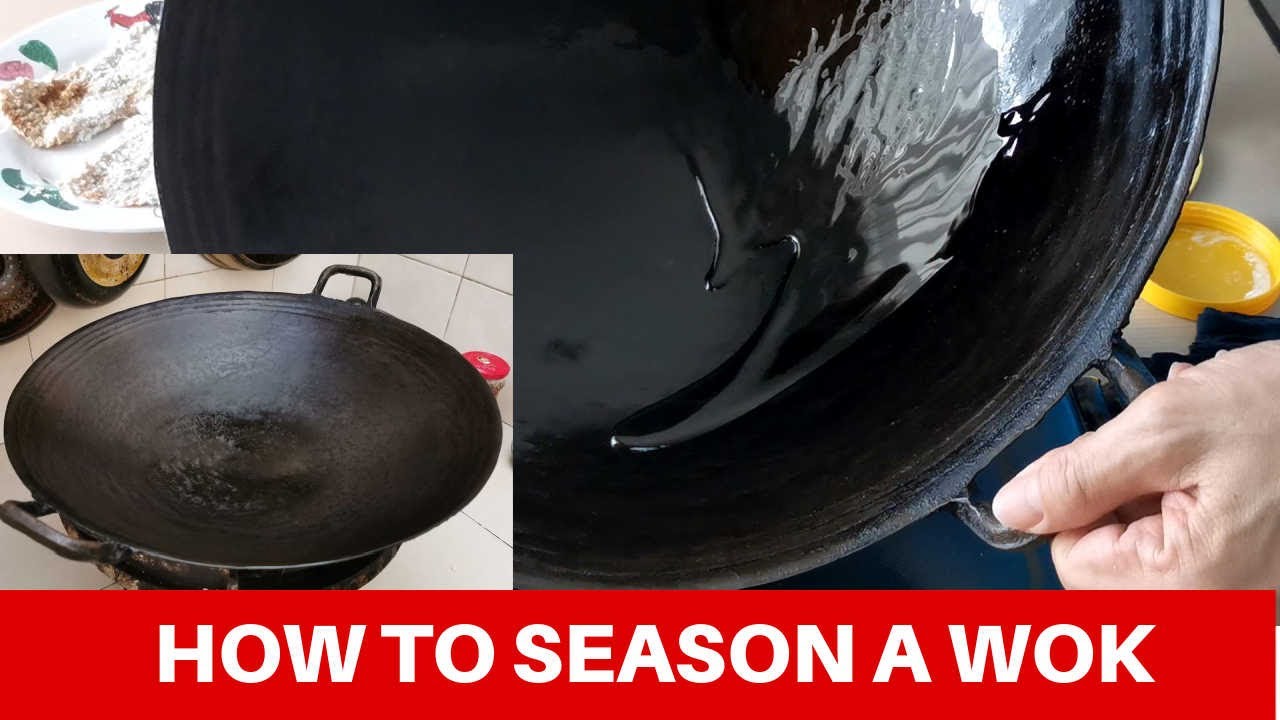
- Heat until the oil starts to smoke lightly. Rotate the wok to heat all surfaces evenly. You’ll notice the metal darkening, first turning golden, then brown, and finally black.
- Move the wok around, holding it with a towel or oven mitt, to catch every spot.
- Let it cool slightly.
Oven Method
- Preheat oven to 450°F (232°C).
- Place the oiled wok upside down on the middle rack (put foil or a tray underneath to catch drips).
- Bake for 30–45 minutes.
- Turn off the oven and allow the wok to cool inside.
Note: The oven method is less common for large woks (they may not fit) but can be great for flat-bottom models.
4. Repeat For Stronger Seasoning
For a better patina, repeat steps 2 and 3 2–3 times. Each layer builds up the coating and gives longer-lasting results. Don’t rush—thin, even layers work better than one thick one.
5. Test And Use
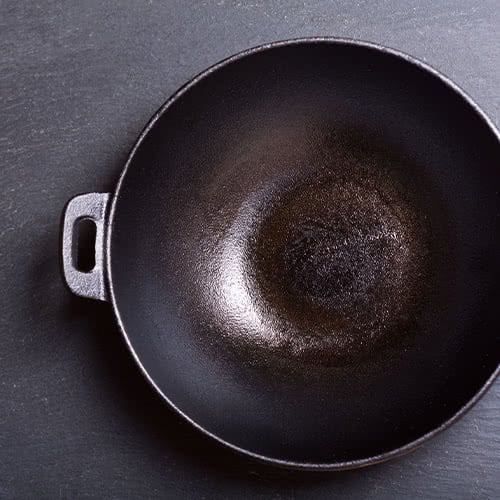
Once seasoned, your wok should be deep brown or black and feel smooth, not sticky. Stir-fry a small amount of vegetables or green onions with oil as the first real cooking. This helps deepen the seasoning and gives a great flavor base.
Common Mistakes To Avoid
Even experienced cooks make errors when seasoning a cast iron wok. Here are some to watch for:
- Too much oil: Excess oil causes sticky or uneven surfaces.
- Not enough heat: The oil must reach its smoke point to bond properly.
- Skipping initial cleaning: Factory coatings can stop seasoning from sticking.
- Letting water sit: Dry the wok completely before heating, or rust will form.
- Not seasoning outside: Protect all surfaces to prevent rust.
Many beginners also forget that seasoning improves with use. Cooking fatty foods for the first few meals will help build a better nonstick layer.
Credit: www.webstaurantstore.com
How To Maintain Your Wok’s Seasoning
Seasoning isn’t just about the first time—it’s a process that continues as you cook. Here’s how to keep your wok in top shape:
- After each use: Wash with hot water and a soft sponge. Don’t use soap unless absolutely needed.
- Dry thoroughly: Put the wok on low heat after cleaning to evaporate water.
- Light oiling: Wipe a thin layer of oil on the surface before storing.
- Avoid acidic foods at first: Vinegar or tomatoes can strip seasoning until the patina is strong.
If rust or sticky spots appear, scrub gently with salt and re-season as needed.
Seasoning Vs. Nonstick Coating
It’s easy to confuse natural seasoning with factory-made nonstick coatings. Here’s how they differ:
| Natural Seasoning | Nonstick Coating |
|---|---|
| Formed by polymerized oil layers | Chemical coating applied in factory |
| Improves with use | Wears out over time |
| Food-safe, can be repaired | Can’t be restored if damaged |
| Withstands high heat | Heat-sensitive |
A seasoned wok will never be as slippery as Teflon, but it can last a lifetime with care and can even be passed down generations.
Practical Tips For A Better Seasoning Experience
- Ventilate your kitchen: Seasoning creates smoke; open windows or use an exhaust fan.
- Use tongs or gloves: The wok gets very hot. Hold towels or paper with tongs to avoid burns.
- Season the lid too: If your wok has a lid, season it the same way to prevent rust.
- Expect color changes: New woks may turn bronze, blue, or brown before turning black.
- Don’t panic about uneven color: The patina evens out with use.

Credit: www.marionskitchen.com
When Should You Re-season A Wok?
Even well-maintained woks need fresh seasoning sometimes. Signs your wok needs re-seasoning:
- Rust spots appear
- Food starts to stick more
- The surface feels rough or patchy
- You accidentally washed with soap or soaked it too long
To re-season, simply repeat the seasoning process from the cleaning step. You don’t need to strip everything unless there’s thick rust or burned-on food.
How Seasoning Affects Cooking Results
A well-seasoned wok changes how you cook and the taste of your food. Here’s what you’ll notice:
- Better Maillard reaction: Food browns more easily, giving richer flavors.
- Less sticking: Stir-frying, frying eggs, and pancakes become easier.
- Faster stir-fry: The patina helps oil spread in a thin, hot layer, perfect for quick cooking.
- Signature “wok hei” flavor: Over time, the wok develops a unique aroma prized in Chinese cooking.
An experienced chef can often taste the difference between food cooked in a seasoned wok and one that’s new or poorly seasoned.
Are All Cast Iron Woks The Same?
Woks come in many shapes and types. Most are made from carbon steel or cast iron. Cast iron is heavier and holds heat longer, giving you better searing but needing more care. Here’s a quick comparison:
| Feature | Cast Iron Wok | Carbon Steel Wok |
|---|---|---|
| Weight | Heavy | Lighter |
| Heat retention | Excellent | Good |
| Seasoning process | Similar | Similar |
| Fragility | Can crack if dropped | Bends but rarely breaks |
Both types need seasoning, but cast iron is less forgiving if dropped or handled roughly.
Frequently Asked Questions
How Often Do I Need To Season My Cast Iron Wok?
You only need to fully season your wok once, but it’s smart to add a thin oil layer after each use. If you notice rust, sticky spots, or food sticking, it’s time to re-season.
What Oil Should I Avoid For Seasoning?
Avoid butter, olive oil, and other low smoke-point oils. They can burn and create a sticky surface rather than a smooth patina.
Can I Use A Cast Iron Wok On A Glass-top Stove?
Yes, but use caution. Cast iron is heavy and can scratch glass surfaces. Lift the wok—don’t drag it. Flat-bottom woks are more stable on glass stoves.
Is It Safe To Use Soap On A Seasoned Wok?
Once seasoned, you should avoid soap for regular cleaning. Soap can strip the seasoning. If you must remove burnt-on food, use hot water, salt, and a gentle scrub.
Where Can I Learn More About Wok Seasoning?
For deeper background, check guides from trusted sources like Serious Eats.
Getting your cast iron wok perfectly seasoned takes some time, but it’s a skill worth learning. With the right oil, heat, and care, your wok will reward you with years of delicious, evenly cooked meals and improve every time you use it.
Season well, cook often, and enjoy the tradition and flavor your wok will bring to your kitchen.