Slicing meat thinly is a skill that can transform your cooking. Whether you’re preparing beef for stir-fry, pork for hot pot, or chicken for sandwiches, thin slices cook faster, taste better, and look more professional. Many home cooks struggle to get even, paper-thin cuts with a regular kitchen knife.
But with the right approach, you can master this technique—even without special tools. This guide will show you how to slice meat thinly with a knife, step by step, including expert tips, common mistakes, and practical examples. By the end, you’ll feel confident slicing meat like a chef.
Why Thin Slices Matter
Thinly sliced meat is not just about appearance. There are several reasons why chefs and food lovers prefer it:
- Even cooking: Thin slices cook quickly and evenly, reducing risk of overcooking.
- Better texture: Meat feels tender and smooth in every bite.
- Absorbs flavors: Marinades, sauces, and seasonings soak in faster.
- Versatile uses: Thin slices work in sandwiches, salads, stir-fries, and more.
For example, Japanese dishes like shabu-shabu and sukiyaki require beef sliced as thin as 1/16 inch (about 1.5 mm). In Chinese cuisine, hot pot is best with ultra-thin lamb or beef. Even Western recipes, like Philly cheesesteak, demand thinly cut steak for the perfect texture.
Choosing The Right Knife
The knife you use greatly affects your results. While you don’t need a professional slicer, not all kitchen knives are equal for this task.
| Knife Type | Blade Length | Best For | Average Price (USD) |
|---|---|---|---|
| Chef’s Knife | 8-10 inches | Most meats | $40-$150 |
| Slicing Knife | 10-14 inches | Roasts, brisket | $30-$120 |
| Japanese Yanagiba | 8-12 inches | Sushi, sashimi | $70-$300 |
Chef’s knives are most common and work well for beef, pork, and chicken. Their wide blade offers control and stability. Slicing knives (with long, thin blades) are ideal for large cuts and delicate work. If you want ultra-thin slices for sushi, a Yanagiba or similar Japanese knife gives the best results.
Keep your knife extremely sharp. A dull blade will crush and tear the meat, making thin slices impossible. Test sharpness by slicing a sheet of paper—if the blade glides through, it’s ready.
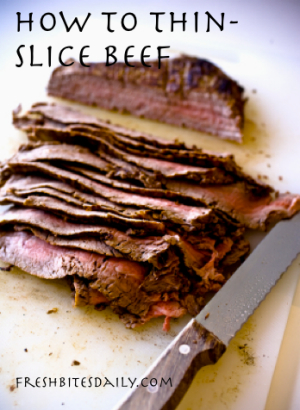
Credit: freshbitesdaily.com
Preparing The Meat
Before slicing, proper preparation makes a huge difference. Here’s what you need to do:
1. Chill The Meat
Cold meat is much easier to slice thinly. For best results, place your meat in the freezer for 30–60 minutes until it feels firm but not frozen solid. The ideal temperature is 28–32°F (-2–0°C).
Why does this help? When meat is cold, it holds its shape and won’t squish under the knife. This is especially useful for fatty cuts, which soften quickly at room temperature.
2. Trim Fat And Gristle
Remove excess fat, sinew, and connective tissue before slicing. These parts don’t cut smoothly and can cause uneven slices. Use a small paring knife to carefully trim.
3. Pat Dry
Moisture on the meat or your cutting board leads to slipping and poor control. Pat your meat dry with paper towels. This simple step can improve accuracy and safety.
Slicing Technique: Step-by-step
Now it’s time to slice. Follow these steps for thin, even slices every time.
1. Set Up Your Cutting Area
Use a stable cutting board—wood or plastic. Place a damp towel underneath to prevent slipping. Make sure your knife is sharp and clean.
2. Identify The Grain
Meat has fibers running in one direction, known as the grain. Slicing against the grain shortens these fibers, making each bite tender. Look for lines or streaks and position your meat so you’ll cut across them.
3. Hold The Knife Correctly
Grip the handle firmly. Place your index finger along the spine for control. If you’re slicing a large piece, use your other hand to gently hold the meat steady, keeping fingers curled away from the blade.
4. Slice With A Gentle Motion
Use a smooth, single stroke—not a sawing motion. Let the knife’s weight do the work. Start at the heel of the blade and pull it toward you in one motion, keeping slices as thin as possible.
Aim for slices 1/8 inch (3 mm) or less. For some dishes, like carpaccio or hot pot, try to go even thinner.
5. Separate Slices As You Go
After cutting each slice, gently move it aside. This keeps your workspace clear and prevents slices from sticking together.
6. Adjust For Bone-in Cuts
If your meat has bones, work around them carefully. For example, with chicken thighs, slice away from the bone and then cut the meat thinly.

Credit: www.justonecookbook.com
Common Mistakes And How To Avoid Them
Even experienced cooks make errors when slicing meat thinly. Here are some pitfalls and how to fix them:
- Using a dull knife: Always sharpen before slicing. Dull blades crush meat and make thin cuts impossible.
- Meat is too warm: If the meat is soft, chill it longer. Warm meat is difficult to slice evenly.
- Sawing instead of slicing: Use one smooth motion. Sawing creates uneven, ragged edges.
- Ignoring the grain: Cutting with the grain leaves chewy slices. Always cut against the grain for tenderness.
- Too much moisture: Dry the meat and your hands for better grip and control.
A non-obvious tip: If your slices are tearing, try switching to a different knife. Sometimes, blade width or flexibility matters more than sharpness alone.
Practical Examples: Slicing Different Meats
Different meats require slightly different techniques. Here’s how to handle the most common types:
Beef
For stir-fry or hot pot, choose flank steak or sirloin. Chill, trim, and slice across the grain at a slight angle. For ultra-thin slices, freeze until firm and use a slicing knife.
Pork
Pork loin or shoulder works well. Chill, trim fat, and slice against the grain. For recipes like tonkatsu, cut 1/8 inch thick. For hot pot, aim for paper-thin slices.
Chicken
Chicken breast is easiest. Chill and slice across the grain for stir-fry. For sandwiches, slice lengthwise. For thighs, remove the bone first, then cut thin strips.
Lamb
Lamb leg or shoulder is best for thin slicing. Chill, trim fat, and slice across the grain. For hot pot, slices should be almost translucent.
Fish
For sashimi or carpaccio, use a Yanagiba knife. Chill fish until firm. Slice at an angle with one smooth motion. For best results, cut slices less than 1/16 inch thick.
Comparing Home Slicing To Deli Slicers
Sometimes people wonder if they should buy a meat slicer. Let’s compare the two approaches:
| Method | Slice Thickness Range | Speed | Skill Required | Cost |
|---|---|---|---|---|
| Knife (Manual) | 1/16–1/2 inch | Medium | Moderate | Low |
| Deli Slicer | 1/32–1/2 inch | Fast | Low | High ($150+) |
Manual slicing with a knife takes practice but gives more control. Deli slicers are fast and precise, but expensive and bulky. For most home cooks, a sharp knife and good technique are enough.
Advanced Tips For Perfect Thin Slices
If you want to take your skills further, try these expert tips:
- Angle your blade: Hold the knife at a 30° angle for wider, thinner slices.
- Use a ruler: For recipes needing exact thickness, measure as you slice.
- Double-chill: For fattier meats, chill twice—once before slicing, and again halfway through if it softens.
- Sharpen often: Every 15–20 slices, quickly hone your knife. This keeps cuts clean.
- Practice with vegetables: Try slicing cucumbers or carrots thinly to improve your hand control.
Beginners often miss the importance of grain direction and blade angle. Changing these can make slicing much easier and give better results.

Credit: www.reddit.com
Safety Tips
Working with sharp knives and cold meat means safety is important. Keep these in mind:
- Use a stable cutting board to prevent slips.
- Keep fingers curled away from the blade.
- Clean up spills immediately—moisture can cause accidents.
- Don’t rush—take your time for thin, even slices.
According to the CDC, kitchen knife injuries account for over 350,000 ER visits per year in the US. Most are preventable with careful technique.
Cleaning And Caring For Your Knife
After slicing meat, clean your knife right away. Wash with hot, soapy water, rinse, and dry completely. Store knives in a block or on a magnetic strip—never loose in a drawer. Sharpen regularly to keep performance high.
Knife maintenance is often overlooked by beginners. A well-maintained blade lasts longer and stays safer.
Frequently Asked Questions
How Thin Should I Slice Meat For Stir-fry?
For stir-fry, aim for slices about 1/8 inch (3 mm) thick. Thinner slices cook faster and absorb sauce better.
Can I Slice Meat Thinly Without Freezing It?
It’s possible, but freezing or chilling makes slicing much easier. Room temperature meat is soft and harder to cut evenly.
What’s The Best Knife For Slicing Meat Thin?
A sharp chef’s knife works for most meats. For ultra-thin cuts, a slicing knife or Yanagiba gives better results.
How Do I Slice Cooked Meat Thinly?
Let cooked meat cool slightly before slicing. Use a sharp knife and slice across the grain. Thin slices are easier if the meat is firm, not hot.
Is It Worth Buying A Meat Slicer For Home Use?
For most people, a meat slicer is not necessary. A sharp knife and good technique are enough. If you slice large quantities often, a slicer can save time—see this Consumer Reports guide for more.
Mastering thin meat slicing opens up many new recipes and improves your cooking results. With practice, patience, and the right knife, you can slice meat thinly at home like a pro. Start with chilled meat, sharpen your blade, and remember to cut against the grain.
Soon, you’ll enjoy better meals—and impress friends and family with your new skill.