Keeping your kitchen knives safe is more than just protecting the blades. It’s about guarding your fingers, preserving your tools, and making your kitchen a secure space. Many home cooks don’t realize how quickly a misplaced knife can cause accidents or dull the blade.
Proper storage prevents injuries, keeps knives sharp longer, and makes your workspace neater. Whether you have just a few knives or a full set, understanding safe storage options helps you avoid common mistakes and choose the best method for your kitchen.
Why Safe Knife Storage Matters
Every year, thousands of people visit emergency rooms due to kitchen knife injuries. According to the Consumer Product Safety Commission, over 40,000 Americans are hurt by knives annually. Most accidents happen because knives are left loose in drawers, hidden under towels, or stored on countertops. Not only is this dangerous for your hands, but it also shortens the life of your knives.
Storing knives safely prevents:
- Accidental cuts
- Blade dulling
- Cross-contamination
- Damage to knife handles
A well-stored knife will last longer, stay sharper, and make cooking easier. For families with children, safe storage is even more important. Kids are curious, and sharp knives within reach can be risky.
Types Of Knife Storage Solutions
There are many ways to store kitchen knives. The best choice depends on your kitchen space, budget, and how often you use your knives. Let’s explore the most common options and their pros and cons.
| Storage Method | Safety | Blade Protection | Accessibility |
|---|---|---|---|
| Knife Block | High | Good | Easy |
| Magnetic Strip | Medium | Excellent | Very Easy |
| Drawer Organizer | High | Excellent | Easy |
| Blade Guards | Medium | Excellent | Moderate |
| Knife Bag/Roll | Medium | Good | Moderate |
1. Knife Blocks
Knife blocks are the classic countertop storage. They’re usually made from wood or plastic and hold several knives upright. Knife blocks keep blades separated and protected, reducing the risk of accidental cuts. But they can collect dust, and if slots don’t fit your knives, blades may rub and dull.
Pros
- Easy access
- Protects blades from contact
- Keeps knives upright and organized
Cons
- Takes up counter space
- Slots may not fit all knives
- Hard to clean inside
2. Magnetic Knife Strips
A magnetic strip mounts to your wall and holds knives in place. This option saves counter space and lets you see all your knives at a glance. Quality strips have strong magnets and don’t scratch blades. But knives are exposed, so children can reach them easily if the strip is too low.
Pros
- Space-saving
- Shows all knives clearly
- Keeps blades from touching
Cons
- Not child-safe unless mounted high
- Requires wall space
- Lower quality strips can weaken over time
3. Drawer Knife Organizers
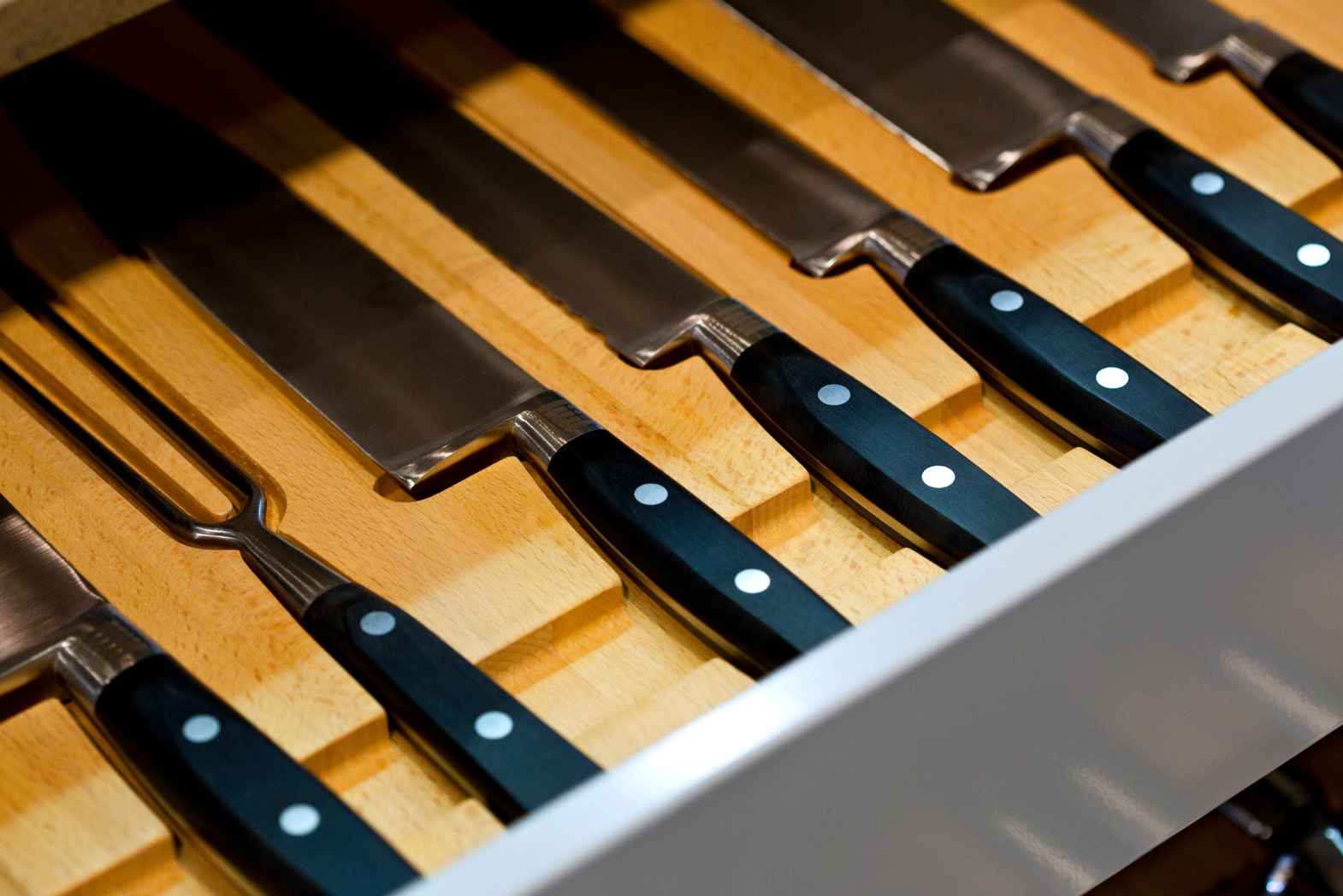
Drawer organizers are trays or blocks designed for knives. They fit inside kitchen drawers, keeping blades separated and hidden. This is one of the safest methods if you have children, as knives are out of sight. It also protects blades from dust and moisture.
| Organizer Type | Capacity | Material |
|---|---|---|
| Wood Block Tray | 6–10 knives | Wood |
| Plastic Tray | 5–8 knives | Plastic |
| Foam Insert | 10–12 knives | Foam |
Pros
- Very safe for homes with children
- Keeps knives clean and dry
- Fits in most kitchen drawers
Cons
- Requires drawer space
- Not as visible as countertop options
4. Blade Guards And Sheaths
Blade guards are plastic or rubber sleeves that cover the knife edge. They’re perfect for knives that are stored loose or taken outside the kitchen, like in a picnic basket or camping gear. Guards protect both blades and hands, but you still need a storage spot for the knife.
Pros
- Inexpensive
- Protects blade and fingers
- Good for travel
Cons
- Doesn’t organize knives
- Must be matched to blade size
5. Knife Bags And Rolls
Professional chefs often use knife bags or rolls to carry their tools. These soft cases have slots for each knife and close securely. They’re ideal for transporting knives, but not the best for everyday kitchen storage.
Pros
- Portable
- Protects knives during travel
- Can hold many knives
Cons
- Not practical for daily use
- Takes time to open and close
Credit: www.souschef.co.uk
How To Choose The Right Storage Method
Picking the best storage option depends on your kitchen, knife collection, and who uses the space. Here are some factors to consider:
Kitchen Size
Small kitchens may not have room for a knife block. A magnetic strip or drawer organizer could be better. In large kitchens, countertop blocks or wall-mounted strips work well.
Knife Collection
If you own specialty knives (like cleavers or bread knives), make sure your storage method fits all shapes and sizes. Universal drawer organizers or blade guards are flexible.
Safety Needs
For homes with kids or pets, prioritize child-safe solutions. Drawer organizers and blocks with locking lids keep knives out of reach.
Budget
Knife storage can cost from $10 for simple guards to $100+ for custom blocks. Choose what fits your budget but don’t sacrifice safety.
Cleaning And Maintenance
Some blocks and organizers are hard to clean. Look for removable trays or open designs to prevent bacteria buildup.
Common Knife Storage Mistakes
Many people make simple errors that can ruin knives or cause accidents. Avoid these mistakes to keep your tools and family safe.
- Storing knives loose in drawers: This dulls blades and risks injury.
- Stacking knives together: Blades chip and handles break.
- Leaving knives on counters: This is dangerous for anyone reaching across the workspace.
- Using cheap magnetic strips: Weak magnets let knives slide or fall.
- Forgetting to clean storage units: Dust, crumbs, or moisture inside blocks can lead to rust and germs.

Credit: www.souschef.co.uk
Practical Tips For Safe Knife Storage
Even the best storage method needs some care. Follow these tips for maximum safety and blade life.
- Always dry knives before storing. Water causes rust and damages handles.
- Store knives with the edge facing down or away from you. This reduces accidental contact.
- Use storage that matches knife size. Oversized slots let knives wobble and chip.
- Clean storage units regularly. Wipe blocks, strips, and trays to prevent buildup.
- Keep knives out of children’s reach. Mount strips high, use locking drawers, or choose blocks with covers.
How To Store Knives In Shared Or Busy Kitchens
If you cook in a shared space or have frequent guests, knife storage needs extra attention. Here are some strategies:
- Label storage units for different users. This prevents mix-ups and keeps tools organized.
- Choose visible storage like magnetic strips so everyone can see where knives belong.
- Set clear rules about knife handling and storage. Teach anyone using the kitchen how to store knives safely.
Knife Storage For Professional Kitchens
Professional kitchens face special challenges. High traffic and many users increase the risk of accidents. Most chefs prefer magnetic strips or wall racks for speed and visibility. Lockable drawers are used for valuable knives. Routine cleaning and inspection are critical.
Some restaurants even have knife check-out systems to track tool usage.
Maintaining Knife Storage Over Time
Your storage method needs care, just like your knives. Here’s how to keep your storage units in top shape:
- Inspect for damage: Cracks, loose magnets, or worn slots can expose blades.
- Replace old units: If a block or strip shows wear, change it before it fails.
- Deep clean regularly: Remove all knives and wash storage units with soap and water.
- Check fit: Make sure knives still fit snugly. If you buy new knives, update your storage.
Comparing Knife Storage Methods
To help you decide, here’s a side-by-side comparison of the most popular options.
| Storage Option | Best For | Typical Cost | Ease of Cleaning |
|---|---|---|---|
| Knife Block | Home kitchens | $20–$80 | Moderate |
| Magnetic Strip | Small kitchens | $15–$60 | Easy |
| Drawer Organizer | Families with kids | $12–$50 | Easy |
| Blade Guard | Travel or picnic | $1–$8/each | Easy |
| Knife Bag/Roll | Professional chefs | $30–$120 | Easy |
Non-obvious Insights For Beginners
- Humidity matters: Many beginners overlook moisture. Storing knives in humid places (near the sink or stove) causes rust and corrosion fast. Keep knives dry and away from steam.
- Knife handle care: Most people focus only on blades, but handles can crack or degrade if stored in tight slots. Choose storage that fits both blade and handle size.
Recommended External Resource
If you want more details about knife safety and storage, visit the Consumer Reports for expert advice.
Frequently Asked Questions
How Do I Keep Knives Sharp During Storage?
Store knives so the blades don’t touch anything hard. Use blocks, strips, or guards that keep the edge safe. Avoid loose storage in drawers.
What’s The Safest Way To Store Knives With Kids At Home?
Drawer organizers keep knives hidden and secure. You can also use blocks with locking lids or mount magnetic strips high out of reach.
Can I Store Knives In A Dishwasher Rack?
No. Dishwashers can dull blades, damage handles, and expose sharp edges. Always hand wash and store knives in a safe unit.
How Often Should I Clean My Knife Storage Units?
Clean at least once a month. If you cook often, check weekly for crumbs, moisture, or rust. This prevents bacteria and keeps knives in top shape.
Is It Okay To Use A Magnetic Strip For All Knife Types?
Most knives work well on quality magnetic strips. However, very heavy cleavers or ceramic knives might not be secure. Check the manufacturer’s advice for your specific knife.
Keeping your kitchen knives safe is simple if you choose the right storage and follow practical tips. Good storage protects your hands, your blades, and makes cooking smoother. With a little care, your knives will stay sharp, your kitchen tidy, and your family safe.

Credit: knifewear.com