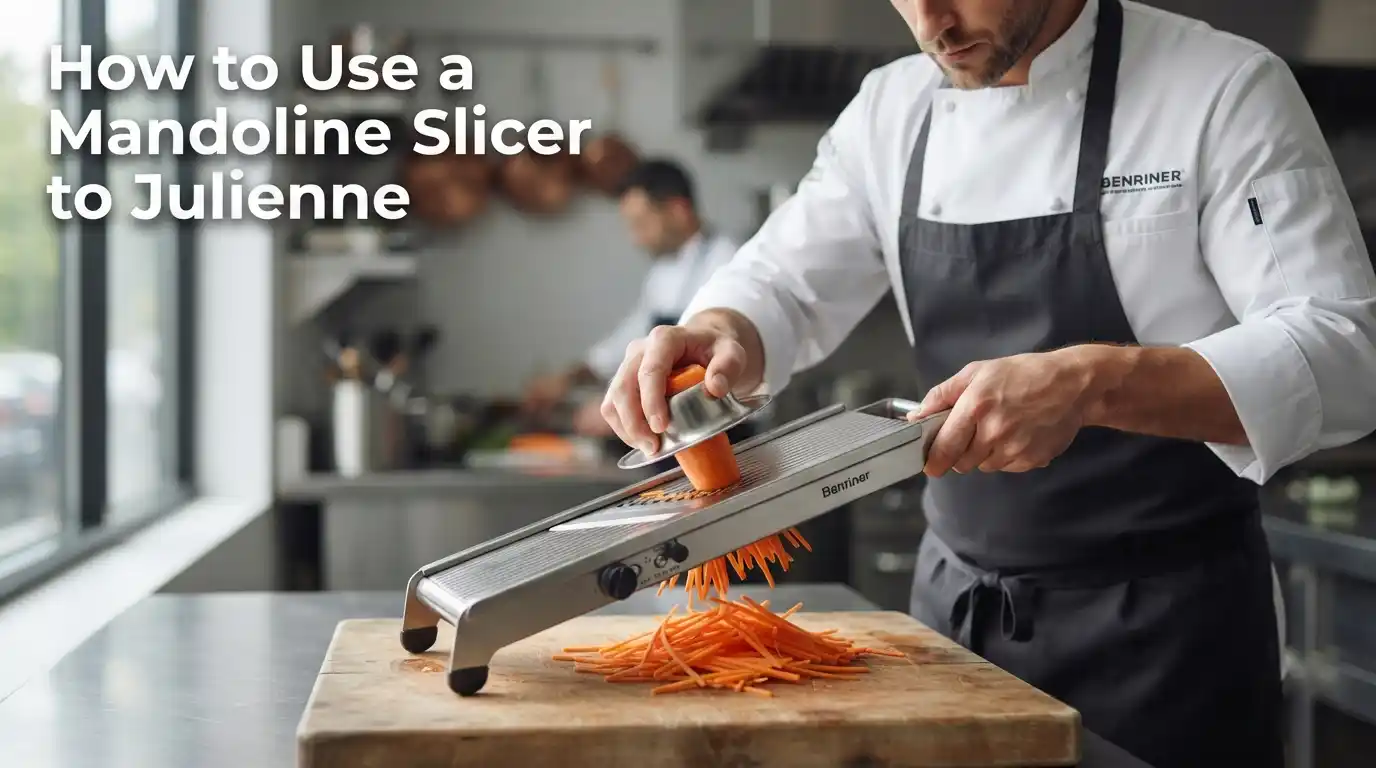
Using a mandoline slicer can transform how you prepare vegetables, especially when you want those neat, thin julienne strips that often seem impossible with a knife. If you love the look and taste of perfectly cut carrots, cucumbers, or potatoes in salads, stir-fries, or garnishes, mastering the mandoline slicer is a skill worth learning. With the right approach, you can save time, improve presentation, and enjoy more consistent cooking results.
This guide will show you step-by-step how to use a mandoline slicer for julienne cuts, explain important safety tips, and share practical insights that most beginners overlook.
What Is A Mandoline Slicer?
A mandoline slicer is a kitchen tool designed for slicing and cutting vegetables and fruits quickly and precisely. It features a flat surface with adjustable blades and often includes attachments for different types of cuts, such as straight slices, crinkle cuts, and julienne strips. Most mandolines are made from stainless steel or durable plastic and offer a variety of thickness settings.
Mandoline slicers are popular in both home and professional kitchens because they:
- Save time compared to manual slicing.
- Deliver uniform cuts that improve cooking and presentation.
- Allow for versatile cuts with interchangeable blades.
Not all mandolines are equal, though. Some have more advanced safety features, while others offer only basic slicing functions. Choosing the right type can make a big difference in your experience.
Julienne: What Does It Mean?
The term julienne comes from French cuisine and refers to thin, matchstick-like strips of vegetables or fruits. Julienne cuts are typically:
- 1/16 to 1/8 inch thick
- 2 to 3 inches long
These strips are used in salads, stir-fries, soups, and as garnishes. They cook quickly and add texture and visual appeal to dishes.
Getting consistent julienne cuts with a knife is difficult, especially for beginners. That’s where the mandoline slicer excels.

Credit: www.amazon.com
Types Of Mandoline Slicers For Julienne Cuts
If you want to julienne with ease, choosing the right mandoline slicer is essential. Here’s a quick comparison of common types:
| Type | Blade Material | Julienne Capability | Safety Features | Price Range |
|---|---|---|---|---|
| Classic French Mandoline | Stainless Steel | Multiple blade options | Hand guard, adjustable thickness | $60–$200 |
| Japanese Mandoline (Benriner) | Stainless Steel/Plastic | Interchangeable blades | Hand guard, simple adjuster | $25–$50 |
| Compact Plastic Mandoline | Plastic | Basic julienne blade | Hand guard only | $10–$30 |
Most home cooks prefer the Japanese-style mandoline for its simplicity and affordability. If you need more advanced features or plan to use it frequently, a classic French mandoline may be worth the investment.
Preparing Your Mandoline Slicer For Julienne
Before you start slicing, it’s important to set up your mandoline properly. Follow these steps:
- Clean the slicer. Wash and dry the mandoline and its attachments to remove dust or residue.
- Choose the julienne blade. Most mandolines have a dedicated julienne blade or attachment. Install it according to the manufacturer’s instructions.
- Adjust thickness. Set the blade height for the desired thickness (usually 1/16 or 1/8 inch for julienne).
- Attach hand guard. Always use the hand guard to protect your fingers.
Beginners often forget to secure the hand guard or set the blade thickness correctly, resulting in uneven strips or injury.
Selecting And Preparing Vegetables For Julienne
Not all vegetables are ideal for julienne cuts. Choose firm, straight vegetables for best results. Examples include:
- Carrots
- Zucchini
- Cucumbers
- Potatoes
- Daikon radish
Prepare vegetables as follows:
- Wash thoroughly. Remove dirt and grit.
- Peel if needed. Some vegetables, like carrots and potatoes, look and taste better peeled.
- Trim ends. Create flat, even surfaces for safer slicing.
- Cut to manageable length. If the vegetable is longer than your mandoline, slice it in half.
A common mistake is trying to julienne soft or uneven vegetables, which can lead to messy cuts and frustration.
Step-by-step: How To Julienne With A Mandoline Slicer
Here’s how to create perfect julienne strips using a mandoline:
- Set up your workspace. Place the mandoline on a stable surface, like a cutting board. Keep a bowl nearby to catch the strips.
- Install the julienne blade. Double-check the blade is locked and secure.
- Adjust thickness. Use the dial or lever to set your preferred thickness.
- Use the hand guard. Insert the vegetable into the hand guard’s prongs.
- Slide the vegetable. Move the hand guard back and forth across the blade, applying gentle, even pressure.
- Collect strips. Julienne strips will fall into the bowl or tray below.
- Check for consistency. Pause occasionally to see if the strips are uniform. Adjust thickness or blade if needed.
Tips For Success
- Don’t rush the process. Fast movements can cause uneven strips or accidents.
- If strips stick together, gently separate them with your fingers.
- For extra-long strips, use the full length of the vegetable.
- If you’re slicing softer vegetables (like zucchini), apply lighter pressure to avoid mushy results.
You might find this helpful: Best Mandoline Slicer
Safety Tips When Using A Mandoline Slicer
Mandoline slicers are sharp and can cause serious injury if used carelessly. Follow these safety tips:
- Always use the hand guard. Never risk your fingers, even for a few slices.
- Keep the slicer stable. Secure the mandoline to the counter or cutting board.
- Pay attention. Avoid distractions while slicing.
- Use cut-resistant gloves. For extra protection, wear gloves made for kitchen use.
- Clean carefully. Wash blades separately to avoid cuts.
Here’s a comparison of safety features from popular mandolines:
| Mandoline Model | Hand Guard | Non-Slip Base | Cut-Resistant Gloves | Blade Cover |
|---|---|---|---|---|
| Benriner Japanese | Yes | Yes | No | No |
| OXO Good Grips | Yes | Yes | Optional | Yes |
| De Buyer French Mandoline | Yes | Yes | Yes | Yes |
Some users skip safety steps because they’re in a hurry. This is a common mistake that leads to injury. Take an extra minute to set up properly.
Cleaning And Maintaining Your Mandoline Slicer
Keeping your mandoline clean and in good condition will make it last longer and keep it safe to use. Here’s how:
- Disassemble carefully. Remove blades and attachments gently.
- Wash parts separately. Use warm water and mild soap.
- Dry thoroughly. Water left on blades can cause rust or dullness.
- Store safely. Keep blades covered and the slicer out of reach of children.
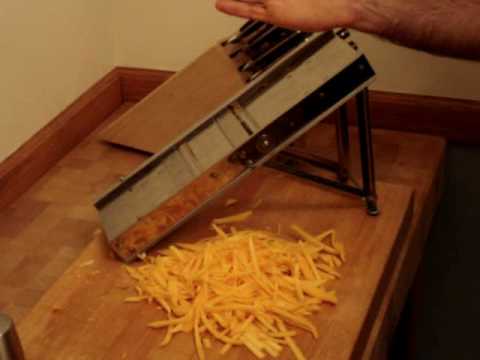
Avoid putting your mandoline in the dishwasher unless the manufacturer recommends it. High heat and strong detergents can damage plastic parts and dull blades.
Credit: www.youtube.com
Common Problems And How To Fix Them
Even experienced cooks run into issues with mandoline slicers. Here are some common problems:
- Uneven strips: Adjust blade thickness or ensure the vegetable is flat and firm.
- Vegetable slips: Use the hand guard or a non-slip mat under the slicer.
- Stuck pieces: Clean the blade between batches and remove stuck strips with a brush.
- Dull blades: Replace blades when they no longer cut cleanly.
One non-obvious insight: If you notice your julienne strips are tearing or mushy, it’s often because the vegetable is too soft or your blade is dull. Sharpen or replace blades regularly for best results.
Practical Uses For Julienne Vegetables
Julienne vegetables are more than just pretty garnishes. They add flavor, texture, and nutrition to many dishes. Here are a few ways to use them:
- Stir-fries: Carrots, bell peppers, and zucchini julienne cook evenly and quickly.
- Salads: Julienne cucumbers or radishes add crunch and visual interest.
- Spring rolls: Thin strips fit easily in wraps and rolls.
- Soups: Julienne vegetables release flavor faster in broth.
- Garnishes: Use strips to decorate plates or cocktails.
A less obvious tip: Julienne strips can be sautéed for just 1–2 minutes, preserving both color and texture. Overcooking will make them limp and less appealing.
Comparing Mandoline Slicer Vs Knife For Julienne
How does a mandoline compare to a knife for julienne cuts? Here’s a quick look:
| Method | Speed | Consistency | Skill Needed | Safety Risk |
|---|---|---|---|---|
| Mandoline Slicer | Fast | High | Beginner | Medium |
| Knife | Slow | Low | Advanced | Low |
Mandolines are faster and more consistent, but require more caution. Knives are safer but need more practice for uniform cuts.
Advanced Tips: Getting The Most From Your Mandoline
Once you’re comfortable with basic julienne cuts, try these advanced techniques:
- Double julienne: Stack strips and slice again for extra-fine matchsticks.
- Mix vegetables: Julienne multiple veggies together for colorful salads or stir-fries.
- Marinate strips: Toss julienne vegetables in lemon juice or vinegar for quick pickles.
- Freeze strips: Julienne strips freeze well for future use in soups or stir-fries.
Most beginners don’t realize that julienne strips can be stored in water in the fridge for up to three days. This keeps them crisp and ready for quick meals.
Frequently Asked Questions
How Do I Know If My Mandoline Slicer Is Safe For Julienne Cuts?
Check that your mandoline includes a hand guard and a dedicated julienne blade. Read the manual to confirm it’s designed for matchstick cuts. If unsure, search for product reviews or visit Wikipedia for more information.
Can I Julienne Soft Vegetables Like Tomatoes With A Mandoline Slicer?
Mandoline slicers work best with firm vegetables. Soft items like tomatoes tend to crush or tear instead of forming neat strips. For softer vegetables, use a sharp knife and gentle pressure.
What’s The Best Way To Clean A Mandoline Slicer?
Disassemble the slicer and wash each part with warm, soapy water. Use a brush to clean blades and avoid direct contact. Dry all parts fully before storing to prevent rust.
How Thick Should Julienne Strips Be For Most Recipes?
The standard thickness is 1/16 to 1/8 inch. This size cooks quickly and looks attractive in salads and stir-fries. Some recipes may call for thicker or thinner strips, so adjust the blade accordingly.
Are Mandoline Slicers Dishwasher Safe?
Some mandoline slicers are dishwasher safe, but many are not. Check the manufacturer’s instructions. Hand washing is often better to protect blades and plastic parts.
Learning how to use a mandoline slicer for julienne cuts can save you time and make your dishes more appealing. With careful setup, attention to safety, and a few practical tips, you’ll achieve results that rival professional chefs. Start slow, follow the steps, and soon you’ll enjoy crisp, uniform julienne strips in all your favorite recipes.