Using a honing rod is one of those kitchen skills that can turn a dull knife into a sharp, reliable tool. Many cooks—both new and experienced—confuse honing with sharpening, or don’t use a rod correctly. But learning how to use a honing rod can make cooking safer and easier.
This article walks you through everything you need to know: what honing rods are, why they matter, how to use them, and some tips most beginners miss. By the end, you’ll understand how to keep your knives in top shape with confidence.
What Is A Honing Rod?
A honing rod is a long, thin rod made from steel, ceramic, or diamond-coated material. It’s not the same as a sharpening stone. Honing rods help realign the edge of a knife, which gets bent or rolled during regular use. Honing does not remove much metal, unlike sharpening. Instead, it keeps your knife’s edge straight and ready to cut.
Most honing rods are about 9 to 12 inches long. The handle is usually textured for a firm grip. The rod itself can have grooves or be smooth, depending on the type.
Honing Vs. Sharpening
It’s common to mix up honing and sharpening. Here’s a quick comparison:
| Feature | Honing Rod | Sharpening Stone |
|---|---|---|
| Main Purpose | Realigns knife edge | Removes metal to form new edge |
| Frequency | Often (every few uses) | Rarely (every few months) |
| Skill Needed | Easy to learn | Takes practice |
Honing keeps knives cutting smoothly between sharpening sessions. Sharpening should be done when honing is no longer enough.
Why Honing Rods Are Essential
If you cook often, you’ve probably noticed knives seem to get dull quickly. Most of the time, the edge isn’t actually worn down—it’s just bent. Honing rods fix this problem. Here’s why they matter:
- Safety: Dull knives slip and cause accidents. Honed knives grip food better and cut cleanly.
- Efficiency: Chopping, slicing, and dicing go faster with a properly honed knife.
- Knife Longevity: Regular honing prevents the need for frequent sharpening, which wears down the blade over time.
- Cost Savings: You avoid buying new knives or professional sharpening services as often.
A study from the University of Michigan showed that regular honing extends the lifespan of kitchen knives by 30–50%. Just a few seconds of honing can save hours and money in the long run.
:max_bytes(150000):strip_icc()/winners-graphic-resized-sea-honing-steels-test-messermeister-12-1200-grit-ceramic-sharpening-rod-ashlee-redger-40-a6423424ed454c639fe82d0a40f2bacd.jpg)
Credit: www.seriouseats.com
Types Of Honing Rods
Different honing rods suit different knives and preferences. Let’s break down the main types:
| Type | Material | Best For | Durability |
|---|---|---|---|
| Steel Rod | Stainless Steel | Most kitchen knives | High |
| Ceramic Rod | Ceramic | Harder blades, finer honing | Medium |
| Diamond Rod | Diamond-coated steel | Very dull knives | Very High |
- Steel rods are the most common and suitable for everyday use.
- Ceramic rods are gentler and work well for Japanese or high-carbon knives.
- Diamond rods are more aggressive. They can remove some metal, so use them sparingly.
You might find this helpful: Best Honing Rod For Home Use
Step-by-step Guide: How To Use A Honing Rod
Learning to use a honing rod is simple, but technique matters. Here’s how to do it safely and effectively.
1. Prepare Your Knife And Rod
- Clean both the knife and rod. Food particles or moisture can damage the blade.
- Hold the rod vertically, with the tip resting on a stable surface like a cutting board.
- Grip the handle firmly with your non-dominant hand.
2. Position Your Knife
- Hold the knife in your dominant hand.
- Place the heel of the blade (closest to the handle) against the top of the rod.
- Angle the blade at about 15–20 degrees from the rod. Most Western knives use 20 degrees; Japanese knives use closer to 15 degrees.
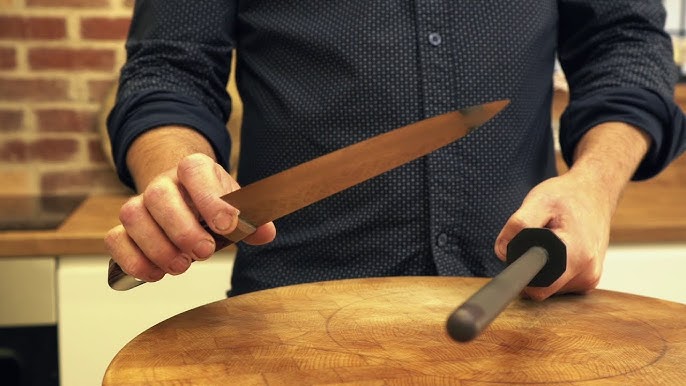
3. Stroke Down And Across
- Apply light pressure. Do not force the blade.
- Pull the knife down and across the rod, moving from the heel to the tip.
- The motion should be smooth—imagine slicing a thin layer from the rod.
- Repeat this stroke 5–10 times on one side.
4. Switch Sides
- Flip the knife to the other side.
- Repeat the same motion, keeping the angle consistent.
- Alternate sides, keeping strokes even.
5. Check Your Edge
- Wipe the blade with a soft cloth.
- Test the sharpness. Slice a piece of paper or tomato; a honed knife should cut cleanly without force.
Tips For Safe Honing
- Keep fingers away from the blade at all times.
- Do not rush. Quick, careless movements can result in slips.
- Use proper lighting to see the edge clearly.
How Often Should You Hone?
Honing frequency depends on how much you cook and the type of knife you use.
- Daily cooks: Hone before or after every use.
- Weekly cooks: Hone once a week.
- Professional chefs: Hone several times daily.
A common mistake is to only hone when knives feel dull. Prevent this by making honing a routine. Some chefs say, “A knife that hasn’t been honed is a knife waiting to slip. ” Consistency is key.
Common Honing Mistakes
Even experienced cooks make errors with their honing rods. Here are some to watch out for:
- Wrong angle: Using the wrong angle can damage the blade or make honing useless. Always check your knife’s recommended angle.
- Too much pressure: Pressing too hard can wear down the edge. Light, steady pressure works best.
- Inconsistent strokes: Uneven motion creates an uneven edge. Repeat each stroke the same way.
- Dirty rod: Food residue or moisture causes corrosion. Clean your rod regularly.
- Skipping both sides: Honing only one side bends the blade. Alternate sides for balance.
- Using a honing rod for sharpening: If your knife is truly dull (can’t cut paper), it needs sharpening, not honing.
Advanced Honing: For Different Knife Types
Some knives need special care. Here’s how honing differs for various knives:
Japanese Knives
Japanese knives often have a thinner, harder blade. Use a ceramic rod and keep the angle at 15 degrees. Fewer strokes are needed—usually 3–5 per side.
Serrated Knives
Serrated knives don’t need frequent honing. If you do hone them, use a special rod with a smaller diameter. Focus only on the flat side of the blade.
Specialty Blades
Cleavers and heavy blades require a steel rod. Use slower, heavier strokes, but keep the angle steady. Avoid diamond rods, as they are too aggressive.
Real-world Example: Chef’s Routine
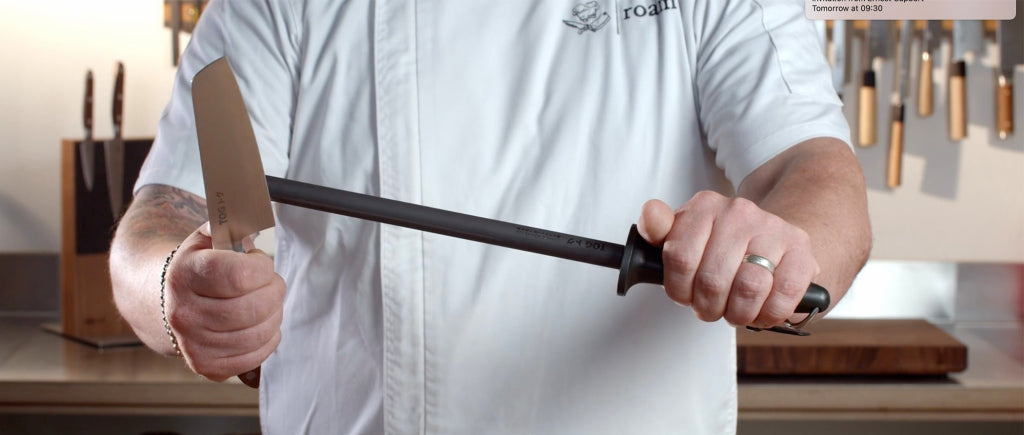
Professional chefs rely on sharp knives for speed and safety. Chef Maria Lopez, who works in a busy New York restaurant, hones her knives 10–15 times daily. She says, “I spend less than a minute each time, but it saves hours later. My knives last years longer.”
A recent survey of culinary schools found that students who honed their knives daily had 30% fewer accidents and reported better cutting performance. Honing is not just for professionals; home cooks see the same benefits with just a few seconds of care.
Credit: togknives.com
Honing Rod Maintenance
Taking care of your honing rod is important. Here’s how to keep it working well:
- Clean after each use: Wipe with a damp cloth. For steel rods, use mild soap and water. Dry thoroughly.
- Store properly: Keep the rod in a knife block or hang it from a hook. Avoid storing it loose in a drawer.
- Inspect for damage: Check for chips or bends, especially on ceramic rods.
- Replace if worn out: A heavily scratched or chipped rod won’t work well. Most rods last 2–5 years with regular use.
Comparing Honing Rods: Which One Is Right?
Choosing the best honing rod depends on your knives and cooking habits. Here’s a practical comparison:
| Rod Type | Price Range | Ease of Use | Best For |
|---|---|---|---|
| Steel | $15–$40 | Easy | Everyday knives |
| Ceramic | $25–$60 | Moderate | Japanese blades |
| Diamond | $35–$80 | Requires care | Very dull knives |
If you’re just starting, a steel rod is usually the best choice. It’s affordable and simple to use. If you have special knives, consider ceramic or diamond rods.
Extra Insights Beginners Often Miss
- Honing rods don’t fix a chipped blade. If your knife edge is chipped or broken, honing won’t help. You need sharpening or professional repair.
- Proper grip matters. Many people hold the honing rod too loosely. A firm grip prevents accidents.
- Knife angle is critical. Using a smartphone angle app can help beginners keep a steady 15–20 degree angle.
- Honing improves food texture. Sharp knives cut cleanly, preventing bruising or tearing—especially important for delicate foods like herbs and tomatoes.
Where To Learn More
If you want deeper knowledge, culinary schools and professional chefs often offer free online tutorials. For detailed science on knife maintenance, see Wikipedia’s honing article.
Credit: www.youtube.com
Frequently Asked Questions
What’s The Difference Between Honing And Sharpening?
Honing realigns the edge; sharpening removes metal to create a new edge. Honing is done often, sharpening is rare.
How Do I Know If My Knife Needs Honing Or Sharpening?
Try slicing a piece of paper. If the knife struggles, hone it first. If it still doesn’t cut, sharpening is needed.
Can I Use A Honing Rod With All Types Of Knives?
Most kitchen knives can be honed. For serrated or specialty blades, use the correct rod and technique.
How Long Does A Honing Rod Last?
With regular care, a steel rod lasts 2–5 years. Ceramic rods can break if dropped. Diamond rods last longer but require gentle use.
Is Honing Dangerous?
If done properly, honing is safe. Keep fingers away from the blade, use light pressure, and don’t rush.
Keeping your knives sharp is a small habit that pays big rewards in the kitchen. Learning how to use a honing rod well makes cooking safer, faster, and more enjoyable. With the right technique and regular practice, your knives will stay sharp for years.