Skip to content
Yes, the immersion blender and the hand blender are the same tool. They’re identical devices with two different names. You’ll also hear “stick blender” or “burr mixer” used for the same kitchen gadget.
The label depends on where you live and which brand made it.
Manufacturer specifications from KitchenAid show most consumer models range from 100 to 600 watts. That’s enough power to puree soup in the pot or whip cream in a tall jar. We’ll walk through the naming confusion, the internal parts, and how this handheld tool compares to the bigger blenders sitting on your counter.
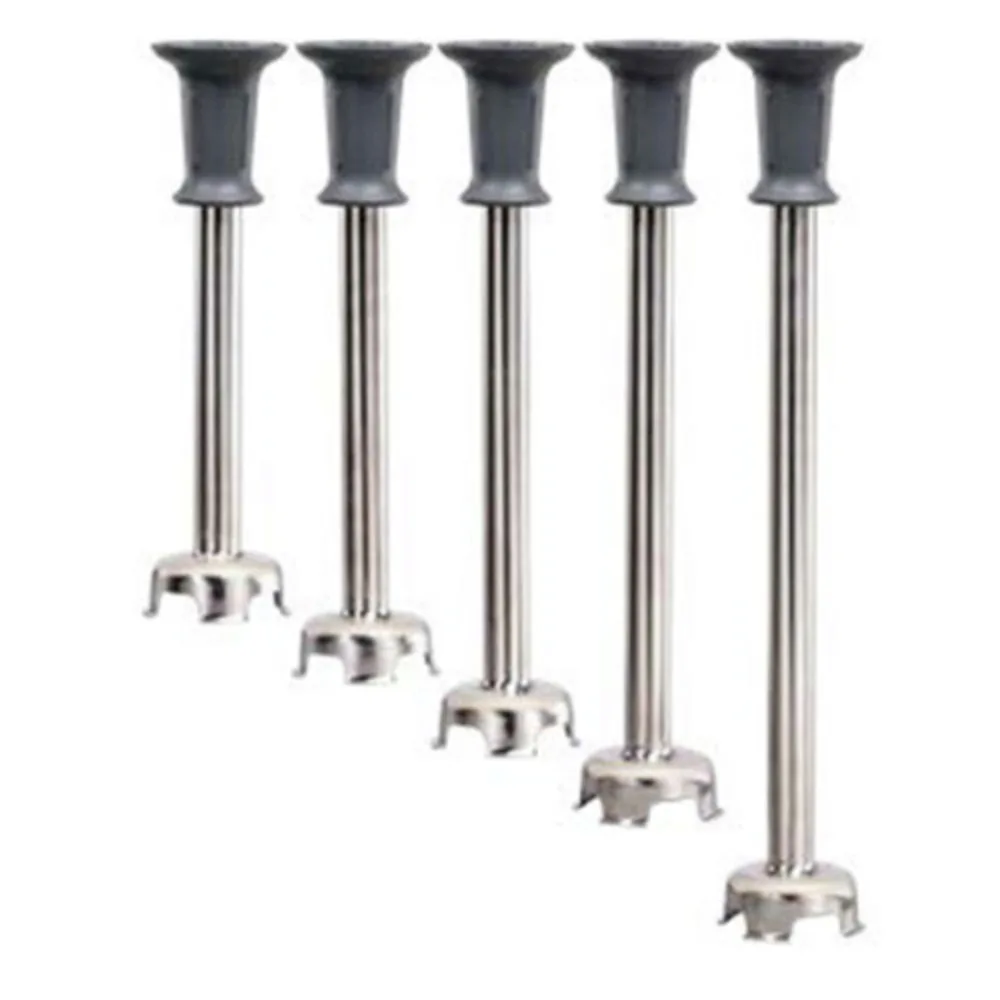
Image source: Web (Bing) / hubert.com (Web image (fair-use with source credit))
Quick Answer: Yes, They’re the Same Tool
An immersion blender and a hand blender are the same tool. The names are interchangeable. So are stick blender and burr mixer.
All refer to the same handheld blending device. You only need one.
Why Are There So Many Names? (Stick Blender, Immersion, Hand Blender)
Walk into a US kitchen store and you’ll see “immersion blender” on the box. Go to the UK and the same product is often labeled “stick blender.” In Australia, “hand blender” is the most common term. They’re all the same device, just different regional vocabulary.
The tool was patented in Switzerland back in the 1950s under the name “bur mixer.” That name described the immersion action. When it crossed borders, each market adopted its own translation. Retailers later shifted to descriptive names like “hand blender” to avoid scaring off shoppers with a European term.
Marketing played a role too. A brand might call it an “immersion blender” to sound professional and chef-approved. Another uses “hand blender” because it’s plain and self-explanatory.
Some companies advertise “stick blender” to highlight the long, wand-like shape. As of 2026, the naming pattern still hasn’t changed.
The physical tool hasn’t changed either. Neither has the way you use it. Same motor, same shaft, same blade.
Just four different labels on the shelf.
What’s Actually Inside: Anatomy of a Hand Blender
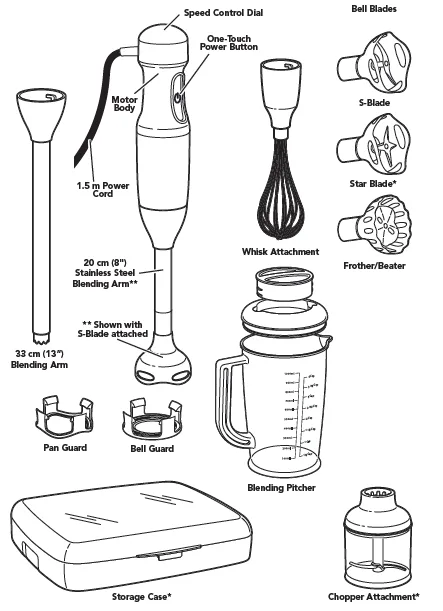
Image source: Web (Bing) / pinterest.com (Web image (fair-use with source credit))
Under the plastic or rubber grip sits the motor. That motor spins a blade at the bottom of a metal or plastic shaft. The blade hides inside a bell-shaped guard with openings.
This guard prevents splatter while still letting liquid flow around the blade. It also keeps the blade from scratching your pot or jar.
Most models share the same core anatomy. Here’s what’s inside, piece by piece.
| Component | What It Does |
|---|---|
| Motor housing | Holds the motor and speed controls. Top section you grip. |
| Blending shaft | Long tube that connects motor to blade. Usually stainless steel or plastic. |
| Bell guard | Sleeve around the blade. Prevents splatter and scratches. |
| Blade assembly | Sharp stainless steel blades that spin and chop. |
| Speed trigger / dial | Controls power. Single-speed, multi-speed, or turbo button. |
| Attachments | Whisk, chopper bowl, frother. Snap onto the motor housing. |
Motor wattage sits between 100 and 600 watts across consumer models. Entry-level units handle soft fruits and cooked vegetables. Higher wattage ratings deliver smoother results with fibrous greens and frozen berries.
The shaft material matters more than most people think. Stainless steel resists staining and odors from garlic or turmeric. Plastic shafts weigh less but scratch over time.
The bell guard is usually the same material as the shaft, so you get a consistent build quality from top to bottom.
Side-by-Side Comparison: Same Tool, Different Labels
If you search “immersion blender vs hand blender,” you’ll see forum threads and blog posts trying to create a difference. Market research and manufacturer documentation show none exists. They’re the same tool with different labels.
Let’s settle the names once and for all.
| Common Name | Used In | Other Names On The Same Box |
|---|---|---|
| Immersion blender | US, Canada | Hand blender, stick blender |
| Hand blender | US, Australia | Immersion blender, stick blender |
| Stick blender | UK, Europe | Hand blender, immersion blender |
| Burr mixer | Switzerland, Europe | Immersion blender |
The only real confusion is with the hand mixer. That’s the tool with two wire beaters that you use to whip egg whites. Some budget stores sell both, and the names sit right next to each other on the shelf.
That’s where shoppers get stuck.
If it has a single shaft ending in a blade, it’s a hand blender. If it has two detachable beaters, that’s a hand mixer. Pick the wrong device and you’ll struggle.
A hand mixer won’t puree soup. A stick blender won’t whip egg whites into stiff peaks. Knowing the distinction saves you from frustrating mistakes and wasted effort.
Immersion Blender vs. Countertop Blender vs. Food Processor
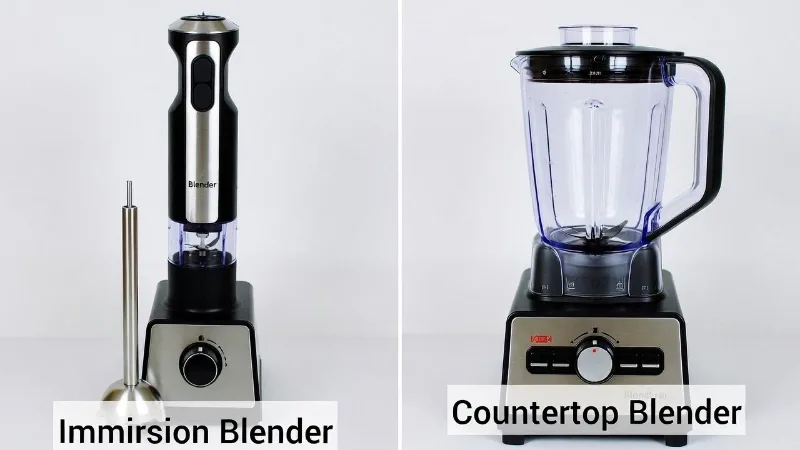
Image source: Bing (Web (fair-use with source credit))
Now that we’ve settled the names, let’s compare the tool to its bigger relatives. You’ve probably got one of these already sitting in your kitchen.
| Feature | Immersion / Hand Blender | Countertop Blender | Food Processor |
|---|---|---|---|
| Best for | Soups, sauces, smoothies in a cup | Large smoothies, frozen drinks, big batches | Chopping, shredding, dough, thick purees |
| Volume | 1 to 4 cups at a time | 4 to 8 cups or more | 4 to 12 cups |
| Cleanup | Rinse the shaft | Wash the jar and lid | Multiple bowls and blades |
| Storage space | Drawer or small cabinet | Countertop corner | Cabinet or shelf |
| Price range | $20 to $150 | $30 to $500+ | $40 to $300+ |
| Hot liquids | Safe directly in the pot | Risk of pressure build-up | Not recommended |
For everyday home cooking, the hand blender wins on convenience. It’s the tool you grab when you want a quick puree without hauling out the big machine. Blending soup in a countertop blender works but takes extra steps and carries a scalding risk.
If you’re making a single smoothie every morning, the hand blender fits right in the cup. Need to crush ice for a pitcher of margaritas? The countertop model handles that better.
And for chopping onions or shredding cheese, nothing beats the food processor.
The hand blender also handles hot liquids more safely. You blend directly in the pot, so you never need to transfer steaming soup to a separate jar. That avoids the pressure buildup that makes countertop blenders dangerous with hot ingredients.
Healthy smoothies on the go are easy too, as long as you keep the batch small.
One more angle to consider: the countertop blender produces a smoother consistency for frozen drinks and thick batters. The hand blender leaves a slightly coarser texture unless you run it longer. Aggregated user reviews report that mixers with 500 watts or more close that gap considerably.
So the real question isn’t which name to use. It’s which tool fits the job. For convenience, cleanup, and hot soup, the hand blender wins.
For big batches and heavy-duty blending, the countertop model earns its counter space.