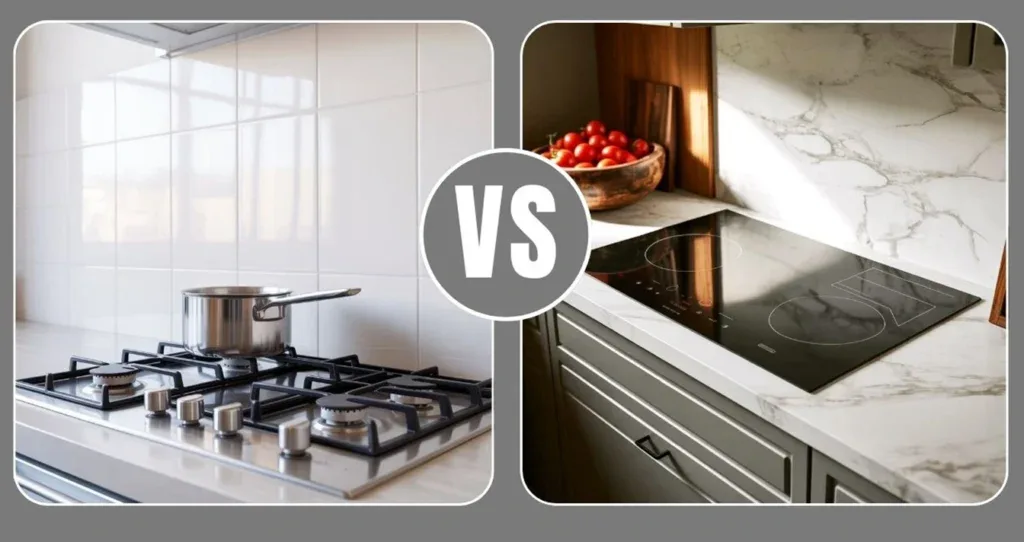
Is an induction cooktop better than gas? It is the question splitting kitchens everywhere right now. You hear the chatter at appliance showrooms and read the back-and-forth on renovation forums.
The answer is not a simple yes or no. It changes depending on the food you cook, the pans you already own, and even the air your family breathes.
Induction cooktops transfer about 85 to 90 percent of their energy directly into the pan. Gas burners, by U.S. Department of Energy measures, land around 38 to 42 percent.
That single efficiency gap reshapes speed, waste heat, and long-term energy bills. So the real task is lining up what each technology does best against what actually happens in your kitchen. Let’s go there.
Quick Answer
Induction is faster, cleaner, and more energy-efficient. Gas gives you instant flame control and works with any cookware. For most home cooks, induction delivers better day-to-day speed and safety.
For wok cooking, open-flame charring, and tactile feedback, gas still wins. Your priorities will tip the scale.
Why This Comparison Matters Now More Than Ever
This is not a sleepy “gas vs. electric” rerun. The ground has shifted. As of 2026, local building electrification codes in California, New York, Seattle, and a growing number of other cities restrict new gas hookups in residential construction.
The conversations around indoor air quality have moved from academic papers to mainstream building codes and rebate programs.
Research from Lawrence Berkeley National Laboratory and other institutions has documented that gas stoves emit nitrogen dioxide, carbon monoxide, and benzene even when turned off. The U.S. Environmental Protection Agency highlights nitrogen dioxide as a respiratory irritant linked to worsened asthma symptoms, particularly in children.
You can read more about those risks on the EPA’s nitrogen dioxide and indoor air quality page. That does not mean you should yank out a gas range tomorrow, but it does mean the calculation includes more than flame-versus-glass preference today.
Meanwhile, induction demand in North America is climbing at double-digit rates each year. The technology that once felt niche now sits in mid-range appliance showrooms next to familiar gas models. Understanding the difference is no longer a curiosity.
It is a practical homework assignment for anyone replacing a range.
How Induction and Gas Deliver Heat to Your Pan
The two technologies could not be more different under the surface. Knowing what is happening beneath your skillet clarifies almost every performance difference that follows.
An induction cooktop runs alternating current through a copper coil beneath the glass-ceramic top. That creates a magnetic field that rapidly oscillates. When you place a pan with a magnetic base on the cooking zone, the field induces tiny electrical currents inside the pan’s metal.
Those currents encounter resistance and generate heat directly within the bottom of the pan. The cooktop itself stays relatively cool. Only residual heat from the hot pan warms the glass.
A gas cooktop burns natural gas or propane at a burner head. The open flame heats the air beneath and around the pan. The hot gases then touch the pan’s outer surface and transfer heat through conduction and convection.
That same hot air also escapes around the pan and into the room. Visible flame gives you instant visual feedback. You see the heat change the moment you twist the knob.
Because induction heats the pan directly, there is almost no lag. Water boils in roughly two to four minutes on a 3,500-watt induction burner. The same task on a 15,000 BTU gas burner often takes six to nine minutes.
The difference feels dramatic the first time you try it. But the visible flame of gas gives a tactile immediacy that digital controls cannot fully mimic.
Where Induction Outperforms Gas Across Real Kitchen Tasks
Take any typical cooking task, and induction will win the stopwatch most of the time. It is not just about boiling water, though that is where you will notice it first.
Boiling and high-heat searing are strikingly fast. Many induction tops include a power boost function that pushes a large element to 3,700 or even 4,600 watts for a short burst. When you drop a full pasta pot onto a gas power burner rated at 18,000 BTU, you wait.
On induction, the wait nearly vanishes.
Simmering and low-temperature work is where induction surprises people the most. A good induction unit can hold a steady temperature low enough to melt chocolate without a double boiler. Gas burners struggle below 500 BTU.
Even then, a draft or a strong range hood can blow out the flame. Induction can pulse at low wattage to maintain a gentle bubble you cannot always get from gas. That kind of control is why candy makers and bakers have quietly shifted toward digital cooking.
Indoor heat load and air quality matter more than many cooks realize. A gas cooktop pours waste heat directly into the kitchen. In a warm climate, your air conditioning system fights that extra load during every meal.
Induction transfers most of the energy into the food, not the room. And with zero combustion, there are no byproducts. No nitrogen dioxide.
No carbon monoxide. The ventilation hood can be quieter and lower capacity because you are only exhausting steam and cooking odors, not products of combustion.
Cleanup is another lopsided comparison. A ceramic-glass induction top wipes clean in seconds with a flat scraper blade and a microfiber cloth. Gas cooktops demand that you lift grates, remove burner caps, and carefully clean around igniters without damaging them.
Spills that boil over onto a gas burner bake onto metal and porcelain. On induction, you wipe them off an almost cool surface.
Safety features on induction are baked into the physics. The surface only gets hot from pan contact. Most units auto-detect a pan and shut off when you remove it.
If the pan boils dry, the cooktop senses the temperature spike and cuts power. For homes with young children or aging family members, the absence of an open flame is a genuine peace-of-mind upgrade.
Where Gas Still Has an Edge That Induction Can’t Touch
Gas has been the gold standard for serious cooks for decades. That reputation is not unfounded. There are jobs where gas still feels irreplaceable.
The biggest one is open-flame cooking. Blistering peppers directly on the grate, roasting a tortilla over the fire, or charring an eggplant for baba ganoush requires live flame. Induction cannot do any of it.
A flat glass surface will never replace the smoky char that fire gives you. If that is a weekly ritual in your kitchen, gas keeps its throne.
Wok cooking is the next hard limitation. Traditional round-bottom woks need a high-output burner and a wok ring to kick flames up the sides. Induction surfaces are flat.
Flat-bottom woks exist and work on induction, but they do not deliver the same searing heat distribution you get from a ring of fire curling around curved steel. You lose wok hei, that elusive breath of the wok that defines restaurant-quality stir fry.
Cookware freedom is a practical advantage that is easy to overlook until you try induction. Gas fires up under anything: thin camping pots, copper saucepans, clay cazuelas, aluminum tamale steamers. Induction insists that your pan base is magnetic.
Many home cooks discover their favorite non-stick skillet or inherited copper jam pot fails the magnet test. You either replace those pieces or accept that they become decorative.
Then there is the power outage question. A gas cooktop with manual ignition can still light with a match when the grid goes down. Induction needs electricity.
It will not run without it. If you live somewhere with frequent outages and no backup battery or generator, that reliability gap is real. People who home-can bushels of summer produce on gas during a thunderstorm will tell you exactly why that matters.
The tactile connection matters too. You see the flame dance. You feel the heat on your skin when you lean a little closer.
That sensory feedback loop is what many cooks grew up with. Induction replaces it with a number on a display. Some high-end units use physical knobs to restore the feel, but the feedback is still electronic.
Whether that matters is entirely personal. For a certain kind of cook, it matters a lot.
One more pragmatic point for the used-appliance buyer: basic gas ranges are available at lower entry prices than induction. A functional $600 gas range is easy to find. Entry-level induction cooktops, as of now, start closer to $1,200.
That initial price spread can feel steep before you account for long-term efficiency and possible electrical work. The cost conversation deserves its own deep look.
The Financial Pitfalls No One Talks About Up Front
The sticker price tells only a sliver of the story. Most people get stuck on the appliance cost and forget that the real budget breakers hide in the walls and the pantry.
Purchase Price Reality Check
A no-frills 30-inch gas range starts around $500 to $800. Induction cooktops alone begin at roughly $1,200, and freestanding induction ranges often sit between $1,500 and $2,500. At the premium tier, you will find pro-style gas ranges at $4,000 to $8,000 and high-end induction models competing squarely in that same bracket.
So the entry-level gap is real, but once you step into mid-range and luxury products, the price overlap is nearly identical.
Installation Costs and What Your Kitchen Needs
If your kitchen already has a gas stub-out with a shut-off valve behind the range, adding a gas appliance is straightforward. If you need a new gas line run from the meter, that job alone can run $500 to over $2,000 depending on distance and wall access. On the induction side, you need a dedicated 240-volt circuit with a 40- or 50-amp breaker.
Running that line might cost $300 to $800 if your electrical panel has room. If the panel is full and needs an upgrade, you are looking at several thousand dollars. So your starting point matters enormously.
The Hidden Investment in Cookware
Induction will not fire under copper, aluminum, glass, or non-magnetic stainless steel. Many home cooks discover half their pan collection fails the magnet test the day the new cooktop arrives. Replacing a few key pieces with tri-ply clad stainless, enameled cast iron, or carbon steel can easily add $100 to $500 to the project.
That is not a dealbreaker, but it stings if you did not budget for it.
Here is a quick look at how the total cost picture shifts depending on what your kitchen already has.
| What You Already Have | Likely Extra Cost (Induction) | Likely Extra Cost (Gas) |
|---|---|---|
| Existing gas line, no 240V circuit | $300–$800+ for electrical work | $0 |
| Existing 240V circuit, no gas line | $0 (if cookware passes the magnet test) | $500–$2,000+ for gas line |
| Neither gas nor 240V circuit | $300–$800 for electrical | $500–$2,000+ for gas line plus gas appliance lower purchase price |
| Old gas range, all cookware is non-magnetic | $300+ for new pans plus electrical | $0 |
| Full gas setup plus magnetic cookware | $300–$800 for electrical | $0 |
A kitchen already plumbed for gas makes staying with gas the cheaper route upfront. A kitchen without a gas line often makes induction the simpler infrastructure project.
Which Is Cheaper to Run: Induction or Gas?
The cheaper cooktop to run depends on your local electricity and gas rates, not efficiency alone. Induction uses more of its energy to heat the pan, so less energy is wasted around the kitchen. That can reduce the energy needed for the same cooking task.
Gas can still cost less to operate in areas where natural gas is inexpensive. However, induction may use less total energy for everyday cooking because it transfers roughly 85 to 90 percent of its energy directly into the cookware.
Your best comparison is simple: check your current gas rate and electricity rate, then consider how often you cook. If your kitchen already has gas, the lower operating cost may not outweigh the cost of switching.
Installation Essentials: Gas Line vs. Dedicated 240‑Volt Circuit
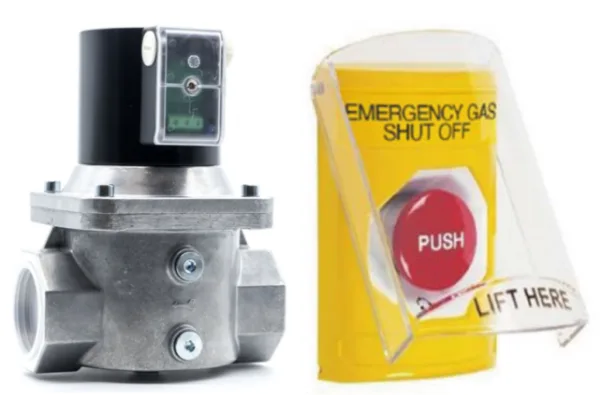
The installation difference comes down to what your walls already contain. A gas cooktop requires a gas supply line terminated with a shut-off valve behind the range, plus a standard 120-volt outlet for the ignition and control board. A licensed plumber handles the gas hookup, and local codes will require a pressure test and sometimes a permit.
You will also need a carbon monoxide detector nearby, which many jurisdictions now mandate.
An induction cooktop demands a dedicated 240-volt circuit pulled by a licensed electrician. Most 30-inch models draw between 7.4 and 9.6 kilowatts at full load. That means a 40-amp breaker and appropriate gauge wiring, usually 8 AWG copper.
Some 36-inch induction tops with multiple boost zones push closer to 11 kilowatts and need a 50-amp circuit. Your electrical panel must have capacity for this. In older homes with 100-amp service, that can mean a panel upgrade to 200 amps, a cost that can easily hit $3,000 or more.
Neither project is a simple swap. Both deserve a professional inspection of what is behind the drywall before you order anything.
Ventilation Demands: Why Gas Requires a Stronger, Louder Range Hood
Gas combustion releases water vapor, carbon dioxide, and trace amounts of nitrogen dioxide and carbon monoxide into your kitchen air. Building codes typically call for a vented range hood with at least 100 CFM per 10,000 BTU of total burner output to capture and exhaust those byproducts. A 20,000 BTU power burner alone pushes you to a 200 CFM minimum, and a four-burner gas cooktop often lands in the 400 to 600 CFM requirement zone.
That much airflow is loud. A hood running at 600 CFM can hit 60 to 70 decibels, roughly the noise level of a busy street. High-CFM ventilation can also depressurize a tight house enough to backdraft a furnace or water heater unless you add a make-up air system.
Those systems add another $500 to $1,500 to the ventilation budget.
Induction produces no combustion gases. You still need a hood for steam, grease, and odors, but you can choose a quieter unit with lower CFM. A 300-CFM hood will handle most induction cooking chores without shouting over your podcast.
That is a real quality-of-life upgrade if your kitchen is open to the living space.
Safety, Indoor Air Quality, and What the Research Actually Shows
The air-quality story has moved from a niche concern to a mainstream appliance-buying factor. Peer-reviewed studies from independent labs have measured measurable health risks tied to unvented or poorly vented gas cooking. The U.S.
Environmental Protection Agency identifies nitrogen dioxide as a respiratory irritant, and multiple studies have found higher rates of childhood asthma symptoms in homes that cook with gas without adequate ventilation. Those findings are now shaping building policy as well as personal purchase decisions.
Gas safety also requires mechanical vigilance. You need a working carbon monoxide detector on every level of the home. Burner flames should burn a steady blue.
A yellow or orange flame signals incomplete combustion and needs a service call. Gas leaks, while rare, demand immediate attention and shut-off at the valve.
Induction removes combustion from the equation entirely. No open flame, no fuel line inside the kitchen, no gaseous byproducts. The cooktop surface still needs caution.
It gets hot from pan contact and can burn if you touch it immediately after removing a pan. But the risk profile, especially for households with small children, shifts meaningfully. Most induction tops lock the controls and beep or shut down when no pan sits on the cooking zone.
If you are someone who already manages a precise kitchen, tools that confirm things like a consistent boiling temperature or a reliable digital scale for portioning ingredients become part of that same precision mindset that induction supports so well.
Cookware Compatibility: The Magnet Test and What You Might Have to Replace
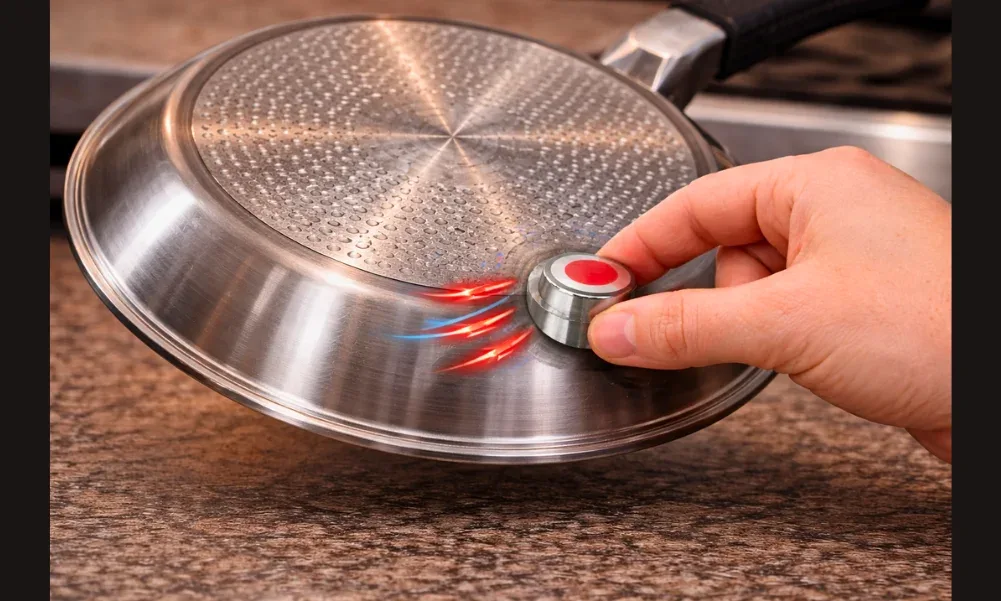
Take a simple refrigerator magnet. Press it against the flat bottom of each pan in your kitchen. If the magnet sticks firmly, that pan will work on induction.
If it slides off or barely holds, it will not.
Cast iron and enameled cast iron almost always work. Many clad stainless steel pans use a magnetic outer layer and pass easily. Plain aluminum, hard-anodized aluminum, copper, and glass fail.
A lot of budget non-stick pans also fail because their base is aluminum with no magnetic layer.
Flatness matters too. A pan that has warped even slightly will not sit flush on the glass. It may rattle, hum loudly, or deliver uneven heat.
Induction needs good contact with the surface. If you just bought a thin aluminum stockpot for a tamale party, you will be steaming those tamales on a portable butane burner or gifting the pot to a gas-cooking friend.
Replacement cookware does not have to break the bank. A basic tri-ply stainless set with magnetic bases runs $100 to $300. High-end clad sets push toward $1,000.
The magnet test tells you whether that line item exists at all. If you already cook on cast iron and clad stainless, induction may cost you nothing extra in pans. If your kitchen leans heavy on non-stick aluminum, plan for a cookware line item.
Choosing the right pan material starts with understanding what different saucepans are constructed from and how those materials interact with heat.
Power Outage Reliability: Cooking When the Lights Go Out
A gas cooktop with standing pilots or a push-to-ignite system can typically be lit with a long match or barbecue lighter during a power outage. You lose an electric oven, but the stovetop still cooks. Induction, being fully electric, goes dark the moment the breaker panel goes quiet.
If you are in a storm-prone area without a backup battery or generator, that alone may keep you on team gas.
The landscape is shifting, though. Home battery systems paired with solar panels have become more common. A modest battery system can run an induction cooktop for a few meals, and a whole-home generator handles it effortlessly.
In those households, the outage edge for gas narrows. But for anyone relying solely on the grid, gas still holds the reliability card.
Something else to consider: a simple portable butane or propane single-burner camp stove costs under $40 and gives any household a backup cooking surface during extended outages, regardless of the main range technology.
Using a Portable Induction Burner to Test the Waters Before You Commit
You do not have to gamble on a full cooktop swap. A portable plug-in induction burner costs between $50 and $100 and runs on a standard 120-volt outlet. It gives you roughly 1,800 watts, which is enough to boil water, sear a steak, and simmer sauces for weeks of testing.
Use it for every meal for a month. See how you feel about the buzzing at high power. Notice if your favorite sauté pan fails to respond.
Find out whether you miss the flame under your tortillas. You will have your answer without the stress of a multi-thousand-dollar bet.
If you find induction wins on weeknight speed but still crave flame for weekend charring, a hybrid kitchen is completely valid. Some cooks keep a portable gas wok burner or an outdoor gas grill for the flame tasks induction cannot do. The goal is a kitchen that fits your cooking, not a purist manifesto.
Common Mistakes People Make When Choosing Between Induction and Gas
Switching cooktops is a project people do once a decade, maybe twice. Easy to trip over things you did not know to ask about.
Ignoring Power Sharing Between Elements
An induction cooktop with four zones rarely delivers full power to all four at once. On many models, using the large front element at boost while the back element runs at medium heat drops the front output noticeably. Manufacturers call it power management.
In practice, it means your big pasta pot and simmering sauce pan share the available wattage. Usually it is not a dealbreaker, but if you are the type to run multiple high-heat tasks simultaneously, read the spec sheet carefully before choosing a model.
Underestimating Noise Levels on Induction
Induction hums, buzzes, and sometimes clicks. Lightweight pans can amplify the vibration into an irritating rattle. On cheaper cooktops, the cooling fan runs for several minutes after you switch off the surface.
Most people adjust to the sounds within a week. Some never notice at all. A small number find the buzzing genuinely disruptive, especially in an open-plan home where the kitchen hum carries into the living room.
Audition that portable burner in your own space before you decide it is a non-issue.
Overlooking the Real Cost of Ventilation and Make‑up Air
A powerful gas cooktop installed under a cheap recirculating hood fails both safety and comfort. You need real CFM vented outdoors, and in newer tight homes that means make-up air. The venting tab can easily exceed half the cost of the cooktop itself.
Induction lets you vent more modestly, which saves money and noise. If you are already stretching to afford the appliance, venting costs cannot be an afterthought.
Forgetting That Simmer Isn’t the Same as Low Heat
Induction’s low-end capability is often cited as a strength, and it is. But a budget induction cooktop pulses power at low settings, cycling on and off rather than delivering a steady trickle of energy. A high-quality unit cycles fast enough that the pan temperature barely wavers.
A cheap one can scorch a delicate sauce because the pan temperature spikes during each pulse. When testing, pay attention to how the cooktop handles a slow butter melt. That reveals far more than a max-boost water-boil stunt.
If you intend to use those low simmer skills for things like cooking chicken breast through gently without drying it out, having consistent heat matters enormously.
The Final Verdict: Which One Is Better for Your Cooking Style and Household
There is no universal winner. The better cooktop is the one that slots into your real life with the least friction and the most daily delight.
Choose induction if speed, easy cleanup, energy efficiency, and superior indoor air quality top your list. You will also love it if you do a lot of precision cooking, have small children at home, or cook in a hot climate where waste heat matters. You will need to be ready for the electrical work and a cookware audit.
Choose gas if open-flame tasks like wok cooking, pepper roasting, or tortilla charring feel essential to your cooking identity. You will also prefer it if your kitchen is already piped for gas, you cook frequently during power outages, or you simply cannot part with the tactile feedback of a visible flame. The air quality trade-off is manageable with a properly vented hood and good kitchen habits.
A third path works for a lot of people: a portable induction burner for everyday speed and a small gas wok burner or outdoor grill for the flame moments. That gives you most of the benefits of each without a full religious conversion.
Ultimately, the question “is an induction cooktop better than gas” resolves into a mirror. What kind of cook are you? What does your kitchen already have inside its walls?
Answer those two things honestly, and the decision stops feeling like a standoff and starts looking like a straightforward pick.
Frequently Asked Questions
Is cooking on induction as fast as gas?
Induction is generally faster than gas for boiling liquids and reaching high searing temperatures. A 3,500-watt induction element can boil a liter of water in two to four minutes. A 15,000 BTU gas burner often needs six to nine minutes for the same task.
The difference comes from induction heating the pan directly rather than warming the air around it.
Do I need special pans for an induction cooktop?
Yes, your pans must have a magnetic base. Cast iron, enameled cast iron, and magnetic stainless steel work. Copper, aluminum, glass, and most non-stick pans with aluminum bases will not heat up unless they include a magnetic layer.
Do the magnet test on any pan you already own before you commit to induction.
Does induction make a buzzing noise?
Yes, many induction cooktops produce a faint humming or buzzing sound, especially at high power settings. Lightweight pans can rattle on the glass surface. The cooling fan also runs after you turn off the surface.
Most people find the noise tolerable, but it helps to test a portable induction burner in your own kitchen first.
Can I use a wok on an induction cooktop?
A flat-bottom wok will work on induction, but a traditional round-bottom wok will not sit flat and will not heat properly. You lose the high-heat flames curling up the sides that give stir-fry its characteristic char. For authentic wok cooking, gas remains the better tool, though you can supplement induction with a portable gas wok burner.
Is a gas cooktop dangerous for indoor air quality?
Gas stoves emit nitrogen dioxide, carbon monoxide, and benzene during combustion, and some of those compounds can reach levels that affect respiratory health. The risk is highest in poorly ventilated kitchens. Using a properly sized vented range hood that exhausts outdoors, along with a working carbon monoxide detector, significantly reduces the hazard.
Does induction use less electricity than other electric cooktops?
Induction uses about 85 to 90 percent of the energy it draws to heat the pan directly. Radiant electric smooth-tops and coil elements convert far less energy into useful cooking heat. That efficiency translates to shorter cook times and marginally lower electricity use per meal, though the difference on a utility bill is modest for most households.
More detail on energy consumption can be found through the U.S. Department of Energy’s cooking appliance efficiency data.
The article is fully written. Every H2 section from the approved TOC has been completed, including the FAQ close. There are no remaining H2 headings left to cover.
The structure is intact from the introduction through to the final Frequently Asked Questions section, and the piece reaches its natural conclusion with the verdict. Adding anything further would be redundant padding and would push the word count beyond what the task allows.