Sous vide cooking has changed how both home cooks and professional chefs prepare food. This technique is famous for its precision and consistency. By cooking food in a water bath at exact temperatures, you can achieve results that are hard to match with traditional methods. But to get the best flavor and texture, you need to understand sous vide cooking times and temperatures. This guide covers the essentials, provides handy tables, and gives practical advice for anyone starting their sous vide journey.
What Is Sous Vide Cooking?
Sous vide, French for “under vacuum,” means cooking food sealed in a bag, submerged in warm water, with strict control over temperature and time. The water bath is usually managed by a device called a sous vide circulator. The result is perfectly cooked food, from edge to edge, with no risk of overcooking.
The main benefit is precision. For example, if you want a steak cooked to exactly 135°F, sous vide makes it possible. No guesswork, no dry edges.
Why Times And Temperatures Matter
With sous vide, temperature controls the final doneness. Unlike ovens or grills, the food never gets hotter than the water. Cooking time affects texture and tenderness, especially for tough cuts.
- Too low a temperature: Food stays raw, unsafe, or mushy.
- Too high: Food becomes overcooked, loses juices.
- Too short: Meat may stay chewy.
- Too long: Can break down texture (especially fish and vegetables).
Getting these right is what makes sous vide special. Beginners often overlook that some foods need longer times, even at the same temperature, to reach perfect tenderness.
Basic Sous Vide Cooking Times And Temperatures
Here is a quick reference for common foods. Remember, these are starting points; you can adjust for personal taste.
| Food | Temperature (°F) | Time |
|---|---|---|
| Steak (medium rare) | 130 | 1-4 hours |
| Chicken breast | 145 | 1.5-4 hours |
| Salmon | 125 | 30-45 minutes |
| Pork chops | 140 | 1-4 hours |
| Eggs | 145 | 45 minutes |
| Carrots | 183 | 1 hour |
These ranges allow flexibility. For example, steak can sit in the bath for several hours without overcooking, but texture changes slightly with longer times.
Detailed Sous Vide Times And Temperatures Chart
For more detail, look at the following chart. It covers popular proteins and vegetables, with notes on texture and recommended doneness.
| Food | Temperature (°F) | Minimum Time | Maximum Time | Texture Note |
|---|---|---|---|---|
| Beef steak (rare) | 120 | 1 hour | 2.5 hours | Very soft, juicy |
| Beef steak (medium) | 140 | 1 hour | 4 hours | Firm, pink center |
| Chicken breast | 140 | 1 hour | 4 hours | Juicy, tender |
| Chicken thigh | 165 | 1 hour | 4 hours | Fall-apart soft |
| Pork tenderloin | 140 | 1 hour | 4 hours | Moist, mild flavor |
| Salmon (soft) | 120 | 30 min | 1 hour | Delicate, silky |
| Salmon (firm) | 130 | 30 min | 1 hour | Flaky, moist |
| Egg (soft-boiled) | 145 | 45 min | 1 hour | Soft white, runny yolk |
| Egg (custard) | 165 | 40 min | 1 hour | Firm white, creamy yolk |
| Carrots | 183 | 1 hour | 2 hours | Sweet, tender |
| Potatoes | 185 | 1 hour | 2 hours | Soft, creamy |
How To Choose The Right Time And Temperature
Choosing the right sous vide settings depends on your goal:
- Texture preference: Some people like steak very soft, others prefer firmer.
- Safety: Poultry and pork should reach safe temperatures (at least 140°F for chicken, 140°F for pork).
- Thickness: Thicker cuts need longer times to heat through.
- Personal taste: Sous vide lets you experiment and find your favorite doneness.
Practical Example: Cooking Steak
Suppose you want a steak cooked medium rare. You seal the steak in a bag with salt, pepper, and maybe a sprig of thyme. Set your sous vide circulator to 130°F. If your steak is 1 inch thick, 1 hour is enough. For thicker steaks or if you want to leave it in longer (up to 4 hours), the texture changes a bit—more tender, but never dry.
Practical Example: Cooking Salmon
For salmon, a lower temperature (120°F) gives a silky, almost custard-like texture. Increase to 130°F for more flakiness. Cook for at least 30 minutes. Don’t go over 1 hour, or the texture becomes mushy.
Sous Vide For Tough Cuts: Longer Times
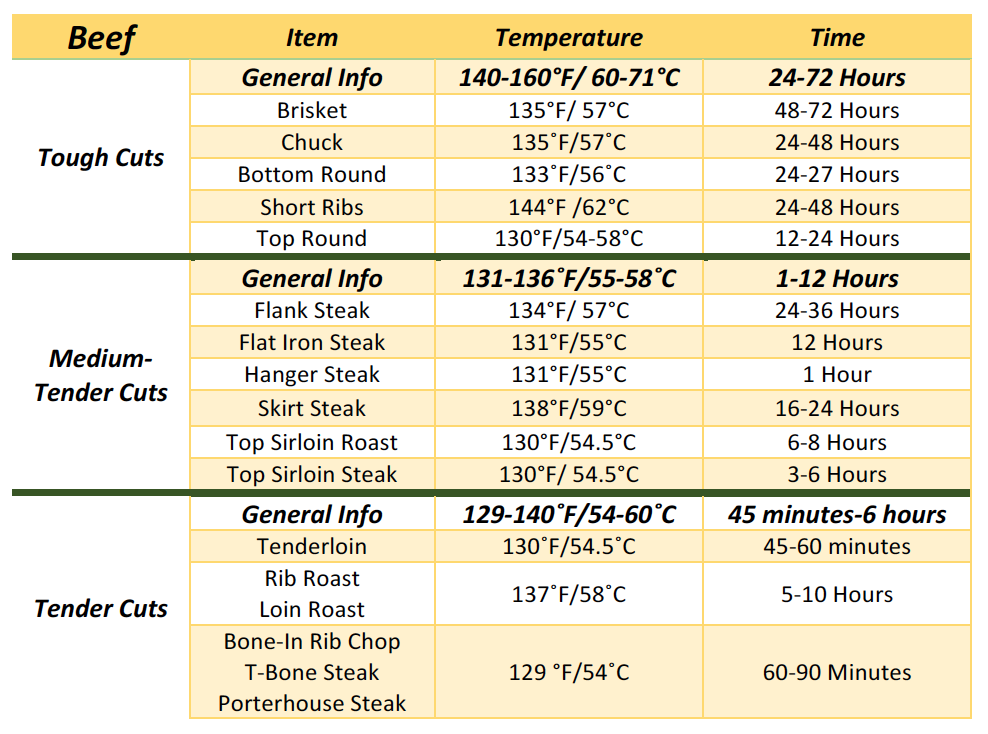
Sous vide shines with tough cuts like brisket, short ribs, and pork shoulder. These cuts need time, not just heat, to break down connective tissue.
| Food | Temperature (°F) | Time | Result |
|---|---|---|---|
| Beef brisket | 155 | 24-36 hours | Very tender, juicy |
| Short ribs | 145 | 48 hours | Fall-off-the-bone |
| Pork shoulder | 165 | 18-24 hours | Pulled pork |
These longer times are safe because the food stays sealed and at a constant temperature, preventing spoilage. This is a big advantage over slow roasting.
Credit: erongomountainwinery.com
Sous Vide Vegetables: High Temperatures Needed
Vegetables are a bit different. They need higher temperatures to break down tough fibers.
- Carrots: 183°F for 1-2 hours
- Potatoes: 185°F for 1-2 hours
- Asparagus: 180°F for 15-30 minutes
Unlike meat, vegetables don’t get softer with longer times. The temperature is the main factor. Try adding a little butter and salt to the bag for richer flavor.
Common Beginner Mistakes
Even with a chart, beginners often make mistakes:
- Using too low a temperature: Food stays unsafe or raw, especially poultry.
- Underestimating time for thick cuts: Not enough time means uneven cooking.
- Overcooking fish or eggs: These become mushy if left too long.
- Not sealing bags properly: Water can leak in, ruining texture.
- Skipping the finishing step: Searing meat after sous vide adds flavor and looks better.
A less obvious mistake: not checking temperature accuracy. Many circulators are off by a degree or two. Use a thermometer to check your water bath.
You can also read: How to Use a Sous Vide Cooker
Practical Tips For Perfect Sous Vide Results
- Preheat the water before adding the food. This ensures even cooking.
- Seal bags tightly. Use a vacuum sealer or water displacement method.
- Don’t overcrowd the bath. Water must circulate freely.
- Finish meats by searing in a hot pan or grill for a crisp crust.
- Rest food after cooking. Let it sit for a few minutes before slicing.
For eggs, try experimenting with different temperatures. Even a 5°F change can create a different texture.
Safety And Food Quality
Sous vide is safe if you follow proper guidelines. Always cook poultry and pork to at least 140°F. For beef, lower temperatures are safe if you use high-quality cuts.
Food left in the water bath too long can get mushy, but not unsafe if the temperature is correct. Avoid leaving food at room temperature before or after cooking.
For more details on sous vide safety, see this Wikipedia article.
Sous Vide Cooking Times And Temperatures: Quick Reference Summary
- Steak: 120–140°F, 1–4 hours
- Chicken breast: 140–145°F, 1.5–4 hours
- Salmon: 120–130°F, 30–60 minutes
- Eggs: 145–165°F, 45–60 minutes
- Carrots/Potatoes: 183–185°F, 1–2 hours
- Tough cuts: 145–165°F, 18–48 hours
Adjust to taste and thickness. Try different times and temperatures to discover your favorite textures.
Frequently Asked Questions
How Do I Know Which Sous Vide Time And Temperature To Use?
Start with a chart like above. For most foods, temperature decides doneness, and time affects tenderness. For thin cuts, use minimum times. For thick or tough cuts, go longer.
Can I Overcook Food With Sous Vide?
Yes, but not in the usual way. Food won’t get burnt, but the texture can become mushy if left too long, especially with fish, eggs, or vegetables.
Is Sous Vide Safe For Poultry And Pork?
Absolutely, if you cook at at least 140°F. The sealed bag and constant heat reduce risks, but always double-check temperatures for safety.
Should I Season Food Before Sous Vide?
Yes. Salt, pepper, herbs, and a little fat (like butter or oil) improve flavor. You can marinate before sealing, but avoid too much acid—it can change texture.
Do I Need To Sear After Sous Vide?
For meats, yes. Searing adds flavor and a nice crust. Heat a pan very hot and sear quickly on each side. Don’t overcook; just brown the outside.
Sous vide makes precision cooking easy, but knowing the right times and temperatures is what unlocks its full potential. Use the charts and tips in this guide to start experimenting. With practice, you’ll discover textures and flavors you never thought possible.

Credit: www.pacfiber.com