Skip to content
Finding the right refrigerator is not as simple as picking the first one you see. The size of your refrigerator impacts your kitchen space, how much food you can store, and even your energy bills. Many shoppers feel confused by all the numbers and terms: cubic feet, width, depth, height. If you’ve ever wondered what the common refrigerator sizes are—and which one is best for your home—you’re not alone.
This guide will help you understand the main refrigerator sizes on the market today. You’ll learn how to measure your space, compare different styles, and spot mistakes that beginners often make. By the end, you’ll know how to choose a refrigerator that fits your kitchen and your family’s needs.
Why Refrigerator Size Matters
Buying the right refrigerator size is more important than most people realize. If your fridge is too small, you might run out of space for leftovers or groceries. Too big, and you waste energy and pay more than necessary. Also, a refrigerator that doesn’t fit your kitchen can block doors, stick out, or make your kitchen feel crowded.
Key reasons to get the right size:
- Storage capacity: Enough room for food and drinks.
- Kitchen fit: Matches your available space.
- Energy efficiency: Avoids wasting electricity.
- Family needs: Fits your household’s eating habits.
A surprising insight: Many buyers focus only on width, but depth is often more important in small kitchens. If your fridge is too deep, it may block walkways or stick out past counters.
Common Refrigerator Sizes Explained
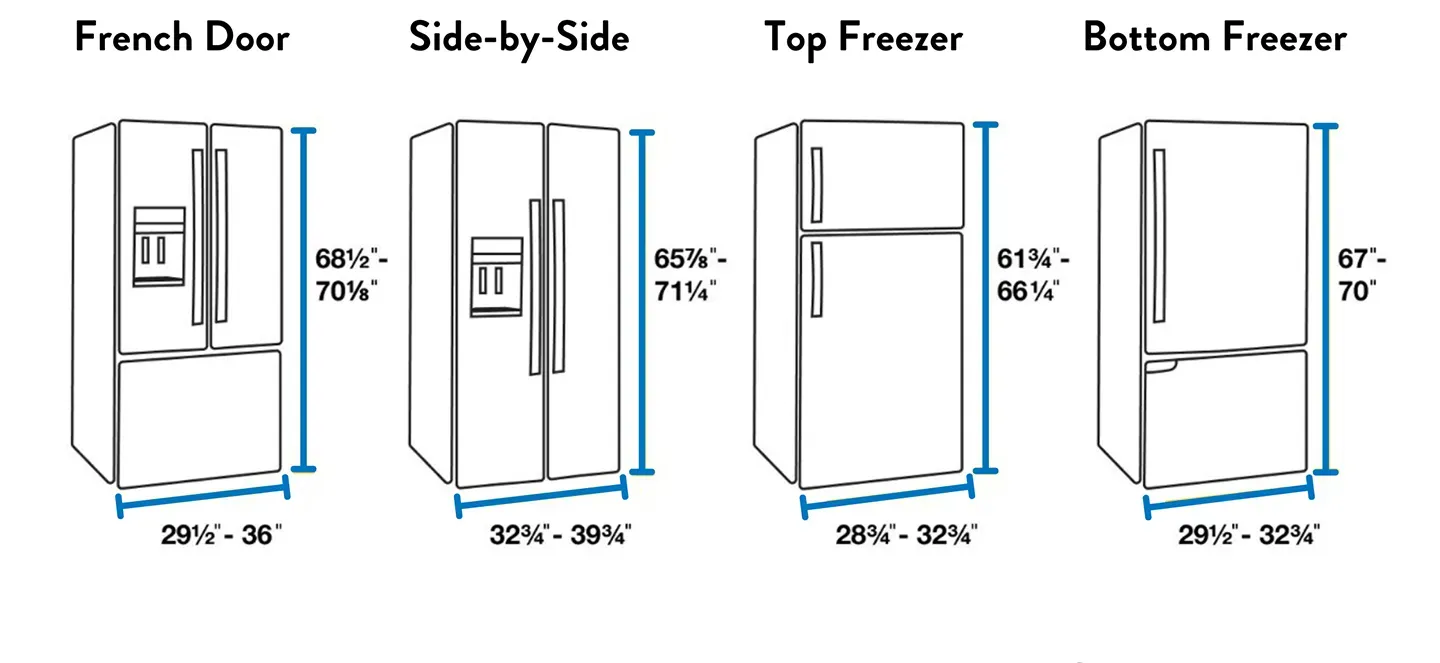
Manufacturers measure refrigerators in cubic feet for storage, and in inches for width, depth, and height. Here are the most popular sizes found in homes and stores.
Standard Refrigerator Dimensions
Most household refrigerators fall into these ranges:
- Width: 24–36 inches
- Depth: 28–34 inches
- Height: 60–70 inches
- Capacity: 10–28 cubic feet
But these numbers vary by style. Let’s look at the four main types.
Top-freezer Refrigerators
This classic style has the freezer on top and the fridge below. It’s common in apartments and older homes.
Typical size ranges:
- Width: 28–32 inches
- Height: 60–66 inches
- Depth: 28–34 inches
- Capacity: 10–21 cubic feet
Example: A popular top-freezer model is 30 inches wide, 66 inches tall, and 31 inches deep. It holds about 18 cubic feet.
Bottom-freezer Refrigerators
Here, the freezer is below and the fridge section is above. This style is easier to access for fresh food.
Typical size ranges:
- Width: 29–33 inches
- Height: 67–70 inches
- Depth: 29–33 inches
- Capacity: 12–25 cubic feet
Side-by-side Refrigerators
These have the freezer on one side and the fridge on the other, running vertically.
Typical size ranges:
- Width: 32–36 inches
- Height: 65–71 inches
- Depth: 30–34 inches
- Capacity: 15–28 cubic feet
Non-obvious tip: Side-by-side models offer narrow freezer shelves. If you store frozen pizzas or large items, check shelf width before buying.
French Door Refrigerators
This modern style has two doors for the fridge and a freezer drawer below.
Typical size ranges:
- Width: 33–36 inches
- Height: 68–70 inches
- Depth: 30–34 inches
- Capacity: 20–28 cubic feet
French door models are popular in large kitchens because they look stylish and are easy to organize.
Compact And Mini Refrigerators
These smaller fridges are used in dorm rooms, offices, or for extra storage.
Typical size ranges:
- Width: 18–24 inches
- Height: 24–34 inches
- Depth: 17–27 inches
- Capacity: 1.7–4.5 cubic feet
Comparing Refrigerator Sizes
Here’s a side-by-side comparison of the main refrigerator types and their typical size ranges.
| Type | Width (inches) | Height (inches) | Depth (inches) | Capacity (cu. ft.) |
|---|---|---|---|---|
| Top-Freezer | 28–32 | 60–66 | 28–34 | 10–21 |
| Bottom-Freezer | 29–33 | 67–70 | 29–33 | 12–25 |
| Side-by-Side | 32–36 | 65–71 | 30–34 | 15–28 |
| French Door | 33–36 | 68–70 | 30–34 | 20–28 |
| Compact/Mini | 18–24 | 24–34 | 17–27 | 1.7–4.5 |
Capacity: How Much Food Fits Inside?
Capacity is measured in cubic feet. The average American family of four needs about 18–22 cubic feet of refrigerator space. Here’s a quick guide:
- 1–2 people: 10–15 cubic feet
- 3–4 people: 16–22 cubic feet
- 5+ people: 23+ cubic feet
Insider tip: The stated capacity is for total space, including both fridge and freezer. If you store lots of frozen food, check the freezer’s size separately.
Some brands list only the fridge section’s cubic feet. Always check both numbers.
Credit: www.brothersmain.com
Depth: Standard Vs. Counter-depth
Depth is often misunderstood. Standard refrigerators are deeper than your kitchen counters. Counter-depth refrigerators are shallower, so they line up with counters and look built-in.
- Standard depth: 30–34 inches
- Counter depth: 24–27 inches
Counter-depth fridges usually hold less food (about 15–23 cubic feet) but give a cleaner look and save space.
Here’s a quick comparison:
| Type | Depth (inches) | Capacity (cu. ft.) | Fits Flush? |
|---|---|---|---|
| Standard Depth | 30–34 | 18–28 | No |
| Counter Depth | 24–27 | 15–23 | Yes |
How To Measure Your Kitchen Space
Before you buy, measure your space carefully. Many buyers skip this step and regret it later.
Steps to measure:
- Measure the width, height, and depth of your available space.
- Leave at least 1 inch of space on each side for ventilation.
- Allow extra room for doors to swing open.
- Check if there is enough space to move the refrigerator into your kitchen (doorways, hallways).
Practical tip: Don’t forget the height. If you have cabinets above the fridge, measure from the floor to the bottom of the cabinet.
Common mistake: Some people measure only the old fridge, not the space. This can lead to problems if the new model is a different shape.
Special Sizes For Unique Spaces
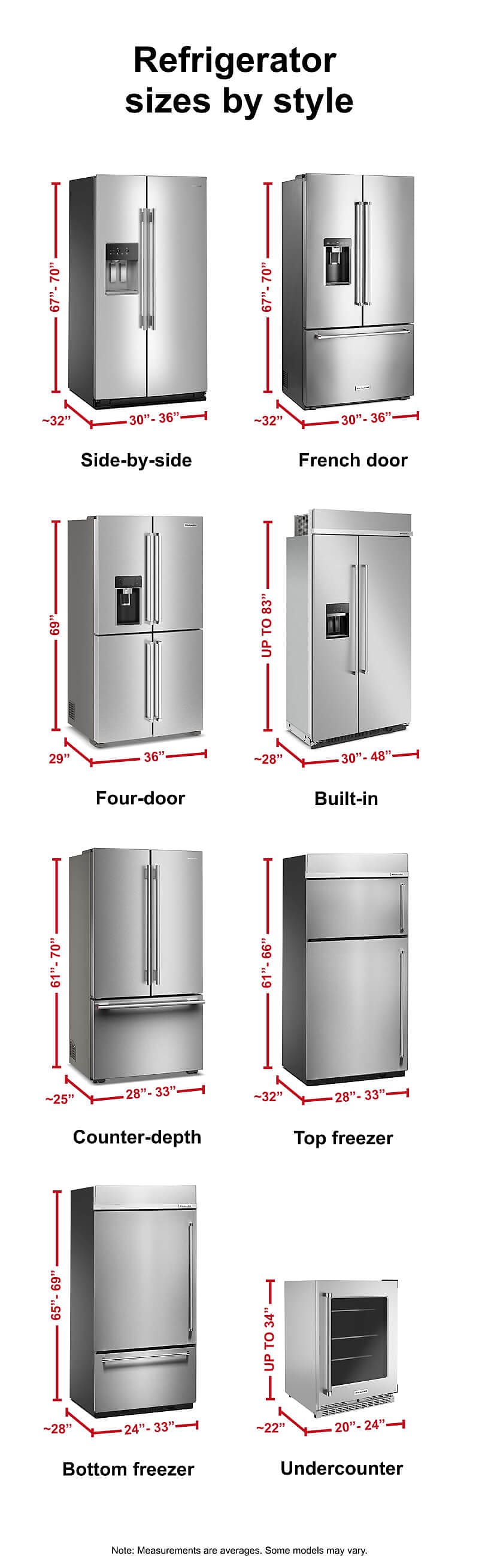
Some kitchens have unusual layouts or small spaces. Manufacturers now offer slim refrigerators (width 24–28 inches) for narrow kitchens, and extra-large models (width 36+ inches) for open floor plans.
For offices, garages, or basements, compact fridges are ideal. They range from tiny cube-shaped models to tall, narrow units.
Example: A slim fridge at 24 inches wide fits in a small apartment, while a 36-inch French door model works for large families.
Refrigerator Size And Energy Efficiency
Larger refrigerators use more electricity. According to the US Department of Energy, the average fridge uses 100–800 kWh per year, depending on size and model.
Energy tips:
- Choose the smallest size that meets your needs.
- Look for ENERGY STAR certified models—they use 10% less energy.
- Keep your fridge full (but not overcrowded) for best efficiency.
Non-obvious insight: Older fridges, even if smaller, may waste more energy than newer, larger models. Upgrading can save money in the long run.
For more information, visit the official ENERGY STAR site.
Credit: www.kitchenaid.com
Refrigerator Size Trends: What’s Popular In 2024?
Recent years have seen a shift toward counter-depth and French door refrigerators. Many families want fridges that look built-in and offer flexible storage. The average size bought in the US is now about 20 cubic feet.
Data: According to market research, over 60% of new refrigerators sold in 2024 are between 18–24 cubic feet, with widths of 30–36 inches.
Trend tip: Smart refrigerators are gaining popularity, but their size is usually similar to standard models. Features like touchscreens or cameras don’t affect the basic dimensions.
Choosing The Right Refrigerator Size For Your Home
To find the best size, ask yourself these questions:
- How many people are in your home?
- How often do you shop for groceries?
- Do you cook often or eat out?
- Do you store large items (like party trays or tall bottles)?
- Is your kitchen small, medium, or large?
Guidance: If you have a small kitchen, a 30-inch wide, counter-depth fridge is a smart choice. For big families, a 36-inch French door model offers space and flexibility.
Real-life Examples
Apartment dweller: Needs a 24-inch wide, 10 cubic feet fridge for limited space.
Family of four: Prefers a 33-inch wide, 20 cubic feet French door fridge for more storage.
Office: Uses a compact 18-inch wide mini fridge with 3 cubic feet capacity.
Most Common Refrigerator Sizes Bought In The Us
Here are the most popular sizes you’ll see in stores:
- Top-freezer: 30 inches wide, 66 inches tall, 31 inches deep, 18 cubic feet
- Bottom-freezer: 33 inches wide, 68 inches tall, 33 inches deep, 22 cubic feet
- Side-by-side: 36 inches wide, 70 inches tall, 33 inches deep, 25 cubic feet
- French door: 36 inches wide, 70 inches tall, 33 inches deep, 27 cubic feet
- Compact: 20 inches wide, 28 inches tall, 22 inches deep, 3.5 cubic feet
Insider tip: Most kitchens are designed for a 30–36 inch wide fridge. If your space is smaller or larger, check specialty models.

Credit: www.angi.com
Refrigerator Size Comparison By Family Size
Here’s a quick table showing recommended sizes based on household size.
| Household Size | Recommended Capacity (cu. ft.) | Typical Width (inches) |
|---|---|---|
| 1–2 people | 10–15 | 24–28 |
| 3–4 people | 16–22 | 30–33 |
| 5+ people | 23+ | 33–36 |
Frequently Asked Questions
What Is The Most Common Refrigerator Size?
The most common refrigerator size in US homes is 30–36 inches wide, 66–70 inches tall, and 31–34 inches deep. Capacity usually ranges from 18–25 cubic feet. This fits most family kitchens and offers enough space for groceries.
How Do I Measure For A New Refrigerator?
Measure the width, height, and depth of your available space. Leave at least 1 inch on each side for airflow. Make sure you have room for the doors to open fully and check entryways for moving the appliance.
What Does “counter-depth” Mean?
A counter-depth refrigerator is shallower than standard models, usually 24–27 inches deep. It sits flush with kitchen counters, giving a built-in look and saving space. Counter-depth fridges typically hold less than standard models.
What Size Fridge Do I Need For A Family Of Four?
Most families of four need a refrigerator with 18–22 cubic feet of capacity. A 33–36 inch wide fridge, such as a French door or side-by-side model, works well for storing enough food and drinks.
Are Bigger Refrigerators Less Energy Efficient?
Larger refrigerators use more electricity, but newer models are often more efficient than old ones. Look for ENERGY STAR certified fridges and pick the smallest size that meets your needs to save energy.
Finding the right refrigerator size is easier when you know what to look for. With careful measurement and a clear understanding of your household’s needs, you’ll pick a fridge that fits perfectly—both in your kitchen and in your daily life.