If you’ve ever wondered what are saucepans made of, you’re not alone. Every option looks similar, but the materials inside are completely different. The choice affects how fast food heats, how easily it sticks, and how long the pan lasts.
We’ll break down the main materials so you can pick with confidence.
As of 2026, the most common materials are stainless steel, aluminum, hard-anodized aluminum, copper, cast iron, carbon steel, and ceramic options. But the story is in the layers. Many stainless steel pans hide an aluminum or copper core between layers.
For example, copper conducts heat at around 400 W/m·K, while stainless steel sits near 16 W/m·K. That difference changes everything.
What are saucepans made of
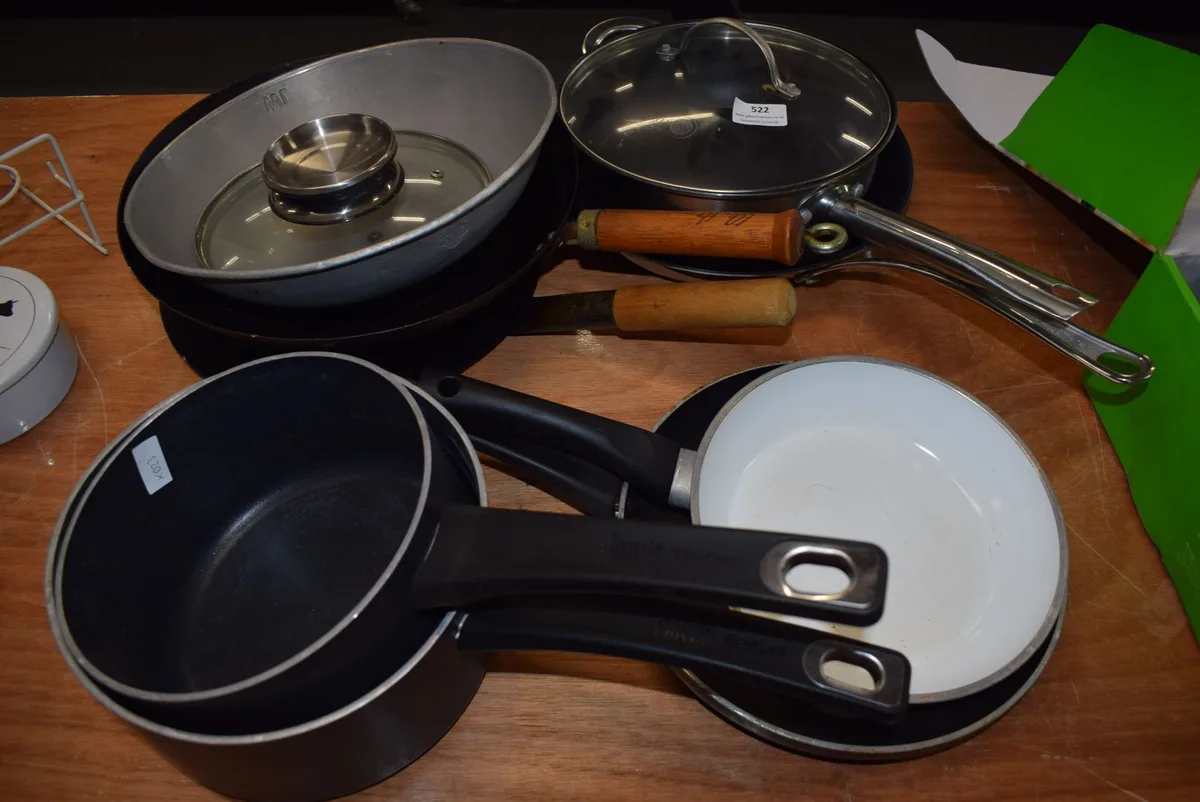
Image source: Web (Bing) / i-bidder.com (Web image (fair-use with source credit))
Why the Material of a Saucepan Actually Matters
A saucepan’s material controls how it behaves on the stove. Some metals heat up instantly. Others hold heat like a slow burner.
Some react with acidic food, others stay neutral. You need to know these differences before you buy.
Here’s the core trade-off: no single material does everything perfectly. Aluminum heats fast but warps easily. Copper controls heat brilliantly but costs a fortune.
Stainless steel lasts forever but heats unevenly on its own. That’s why many modern pans combine metals.
Manufacturers call this clad construction. They sandwich an aluminum or copper core between two layers of stainless steel. The result is a pan that conducts heat well and doesn’t react with food.
This is the standard for most quality saucepans.
If you’re buying cookware, it’s also worth understanding the safety side. The FDA regulates food-contact substances. Their rules cover what metals can touch your food.
You can check the FDA’s food contact substances page for the official details.
Quick Answer: The Main Materials You’ll Encounter
Saucepan materials range from stainless steel to aluminum to copper. Stainless steel is durable and non-reactive. Aluminum heats fast but is reactive.
Copper offers precise control but needs lining. Hard-anodized aluminum is tougher and lighter. Cast iron and ceramic round out the list.
Pick based on your stove and budget.
Stainless Steel: The Everyday Workhorse
Stainless steel is the default for good reason. It doesn’t react with food, it doesn’t rust, and it survives decades of use. You’ll find it in professional kitchens and home kitchens alike.
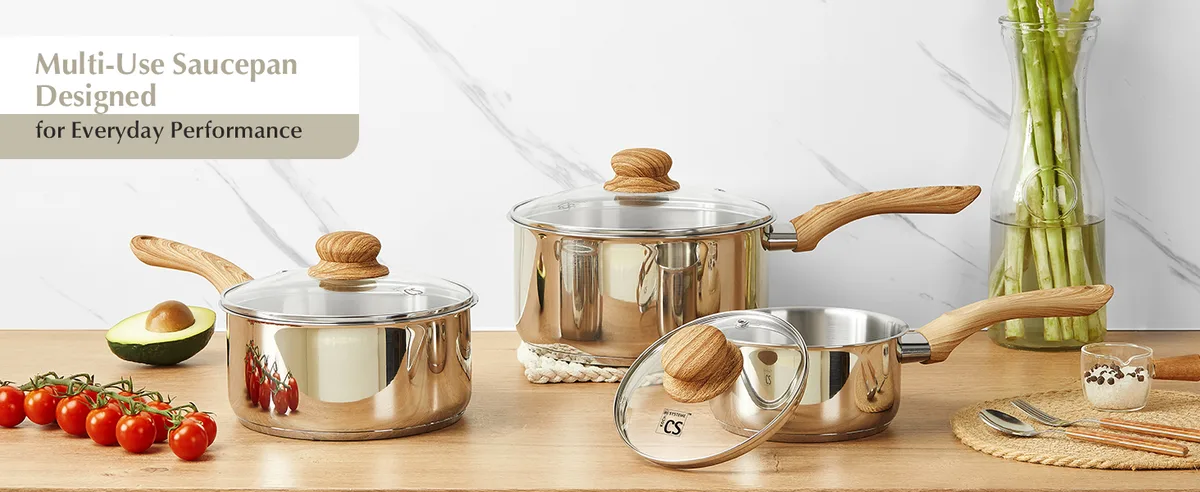
Image source: Bing (Web (fair-use with source credit))
But here’s the catch: stainless steel alone is a poor heat conductor. It heats unevenly, with hot spots that scorch food. To fix that, manufacturers bond it with a core of aluminum or copper between the steel layers.
That’s the “tri-ply” or “clad” construction you see on labels.
When shopping, look for the grade. The numbers 18/10 and 18/8 refer to percentages of chromium and nickel. 18/10 means 18% chromium and 10% nickel. More nickel gives a shinier, more corrosion-resistant surface.
For everyday use, 18/8 is fine. For a premium pan, 18/10 feels better.
Stainless steel saucepans work with every stovetop, including induction, because steel is magnetic. They’re also dishwasher-safe, though hand washing keeps them shinier. They’re not nonstick, though.
If you cook eggs or delicate sauces, you’ll need a little fat or a gentle touch.
Aluminum: Lightweight and Quick (With a Catch)
Aluminum is the workhorse of budget cookware. It heats up fast and spreads heat evenly across the pan, which is great for sauces and soups. It’s also light.
You can pour a full pot with one hand without any strain.
But aluminum has a major downside: it reacts with acidic foods. Tomatoes, vinegar, and citrus can cause pitting and a metallic taste. That’s why you’ll rarely see bare aluminum saucepans sold for general use.
Usually, it’s coated or anodized.
Another problem is durability. Pure aluminum is soft. Thin pans warp on high heat or after a few years of heavy use.
If you see a cheap aluminum pan with a thin base, expect it to deform eventually.
One more thing: aluminum is not magnetic. That means it won’t work on induction cooktops unless the base has a steel layer bonded in. If you have induction, check for that before you buy.
You might find this helpful: Best Saucepan for Gas Stove
Hard-Anodized Aluminum: The Middle Ground
Hard-anodized aluminum is a step up from regular aluminum. The pan goes through an electrochemical process that thickens the natural oxide layer on the surface. The result is a darker, harder, non-reactive surface that doesn’t leach into food.
This material keeps the best qualities of aluminum, like fast, even heating and light weight. But it’s much more durable. Anodized pans resist scratching, warping, and staining better than bare aluminum.
Many home cooks consider it a sweet spot between cheap aluminum and expensive stainless steel.
The downside? Hard-anodized aluminum is not induction compatible on its own. Some brands add a stainless steel base to the bottom for induction stoves.
So check the product description carefully if that’s a dealbreaker for you.
Also, hard-anodized surfaces are often nonstick coated, but the coating isn’t always PTFE-free. If you want to avoid nonstick chemicals, look for “ceramic-coated” or “PFOA-free” labels.
Copper: The Chef’s Choice, and Its Big Trade-Off
Copper is the gold standard for heat control. It warms up in seconds and cools just as fast, so you get precise temperature changes without lag. That responsiveness makes it a favorite in professional kitchens.
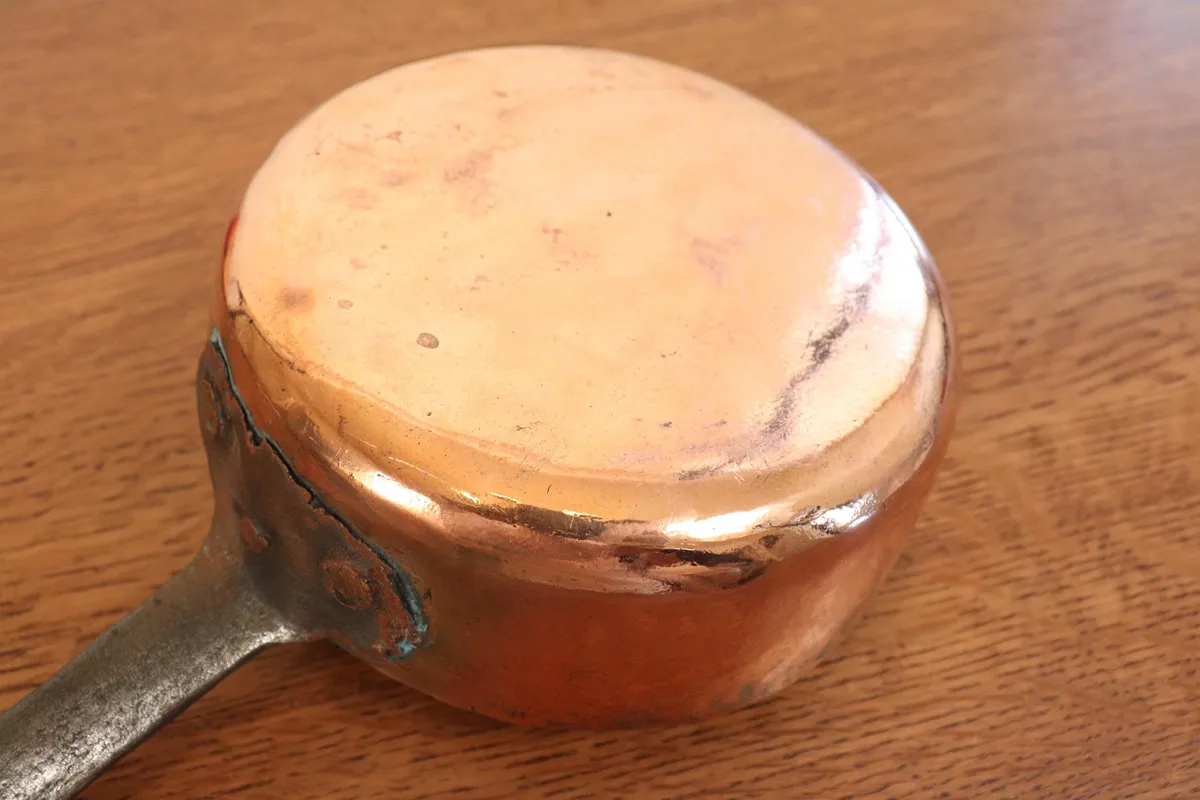
Image source: Web (Bing) / bigcopperkitchen.com (Web image (fair-use with source credit))
But copper reacts with acidic foods. Tomatoes or vinegar can tarnish the surface and leave a metallic taste. That’s why most copper pans are lined with tin or stainless steel.
Tin linings work beautifully but wear down. You’ll need to get them re-tinned every few years unless you choose stainless-lined copper, which lasts longer.
The price is the big trade-off. A quality copper saucepan can cost several hundred dollars. Manufacturer specs show copper roughly matches aluminum in cost per weight, but the thickness and lining push the final price up.
Copper is a lifetime purchase, not a budget option.
If you want a pan that feels like an extension of your hand and you’re willing to maintain it, copper is the pick. For most home cooks, though, a stainless pan with a copper core gives most of the benefit at a fraction of the cost.
Cast Iron and Enameled Cast Iron: Heavy Hitters
Cast iron is all about heat retention. Once it’s hot, it stays hot, which makes it great for slow simmering and browning. Bare cast iron gets a natural nonstick surface when seasoned properly.
But it reacts with acidic food and takes effort to maintain.
Enameled cast iron skips those problems. The enamel coating protects the pan and your food, so you can simmer tomato sauce all day without any metal taste. You also don’t need to season it.
Just wash and go.
The catch is weight. An enameled cast iron saucepan feels like a brick. You’ll struggle to pour with one hand.
The coating can also chip if you drop it or knock it with a metal spoon. Aggregate reviews report chipping as the top complaint.
If you make lots of braises, stews, or slow sauces, cast iron earns its place. If you move fast and need lightweight pans, look elsewhere.
Carbon Steel: The Lightweight Nonstick Alternative
Carbon steel cooks almost like cast iron, but it weighs less and heats faster. That makes it a sweet spot for cooks who want some of cast iron’s performance without the shoulder workout.
Like bare cast iron, carbon steel needs seasoning. That seasoning layer builds a natural nonstick surface over time. It also means the pan reacts with acidic ingredients, so avoid long simmers with tomatoes or lemon juice.
The material is relatively rare in saucepans but more common in French and Japanese cookware. A seasoned carbon steel saucepan is excellent for boiling, quick sauces, and anything where fast response matters. It’s also one of the tougher materials, so it can take high heat and years of abuse.
For the price, carbon steel is a good value. It costs little more than aluminum but lasts a lot longer. The maintenance turns some people away, though.
If you don’t want to baby your pan, stick with stainless steel.
Nonstick and Ceramic Coatings: What’s on the Surface Matters Too
Many saucepans get their nonstick power from a coating, not the base metal. The most common coating is PTFE, the same class of material used in some nonstick pans. It releases eggs and delicate sauces effortlessly.
But PTFE can degrade at high heat and is linked to concerns around per- and polyfluoroalkyl substances, or PFAS.
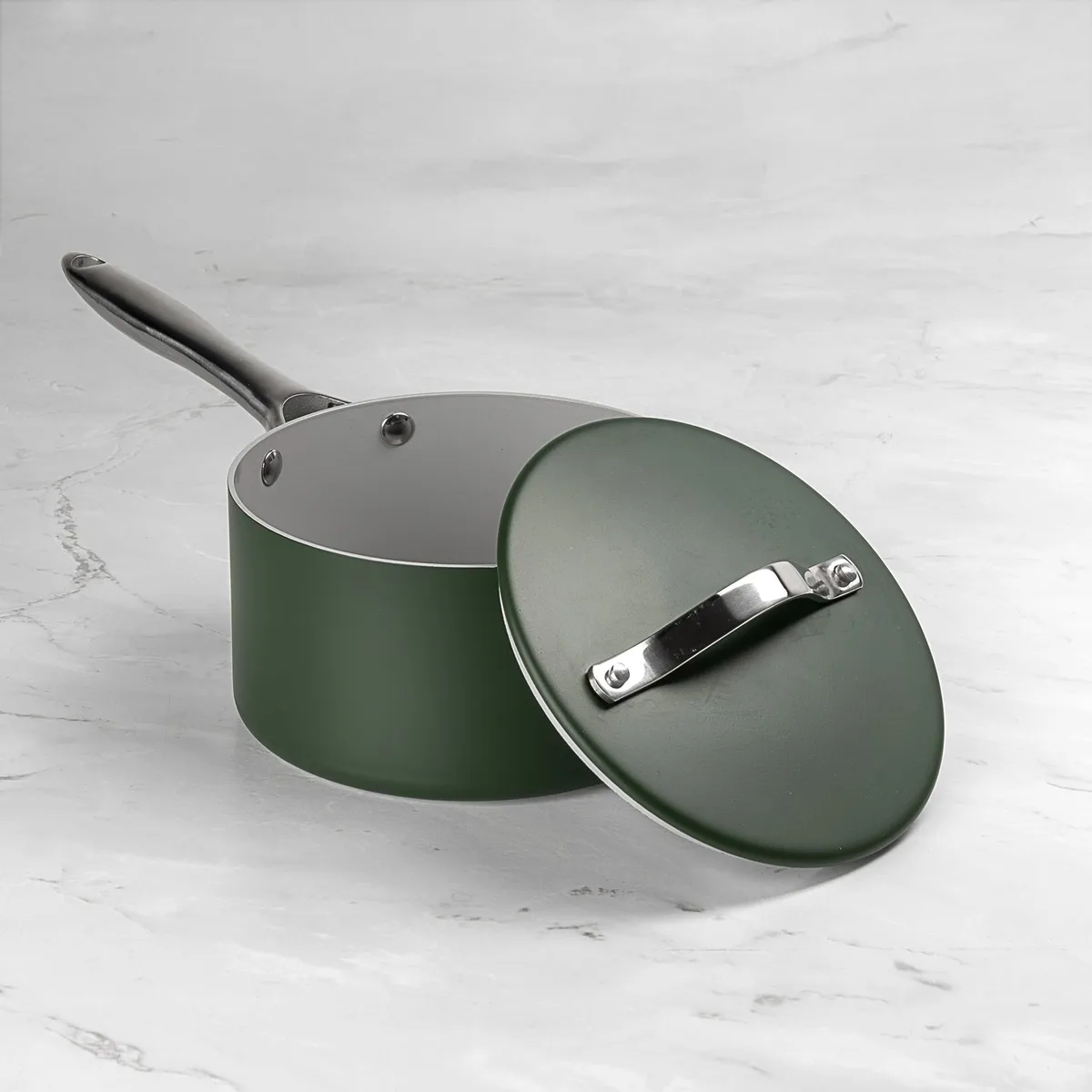
Image source: Web (Bing) / prochefkitchenware.com (Web image (fair-use with source credit))
Ceramic coatings solve that problem. They’re made from a silica-based finish that contains no PTFE or PFOA. They also release food well and clean up easily.
The downside is durability. Ceramic coatings wear out faster than traditional nonstick, especially if you use metal utensils or high heat.
If you choose a nonstick saucepan, treat it gently. Use wooden or silicone utensils, keep heat at medium, and hand wash it. Even then, expect the coating to degrade after a few years of heavy use.
That’s the nature of coatings.
The material underneath still matters. A nonstick coating over a thin aluminum base will still warp. A coating over a thick, clad base gives you both nonstick convenience and solid heating.
Side-by-Side Comparison: Materials, Heating, Weight, and Price
This table sums up the key differences. Use it as a quick reference when you compare saucepans.
| Material | Heat Conductivity (W/m·K) | Weight | Durability | Induction Compatible | Typical Price Range |
|---|---|---|---|---|---|
| Stainless steel | ~16 | Light to medium | Very high | Yes | $25–$150 |
| Aluminum (bare) | ~237 | Light | Low | No | $15–$50 |
| Hard-anodized aluminum | ~237 | Light | Medium | Usually not | $40–$120 |
| Copper | ~401 | Medium | High | No | $100–$400+ |
| Cast iron | ~54 | Heavy | Very high | Yes | $30–$100 |
| Enameled cast iron | ~54 | Very heavy | High (coating chips) | Yes | $80–$300 |
| Carbon steel | ~54 | Light to medium | Very high | Yes | $20–$80 |
| Nonstick / ceramic coated | Depends on base | Light | Low to medium | Depends on base | $20–$100 |
Numbers come from material science standards, and prices reflect typical retail averages. The key takeaway is simple. For responsive heating, pick copper or aluminum.
For durability, pick stainless or cast iron. For easy cleanup, pick a coated surface.
Which Saucepan Material Should You Choose? (By Cooking Style and Stove Type)
There’s no universal best, but there is a best for you. Here’s the decision process.
If you cook eggs, delicate sauces, or anything that tends to stick, choose a nonstick or ceramic-coated saucepan. The release factor matters more than perfect heat distribution. If you’re on an induction stove, check for a magnetic base.
Stainless steel and cast iron offer that. Aluminum and copper won’t work on their own.
If you mostly simmer soups, boil pasta, or make tomato-heavy dishes, pick stainless steel with an aluminum core. It’s non-reactive, durable, and handles long cooking times without issues. For fast temperature changes and control, copper is worth the cost, but only if you’re serious about cooking.
Weigh the weight factor honestly. If you struggle with heavy pans, avoid cast iron and enameled cast iron. Go with aluminum or carbon steel instead.
Also consider maintenance. Bare cast iron and carbon steel need seasoning and careful drying. If that feels like a chore, stainless steel or enameled cast iron fit your lifestyle better.
The buying decision comes down to three questions. What stove do you have? What foods do you cook most?
How much upkeep are you willing to accept? Answer those honestly and the right material becomes obvious.
Common Saucepan Mistakes and How to Avoid Them
Even a good saucepan fails when used wrong. Here are the most common mistakes.
Overheating an empty pan. Nonstick coatings degrade above 500°F. Stainless steel can warp or discolor.
Always add oil or food before cranking the heat.
Using metal utensils on coated surfaces. That scratching is permanent. It shortens the lifespan of the coating and can flake into food.
Use wood, silicone, or nylon instead.
Cooking acidic food in reactive pans. Bare aluminum, uncoated cast iron, and carbon steel react with tomatoes and vinegar. You’ll taste it, and the pan may pit.
Stick to stainless or enameled surfaces for those recipes.
Putting cold water in a hot pan. Thermal shock can warp the base or crack enamel. Let the pan cool before washing.
Yes, you’re busy, but a warped pan never heats evenly again.
Dishwashing nonstick or aluminum. The harsh heat and detergents harm coatings and dull finishes. Hand wash with mild soap and you’ll get years more use.
How to Care for Different Saucepan Materials
Proper care extends a saucepan’s life. The rules differ by material.
Stainless steel is forgiving. Hand wash with warm, soapy water and dry immediately. Use a dedicated stainless cleaner or vinegar for water spots.
It can go in the dishwasher, but hand washing protects the finish.
Hard-anodized aluminum and nonstick surfaces need gentler treatment. Avoid abrasive pads and harsh detergents. Soft sponges only.
For stuck-on food, soak with warm water and a little dish soap.
Cast iron and carbon steel get a wipe-down, not a soak. Hot water and a stiff brush, then dry over low heat. Apply a thin layer of oil to keep the seasoning strong.
If rust appears, scrub it off and re-season.
Enameled cast iron is simpler. Use soap and water, avoid metal scouring pads, and never thermal shock. For tough stains, a paste of baking soda and water works well.
Copper needs polish. The exterior tarnishes naturally, and most owners use a copper cleaner for a bright shine. The tin lining needs occasional re-tinning once it wears thin.
Stainless-lined copper only needs the exterior attention.
FAQs About Saucepan Materials
Are aluminum saucepans safe to cook with?
Yes, in most cases. Bare aluminum can react with acidic food, so it’s not ideal for tomato or vinegar dishes. Anodized aluminum is safe because the surface is hardened and sealed.
Always avoid scratched or heavily worn aluminum pans.
What’s the best material for a saucepan?
For most home cooks, stainless steel with an aluminum core is the best all-rounder. It heats evenly, resists reactions, works on induction, and lasts for decades. If you prioritize easy cleanup, a ceramic-coated saucepan is a solid alternative.
Is ceramic coating better than PTFE nonstick?
Ceramic coatings are free of PTFE and PFAS, which eases health concerns. They also handle higher temperatures without degrading. But they wear out faster than traditional nonstick coatings.
Expect to replace a ceramic-coated pan more often.
Can I put my saucepan in the dishwasher?
It depends on the material. Stainless steel can handle it, though it may dull. Nonstick, aluminum, and ceramic-coated pans should be hand washed.
Cast iron and carbon steel never go in the dishwasher. The heat and detergent ruin their seasoning.
The Bottom Line: Our Honest Take
Choosing a saucepan material is about matching the pan to your kitchen, not chasing the most expensive option. Stainless steel with an aluminum core is the practical winner for most home cooks. It handles everyday cooking without fuss and lasts for years.
If easy cleanup is your priority, add a good nonstick or ceramic-coated pan to your collection. If you love the craft of cooking and don’t mind maintenance, copper or cast iron will reward you with outstanding performance.
Buy the best quality you can afford in the material that fits your habits. A well-made saucepan is one of the most-used tools in your kitchen. Get this decision right and you won’t think about it again for a long time.