You want to bake bread, slow-cook stew, or roast chicken—but you don’t have a Dutch oven. Maybe yours broke, maybe you never bought one, or maybe you’re cooking somewhere with limited equipment. The Dutch oven is famous for its thick walls, tight lid, and versatile use in kitchens all over the world.
But you don’t need to stop cooking just because you’re missing this classic pot. There are many alternatives, each with its own strengths and weaknesses. This article explores the best substitutes for a Dutch oven, how to use them for different recipes, and what you should know before choosing one.
What Makes A Dutch Oven Special?
Before looking for alternatives, it helps to understand why Dutch ovens are so popular. These pots are usually made of cast iron and often coated with enamel. Their key features:
- Even heat distribution: Thick metal walls keep heat steady, making them perfect for slow-cooked dishes.
- Tight-fitting lid: This helps trap moisture, so food stays juicy and tender.
- Oven-safe: You can use them on the stove or in the oven.
- Durability: They last for decades if cared for properly.
Many recipes call for a Dutch oven because it handles temperature changes well and keeps food moist. When choosing a substitute, look for these qualities.
Top Alternatives To A Dutch Oven
There are several pots and pans you can use instead of a Dutch oven. Here’s a breakdown of the best options and how they compare.
| Alternative | Best For | Oven Safe? | Price Range |
|---|---|---|---|
| Heavy-duty Stockpot | Soups, stews, pasta | Usually | $25-$60 |
| Cast Iron Skillet + Lid | Bread, roasts, braises | Yes | $20-$50 |
| Slow Cooker (Crock-Pot) | Long, slow cooking | No (not for oven) | $30-$80 |
| Clay Pot | Moist cooking, ethnic recipes | Yes | $20-$60 |
| Roasting Pan with Lid | Large cuts of meat | Yes | $25-$70 |
| Instant Pot | Pressure cooking, stews | No (not for oven) | $70-$150 |
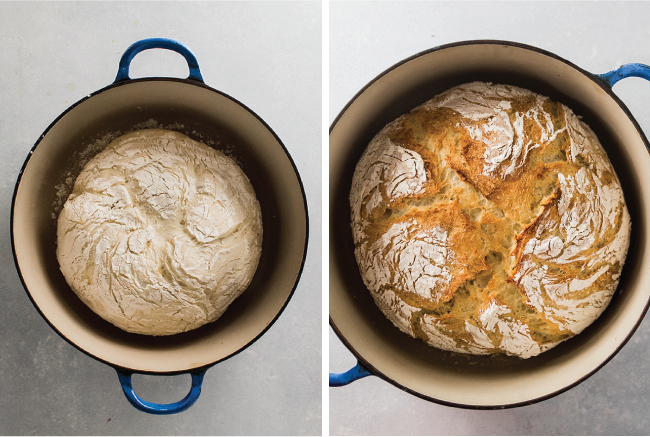
Credit: www.lifeasastrawberry.com
Heavy-duty Stockpot
A stockpot is a common kitchen item. It’s taller and thinner than a Dutch oven, but if you pick one made of stainless steel or heavy aluminum, it can handle most Dutch oven jobs.
- Best for: Soups, stews, boiling pasta, simmering sauces.
- Tips: If your recipe needs the oven, check if the handles and lid are oven-safe. Not all stockpots can handle high heat.
- Common mistake: Using thin pots that heat unevenly. Always pick a thick-bottomed pot for slow-cooked recipes.
Cast Iron Skillet + Lid
A cast iron skillet is great for baking bread or roasting meats. It lacks high walls, but if you cover it with a lid or aluminum foil, it can mimic a Dutch oven’s moist cooking.
- Best for: Artisan bread, searing and oven-roasting meat, braises.
- How to use: For bread, place the dough in the skillet, cover with a lid or foil, and bake. For roasts, sear on the stove, then transfer to the oven.
- Non-obvious insight: Preheat both the skillet and lid before baking bread. This helps achieve a crispy crust.
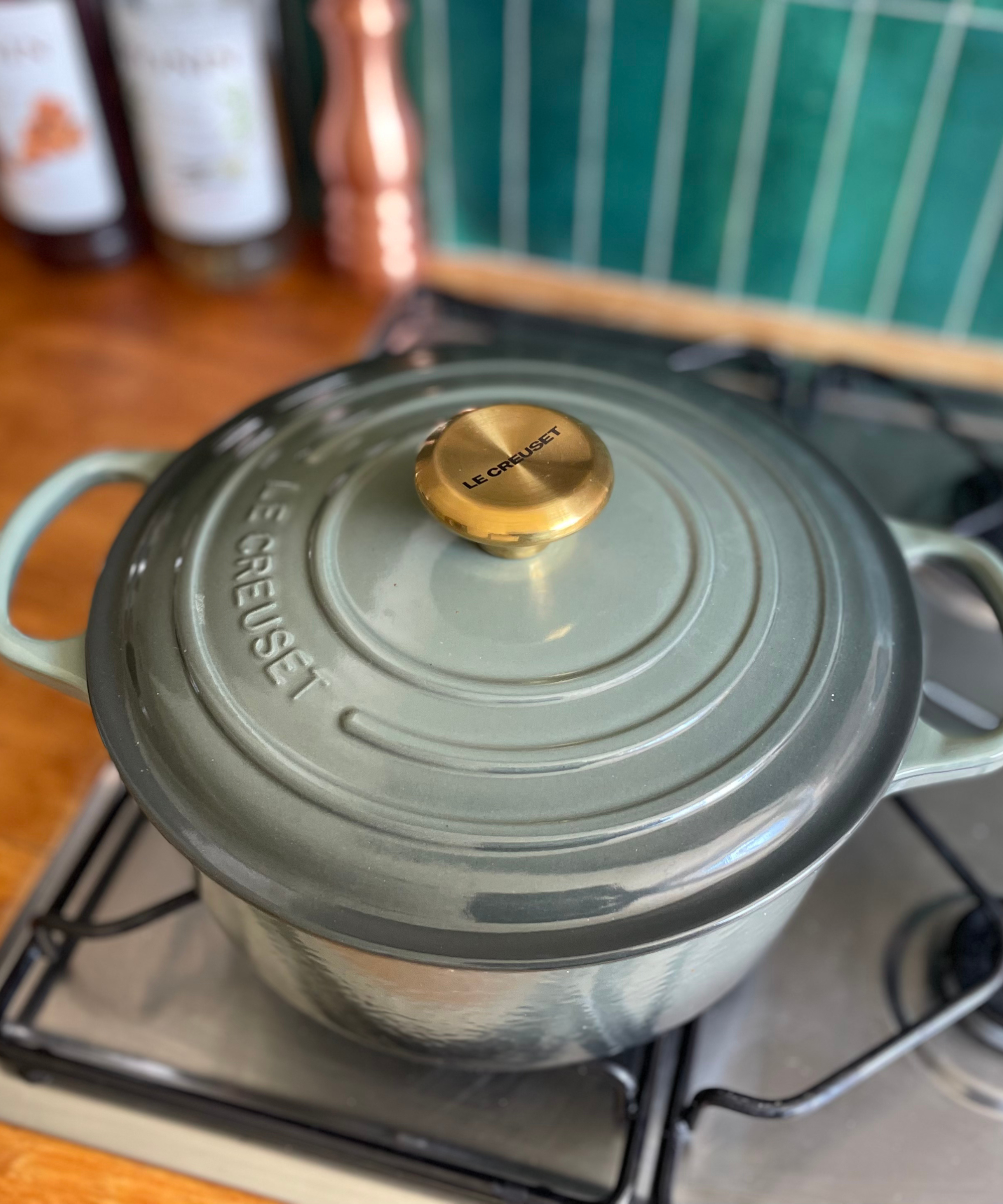
Credit: www.homesandgardens.com
Slow Cooker (crock-pot)
A slow cooker is an electric appliance that cooks food over hours at low heat. It’s perfect for stews, chili, and pulled pork.
- Best for: Slow-cooked recipes, soups, shredded meats.
- Limitations: Not oven-safe. If your recipe needs browning, you must do it in another pan first.
- Practical tip: Use less liquid than you would in a Dutch oven—slow cookers trap more moisture.
You might find this helpful: Best Slow Cooker For Home Use
Clay Pot
Clay pots are used in many cultures for slow, moist cooking. The Römertopf is a famous example from Germany.
- Best for: Baking bread, braises, ethnic dishes like tagine or biryani.
- How to use: Soak clay pot in water for 15–30 minutes before cooking. This creates steam during baking.
- Common mistake: Placing cold clay pot in a hot oven. Always start with a cold oven to avoid cracking.

Credit: www.youtube.com
Roasting Pan With Lid
A roasting pan is designed for large cuts of meat. It often comes with a lid, which helps trap moisture.
- Best for: Roasting chicken, brisket, vegetables.
- Tips: Line with parchment or foil for easier cleanup. If the lid isn’t tight, cover with foil.
- Non-obvious insight: Add a small amount of water or broth to the pan. This prevents burning and keeps meat tender.
Instant Pot
An Instant Pot is a modern electric pressure cooker. It’s popular for fast stews, beans, rice, and more.
- Best for: Pressure cooking, stews, beans, risotto.
- Limitations: Not oven-safe. You can sauté, then pressure cook—but you can’t bake bread.
- Practical tip: Use “Slow Cook” mode for recipes that need gentle heat.
Comparing Dutch Oven Alternatives
Let’s look at how these substitutes perform in key areas:
| Feature | Dutch Oven | Stockpot | Cast Iron Skillet | Slow Cooker | Roasting Pan |
|---|---|---|---|---|---|
| Heat Distribution | Excellent | Good (if thick) | Excellent | Even (low temp) | Good |
| Moisture Retention | High | Medium | Medium | High | Medium |
| Oven-Safe | Yes | Usually | Yes | No | Yes |
| Versatility | High | Medium | Medium | High | Medium |
How To Choose The Right Substitute
Your best choice depends on the recipe and your kitchen setup. Consider these questions:
- What are you cooking? Bread, stew, roast, or soup?
- Do you need oven use? Some alternatives aren’t oven-safe.
- Do you want a crispy crust? Cast iron is best for this.
- How much food? Roasting pans and stockpots are great for large groups.
Non-obvious insight: If you want to make rustic bread, a cast iron skillet with a tight lid produces almost the same results as a Dutch oven—but preheating both is crucial.
Practical Examples
Let’s look at some common recipes and how you can adapt them.
Baking Artisan Bread
Most “no-knead” bread recipes use a Dutch oven for the steam and heat. Try this method:
- Use a cast iron skillet for the dough.
- Cover tightly with another skillet or lid.
- Preheat both before baking.
- Bake at 450°F for 30–40 minutes.
Slow-cooked Beef Stew
If you don’t have a Dutch oven:
- Use a heavy-duty stockpot or slow cooker.
- Brown meat in a skillet first for flavor.
- Add vegetables and liquids.
- Simmer on low for several hours.
Roasting Chicken
You can use a roasting pan with lid:
- Place chicken in pan.
- Add vegetables and broth.
- Cover with lid or foil.
- Roast at 375°F until internal temperature reaches 165°F.
Common Mistakes When Choosing A Substitute
Beginners often make these errors:
- Using thin pots: They burn food and cook unevenly. Always use thick-bottomed cookware.
- Ignoring oven safety: Not all pots can handle oven heat, especially those with plastic handles.
- Forgetting moisture: If your substitute’s lid isn’t tight, cover with foil to trap steam.
Cleaning And Care Tips
Different materials need different care.
- Cast iron: Wash gently, dry fully, and oil after use.
- Clay pots: Avoid soap; rinse and dry naturally.
- Stockpots: Stainless steel is dishwasher safe, but avoid soaking aluminum.
- Roasting pans: Line with foil for easier cleaning.
When You Should Not Substitute
Sometimes only a Dutch oven will do. For example, if you want to cook over a campfire, most alternatives won’t survive open flames. Also, if your recipe demands both stove and oven use, you need oven-safe handles.
Saving Money And Space
If you’re on a budget or living in a small apartment, you don’t need to buy a Dutch oven right away. Try using a heavy-duty stockpot or cast iron skillet for most recipes. These are cheaper and take less space.
Where To Learn More
If you want detailed comparisons, recipes, and tips, visit Serious Eats. Their guides are research-based and easy to follow.
Frequently Asked Questions
What Is The Best Dutch Oven Substitute For Baking Bread?
The cast iron skillet with a lid is the closest alternative. Preheat both the skillet and lid before baking to get a crispy crust. If you don’t have a lid, use heavy-duty foil.
Can I Use A Stockpot In The Oven?
Some stockpots are oven-safe, but check the manufacturer’s instructions. Avoid pots with plastic handles or thin metal. Stainless steel is usually safe up to 500°F.
Will A Slow Cooker Give The Same Results As A Dutch Oven?
A slow cooker can make stews and soups, but it won’t brown meat or bake bread. If your recipe needs a crispy crust or caramelized flavor, brown meat first in a skillet.
Is A Clay Pot A Good Dutch Oven Substitute?
Yes, a clay pot works well for moist cooking and baking. Always soak it in water before use and start in a cold oven. Great for ethnic dishes like tagine and biryani.
What Should I Avoid When Picking A Dutch Oven Substitute?
Don’t use thin pots or cookware with non-oven-safe handles. Always check if your substitute traps moisture well. For bread, avoid glass or ceramic dishes, as they can crack under high heat.
Dutch oven substitutes are easy to find if you know what to look for. Whether you’re baking, roasting, or simmering, there’s a pot or pan that fits your needs. With smart choices and a few practical tips, you can cook almost any Dutch oven recipe—even without the classic pot.