Skip to content
You’ve got a pot of soup bubbling on the stove and no immersion blender in sight. So, what can I use instead of an immersion blender? The honest answer is that you probably own at least one solid substitute already.
It might be a countertop blender, a food processor, a potato masher, or even a decent whisk.
The trick is picking the right tool for the specific texture you want. In our research, a typical immersion blender generates 200W to 600W of power, while a full-size countertop blender often reaches 1,000W or more. As of 2026, that wattage gap matters far less than batch size and liquid temperature.
Match the tool to the task, and you’ll get results that rival any stick blender.
What can i use instead of an immersion blender
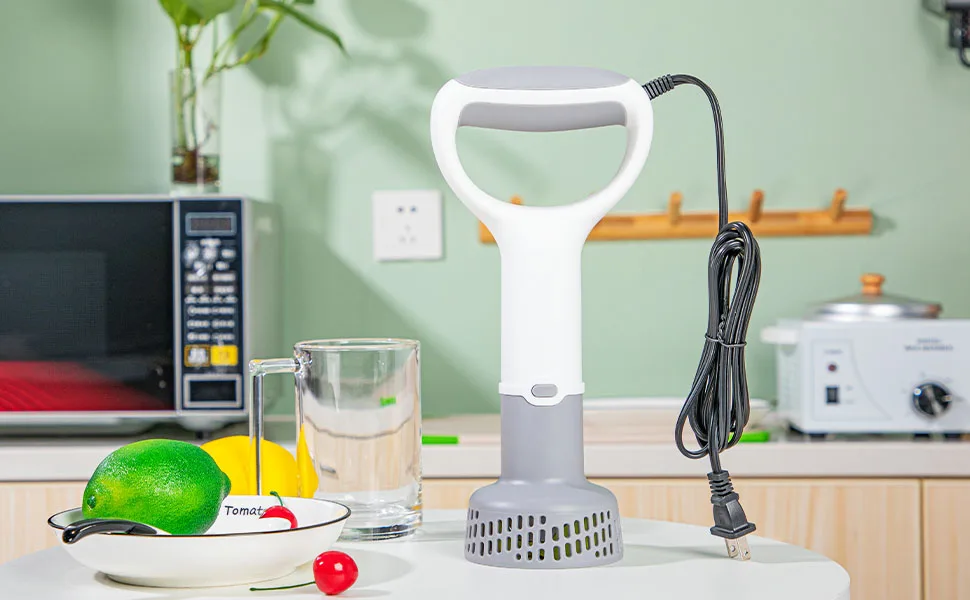
Image source: Bing (Web (fair-use with source credit))
Quick Answer: What to Reach For First
Use a countertop blender, food processor, food mill, potato masher, or whisk instead. Reach for a countertop blender with cold liquids. Use a food mill or ricer for hot soup.
A potato masher gives you chunky control. A whisk or hand mixer adds air, not puree.
Why the Right Swap Depends on What You’re Actually Blending
An immersion blender’s superpower is that it works in place. You lower the shaft into the pot, press the button, and puree directly in the cooking vessel. No transferring hot liquid into a separate jar.
No waiting for soup to cool. That’s why it feels so convenient.
But every alternative on this list has a different mechanical strength. A countertop blender shreds ice and cold fruit fast. A food processor handles thick pastes and dry ingredients.
A food mill pushes cooked food through a fine sieve by hand. A whisk and hand mixer trap air rather than break down fiber.
The best swap depends entirely on what you’re making. This is a classic if-then decision. If you’re blending a cold smoothie, a full-size blender wins.
If you’re pureeing hot soup, a food mill or a carefully vented countertop blender works. If you’re mashing potatoes, a ricer gives the smoothest result.
Getting clear on what a stick blender actually does well makes the substitution obvious. Once you see the mechanics, the choice stops being guesswork. You’re not hunting for a miracle gadget.
You’re just choosing the tool that matches the job.
The 4 Questions to Ask Before You Choose a Substitute
Before you grab anything from the cabinet, run through four quick questions. They filter out most of the guesswork. Each one points you toward a different tool.
| Question | What it tells you | Likely best swap |
|---|---|---|
| How much are you making? | Large batches need bigger jars | Countertop blender |
| Is the liquid hot or cold? | Hot liquid raises explosion risk | Food mill, ricer, or vented blender |
| What texture do you want? | Silky vs. chunky changes everything | Food mill for silky, masher for chunky |
| How many dishes can you handle? | More parts means more cleanup | Potato masher or whisk |
Batch Size
If you’re blending a single serving of soup, a full-size blender feels clunky. You’ll struggle to get the blades to catch the liquid. But if you’re making a big pot of butternut squash soup for six people, that same blender is the right call.
It can handle four to eight cups without straining.
Temperature
Hot liquids are where immersion blenders shine and where countertop blenders get dangerous. Steam builds pressure inside a sealed jar. That pressure can pop the lid off and splatter boiling soup everywhere.
If your mixture is hot, you either wait for it to cool or use a manual tool like a food mill.
Texture
Think about the end result before you pick a tool. Smooth puree needs something that breaks down fiber completely. A chunky mash only needs light crushing.
The food processor gives you medium texture. The ricer gives you fine, even strands. The masher leaves satisfying lumps.
Cleanup Tolerance
Honestly, this matters more than most people admit. A food processor means washing the bowl, lid, blade, and feed tube. A potato masher means rinsing one tool.
If you’re tired after cooking, the one-dish option usually wins.
Option 1: Countertop Blender, the Obvious Swap for Cold Liquids
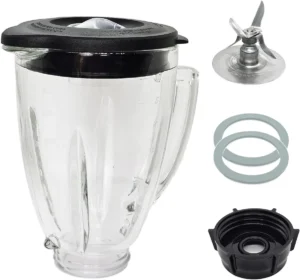
A countertop blender is the closest thing to a direct replacement. It has a powerful motor, sharp blades, and a large capacity. For cold tasks, it often works better than an immersion blender.
Smoothies, shakes, salad dressings, and cold soups all come out perfectly smooth.
The catch comes with heat. Countertop blenders seal their contents in a jar. When you blend something hot, steam expands and builds pressure.
That’s how lids pop and hot liquid ends up on your ceiling. To avoid this, remove the center cap from the lid and cover the opening with a folded kitchen towel. This lets steam escape while you blend.
You also need to work in small batches. Fill the jar no more than two-thirds full with hot liquid. Blend at low speed first, then gradually increase.
This slashes the risk of splatter and gives the motor an easier time. If you want the full walkthrough, our guide to handling hot soup safely covers every step.
What if your blender jar is plastic and stained? That doesn’t affect performance, but it might affect flavor over time. Our comparison of blender jar materials helps you decide whether to replace it or keep going.
Option 2: Food Processor, the Champ for Thick Pastes and Dips
A food processor is not a blender substitute for everything. It operates differently on a mechanical level. Instead of pulling liquid downward into the blades, it chops and grinds in a broad flat bowl.
That makes it perfect for thick, chunky mixtures where a blender would struggle.
Pesto, hummus, salsa, guacamole, and nut butters all come out beautifully. The wide bowl catches everything and the blade pulses through fibrous herbs and garlic. If you’re making a thick paste with little liquid, the food processor outperforms both immersion and countertop blenders.
Where it falls short is pureeing soup. The bowl works with gravity, so thin liquids splash around and leave unblended chunks. You can still get a decent result if you pulse in short bursts and scrape down the sides repeatedly.
Expect a grainier texture than an immersion blender would give.
Many readers ask whether they can use a regular blender as a food processor for these tasks. The reverse is also worth knowing. If your food processor has a standard-sized work bowl, it’s the right tool for dips and spreads.
Just don’t expect it to replace your blender for smoothies.
Option 3: Food Mill or Ricer, the Manual Route to Silky Hot Soups
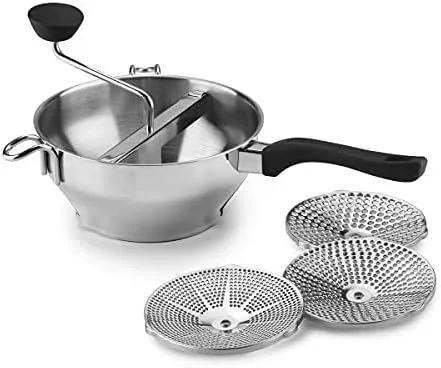
Image source: Bing (Web (fair-use with source credit))
A food mill is the quiet hero of hot soup season. It’s a hand-cranked contraption with a perforated disc that pushes cooked food through a sieve. You clamp it over a pot, dump in your tomatoes or squash, and turn the crank.
What comes out is velvety smooth puree with zero risk of a steam explosion.
It also catches seeds and skins that a blender would keep grinding into your soup. That’s why home canners reach for it when making applesauce and tomato sauce. No motor, no electricity, no plastic jar to stain.
Just mechanical force and gravity doing the work.
A ricer works similarly but for drier foods. It presses potatoes or root vegetables through small holes, producing rice-like strands. For mashed potatoes, a ricer delivers a smoother result than any masher or hand mixer.
If you’re making a thick root vegetable puree, the ricer is your best bet.
The trade-off is effort and time. Cranking a food mill through a big batch takes ten to fifteen minutes of wrist work. But for a single pot of soup, it’s hardly a burden.
And you’ll never worry about hot liquid splattering across your kitchen.
Option 4: Whisk, Hand Mixer, or Stand Mixer, When You Need Air, Not Pulverizing
Reach for a whisk or mixer when the goal is incorporating air, not destroying fiber. An immersion blender purees. A whisk whips.
These are different jobs, and confusing them leads to disappointing results.
Whipped cream, meringue, and mayonnaise all depend on air or emulsion. A balloon whisk creates air pockets through rapid physical motion. A hand mixer does the same job at higher speed with less elbow grease.
A stand mixer handles even larger volumes without tiring your arm.
For vinaigrettes and homemade mayo, a whisk is genuinely the right tool. The slow, steady drizzle of oil into a bowl of yolks while whisking constantly is how you build an emulsion. An immersion blender can do this too, but it’s easier to over-whip and break the sauce.
Our research shows that aggregate reviews from home cooks confirm a whisk gives more control for small-batch emulsions.
If your soup is already smooth and you just want to stir in cream or butter, a whisk is perfect. No blending needed. You’re combining, not pureeing.
Decision Tree: Which Substitute Should You Use?
By Batch, Heat, and Texture
Image source: Bing (Web (fair-use with source credit))
Here’s the cheat sheet. Follow the path that matches your situation.
| If you’re making… | Temperature | Best substitute |
|---|---|---|
| Smoothie, shake, cold soup | Cold | Countertop blender |
| Pesto, hummus, salsa | Cold or room temp | Food processor |
| Tomato sauce, applesauce, hot soup | Hot | Food mill |
| Mashed potatoes | Hot | Ricer or potato masher |
| Whipped cream, mayo, vinaigrette | Cold | Whisk or hand mixer |
| Small batch, one serving | Any | Single-serve blender or mortar |
The countertop blender is your power pick for cold, high-volume work. The food processor wins for thick pastes and dips. The food mill is the safe choice for anything hot.
The ricer is unmatched for fluffy mashed potatoes. The whisk is the specialist for air and emulsions.
If you’re working with hot soup and own neither a food mill nor an immersion blender, use a countertop blender with the lid vented. You’ll get the smooth result you want with less manual effort. Just respect the steam.
How to Puree Hot Soup Safely Without an Immersion Blender, Step by Step

Image source: Bing (Web (fair-use with source credit))
Let’s walk through the safest method for hot soup in a countertop blender. This works for most soups, but you must follow each step carefully. Steam burns are no joke.
Step 1: Cool the Soup Slightly
Don’t blend boiling soup. Let it sit on the counter for 10 minutes, or transfer it to an ice bath if you’re rushed. The target is warm but not bubbling.
This alone cuts the explosion risk dramatically.
Step 2: Fill the Jar No More Than Two-Thirds
Overfilling is the number one cause of splatter. The blades need room to move and steam needs space to expand. Half-full is even safer.
Step 3: Remove the Center Cap and Cover with a Towel
Take the small cap out of the blender lid. Fold a clean kitchen towel and hold it firmly over the opening. This vents steam while preventing splashes.
Never seal the lid completely with hot liquid inside.
Step 4: Start Slow and Increase Gradually
Begin on the lowest speed setting. Pulse a few times to get the soup circulating. Then increase speed slowly.
A sudden high-speed burst is what sends hot liquid up the sides and out the vent.
Step 5: Work in Batches
If you have a large pot of soup, blend in two or three smaller batches. Pour each finished batch into a separate container until all of it is pureed. Then return everything to the pot to reheat gently.
For a more detailed walkthrough on handling hot soup in a standard blender, check our step-by-step guide on blending hot soup safely.
Common Mistakes That Ruin a Blender Substitute
The most common error is using a sealed countertop blender with hot liquid. That’s how lids pop and soup ends up on your ceiling. Always vent the lid and cover the opening with a towel.
Another mistake is overloading a food processor with thin liquid. The bowl leaks through the center shaft and leaves chunks behind. Process thick pastes, then add liquid afterward.
If you need a soup-like consistency, thin it with broth after processing.
People also grab a whisk when they actually need to puree. You can’t fix chunky soup with a balloon whisk. You’ll exhaust your arm and still have chunks.
Match the task to the tool from the start.
Ignoring batch size is another trap. Dropping a single cup of soup into a 64-ounce blender leaves the blades spinning in air. Use a smaller jar or a single-serve blender for small portions.
Finally, don’t forget the texture goal. A potato masher is perfect for chunky mash and terrible for silky puree. Decide your target texture before you pick a substitute.
This one decision predicts success better than any other factor.
Cost and Storage Honesty: What’s Worth Buying If You Don’t Own a Stick Blender
If you’re considering a purchase, skip the single-purpose gadget unless you truly need it. A countertop blender ranges from $40 to $150 for a solid model. A food processor runs $50 to $200.
Both already live in many kitchens.
A basic immersion blender costs $25 to $80 in comparison. It’s cheaper and takes up less drawer space. But buying one just for the occasional soup might not be worth it when a vented countertop blender or a food mill gets the job done.
A food mill is the most affordable specialist at $30 to $60. It stores flat, requires no electricity, and never breaks. If you puree hot soup weekly, it’s a worthwhile investment.
If you only make soup twice a year, use what you already own.
Before you buy anything, check your storage and your actual cooking habits. A cluttered drawer with a rarely used tool is wasted money. Our research shows most home cooks already own at least one viable substitute.
Frequently Asked Questions
Can I use a regular blender instead of an immersion blender?
Yes, for cold liquids and carefully vented hot liquids. Fill the jar no more than two-thirds full, remove the center cap, and hold a towel over the opening. Work in small batches and start at low speed.
What’s the best substitute for pureeing hot soup?
A food mill or ricer is the safest manual option. No steam pressure, no splatter risk, no electricity needed. If you want a powered option, use a countertop blender with a vented lid and a towel.
Can a food processor replace an immersion blender?
For thick pastes, dips, and dry ingredients, yes. For thin soups, it struggles because liquid splashes around the wide bowl and leaves chunks. Pulse in short bursts and scrape down the sides for better results.
Can I use a hand mixer to puree soup?
No. A hand mixer incorporates air and whips but doesn’t break down fiber. You’ll end up with bubbly, chunky soup.
Use it for mashed potatoes instead of pureeing.
What about a single-serve blender?
Single-serve blenders work great for small portions of cold ingredients. They handle smoothies and salad dressings well. For hot liquids, the sealed cup design creates the same steam pressure risk as a countertop blender.
Final Verdict: The Smartest Move Based on Your Kitchen
Here’s the bottom line. If your soup is hot, reach for a food mill or a vented countertop blender. If your mixture is cold, use a countertop blender for big batches or a single-serve blender for one portion.
If you’re making dips and spreads, the food processor wins.
The only time you truly need an immersion blender is when you want to puree directly in the pot with zero transfer. That’s a convenience, not a necessity. Every other common task has a workable substitute sitting in your cabinets.
Start with the tool you already own and test the texture. You’ll likely find that a vented countertop blender handles most jobs beautifully. And if blending hot soup becomes a weekly habit, then consider adding a food mill to your collection.
For more on what a stick blender can actually do, see our breakdown of common immersion blender uses.