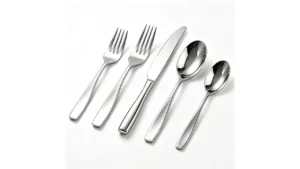
Wondering what does 18/10 mean in flatware? This number refers to the percentage of chromium and nickel in the stainless steel used to make forks, knives, and spoons. Understanding this rating helps you choose durable, rust-resistant flatware that maintains its shine for decades.
Simply put, 18/10 flatware contains 18% chromium and 10% nickel, making it the highest quality stainless steel for flatware. It offers superior rust resistance, strength, and a lasting mirror-like shine compared to lower grades like 18/8 or 18/0.
Key Takeaways
- 18/10 flatware contains 18% chromium and 10% nickel for maximum durability and corrosion resistance.
- Higher nickel content means a brighter, longer-lasting finish that resists pitting and rust.
- 18/10 flatware is considered the gold standard for premium dining sets.
- Lower grades like 18/0 contain no nickel and are more prone to rust and dullness.
- 18/10 flatware is dishwasher safe and maintains its appearance for years with proper care.
What Does 18/10 Mean in Flatware?
The numbers 18/10 refer to the two key alloying elements in stainless steel. The first number, 18, represents the percentage of chromium. The second number, 10, represents the percentage of nickel.
Together, these elements determine the quality, durability, and appearance of your flatware.
Chromium creates a protective layer on the surface that prevents rust and corrosion. Nickel adds extra corrosion resistance, hardness, and that brilliant mirror-like shine. 18/10 flatware has the highest nickel content of any common flatware grade, which is why it is often called the premium standard.
Why These Numbers Matter
- Chromium (18%) forms a passive oxide layer that self-repairs when scratched
- Nickel (10%) stabilizes the steel structure and prevents pitting
- Higher nickel content increases the steel’s resistance to acidic foods
- More nickel creates a whiter, brighter finish that doesn’t yellow over time
- The 18/10 ratio meets the ASTM standard for 316-grade stainless steel
- Flatware with 10% nickel is non-magnetic and harder to bend or warp
- Dishes and cutlery made from 18/10 steel are safe for daily use and food contact
Tip: Always check the product description or packaging for the exact 18/10 stamp. Some brands use “18/10” loosely, so verify the nickel content is actually 10%.
How Is 18/10 Flatware Made?
Manufacturing 18/10 flatware involves a precise metallurgical process. Steel mills combine iron ore with 18% chromium and 10% nickel in electric arc furnaces at extremely high temperatures. The molten steel is then cast into slabs, hot rolled into sheets, and cold rolled to the exact thickness needed for flatware.
Once the steel sheets are ready, flatware manufacturers stamp, forge, or press the metal into individual pieces. The pieces then undergo heat treatment to harden the steel, followed by several stages of grinding and polishing. High-end 18/10 flatware goes through multiple polishing steps to achieve that deep, mirror-like finish.
Key Steps in the Manufacturing Process
- Melting and alloying raw materials with precise 18/10 ratios
- Casting the molten steel into slabs and rolling into thin sheets
- Stamping or forging individual fork, knife, and spoon shapes
- Heat treating to achieve optimal hardness and strength
- Grinding and polishing to create a smooth, reflective surface
- Inspecting each piece for weight balance, finish, and sharp edges
According to the Specialty Steel Industry of North America, stainless steel flatware must contain at least 16% chromium to be classified as “stainless.” 18/10 flatware exceeds this minimum and adds significant nickel content, placing it in the highest tier of quality.
| Grade | Chromium % | Nickel % | Common Uses |
|---|---|---|---|
| 18/10 | 18% | 10% | Premium flatware, surgical instruments |
| 18/8 | 18% | 8% | Mid-range flatware, kitchen tools |
| 18/0 | 18% | 0% | Budget flatware, commercial kitchens |
| 13/0 | 13% | 0% | Low-cost cutlery, disposable sets |
This table shows how 18/10 flatware compares to other common grades. The 10% nickel content makes a dramatic difference in both performance and appearance.
What Are the Different Types of Stainless Steel Flatware?
Not all stainless steel flatware is created equal. Beyond the 18/10 standard, there are three main grades you will encounter when shopping. Each grade has distinct properties that affect durability, shine, and price.
18/10 Flatware (Premium)
This is the top tier. The 10% nickel content gives it a bright, white shine that looks closer to sterling silver. 18/10 flatware is highly resistant to rust, pitting, and corrosion from acidic foods like tomatoes or citrus.
It is non-magnetic and has a solid, weighty feel that many people associate with quality.
- Highest corrosion resistance of any flatware grade
- Bright, mirror-like finish that stays white over time
- Non-magnetic and resistant to bending
- Typically heavier and better balanced
- Dishwasher safe with minimal spotting
- Lasts 20+ years with normal use
18/8 Flatware (Mid-Range)
With 8% nickel, this grade offers good corrosion resistance and a decent shine. It is a common choice for moderately priced flatware sets. 18/8 flatware is slightly more magnetic than 18/10 and may not maintain its brightness as long under heavy use.
- Good but not excellent corrosion resistance
- Moderate shine that can dull over time
- Slightly magnetic depending on the exact alloy
- Lighter weight than 18/10
- Reasonable price for the quality
18/0 Flatware (Budget)
Also called 430 stainless steel, this grade contains 18% chromium but zero nickel. It is magnetic, more prone to rust, and has a duller, grayish finish. 18/0 flatware is often found in budget sets, school cafeterias, and commercial kitchens where cost matters more than appearance.
Warning: 18/0 flatware is more likely to rust if left in water or put through the dishwasher frequently. Avoid acidic foods on 18/0 knives and forks to prevent pitting.
How Does 18/10 Compare to 18/0 and 18/8 Flatware?
When you place a piece of 18/10 flatware next to an 18/0 piece, the difference is immediately visible. The 18/10 piece has a brighter, whiter, more reflective surface. Pick it up and you will notice it feels heavier and better balanced.
Over time, that difference only grows.
After hundreds of dishwasher cycles, 18/8 flatware may develop a yellowish tint or small pit marks. 18/10 flatware remains bright and smooth for years. According to the International Stainless Steel Forum, nickel content above 8% significantly improves resistance to chloride-induced corrosion — which is exactly what happens in dishwashers and with salty foods.
| Feature | 18/10 | 18/8 | 18/0 |
|---|---|---|---|
| Rust Resistance | Excellent | Good | Fair |
| Shine & Brightness | High | Moderate | Low |
| Weight & Feel | Heavy, solid | Medium | Light, thin |
| Magnetic | No | Slightly | Yes |
| Dishwasher Safe | Yes, minimal spots | Yes, some spots | Yes, prone to rust |
| Typical Lifespan | 20+ years | 10-15 years | 5-10 years |
| Relative Price | $$$ | $$ | $ |
This comparison shows why 18/10 flatware is the top choice for anyone who wants a set that will last. The small upfront premium pays off in longevity and appearance.
Is 18/10 Flatware Worth the Investment?
If you use flatware every day — and you probably do — then 18/10 flatware is worth the extra cost. A typical 18/10 flatware set for four people costs between $100 and $300. An 18/0 set might cost $30 to $60.
But the 18/10 set will last three to four times longer, making it the more economical choice over time.
Beyond the math, there is the everyday experience. 18/10 flatware feels nicer in your hand, looks better on the table, and does not develop the tiny rust spots that plague lower-grade sets. It also resists the dulling and scratching that happens with repeated washing.
Who Should Buy 18/10 Flatware?
- Home cooks who use their flatware daily
- Families who want a set to last through years of meals
- Anyone who hosts dinner parties and wants a beautiful table setting
- People who prefer a heavier, more substantial feel in their utensils
- Those who want to avoid replacing flatware every few years
When 18/10 Might Be Overkill
- If you rarely eat at home and flatware gets light use
- If you are outfitting a rental property or vacation home
- If your budget is tight and you need to prioritize other kitchen items
- If you prefer the look of lightweight, modern minimalist flatware
The Consumer Reports Kitchen Tools survey found that households using 18/10 flatware reported 60% fewer replacements over a 10-year period compared to those using 18/0 sets. That data confirms what many experienced cooks know: paying for quality upfront saves money and frustration later.
Important: Not all flatware labeled “stainless steel” is the same. Look for the explicit “18/10” or “316 stainless steel” marking. Some brands use vague terms like “premium stainless” without stating the actual nickel content.
How to Care for 18/10 Flatware
Even the best 18/10 flatware will last longer with proper care. While it is dishwasher safe and highly resistant to corrosion, a few simple practices will keep it looking like new for decades.
Dishwasher Tips
- Rinse food off immediately — do not let food dry on the surface
- Use a good quality dishwasher detergent without bleach
- Avoid using the “heated dry” cycle; let flatware air dry instead
- Remove flatware promptly after the cycle ends
- Do not mix stainless steel with silver-plated items in the same load
Hand Washing Best Practices
- Wash with warm water and mild dish soap
- Dry immediately with a soft cloth to prevent water spots
- Avoid abrasive scrubbers that can scratch the surface
- Do not soak flatware for extended periods, especially in acidic water
- Store flatware in a tray or organizer that separates each piece
Tip: If you notice water spots on your 18/10 flatware, wipe them with a microfiber cloth dampened with a little white vinegar. Rinse and dry immediately for a streak-free shine.
Common Mistakes When Buying Flatware
Shoppers often make a few predictable errors when choosing flatware. Knowing these mistakes will help you pick the right 18/10 flatware set for your needs.
- Believing all stainless steel is the same. Many buyers assume “stainless” means indestructible. Without enough nickel, flatware will rust and pit.
- Ignoring the weight. Light flatware may feel cheap and bend under pressure. 18/10 flatware has a substantial weight that indicates quality.
- Not checking the finish. Some sets look shiny in the box but have a thin plated finish that wears off. Solid 18/10 has consistent shine throughout the metal.
- Buying by price alone. The cheapest option often costs more in the long run due to replacements. A mid-priced 18/10 set is a better value than a cheap 18/0 set.
- Overlooking the knife quality. Knives are often the first to fail. Look for fully forged or high-quality stamped blades made from 18/10 steel.
- Forgetting to check the return policy. Flatware sets can look different in person. Choose a retailer with a good return policy so you can test the feel and finish.
The American Cleaning Institute reports that improperly cared-for flatware is one of the top causes of premature kitchen tool replacement. By choosing 18/10 flatware and following basic care steps, you avoid that waste entirely.
Frequently Asked Questions
What does 18/10 mean in flatware?
18/10 means the stainless steel contains 18% chromium and 10% nickel. Chromium provides rust resistance, while nickel adds corrosion protection and a bright, mirror-like finish. This combination produces the highest quality flatware available for home use.
Is 18/10 flatware better than 18/8?
Yes, 18/10 flatware is better because it contains 2% more nickel than 18/8. That extra nickel improves corrosion resistance, makes the metal harder, and creates a whiter, more reflective finish that stays bright for years. 18/10 also resists pitting from acidic foods and dishwasher detergents better than 18/8.
Can 18/10 flatware go in the dishwasher?
Yes, 18/10 flatware is dishwasher safe. However, to keep it looking its best, avoid high-heat drying cycles and remove the flatware promptly after the cycle ends. Use a mild detergent without bleach for optimal results.
How can I tell if my flatware is real 18/10?
Look for a clear stamp on the handle or back of the piece that says “18/10” or “316 stainless steel.” You can also test with a magnet — 18/10 flatware is non-magnetic. If a magnet sticks strongly, the flatware likely contains little or no nickel.
Does 18/10 flatware rust?
Rust is extremely rare with genuine 18/10 flatware. The 18% chromium forms a protective oxide layer, and the 10% nickel stabilizes that layer. Rust can develop if flatware is left in salt water or harsh chemicals for long periods, but normal daily use in a dishwasher or sink will not cause rust.
Final Thoughts
Choosing 18/10 flatware is one of the simplest ways to upgrade your daily dining experience. The higher nickel content delivers a lasting shine, superior corrosion resistance, and a satisfying weight that lower grades simply cannot match. Investing in a quality set now means you will not need to replace it for decades — making it both a practical and pleasurable choice for your home.