The air fryer liner debate usually splits cooks into two camps: those who swear by them and those who call them an unnecessary expense. After years of testing both approaches in my own kitchen, I land somewhere in the middle — and that middle ground comes down to one simple rule.
Let the mess level decide.
Use a liner when your meal will drip, glaze, crumble, or melt. Skip it when you want hot air swirling around every side of the food for maximum crunch. That one judgment call solves most of the confusion about whether to use a liner in the first place. You can also read our guide on can you use shake and bake in air fryer.
Get this wrong and you'll either spend twenty minutes scrubbing baked-on barbecue sauce or serve up a batch of pale, soggy fries. Get it right, and cleanup becomes a thirty-second rinse.
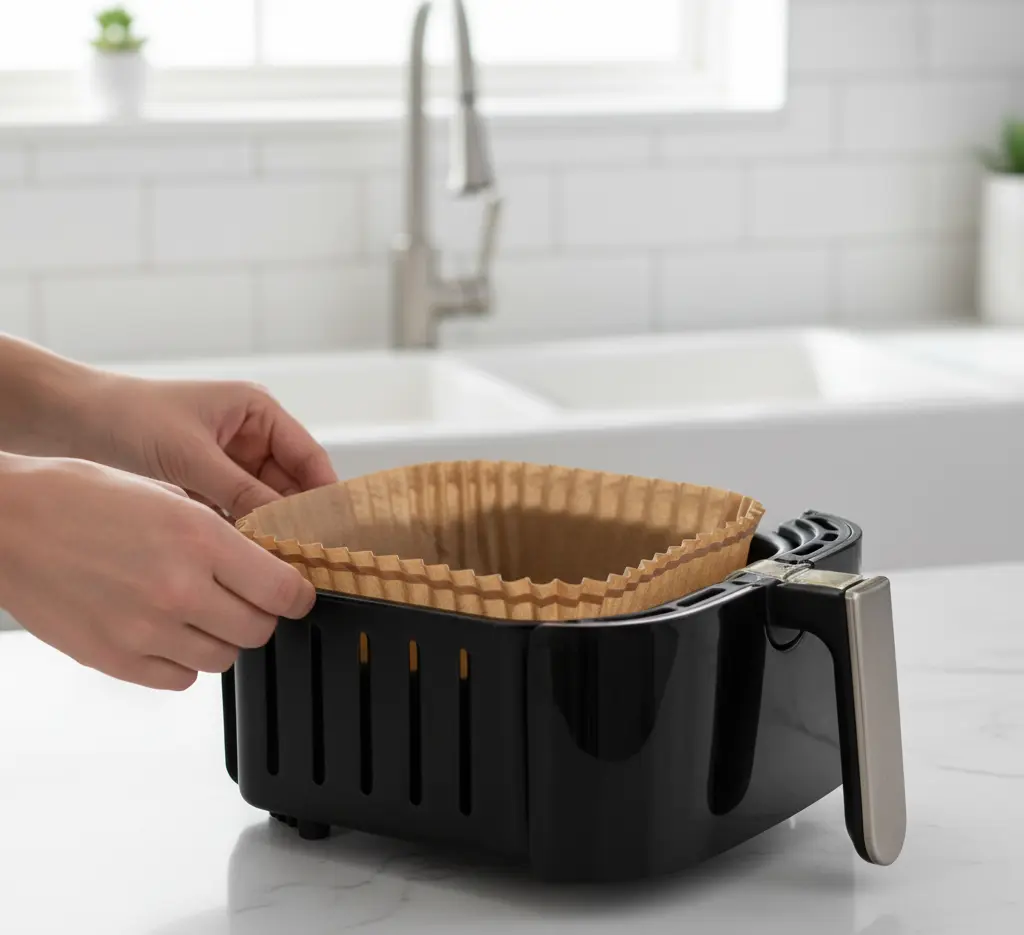
A perforated parchment liner lying flat in the basket, ready for food to weigh it down.
What Are Air Fryer Liners, Really?
An air fryer liner is a disposable or reusable insert that sits in the bottom of your cooking basket. It catches grease, drips, crumbs, and sauce before they bake onto the nonstick surface. Liners come in parchment paper, silicone, and aluminum foil, and they are sold as either flat sheets or pre-shaped rounds sized for common basket diameters. You can also read our guide on can you use a meat thermometer in an air fryer.
Here's what most guides don't tell you: liners are never required. Your air fryer basket is nonstick and works perfectly well bare. That's how the appliance was designed to function.
So why use one at all? Because in the right situation, a liner transforms a miserable cleanup into a two-second lift-and-toss. The key is understanding when the liner helps and when it gets in the way—and that depends on what you're cooking. You can also read our guide on best stainless steel air fryer.
The most reliable authority on this question is your air fryer's manual. If the manufacturer explicitly warns against liners, follow that guidance. Some basket designs rely on unobstructed airflow or a specific nonstick coating that a liner can interfere with.
Air Fryer Liner Types: Parchment, Silicone, and Foil
Not all liners behave the same way. Here's how the three main materials compare:
| Liner Type | Reusable? | Best For | Watch Out For |
|---|---|---|---|
| Parchment paper | No | Battered food, sticky sauces, baked goods | Empty liners can blow around; heat ratings vary |
| Silicone | Yes | Greasy, sticky foods you cook often | Solid versions trap steam and soften crispy food |
| Aluminum foil | No | A temporary drip guard in a pinch | Blocks airflow; can tear and fold near the heating element |
Perforated liners let hot air reach the food while solid ones trap steam underneath.
Parchment Paper Liners
Parchment is the most popular choice because it's cheap, disposable, and naturally nonstick. The best versions are perforated, which allows some hot air to reach the underside of the food.
Parchment liners shine with:
- Chicken tenders, fish sticks, or mozzarella sticks with a crumb coating
- Battered onion rings or tempura
- Anything glazed with barbecue, honey, or teriyaki sauce
- Small baked goods like cinnamon rolls or garlic bread
Place the parchment in the basket, then add food immediately on top. The food's weight keeps the paper flat. If your recipe calls for preheating, do that with an empty basket—never with the liner already inside.
One common mistake I see: using standard supermarket parchment without checking its heat rating. Many brands are rated to about 425°F (220°C), but this varies. Always check the box before using it at high temperatures. A lower-rated paper can scorch and smoke when your air fryer runs at 450°F.
Silicone Liners
Silicone liners are reusable, flexible, and much heavier than paper, so they won't fly around in the hot air. They're a solid daily option if you cook sticky or greasy foods regularly. After cooking, wash them by hand or put them in the dishwasher.
However, silicone has a real trade-off: it can act like a small baking sheet, insulating the bottom of the food from the hot air. Breaded items may come out softer on the underside than they would in a bare basket. If crispiness is your priority, choose a perforated silicone mat or skip the liner entirely.
Aluminum Foil Liners
Foil is the least ideal of the three options. It blocks airflow more easily than parchment, and if it tears, the pieces can end up near the heating element. If you must use foil, poke plenty of holes, keep it flat, and never wrap it up the sides of the basket.
Skip foil entirely for acidic foods like tomato-based sauces. Aluminum can react with acid and leave a metallic taste in your food. For almost every recipe, parchment or silicone is safer and more effective.
Do You Really Need a Liner? Honest Trade-Offs
No—and it helps to know exactly what a liner can and cannot do before you buy a pack.
The three real benefits:
- Easier cleanup. Liners catch drips and crumbs before they bake onto the basket.
- Better food release. They stop delicate items from sticking to scratched or worn surfaces.
- Extra basket protection. They add a soft barrier between food and the nonstick coating.
The three real costs:
- Less crispiness. Any barrier between food and the basket changes how heat and air reach the underside.
- Extra expense and waste. Disposable liners add up over time, both financially and environmentally.
- Fire risk if misused. Paper liners can burn when left empty or placed too close to the heating element.
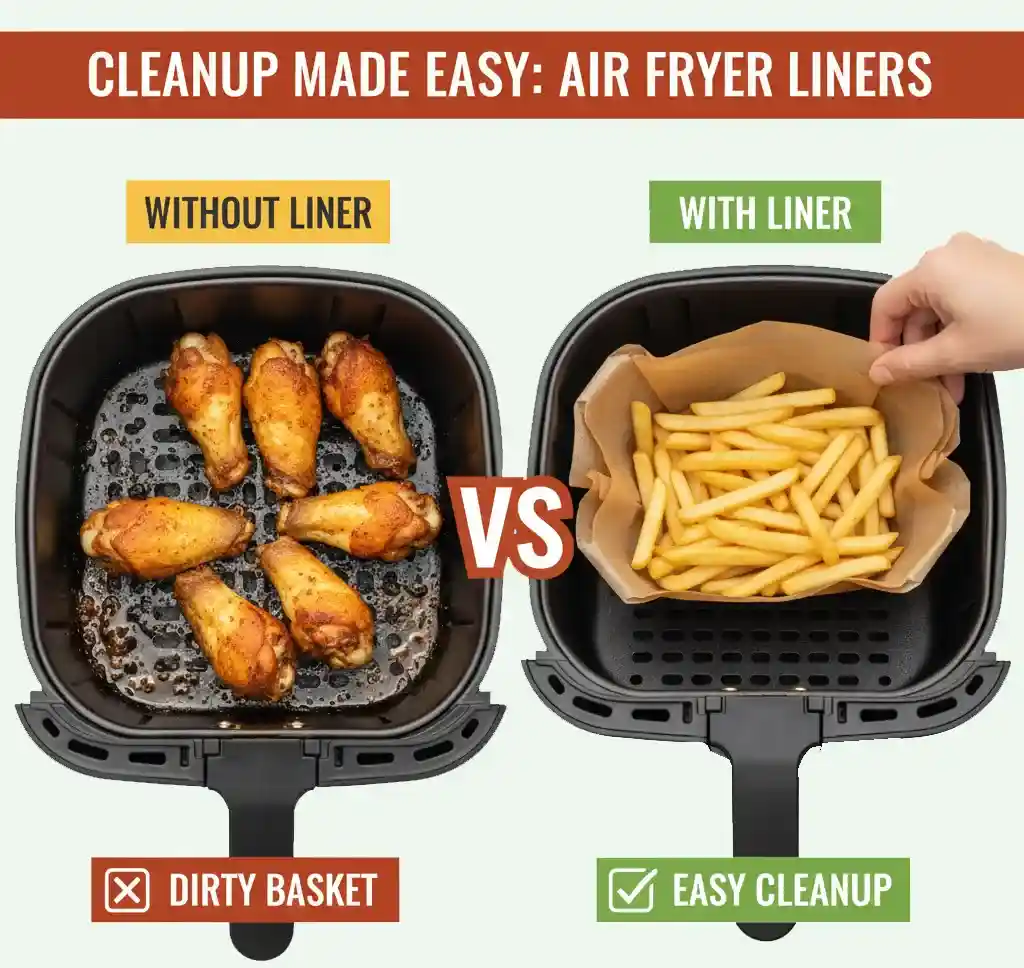
Consider whether tonight's meal actually needs a liner before adding one to the basket.
Think of a liner as a problem-solving tool, not an essential upgrade. The right question isn't "should I always use one?" but "does tonight's meal need one?" For crispy foods like french fries or chicken wings, the answer is almost always no.
My Simple Rule: When to Use an Air Fryer Liner
Use a Liner for Battered and Breaded Foods
Wet batter drips through the basket and bakes onto the drawer below—and that sticky film is one of the hardest things to clean in an air fryer.
A liner catches the drips before they burn. This works well for:
- Tempura vegetables
- Battered fish fillets
- Onion rings
- Chicken nuggets with a wet coating
- Mozzarella sticks
Parchment or silicone both work here, though I lean toward perforated parchment for anything breaded. Just make sure the liner lies flat and the food covers most of it so it can't lift in the fan. For more air fryer cooking inspiration, check out our guide on getting frozen cheese sticks crispy without the mess.
Use a Liner for Sticky, Saucy, or Glazed Dishes
Glazes contain sugar, and burned sugar is the worst kind of air fryer mess. Barbecue wings, honey garlic chicken, and teriyaki salmon all leave a residue that can take a long soak to remove.
One parchment liner catches the sauce while the flavor still caramelizes on the food. After cooking, lift the liner out and throw it away. The basket usually only needs a quick rinse.
Use a Liner for Crumbly or Melty Foods
Flaky fish, crumb-coated pork chops, garlic bread, and anything with shredded cheese can leave scattered bits behind. A liner gathers those loose pieces in one place.
It also helps with foods that stick as they melt. For a gooey baked cheese like camembert, a liner lets the whole dish slide out cleanly instead of gluing itself to the basket.
Use a Liner to Protect a Worn Basket
If the nonstick coating already has scratches, a liner provides a temporary protective layer. But here's the honest part: if the coating is flaking, replace the basket or the appliance. A liner is not a permanent fix for a failing nonstick surface, and it won't stop those flakes from ending up in your food.
When NOT to Use an Air Fryer Liner
Skip It When You Want Maximum Crispiness
Frozen fries, chicken wings, roasted vegetables, and anything you want a dry, crunchy exterior cook best directly on the basket. The exposed surface allows hot air to reach the bottom of the food.
A liner—especially a solid silicone mat—can trap steam and make the underside soft and pale. For homemade fries, even a perforated liner changes how the heat reaches the bottom of each piece. No liner will ever give you better browning than an uncovered basket.
Skip It During High-Heat Cooking and Empty Preheating
Most air fryers preheat around 400°F (200°C). If you put a paper liner in before preheating, the fan can blow it around until it touches the heating element. That can cause smoke, melting, or a fire risk.
Always preheat with an empty basket. Add the liner only after the preheat finishes, right before you add the food.
Most parchment liners are rated safe up to 425°F to 450°F, but a liner that touches the heating element can still scorch before the air around it reaches that temperature. If your recipe calls for 400°F or higher, weigh whether the mess is worth the risk. Often, a bare basket with a quick soak afterward is the safer choice.
Skip It in a Crowded Basket
An air fryer works by circulating hot air around every piece of food. Pack the basket too full and the air barely moves, leaving you with unevenly cooked results. Adding a liner on top of that reduces usable space and can push food higher than normal, closer to the heating coil.
If the basket is more than two-thirds full, leave the liner out and cook in smaller batches instead. You'll get better browning and avoid the liner shifting under the weight of a full load.
Skip It for Foods That Need Direct Heat From Below
Anything you want crispy on the bottom—hash browns, tortilla chips, breaded cutlets, or roasted chickpeas—benefits from direct contact with the hot basket surface. A liner adds a layer of insulation between the food and the heat source, which often means the underside comes out pale or soggy.
Air Fryer Liner Safety: What I Keep in Mind
Air fryer liners are safe when used correctly, but they're not risk-free. The two real dangers are fire and heat damage, both of which are easy to avoid with a few habits.
Always Weigh the Liner Down With Food
An empty parchment liner is a liability. The fan can lift it, flip it, and push it into the heating element, where it can smoke or catch fire. Once you place the liner in the basket, add food on top immediately. If you need to set the liner aside before cooking, keep it folded or pressed flat under a plate.
Trim the Liner to Fit Your Basket
Round parchment liners are sold in standard sizes, and they don't always match your basket diameter exactly. If the liner comes up the sides of the basket or extends over the rim, trim it down. The liner should lie flat across the bottom, with no edges sticking up or folding over. Any loose paper near the heating element is a potential problem.
Read the Heat Rating on the Box
Parchment paper is not all the same. Some brands are rated to 425°F, others to 450°F. Silicone typically handles up to 450°F as well. Check the packaging before you buy, and keep your air fryer's maximum temperature in mind. For reference, the USDA recommends cooking poultry to a safe internal temperature rather than relying on your appliance's max heat setting.
Don't Reuse Disposable Liners
Once a paper liner has been cooked, it's weakened and brittle. Reusing it risks tearing, which can send paper fragments into the basket and toward the heating element. Use each parchment liner once, then discard it. The cost of a single liner is far less than the hassle of cleaning burnt paper out of your air fryer.
Can You Reuse Silicone Liners?
Yes, silicone liners are designed for multiple uses. The main maintenance tasks are washing and inspecting.
After cooking, rinse the liner under warm water while it's still slightly warm. Grease comes off more easily when it hasn't fully hardened. Use a mild dish soap and a soft sponge or cloth. Avoid abrasive scrubbers and steel wool, which can scratch the silicone and create spots where food collects. Most silicone liners are dishwasher safe, but check the product description first—some are better hand-washed to preserve flexibility.
Let the liner dry completely before storing. Folded or stacked while damp, silicone can develop a musty smell. Inspect it regularly for cracks, tears, or discoloration. A torn silicone liner can leak grease onto the basket and compromise the nonstick surface. When that happens, replace it.
Disposable paper liners, by contrast, take zero maintenance. You use them once and toss them. The trade-off is ongoing cost and waste. In practice, many cooks keep a roll of perforated parchment sheets for messy dishes and one silicone liner for the sticky foods they cook weekly.
Common Mistakes That Ruin Air Fryer Liners
Even experienced cooks make these mistakes. They're easy to avoid once you know what to look for.
Mistake 1: Covering the Entire Basket Bottom
Some liner sheets are larger than the basket. If the liner covers the whole bottom and curls up the sides, it can block a significant portion of the airflow that runs along the basket walls. Cut the liner to size or buy one that fits your specific model. A liner that lies flat, with open space around the edges, keeps the hot air moving.
Mistake 2: Using Regular Parchment Paper Without Checking the Rating
Supermarket parchment paper is often labeled as oven-safe up to 425°F, which matches most air fryer preheat settings. But some brands are rated lower. If you use a paper rated for 400°F and run the air fryer at 450°F, the paper can scorch and smoke. Check the label. If it doesn't list a temperature rating, don't use it in an air fryer.
Mistake 3: Forgetting to Poke Holes in Solid Liners
Solid silicone mats and unbranded foil sheets can act like a solid plate, trapping steam underneath the food. If you have a solid liner, either buy a perforated version or poke a grid of small holes with a fork or toothpick (for foil) before cooking. The holes let hot air reach the bottom of the food, promoting even browning.
Mistake 4: Ignoring the Manual
A small number of air fryer manufacturers advise against liners because their basket design relies on exposed airflow or a specific nonstick coating. Your manual is the most reliable source of truth. If it says no liners, respect that warning. If it stays silent, proceed with the safety tips above.
Alternatives to Air Fryer Liners That Actually Work
Sometimes the best way to avoid a mess is to change how you cook, not to add another purchase. These three options keep cleanup easy without any liner at all.
Spray the Basket Lightly With Oil
A quick mist of cooking oil on the basket surface reduces sticking. This works best on a clean, nonstick basket. Spray lightly across the bottom and up the sides, then add your food. Avoid aerosol sprays that contain lecithin or propellants, which can leave a sticky residue on the coating over time. A simple oil mister or a brush dipped in oil does the job without the residue.
Use the Crisper Plate or Rack
Many air fryers come with a removable crisper plate or rack. Cooking on this elevated surface keeps food above the drips, which collect at the bottom of the basket. The plate is usually dishwasher safe. If yours has one, experiment with it for foods like chicken thighs or salmon, where the plate catches most of the rendered fat.
Soak the Basket Immediately After Cooking
The fastest path to an easy cleanup is to clean within a few minutes of cooking. Once the basket cools just enough to touch, fill it with warm water and a drop of dish soap. Let it soak for 10 minutes. Baked-on food releases easily with a soft sponge. This method works well for poultry, roasted meat, and any dish that leaves fat behind.
Wash the Basket Thoroughly Between Uses
A buildup of old grease makes every future cook stickier. Give the basket a full clean after each use with warm, soapy water and a soft sponge. For stubborn spots, an extra soak helps remove residue without harsh scrubbing. Harsh scrubbing can scratch the nonstick coating over time. If you notice the coating flaking, stop using the basket and consider a replacement.
How to Choose the Right Air Fryer Liner
If you decide a liner is worth trying, pick based on your primary use, not the brand with the most stars.
Material Preferences
- Parchment is best for sticky, saucy, or battered foods when you want zero cleanup afterward.
- Silicone suits greasy, sticky foods cooked regularly and reduces waste over time.
- Foil is the least recommended due to airflow and tearing concerns.
Size and Fit
Buy a liner that sits flush in your basket. If the liner is too large, it rises up the sides and blocks airflow. If it's too small, it can slide around. Measure the basket diameter before ordering. Many brands sell multi-packs with several sizes, which is a practical option if you own multiple air fryers or plan to upgrade later.
Perforation Matters
Perforated liners allow hot air to reach the food. Solid liners are fine for baking-style dishes like frittata or cornbread, where you want the food to simmer in its own moisture. For anything you want crispy, choose perforated.
Heat Resistance Check
Look for a liner rated to at least 450°F (230°C), which is above the maximum of most air fryers. That margin of safety ensures the liner won't scorch during preheating or high-heat cooking.
Frequently Asked Questions
Are air fryer liners worth getting?
Yes, for messy, sticky, or battered foods. They cut cleanup time significantly and protect the basket from scratches. For crispy foods like fries and wings, brushing the basket with a little oil achieves better results without a liner.
Do air fryer liners prevent air flow?
They can reduce airflow if they are solid or too large for the basket. Perforated paper liners and properly fitted silicone mats allow decent air movement. Cook at a slightly lower temperature or shake the basket halfway through to account for the difference.
When should I not use a crisper plate in the air fryer?
Skip the crisper plate for foods that drip a lot, like bacon or marinated chicken, because the extra height can create smoke and uneven cooking. Use it for breaded items and homemade fries where you want crisping on all sides.
Can a paper liner catch fire in an air fryer?
An empty parchment liner can drift toward the heating element and ignite. Always weigh the liner down with food immediately after placing it, and never preheat with the liner inside. This is the single most important safety rule with paper liners.
How many times can I reuse a silicone liner?
With proper care, silicone liners last for months or even years. Replace them when you notice cracks, tears, burns, or an odor that doesn't wash out. Once the surface degrades, it's no longer safe to use.
Final Thoughts on When to Use Air Fryer Liners
The best air fryer liner is the one that matches the meal you're making. Use a parchment liner for battered, saucy, or melty foods that would otherwise leave a baked-on mess. Use a silicone liner for the sticky favorites you cook every week. Skip the liner entirely for anything that needs dry, circulating heat to turn crispy.
The rule I come back to every time is this: if the food would leave a mess on the basket, use a liner. If you want maximum crunch, cook bare.
With that simple judgment call, you get clean baskets and crispy results without buying a drawer full of accessories. Start with one pack of perforated parchment liners and one silicone mat, and learn which of your favorite meals actually benefit from them. The rest is just a habit.