Skip to content
Cooking a turkey can make even experienced home cooks a little nervous. One reason is the worry about whether the turkey is done all the way through. Nobody wants dry, overcooked meat, but serving undercooked poultry is risky. That’s why using a meat thermometer is essential—it’s the only way to really know if your bird is safe and juicy.
But a thermometer is only as good as its placement. If you insert it in the wrong spot, you might get a false reading, which can lead to food safety issues or a disappointing meal. This article gives you clear, expert advice on where to insert a meat thermometer in turkey, why the location matters, and how to get the best results every time.
Why Proper Thermometer Placement Matters
A turkey is not one single piece of meat. Its different parts—breast, thigh, drumstick, and wings—cook at different rates. The breast is lean and dries out quickly, while the thighs and drumsticks are fattier and need more time. If you check the temperature in the wrong place, you could think your turkey is done when it’s not, or you could overcook the most delicate part.
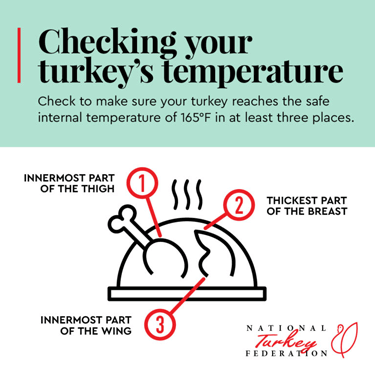
Food safety is a top concern, too. The USDA recommends turkey reach an internal temperature of 165°F (74°C) to kill harmful bacteria like Salmonella and Campylobacter. Only the thickest part of the turkey takes the longest to heat up, so that’s where you need to check.
Besides safety, thermometer placement affects taste and texture. Correct placement means the breast stays moist and the legs are cooked through, leading to a turkey that’s both safe and delicious.
Types Of Meat Thermometers For Turkey
Before inserting a thermometer, you need to know which type you have. Each works a little differently, and some are more accurate than others.
| Type | How It Works | Best For | Accuracy |
|---|---|---|---|
| Instant-Read | Gives a temperature in 5–10 seconds | Spot checking | Very accurate |
| Leave-In Analog | Stays in turkey during roasting | Continuous monitoring | Good, but slower response |
| Digital Probe | Probe stays in, display outside oven | Precise, real-time reading | Highly accurate |
Instant-read thermometers are great for quick checks, but you can’t leave them in the oven. Leave-in analog or digital probe thermometers can stay in the turkey while it cooks, letting you track progress without opening the oven too often.
The Best Place To Insert A Meat Thermometer In Turkey
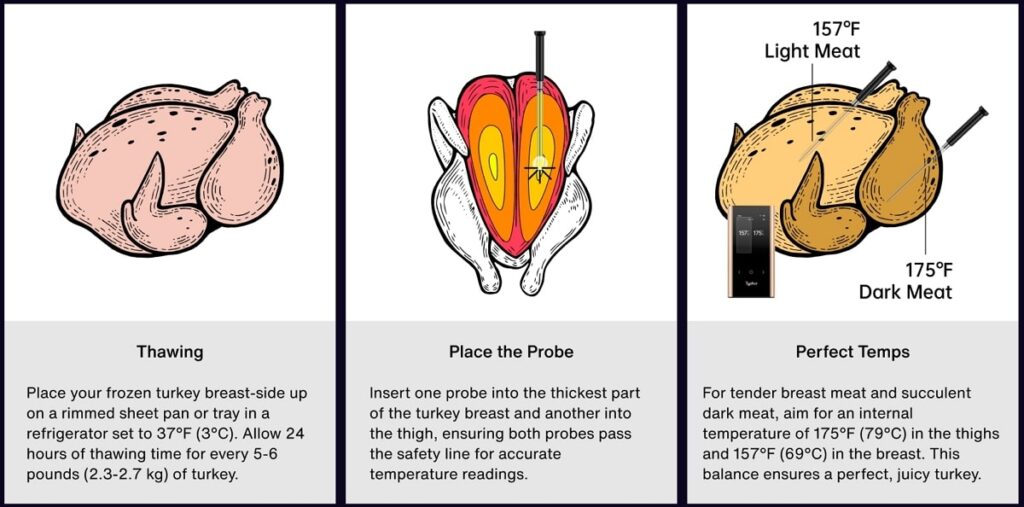
Many cooks get confused about where to put the thermometer. The answer: the thickest part of the turkey’s thigh is the gold standard, but you should also check the breast.
Here’s why:
- The thigh is the slowest to heat up. If the thigh is safe, the rest is, too.
- The breast can overcook, so checking it helps avoid dry meat.
Step-by-step: Inserting The Thermometer
1. Locate The Thigh
Find the area where the turkey’s leg attaches to the body. This “joint” is the perfect spot to check.
2. Insert Into The Thickest Part
Push the thermometer into the thickest part of the thigh, away from the bone. If it touches bone, your reading will be too high.
3. Check The Breast
After the thigh, insert the thermometer into the thickest part of the breast, deep but not touching bone. The breast cooks faster, so you want to be sure it’s not overdone.
4. For Stuffed Turkeys
If your turkey is stuffed (not recommended for safety), also check the center of the stuffing. It must reach 165°F (74°C).
Visual Reference
The following table summarizes the target placements and temperatures:
| Location | Why Check Here? | Safe Temperature | Tips |
|---|---|---|---|
| Thickest Part of Thigh | Heats slowest, ensures safety | 165°F (74°C) | Avoid bone and fat pockets |
| Thickest Part of Breast | Prevents overcooking | 160–165°F (71–74°C) | Don’t touch bone |
| Center of Stuffing | Stuffing can harbor bacteria | 165°F (74°C) | Check after meat is done |
Common Mistakes To Avoid
Even with the best thermometer, mistakes can lead to unsafe or dry meat. Here are errors to watch out for:
1. Touching Bone Or Gristle
The bone heats up faster than meat, so readings are higher. Always insert the thermometer into the meat only.
2. Shallow Insertion
If the tip is too close to the surface, it reads the oven temperature, not the turkey’s inside.
3. Only Checking One Spot
The thigh and breast heat at different rates. Always check both before deciding your turkey is done.
4. Ignoring Carryover Cooking
The turkey keeps cooking after you remove it from the oven. If the breast is at 160°F, it will rise to 165°F as it rests.
5. Not Calibrating The Thermometer
Old or cheap thermometers may give wrong readings. Check your thermometer’s accuracy by testing it in ice water (should read 32°F/0°C) and boiling water (212°F/100°C at sea level).
Credit: explore.typhur.com
Step-by-step Guide For Perfect Results
Let’s walk through the process so you can roast with confidence.
1. Prepare The Turkey
Remove the giblets and pat the turkey dry. Tuck wings under, tie legs together, and season as you like. Preheat the oven according to your recipe—usually 325°F (163°C).
2. Insert The Thermometer
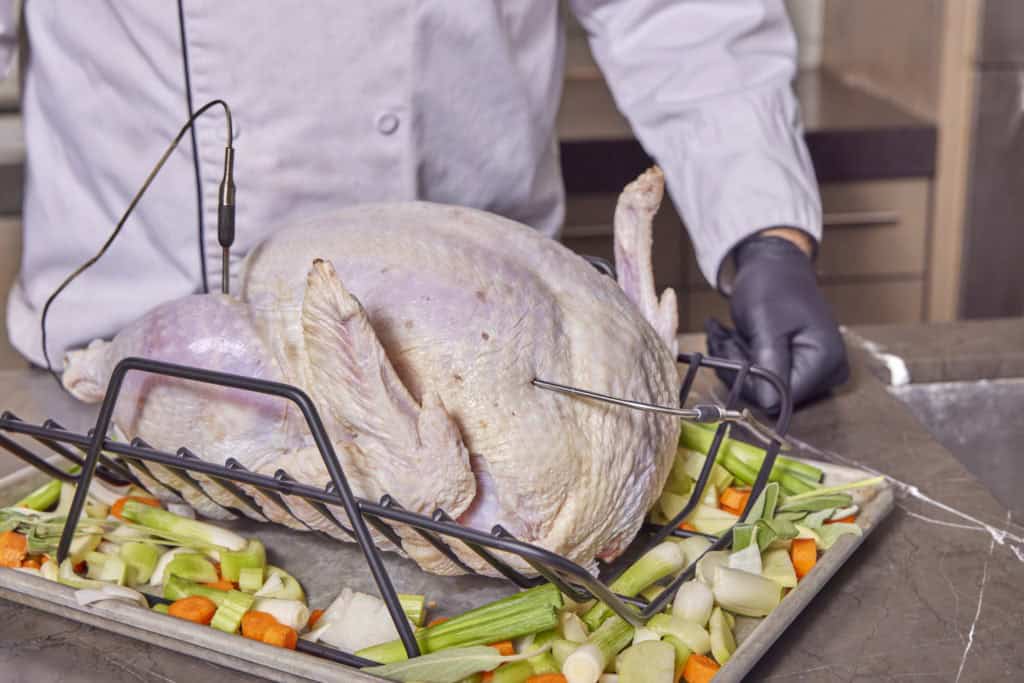
If using a leave-in probe, insert it before roasting. For instant-read, check at the end of cooking.
- Thigh: Insert into the inner, thickest part, near the drumstick but not touching bone.
- Breast: Insert into the thickest section, in the center of the breast.
3. Monitor Temperatures
Start checking about 30–45 minutes before the estimated finish time. Turkeys roast roughly 13–15 minutes per pound unstuffed, but always go by temperature, not time.
4. Rest Before Carving
When the thigh and breast reach safe temperatures, remove the turkey from the oven. Tent with foil and let rest at least 20–30 minutes. This lets juices redistribute and the temperature finish climbing.
5. Check Again Before Serving
For extra safety, check the temperature again in both spots before carving. Especially if the turkey has rested a long time or you’re serving a crowd.
You might find this helpful: Best Meat Thermometer for Turkey
Comparing Thermometer Placement: Whole Turkey Vs. Turkey Breast Or Pieces
Not everyone roasts a whole bird. If you’re cooking only a turkey breast or turkey legs, the approach changes slightly.
| Type | Where to Insert | Safe Temperature | Notes |
|---|---|---|---|
| Whole Turkey | Thickest thigh and breast | 165°F (74°C) | Check both spots |
| Turkey Breast | Center of thickest part | 160–165°F (71–74°C) | Rest so temp rises |
| Turkey Legs/Thighs | Thickest part of each piece | 170°F (77°C) for extra tenderness | Dark meat can go a bit higher |
Pro tip: Dark meat (thigh, drumstick) can reach 170–175°F (77–80°C) and still stay juicy, while the breast dries out above 165°F.
Credit: www.eatturkey.org
Non-obvious Tips For Accurate Readings
Most guides stop at basics, but a few extra steps can make your holiday meal stress-free:
- Pre-warm the thermometer’s probe under warm water if it’s cold. A cold probe can drop the reading briefly.
- Take multiple readings in each spot. Sometimes, one side of the turkey is hotter than the other, especially in crowded ovens.
- Angle the thermometer slightly toward the center of the bird, especially for the thigh. This helps avoid bone and gets the true center.
- For spatchcocked (butterflied) turkeys, check both thighs and the thickest breast point, as the bird cooks more evenly but faster.
What About Pop-up Timers?
Many store-bought turkeys come with a pop-up timer. These can be handy but are not always accurate. They often “pop” at 180°F (82°C) or higher, which is safe but can lead to dry meat. Always trust your own thermometer more than a pop-up timer.
Cleaning And Caring For Your Thermometer
A meat thermometer touches raw turkey, so cleaning is essential for safety.
- Wash the probe with hot, soapy water after each use.
- Avoid submerging digital displays—wipe with a damp cloth.
- Store thermometers in a clean, dry place to protect the tip and electronics.
Troubleshooting: What If Readings Seem Off?
If your thermometer gives strange readings, try these steps:
- Recalibrate using ice water or boiling water.
- Change batteries if it’s digital.
- Check multiple spots in the turkey.
- If using an analog thermometer, tap it gently—the needle can get stuck.
If in doubt, cook the turkey a little longer and re-check. It’s better to be safe, as undercooked poultry is dangerous.
Credit: blog.thermoworks.com
Frequently Asked Questions
Where Exactly Should I Insert The Thermometer In The Turkey Thigh?
Push the thermometer into the inner, thickest part of the thigh, just above where the drumstick attaches to the body. Make sure it’s not touching bone—only meat. This spot heats up last, so it gives the safest reading.
Can I Leave My Thermometer In The Turkey While It Cooks?
If your thermometer is labeled as oven-safe or has a digital probe with a heatproof cord, you can leave it in. Instant-read models are for spot checks only and should not stay in the oven.
What If The Breast Is Done But The Thigh Isn’t?
If the breast reaches 165°F before the thigh, cover the breast loosely with foil and return the turkey to the oven. The foil slows down cooking of the breast while the thighs finish. This helps prevent dry breast meat.
Do I Need To Check The Stuffing Temperature?
Yes, if you cook your turkey with stuffing inside, the stuffing must reach 165°F (74°C). Insert the thermometer into the very center of the stuffing to check. If it’s not hot enough but the turkey is, remove stuffing and microwave until it reaches the safe temperature.
What Are The Risks Of Not Using A Meat Thermometer?
Without a thermometer, you’re guessing if the turkey is safe to eat. Undercooked turkey can cause food poisoning, while overcooked turkey is dry and tough. A thermometer removes the guesswork and is the only reliable way to check doneness.
Roasting a turkey is easier and less stressful when you know exactly where to insert your meat thermometer. The right placement protects your family’s health, keeps the meat juicy, and ensures a perfect holiday centerpiece. For more detailed guidelines and official recommendations, visit the USDA Food Safety and Inspection Service website. With the right tools and techniques, your next turkey will be both safe and delicious.