Skip to content
Ask anyone who has donated a barely used air fryer, and the answer is rarely “it stopped working.” Why are people getting rid of their air fryers? In many kitchens, the machine still runs fine. The real problem is that it no longer fits the space, the portion size, or the cleanup routine.
Manufacturer specifications show most popular basket models pull between 1400 and 1800 watts and hold roughly 4 to 6 quarts. That is enough for two to four servings of fries, but not a family dinner. As of 2026, typical prices sit between $60 and $300, so the appliance is not a huge financial loss when it goes.
Instead, it is a counter space and expectation problem. So before you toss yours, it helps to understand where the regret actually comes from.
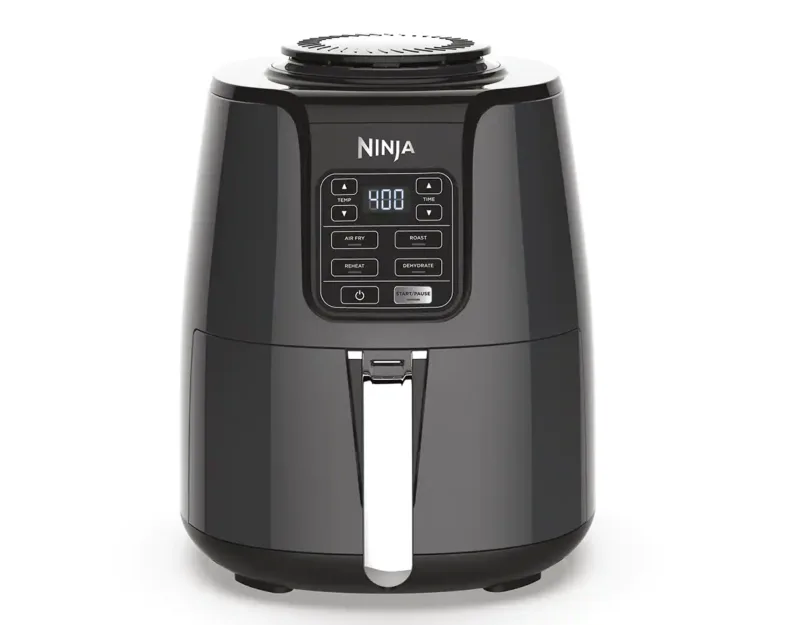
Image source: Bing (Web (fair-use with source credit))
The Real Reason People Are Getting Rid of Their Air Fryers
For most people, the decision starts with counter space. Air fryers look compact in product photos, but on a real counter a 6-quart basket model is surprisingly tall and deep. It competes with a coffee maker, a knife block, and a cutting board.
Many owners realize only after a month that the appliance has become a permanent counter resident, not a cupboard item.
Capacity is the second frustration. A standard basket holds enough for one or two people, but not for a family of four. You can cook in batches, but that takes extra time and means the first batch sits while the second finishes.
That defeats the convenience people bought it for.
Cleaning is another breaking point. Food particles get trapped around the crisper plate, and grease builds up in a way that a quick wipe cannot fix. Some models have nooks that are hard to reach without soaking.
If the nonstick coating starts to peel, that appliance quickly loses its appeal.
Texture expectations are also a common letdown. An air fryer does not truly deep fry. It circulates hot air, which crisps the outside but does not produce the same chew or interior moisture.
Foods with wet batters turn out pale and soggy. Some people simply expected a fried chicken replacement and got roasted chicken instead.
Our research shows that the energy cost difference is real, but it rarely decides whether someone keeps the machine. And if you want a clearer picture of the airflow design inside a basket-style model, that visual guide helps explain why food needs to be in a single layer.
Quick Answer: Most Regret Comes Down to Size and Expectations
Why are people getting rid of their air fryers? Most regret comes down to size and expectations. A 4 to 6 quart basket feeds one or two people.
It does not replace a full oven. Cleaning and peeling nonstick add frustration. Many owners decide it is not worth the counter space.
Basket-Style vs Oven-Style Air Fryers: Where the Frustration Starts
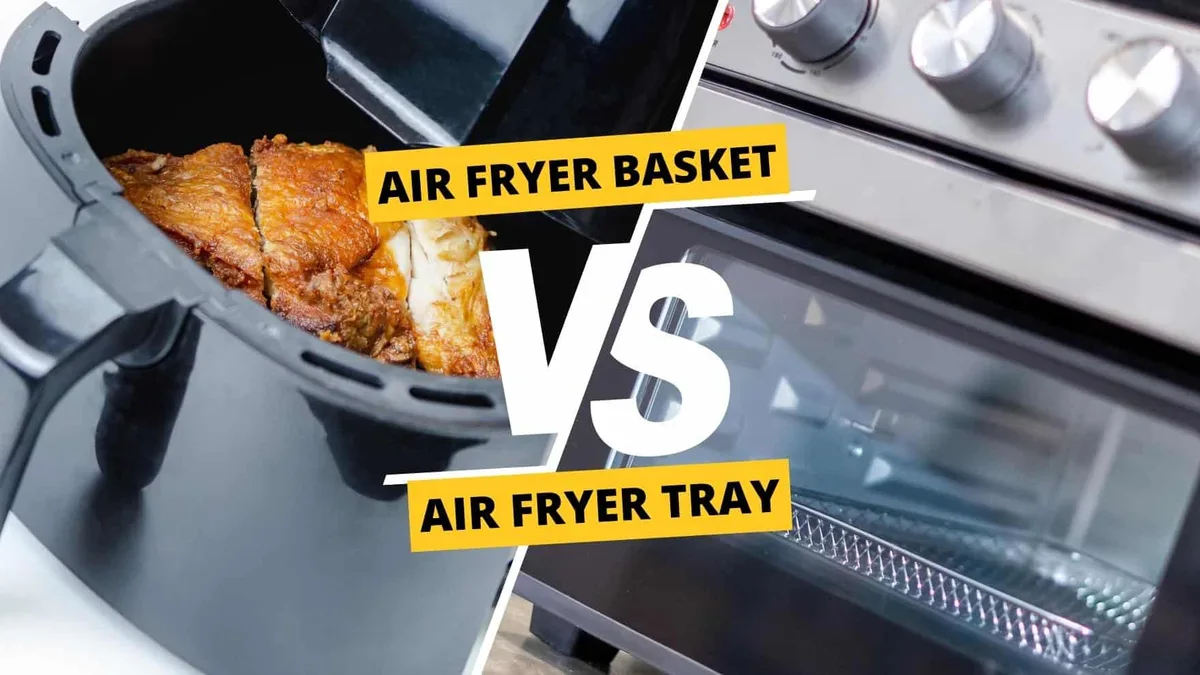
Image source: Web (Bing) / kitchenwink.com (Web image (fair-use with source credit))
The first decision that leads to regret is often the style. Basket-style air fryers have a pull-out drawer with a removable crisper plate. Oven-style air fryers look like small convection ovens with a door, racks, and sometimes a rotisserie.
Both use a heating element and a fan, but the ergonomics and cooking results differ in ways that matter daily.
Here is a side-by-side look:
| Feature | Basket-Style Air Fryer | Oven-Style Air Fryer |
|---|---|---|
| Counter footprint | Smaller and deeper | Wider but flatter |
| Usable capacity | Often overstated | More flexible rack space |
| Cleaning | Basket and plate can go in dishwasher | Racks and interior need more manual wiping |
| Best for | Crisping small batches, fries, wings | Baking, toasting, larger items |
Basket models are more popular, but they force food into a single layer to cook evenly. That limitation becomes obvious when you try to cook a whole bag of frozen fries. You either cook in batches or accept uneven browning.
Oven-style units spread food across two or three racks, but they still need rotation halfway through for even results.
Many owners who ditch a basket machine do not abandon air frying altogether. They often replace it with an oven-style unit or a convection toaster oven, which brings us to the next comparison.
Air Fryer vs Convection Toaster Oven: The Replacement Many Choose
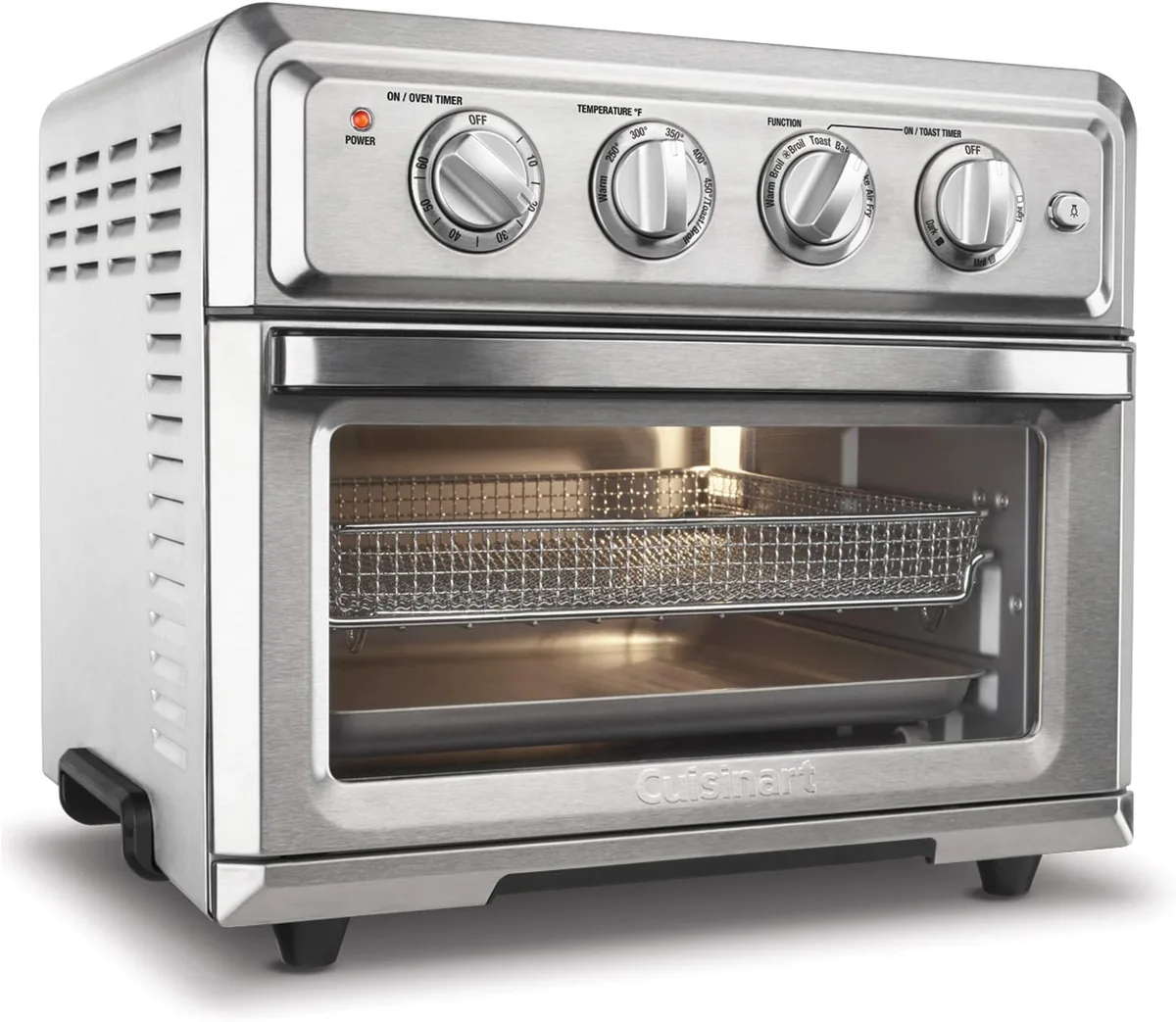
Image source: Web (Bing) / amazon.com (Web image (fair-use with source credit))
When someone gives away a small air fryer, the replacement is often a convection toaster oven. Why? Because a toaster oven with convection does most of what an air fryer does, plus it toasts, bakes, broils, and handles a sheet pan.
The flat interior accepts more food shapes than a round basket, and the glass door lets you watch without opening the unit.
The trade-off is speed. A dedicated air fryer preheats faster and pushes air more aggressively around a small cavity. A convection toaster oven takes longer to get hot and does not always crisp as intensely.
But for reheating pizza, roasting vegetables, or making a decent slice of toast, the toaster oven is more forgiving.
Many households keep both for a while, then realize one is carrying the load. Our research suggests the air fryer usually loses that contest when counter space is limited. If you use your oven less than your toaster, a convection toaster oven is the smarter single appliance.
Air Fryer vs Full-Size Oven and Convection Oven
A full-size oven is not a direct replacement for an air fryer, but it is the benchmark people judge against. The oven wins on capacity. A standard oven can roast a whole chicken, bake a tray of cookies, and handle multiple dishes at once.
An air fryer cannot do any of that at scale.
The air fryer wins on speed and heat management. A 1500-watt air fryer preheats in about three minutes and directs heat right at the food. A full-size oven uses 2400 to 5000 watts and needs ten to fifteen minutes just to reach temperature.
In warm weather, that extra heat makes the whole kitchen uncomfortable. You can see the full cook time savings in our separate breakdown.
That said, a convection oven closes most of the gap. Convection uses a fan to move hot air, just like an air fryer. The difference is size.
A convection oven takes longer to heat but can crisp a full sheet pan of vegetables in one go. If you already have a convection oven, you may not need a separate air fryer.
For meat and poultry, always use a food thermometer and follow USDA safe internal temperatures. An air fryer cooks quickly, but smaller cuts can dry out on the outside before the center reaches a safe temperature. Check thick chicken breasts and pork chops at the halfway mark.
Air Fryer vs Microwave for Reheating and Crisping
A microwave is fast but turns fried food soggy. An air fryer takes longer but restores a crisp exterior. That is the trade-off people usually accept.
For reheating pizza, fries, or fried chicken, an air fryer wins on texture. Set it to 300°F to 350°F for a few minutes. A microwave will finish in half the time, but the food often ends up limp.
Verified buyer feedback suggests the air fryer is reserved for weekends or larger portions. If you only reheat small snacks, a microwave may be all you need. For restaurant-quality wings at home, you might use an air fryer to bring leftover wings back to crisp.
Capacity, Counter Space, and Single-Layer Cooking Limits
Air fryer baskets range from 2 to 10 quarts. Most popular models sit between 4 and 6 quarts. That sounds generous, but the usable space is smaller than the number suggests.
Food needs a single layer to brown properly. A 6-quart basket can hold about 1 pound of fries or two chicken breasts. A family of four will need two or three batches.
That means the first batch cools while the second cooks.
The footprint adds frustration. A typical basket air fryer is about 12 inches deep and 12 inches tall. On a small counter, that pushes other appliances aside.
Many owners decide the space is better used for a toaster oven or a microwave.
Cleaning, Nonstick Coatings, and Smoke Problems
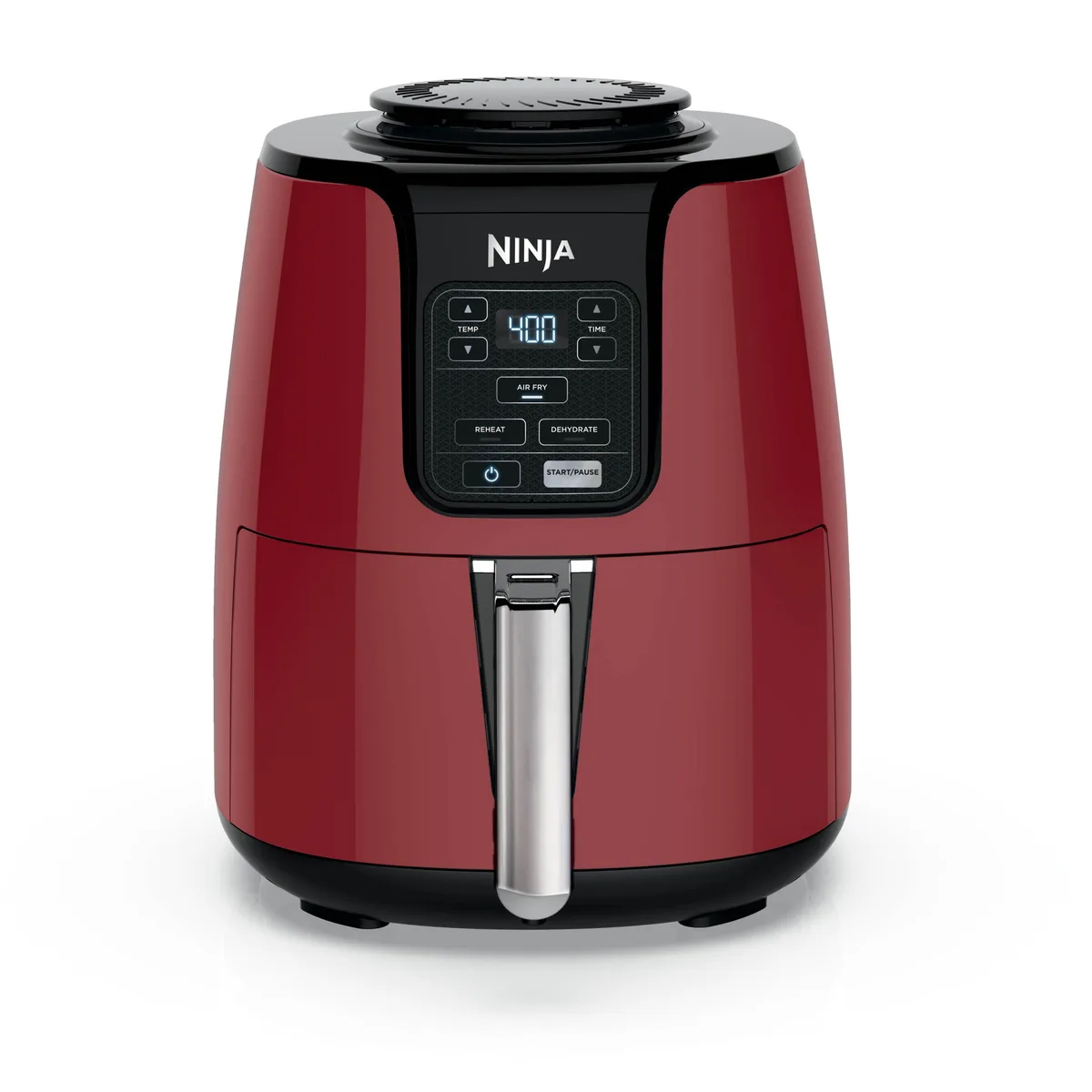
Image source: Web (Bing) / walmart.com (Web image (fair-use with source credit))
Cleaning is the quiet killer of air fryer enthusiasm. The basket and crisper plate often fit in a dishwasher, but grease still builds up. Food particles wedge between the plate and the basket walls.
A quick rinse is rarely enough.
Nonstick surfaces create another concern. Many baskets use a PTFE-based coating. If it scratches or peels, the coating can flake into food.
Some people switch to ceramic-coated baskets or models labeled PFOA-free. Always hand wash if the coating is damaged.
Fatty foods also cause smoke. Bacon, burgers, or chicken thighs release grease that hits the hot element. That can set off smoke alarms in a small kitchen.
Putting a little water in the bottom of the basket helps reduce smoke, but you should still watch the exhaust vent. For more on what can and cannot go inside the basket, our guide on using tin foil safely covers the basics.
Energy Use, Preheating, and Where Air Fryers Still Win
An air fryer uses 1400 to 1800 watts, which is less than a full-size oven but more than a microwave. Because it preheats in three to five minutes, it draws less total energy than a large oven for small meals. In warm weather, that also means less heat added to the kitchen.
The air fryer still wins for small batches, frozen snacks, and reheating crispy foods. It also works well in apartments or rental kitchens with weak ovens. If you cook a full meal, a convection oven or toaster oven will often be more efficient because it can handle everything at once.
Who Should Actually Get Rid of an Air Fryer
If you cook for four or more people every night, a single-basket air fryer will frustrate you. You may be better off with a dual-basket model, an oven-style unit, or a full-size convection oven.
If you already have a convection toaster oven, a separate air fryer is often redundant. The toaster oven can crisp, bake, and reheat without taking another appliance slot. If you hate cleaning small parts, the basket and plate will annoy you after a few weeks.
If you rarely eat fried-style foods, the air fryer will likely collect dust. And if counter space is already tight, that tall basket model will be the first thing you move to a cupboard, then eventually out the door.
Who Should Keep It or Upgrade to a Larger Model
If you cook for one or two people and use the air fryer most days, keep it. A 4 to 6 quart basket handles a couple of chicken breasts, a half bag of fries, or a dozen wings without fuss. You are the exact user the appliance was built for.
If you like the air frying method but need more room, upgrade instead of quitting. A dual-basket model cooks two foods at different temperatures at the same time. An oven-style air fryer with racks gives you more flexible sheet pan space.
Choose based on what you actually cook, not what the presets promise.
Owners who live in warm climates often keep the air fryer because it does not heat the kitchen like a full oven. If you rent a place with a weak or unreliable oven, the air fryer becomes the primary cooker for small meals. In those cases, keeping it makes more sense than donating it.
Mistakes That Make People Hate a Perfectly Good Air Fryer
Many people dislike an air fryer because of how they use it, not because of a design flaw. The biggest mistake is overcrowding the basket. When food stacks or touches, air cannot circulate around every piece.
The result is uneven browning and soggy spots.
Another common error is skipping the preheat. A three minute preheat makes a noticeable difference on frozen fries, chicken wings, and breaded items. Without it, the first batch starts in a cold cavity and never develops the crisp exterior you expect.
Here are the most common mistakes that push people toward giving up on air frying:
- Filling the basket more than halfway and getting steamed food instead of crisp food
- Using wet batters that drip and burn on the heating element
- Spraying aerosol nonstick spray that damages the basket coating over time
- Not shaking or flipping food halfway through the cook
- Setting the temperature too high and drying out thin cuts of meat
- Never cleaning the crisper plate, which leads to smoke and bad smells
Fix those habits before blaming the appliance. Many verified buyer reviews confirm that simple technique changes solve most texture complaints. If you are unsure about which oils are safe to spray, that guide clears up one of the biggest coating mistakes.
Pro Tips for Making a Small Air Fryer Earn Its Space
A compact air fryer can still pull its weight if you use it smartly. Pat food dry before it goes in the basket. Moisture turns to steam instead of crisp.
A light brush of oil helps browning, but you do not need much.
Preheat the unit while you season the food. Shake the basket or flip larger pieces halfway through. This one step fixes most uneven cooking complaints on fries and nuggets.
Use perforated parchment liners if you hate scrubbing the basket.
Use the air fryer for reheating more than raw cooking. It revives leftover pizza, fried chicken, and roasted vegetables faster than an oven and better than a microwave. For thicker proteins, lower the temperature and check the internal temperature early.
If you are cooking a steak in the air fryer, a shorter cook at high heat gives a better crust than a long slow roast.
A few well chosen accessories help. A small trivet or rack lets you cook two layers of vegetables. A silicone liner reduces cleanup.
But avoid accessories that block airflow or create clutter, because that defeats the purpose of a small appliance.
Air Fryer Regret Questions People Ask Before Donating One
Can a bigger air fryer actually solve portion problems?
Yes, but only if you go big enough. A 8 or 10 quart model holds more, but it takes up more counter space. A dual-basket unit lets you cook a main and a side at once without doubling the footprint too much.
If you need a full family dinner in one go, an oven-style air fryer or a convection toaster oven is usually the better swap.
Is an air fryer bad for your health?
No. The cooking method uses hot air and little oil, which is not harmful. Concerns usually come from nonstick coatings that can degrade.
Look for PFOA-free or PFAS-free models. Avoid scratching the basket. If the coating flakes, replace the basket or the whole unit.
The FDA food contact safety rules set the standard for those coatings.
Do air fryers cause smoke or fire hazards?
They can smoke from grease hitting the heating element, but they rarely cause fires when used correctly. Unplug before cleaning. Leave clearance around the exhaust vent.
Never place the unit against a wall or under cabinets. High fat foods like bacon need a little water in the bottom of the basket to reduce smoke. Follow the electrical safety guidance from UL and check for recalls on older models.
Will I regret getting rid of my air fryer?
Maybe. If you only use it for frozen snacks in summer, you might miss it when the weather gets hot again. If you replace it with a convection toaster oven, the gap closes completely.
But if you give it away and still have no reliable way to crisp small portions fast, you will likely wish you had kept the basket model.
Final Verdict: Keep It, Swap It, or Let It Go
Keep it if you cook for one or two, use it at least weekly, and want quick crisp results without heating the whole kitchen. A 4 to 6 quart basket model earns its space for that crowd.
Swap it if you love air frying but need more capacity. Go for a dual-basket model or an oven-style air fryer. That upgrade solves the batch cooking problem without giving up the method.
Let it go if you already own a convection toaster oven, you rarely eat fried-style foods, or you hate cleaning small parts. In those cases, the air fryer is just clutter. Donate it to someone who will actually use it.