Microwaves have changed how we cook and reheat food. They are fast, convenient, and almost every kitchen has one. But there’s a common frustration: food heated in the microwave often gets cold much faster than food warmed on the stove or in the oven. You take out your plate, enjoy a few bites, and suddenly, your meal is lukewarm or even cold. Why does this happen? Is it just your imagination, or is there science behind it?
Understanding why microwave food cools down faster can help you avoid disappointment at lunch or dinner. It also reveals interesting facts about how microwaves work, how heat moves in food, and what you can do to keep your meals hot for longer. This article will explain, step by step, the reasons behind this phenomenon, using clear language and practical examples. Whether you love quick microwave meals or just want to keep your leftovers warmer, you’ll find useful tips and science-backed explanations here.
How Microwaves Heat Food
To understand why microwave-heated food cools quickly, you first need to know how microwaves heat food in the first place. Unlike ovens or stoves, microwaves use a special method to make food hot.
The Science Behind Microwave Heating
Microwaves use electromagnetic waves, specifically microwaves, to heat food. These waves are absorbed mainly by water molecules inside the food. The microwaves cause these water molecules to vibrate very fast, creating heat. This process is called dielectric heating.
Most of the time, microwaves heat food from the inside out. Actually, they mostly heat the water, fat, and sugar molecules in the outer layers of the food. The heat then spreads inward and outward, but not always evenly. This is different from stoves and ovens, which heat the surface first and then heat moves inward by conduction.
Uneven Heating
Because microwaves heat certain molecules, food can heat unevenly. Some parts might be very hot, and others still cold. This patchy heating is why you often see warnings to stir your food halfway through microwaving.
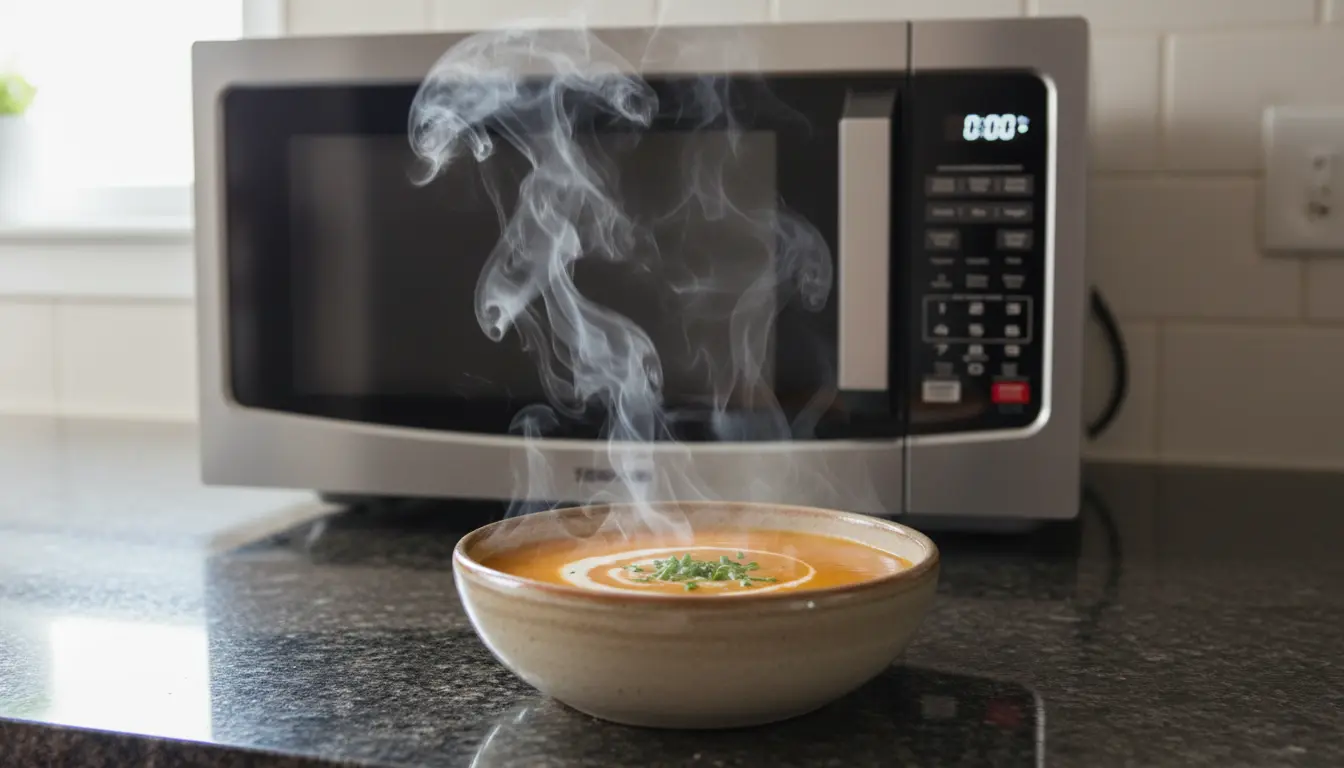
A practical example: If you microwave a bowl of soup, the top may be hot while the bottom is still cool. If you microwave a slice of pizza, the cheese might bubble while the crust stays soggy.
Comparison With Other Heating Methods
Here’s a quick look at the main differences between microwave heating and other common methods:
| Heating Method | How It Heats | Speed | Evenness |
|---|---|---|---|
| Microwave | Electromagnetic waves excite water molecules | Very fast | Uneven |
| Oven | Heats air, then surface, then inside | Slow | Even |
| Stovetop | Direct contact heats surface, then inside | Medium | Moderate |
Why Does Microwave Food Cool Down Faster?
Many people notice their food gets cold quickly after coming out of the microwave. This is not just bad luck. There are several scientific reasons for this.
1. Surface Moisture And Evaporation
Microwaves heat water molecules near the surface of food. This creates steam or moisture on the outer layer. When you take the food out, this hot steam escapes quickly into the air. The loss of steam means the food loses heat faster, especially from the surface.
Evaporation is a powerful cooling process. For example, if you microwave a plate of vegetables, you often see steam rising right away. This is heat leaving your food rapidly.
2. Uneven Internal Temperature
Because microwaves can heat food unevenly, some spots are very hot, while others are just warm. The hot spots lose their heat quickly, trying to reach the same temperature as the cooler areas and the surrounding air. This rush of heat from hot to cool makes the overall temperature drop faster.
Imagine a leftover casserole: the edges might be boiling, but the center is just warm. As you eat, the heat from the hot parts spreads out and cools off much faster than in food heated evenly in an oven.
3. Lack Of Residual Heat
Oven or stovetop heating warms both the inside and outside of food. The container, plate, or pan also stays hot for a while. This “residual heat” keeps warming the food, even after you remove it from the heat source.
Microwave containers, on the other hand, don’t absorb much heat. Most microwave-safe plates or bowls are made from glass, plastic, or ceramic that do not get very hot. They don’t give back heat to the food. Once you open the microwave, there’s little extra warmth to keep your food hot.
4. Food Structure And Water Content
Microwaves heat water-rich foods especially fast. But water also cools quickly because it evaporates and conducts heat well. Foods with a lot of moisture, like soup or pasta, will cool down faster after microwaving than foods with less water, like bread.
A slice of pizza may stay warm longer than a bowl of soup, even if both were microwaved for the same time. This is because the soup has more water, which loses heat quickly.
5. The Role Of Air Movement
When you open the microwave door, the hot, moist air around your food escapes instantly. Room temperature air replaces it. The cold air in your kitchen pulls away heat from your food’s surface, speeding up cooling.
Contrast this with a traditional oven. When you open the door, a wave of hot air surrounds the food, and the oven walls stay warm for a while, helping to keep your meal hot.
Exploring Heat Transfer: Conduction, Convection, And Radiation
To understand cooling, it helps to know how heat moves. Three main processes are at work: conduction, convection, and radiation.
Conduction
Conduction is heat transfer through direct contact. When you place a hot potato on a cold plate, heat moves from the potato to the plate.
In microwave heating, the plate or bowl often stays cool, so there is little conduction keeping your food hot.
Convection
Convection is heat transfer through moving fluids or gases, like air or water. When steam rises off your food, it takes heat with it. When room air moves over your meal, it also pulls heat away.
Microwave food, which tends to have a lot of steam, loses heat quickly through convection as the hot air escapes.
Radiation
Radiation is heat transfer through electromagnetic waves, like sunlight warming your skin. In an oven, the hot walls and air radiate heat to your food. In a microwave, once you open the door, radiation stops instantly.
Comparing Heat Loss
Here’s a simple comparison of how food loses heat after microwaving versus oven heating:
| Heating Method | Heat Loss Process | Speed of Cooling |
|---|---|---|
| Microwave | Evaporation, convection, little conduction | Fast |
| Oven | Radiation, conduction, some evaporation | Slow |
Real-world Examples: Why Your Food Feels Cold So Quickly
Let’s look at some common foods and how they behave when microwaved.
Soup
Microwaved soup heats up very fast. The surface gets hot and produces a lot of steam. But within minutes, the surface cools down as the steam escapes, and the bowl is not hot enough to keep the soup warm. Result: your soup feels cold before you finish.
Pizza
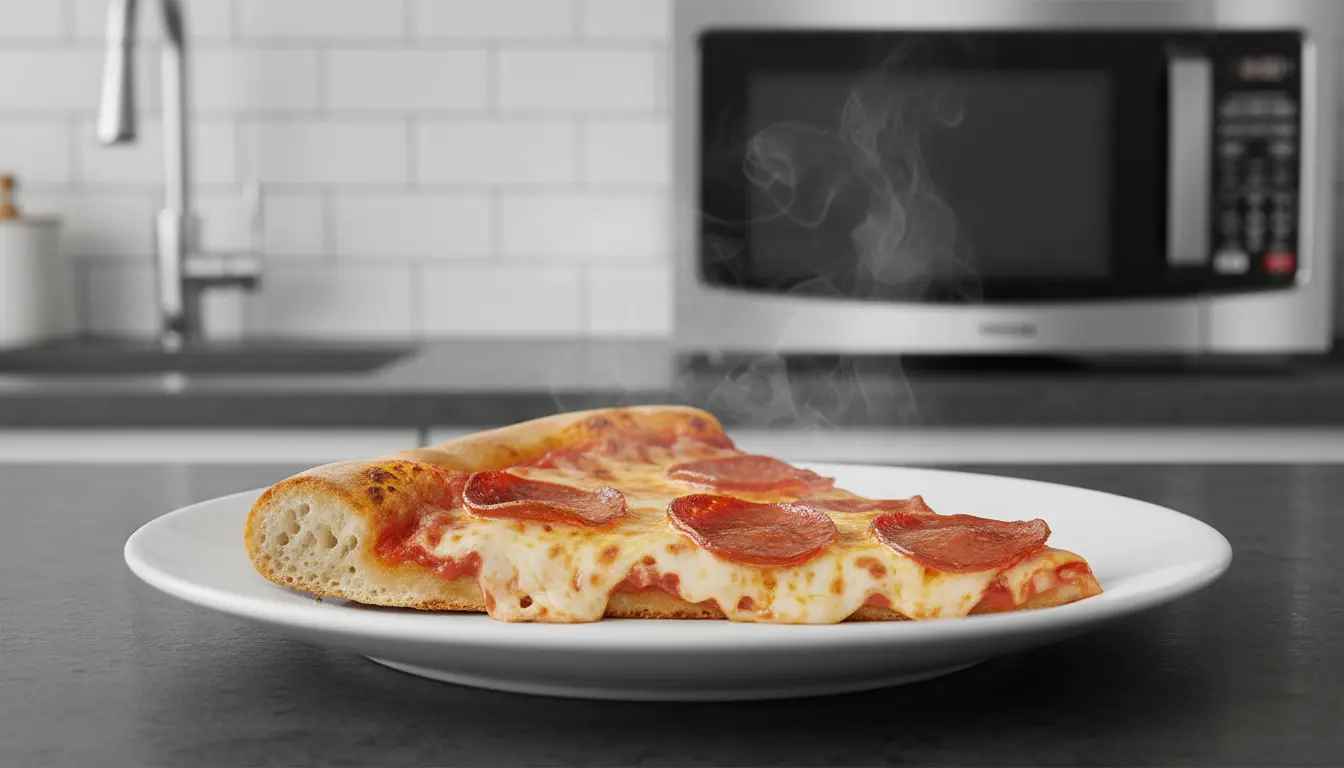
A slice of pizza heated in the microwave may have molten cheese, but the crust can still be cool. The melted cheese loses heat through steam, and the crust does not have enough moisture to stay hot. Because the plate is often cool, the pizza cools faster than if heated in a hot oven.
Leftover Pasta
Microwaved pasta often feels dry on top and still cool underneath. The hot, moist surface loses heat quickly through evaporation, and the cool bottom does not help maintain warmth.
The Physics Behind Rapid Cooling
The speed at which food loses heat can be explained by the laws of thermodynamics and the physical properties of food.
Newton’s Law Of Cooling
Newton’s Law of Cooling says that the rate at which an object cools is proportional to the difference in temperature between the object and its surroundings. If food is much hotter than the air, it loses heat quickly. As it cools, the rate slows down.
Microwaved food often has a high surface temperature and a cooler interior. This large temperature difference means the hot parts cool rapidly.
Specific Heat Capacity
Specific heat capacity is the amount of energy needed to raise the temperature of a substance. Water has a high specific heat capacity, which means it takes a lot of energy to heat, but it also gives up heat quickly when exposed to cooler air.
Foods with high water content, like vegetables, soup, and rice, heat fast in a microwave but also cool down fast.
Thermal Conductivity
Thermal conductivity measures how easily heat moves through a substance. Foods with low thermal conductivity (like bread) heat and cool more slowly. Foods with high thermal conductivity (like soup or stew) heat and cool quickly.
Myths And Misconceptions
There are some common myths about microwaves and food cooling. Let’s clear them up.
- Myth: Microwave food isn’t as hot as oven food.
- Fact: Microwave food can reach the same temperature as oven-heated food. The issue is not maximum temperature but how heat is distributed and lost.
- Myth: Microwaves cook food from the inside out.
- Fact: Microwaves heat the outer layers first. The heat then travels inward, mostly by conduction.
- Myth: Using a hotter plate keeps food hot longer.
- Fact: In a microwave, the plate usually does not get hot enough to provide extra warmth. In an oven, a hot plate or dish can help keep food warm.
Tips To Keep Microwave Food Hotter, Longer
You don’t have to settle for cold leftovers. Try these practical tips to keep your microwave meals warm:
- Cover your food: Use a microwave-safe lid or plate to trap steam. This reduces evaporation and keeps heat in.
- Let food rest: After microwaving, let the food sit covered for a minute or two. This allows heat to spread evenly.
- Use thicker containers: Glass or ceramic dishes hold heat better than thin plastic.
- Preheat the plate: Briefly heat your plate in the microwave before adding food. This adds residual heat.
- Stir or rotate food: Mixing helps distribute heat evenly and reduces hot/cold spots.
- Reheat in smaller portions: Heat smaller amounts at a time for more even warmth.
When Does Food From The Oven Stay Hotter?
Oven-cooked or reheated food often stays hot longer. Here’s why:
- The plate, dish, or pan is usually very hot and continues to warm the food.
- The hot air in the oven surrounds the food, providing extra warmth through radiation.
- The food heats more evenly, reducing rapid cooling from hot spots.
- Ovens dry out food less quickly, so there is less heat lost by evaporation.
Data And Research: What Studies Say
Research supports the idea that microwave-heated foods cool faster than oven-heated foods, mainly due to moisture loss and poor heat retention.
A 2018 study from the Journal of Food Science showed that microwave-reheated foods lost 30% more moisture from the surface than oven-reheated foods. This leads to faster cooling and dryness.
Another study found that the average surface temperature of microwave-reheated meals dropped by 15°F within 3 minutes, compared to only 7°F for oven-reheated meals. This demonstrates how quickly heat escapes when there is little residual warmth.
For more in-depth technical detail, you can review the scientific explanation at Wikipedia: Microwave oven.
Practical Insights Most People Miss
- Microwave food is not always evenly hot inside, so the “average” temperature can be misleading. When you test with a fork or spoon, you might hit a hot spot and think the whole dish is hot, but other areas are much cooler and cool down faster as a result.
- The container matters more than you think. A thick, heavy dish absorbs more heat and can help keep your food hot after microwaving. Thin plastic containers lose heat quickly, making your meal cool down faster.
- Resting time is crucial. Many people skip the resting step after microwaving. But letting food sit for a minute or two, covered, allows heat to spread and minimizes rapid cooling.
Frequently Asked Questions
How Can I Keep Microwave Food Hot For Longer?
To keep food hot, use a microwave-safe cover to trap steam, let the food rest after heating, and use thick glass or ceramic dishes. Preheating your plate before adding food can also help retain heat.
Why Does My Soup Cool Down So Quickly After Microwaving?
Soup has a lot of water. Microwaves heat the water molecules, causing steam to escape rapidly when you remove the bowl. This evaporation cools the soup quickly, especially if the bowl isn’t hot enough to help retain heat.
Are There Foods That Cool Slower After Microwaving?
Foods with low water content, like bread or pizza crust, cool more slowly than water-rich foods like soup or pasta. Using thicker containers or covering the food can also slow cooling.
Does Stirring Food Help It Stay Hot?
Yes, stirring helps distribute heat evenly. It eliminates hot and cold spots, so the food cools at a more steady rate, and overall, it can stay hot a bit longer.
Is Microwave-cooked Food Less Safe Because It Cools Fast?
Microwave-cooked food is safe if heated to the right temperature (165°F or 74°C for leftovers). Rapid cooling does not affect food safety, but uneven heating can leave cold spots where bacteria survive. Always stir and check temperature in several spots.
Food that cools fast in the microwave can be frustrating, but understanding the science behind it helps you make smarter choices. With the right tips, you can enjoy hotter meals and avoid the disappointment of a cold lunch or dinner.