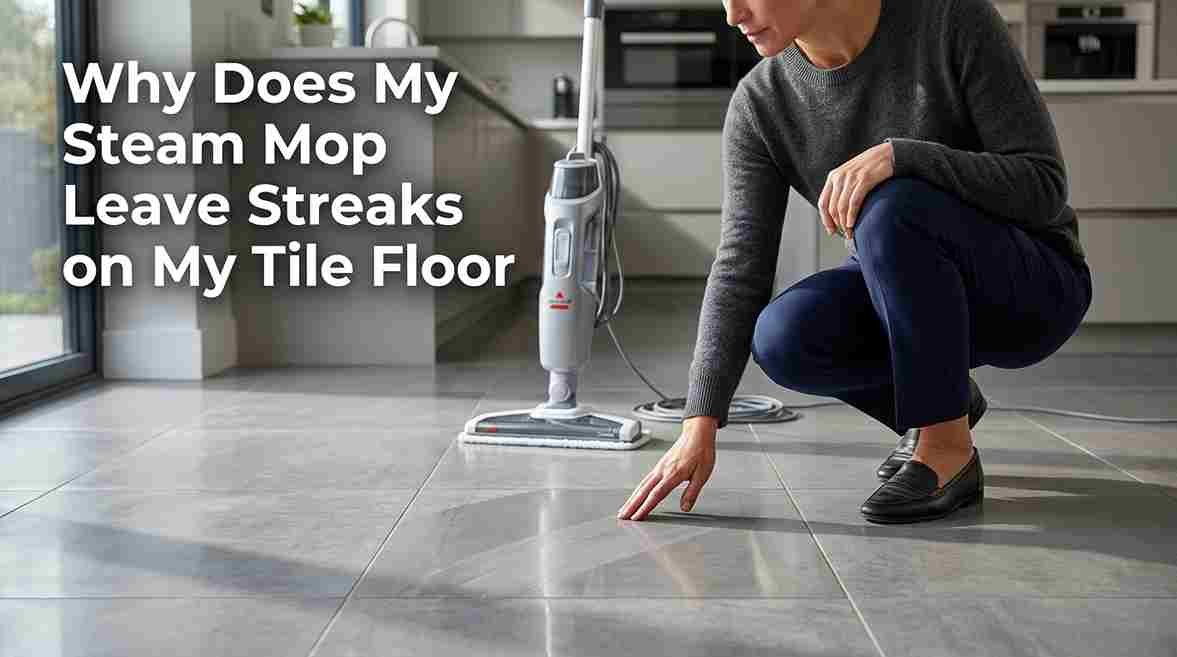
Steam mops promise sparkling tile floors with less effort. Yet, many people find streaks after cleaning, which can be frustrating and confusing. If your steam mop leaves streaks on tile, you’re not alone. Let’s explore why this happens, how to fix it, and how to prevent streaks in the future. With the right knowledge, your tile can shine just like you want.
What Causes Streaks On Tile Floors?
1. Dirty Mop Pads
The most common reason for streaks is using a dirty mop pad. Steam mops push dirt into the pad, but if it’s full, the dirt spreads back onto the floor. Many people overlook how quickly pads get dirty, especially after cleaning a large area.
2. Hard Water
Steam mops use water to create steam. If your tap water has a lot of minerals (hard water), it can leave white streaks or spots as the water dries. These streaks are more visible on dark tile.
3. Residue From Cleaning Products
If you’ve used floor cleaners before mopping, leftover chemicals may react with steam, leaving streaks. Some soaps and waxes don’t dissolve well and stick to tile, making streaks worse.
4. Incorrect Mop Technique
Moving the steam mop too fast, skipping areas, or not letting the steam work can cause uneven cleaning. This often results in streaks, especially if the tile is textured.
5. Tile Type And Finish
Some tile types, like glossy ceramic or porcelain, show streaks more than matte finishes. Highly polished surfaces reflect light, making any streaks obvious.
6. Poor Quality Steam Mop
Not all steam mops are equal. Cheap models may have weak steam, poor pad contact, or uneven pressure, causing streaks. Using the wrong mop for your tile can also create problems.
7. Over-wetting The Floor
If you use too much steam or let water pool, tile can dry unevenly, leaving streaks. This is common in humid areas or with slow-drying tiles.
8. Not Sweeping Before Mopping
Steam mops are not designed to pick up loose dirt. If you don’t sweep first, dust and debris mix with steam and stick to the floor, creating streaks.
How To Fix Streaks Left By Steam Mops
Step 1: Check And Change Your Mop Pad
Always use a clean mop pad. If your pad is dirty, wash or replace it. For large areas, change pads halfway through cleaning.
Step 2: Use Distilled Water
Switch to distilled water instead of tap water. This avoids mineral build-up and prevents white streaks. Distilled water is cheap and easy to find.
Step 3: Remove Old Residue
If streaks are from old cleaners, mop with plain water first. You can also use a mix of water and white vinegar (1 cup vinegar in 1 gallon water) to break down residue. Avoid vinegar on natural stone tiles, as it can damage them.
Step 4: Improve Your Technique
Move the mop slowly and evenly. Let the steam loosen dirt before moving on. Go over stubborn areas twice if needed. Don’t rush—steam works best when it has time.
Step 5: Sweep Or Vacuum Before Mopping
Always sweep or vacuum before using your steam mop. This removes dust and debris, letting the steam mop clean more effectively.
Step 6: Adjust Steam Settings
If your mop has adjustable steam, use the lowest setting for glossy tile and higher for textured tile. Too much steam can cause over-wetting and streaks.
Step 7: Let Tiles Dry Completely
After mopping, let tiles air dry fully. Open windows or turn on fans if needed. Avoid walking on wet tile to prevent new streaks.
How To Prevent Streaks In The Future
1. Clean Mop Pads Regularly
Wash mop pads after every use. Don’t let dirt build up, as it causes streaks next time. Keep extra pads so you can swap them out during cleaning.
2. Use Only Steam—no Chemicals
Avoid adding cleaning products to your steam mop. Most tile doesn’t need soap with steam. If you must use a cleaner, rinse tiles afterward to remove residue.
3. Choose The Right Steam Mop For Your Tile
Some steam mops are made for specific tile types. If you have delicate tile, pick a mop with gentle steam and soft pads.
4. Avoid Hard Water
If your area has hard water, always use distilled water. This prevents mineral streaks and protects your mop.
5. Sweep Before Every Cleaning
Make sweeping a habit before mopping. This small step stops dirt from causing streaks.
6. Dry Tiles Quickly
Help tiles dry fast by increasing airflow. This prevents streaks caused by slow drying.
7. Inspect Your Floor Finish
If your tile is showing streaks no matter what, check if the finish is damaged or worn. Sometimes, re-sealing or polishing is needed.
Comparing Steam Mops And Traditional Mops
For many, the switch from traditional to steam mop seems like an upgrade. But when streaks appear, you may wonder if the change was worth it. Here’s how they compare:
| Feature | Steam Mop | Traditional Mop |
|---|---|---|
| Cleaning Power | High (uses heat) | Medium (depends on soap) |
| Streak Risk | Medium (from residue, minerals) | Low (if rinsed well) |
| Effort | Low (no wringing) | Medium (manual wringing) |
| Drying Time | Fast | Slow |
| Best For | Tile, sealed floors | Tile, wood, vinyl |
Steam mops clean deeper but need more care to prevent streaks. Traditional mops are simpler but require more physical effort.

Credit: www.reddit.com
Different Types Of Tile And Streak Issues
Some tiles are more prone to streaks. Here’s a quick look:
| Tile Type | Streak Risk | Recommended Mop |
|---|---|---|
| Ceramic (Glossy) | High | Steam mop with microfiber pad |
| Porcelain (Matte) | Low | Steam or traditional mop |
| Natural Stone | Medium | Steam mop (no vinegar), soft pad |
| Textured Tile | Medium | Steam mop, extra steam |
Knowing your tile type helps you pick the best cleaning method and avoid streaks.
Common Mistakes When Using Steam Mops
1. Using Tap Water
This is a frequent mistake. Tap water can cause mineral streaks and even clog the mop.
2. Not Changing Pads Often Enough
Dirty pads spread dirt. Change them more often than you think—especially for larger rooms.
3. Ignoring Floor Preparation
Skipping sweeping or vacuuming results in streaks. Always prep the floor before steaming.
4. Overusing Cleaning Products
Adding soap or cleaner to steam mops can cause sticky streaks. Steam alone is usually enough.
5. Not Reading Mop Instructions
Each steam mop has unique settings. Check the manual for best results on tile.
Real Data: How Often Do Steam Mop Users Report Streaks?
According to a survey by a home cleaning forum, around 35% of steam mop users say they experience streaks on tile floors regularly. Most cases are linked to dirty pads or hard water. Only about 12% say streaks are a major problem they haven’t solved.
One non-obvious insight: Humidity in your home can make streaks worse. If you live in a humid area, tiles dry slower, increasing streak risk.
Another overlooked factor: The age of your tile. Older tiles may be more porous or have worn finishes, which attract residue and show streaks more easily.
Practical Tips For Streak-free Tile Floors
- Always sweep or vacuum before using your steam mop.
- Use distilled water to avoid mineral streaks.
- Change mop pads often—every 100-200 square feet.
- Mop slowly and let the steam do its work.
- Avoid using extra cleaners unless necessary.
- Dry tiles quickly with fans or open windows.
- Check your tile finish and seal if needed.
- Test your mop settings on a small area first.
If streaks persist, try mopping once with plain water, then again with steam. This often clears up hidden residue.
Credit: www.reddit.com
Comparing Popular Steam Mop Brands
Here’s a look at three popular steam mop brands and their streak performance:
| Brand | Steam Power | Pad Quality | Streak Risk |
|---|---|---|---|
| Bissell PowerFresh | Strong | Good (microfiber) | Medium |
| Shark S3501 | Moderate | Average | Medium |
| O-Cedar Microfiber Steam Mop | Strong | High Quality | Low |
Choose a mop with good steam output and quality pads for fewer streaks.
Frequently Asked Questions
Why Does My Steam Mop Leave Streaks Even With A New Pad?
Streaks can still happen if you use tap water, clean too fast, or have old residue on the tile. Try using distilled water and mop slowly.
Can Steam Mops Damage Tile Floors?
Most steam mops are safe for sealed tile. Avoid using them on unsealed or damaged tile, as moisture can get inside and cause problems.
How Often Should I Change The Mop Pad?
Change pads every 100-200 square feet or when they look dirty. For larger rooms, keep extra pads handy.
Is It Okay To Use Vinegar In My Steam Mop?
Vinegar can help remove residue but avoid it on natural stone tiles. It can cause damage. For most ceramic or porcelain, a small amount is safe.
What’s The Best Water To Use In A Steam Mop?
Distilled water is best. It prevents mineral streaks and protects the mop. Tap water can cause problems over time.
Conclusion
If your steam mop leaves streaks on tile, the good news is that the fix is usually simple. In most cases, a clean mop pad, distilled water, and the right mopping technique will solve the problem. I’ve found that slowing down and letting the steam do the work makes a big difference. With a little care before and during cleaning, you can enjoy clean, shiny, streak-free tile floors every time. The goal is not just to clean your floor but to keep it looking its best without extra effort.