Let’s be honest: you’re not here because you’re curious about paper science. You’re here because you’ve either seen the warning in your air fryer manual, or you’ve had a friend who almost smoked out their kitchen trying to line the basket with a paper towel. Will a paper towel catch fire in an air fryer?
The short answer is yes, it absolutely can, and it’s one of the most common appliance mistakes people make in 2026.
The risk isn’t just about the paper reaching a flame. It’s about how an air fryer works, where the heating element sits, and why a lightweight paper towel is basically a wick waiting for a spark. If you’ve ever used your air fryer to reheat chicken wings or make a quick batch of frozen fries, you’ve seen how powerful the internal fan is.
That fan is the same force that can lift an unsecured paper towel directly onto a red-hot metal coil. Let’s break down exactly why this happens, what temperature triggers it, and what you can safely use instead.
Image source: Bing (Web (fair-use with source credit))
Quick Answer
Yes. A paper towel can catch fire in an air fryer. The towel can be blown toward the heating element, where intense heat may cause it to scorch, smolder, or ignite. For that reason, paper towels should never be placed inside an operating air fryer.
The paper towel can smolder quietly, then burst into flames. Don’t risk it.
Why Air Fryers and Paper Towels Don’t Mix
The problem isn’t the paper towel’s quality or thickness. It’s how an air fryer circulates hot air around an exposed heating element. Unlike a conventional oven, an air fryer uses a heating element positioned near the top of the cooking chamber, where loose materials can come into contact with it.
Here’s how a paper towel can become a fire risk:
- The fan kicks on. The convection fan circulates hot air rapidly around the food.
- The paper towel lifts. If it isn’t held down by food, the airflow can move the lightweight towel around the basket.
- It moves toward the heating element. The towel can reach the hot element or another hot surface.
- The paper begins to scorch or smolder. The heat can char the paper and produce smoke.
- It can ignite. If the paper remains exposed to intense heat, it may eventually catch fire, especially when it has absorbed oil or grease.
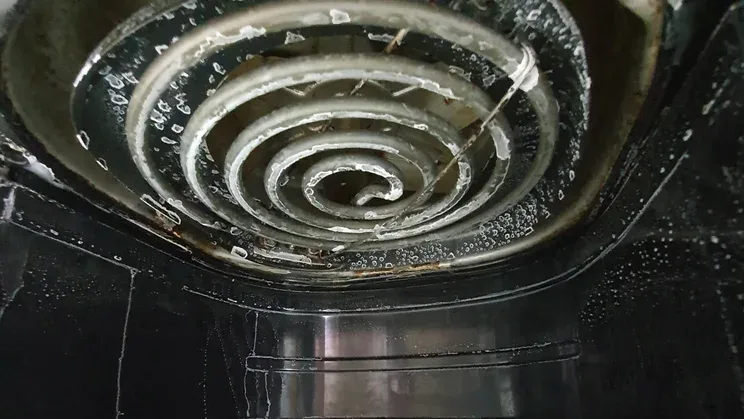
Image source: Bing (Web (fair-use with source credit))
The airflow is an important part of the problem. You might think, “I’ll just lay it flat on the bottom, and it’ll stay put.” But the fan can lift a lightweight paper towel, particularly when its edges are exposed.
Once the towel moves from the basket, it can come closer to the heating element and other hot surfaces.
The temperature shown on an air fryer is its cooking setting. It does not necessarily represent the temperature of every surface inside the appliance. The heating element itself can become much hotter, so paper that comes into direct contact with it can scorch or ignite.
Understanding where the heating element sits can also help explain why loose paper products are unsafe inside an operating air fryer.
Smoldering vs. Flames: The Silent Danger Zone
The most dangerous phase isn’t open fire. It’s the smoldering stage. This is when the paper towel starts to break down chemically, releasing smoke and glowing embers without visible flames.
A paper towel may begin to scorch or smolder before visible flames appear. That makes the problem easy to miss until the paper suddenly ignites.
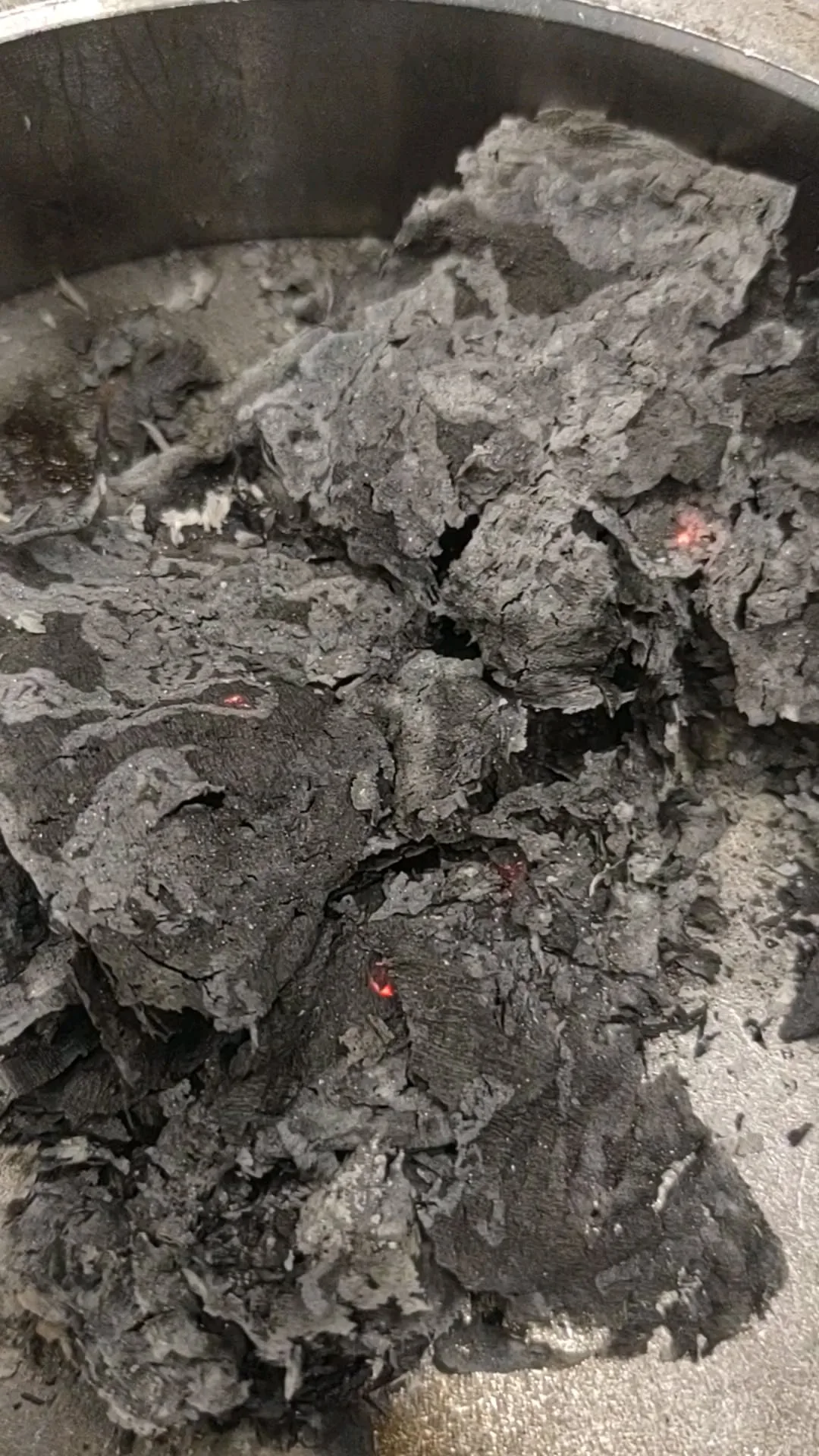
Image source: Web (Bing) / reddit.com (Web image (fair-use with source credit))
Here’s what makes smoldering so dangerous in an air fryer:
- Delayed reaction: You might smell burning and think it’s just residual grease from previous cooking. By the time you open the drawer, the paper towel is already in full ignition.
- Grease acceleration: A paper towel that has absorbed oil from your food burns hotter and faster than a dry one. The oil itself becomes a fuel source.
- Narrow escape window: An air fryer is a sealed, insulated chamber. Once the paper towel catches fire, the flames spread quickly to any other loose material nearby, like crumbs or a parchment paper liner used incorrectly.
You can’t rely on the air fryer’s own overheat protection thermostat. Most units will shut off when the internal air temperature gets dangerously high, but that sensor is typically located in a position that measures air temperature, not direct contact temperature. A paper towel pressed against the coil can ignite before the sensor registers a problem.
Common Ways People Use Paper Towels in an Air Fryer
Despite the clear warnings in user manuals, people still try to use paper towels in air fryers. It’s almost always one of these three scenarios, and each one has its own specific failure mode.
The “Grease Absorber” Hack (and Why It Fails)
The idea sounds smart: lay a paper towel under your bacon or chicken thighs to soak up the grease as it renders. The reality is that this introduces two fire hazards at once. First, the paper towel is now saturated with cooking oil, which has a flash point around 400°F or lower, depending on the oil.
Second, the paper towel blocks the airflow from the bottom of the basket, which defeats the entire purpose of air frying: crispy food via proper air circulation.
What happens instead is that the oil pools on the paper towel, the heat rises, and the oil reaches its smoke point. Then it reaches its flash point. And then you have a grease fire inside a contained metal box with a fan blowing oxygen everywhere.
This is the fastest way to turn a minor mistake into a kitchen emergency.
The “Liner to Keep the Basket Clean” Myth
Some people use paper towels as a sacrificial liner, thinking it will catch the crumbs and make cleanup easier. The problem is that a paper towel doesn’t have the structural integrity to stay in place. It’s too thin and too light.
The fan blows it around, it folds over on itself, and one edge always finds its way toward the heating element. If you’re determined to line your basket, you need materials designed for this specific purpose, not household paper products. A reusable silicone liner is the classic choice, and it won’t turn your dinner into a fire hazard.
The “Drying Herbs” Mistake
This one is less common but still dangerous. People try to use the air fryer to dry out fresh herbs like rosemary or thyme. They place the herbs on a paper towel to absorb moisture, then run the air fryer on a low temperature.
The combination of dry paper, dried plant material, and moving air is essentially tinder. After a few minutes, the herbs become brittle and the paper towel starts to brown. It’s a recipe for disaster that produces a smoke-filled kitchen and a ruined appliance.
If you’re looking to reduce your overall air fryer cook times instead of drying herbs, there are safer ways to do that, like adjusting your preheating habits and not overcrowding the basket.
Safe Alternatives That Won’t Burn Your House Down
You don’t have to abandon the idea of easy cleanup. You just need to swap out the flammable materials for ones engineered to withstand high heat. There are three main categories of safe alternatives, and each one has its own strengths.
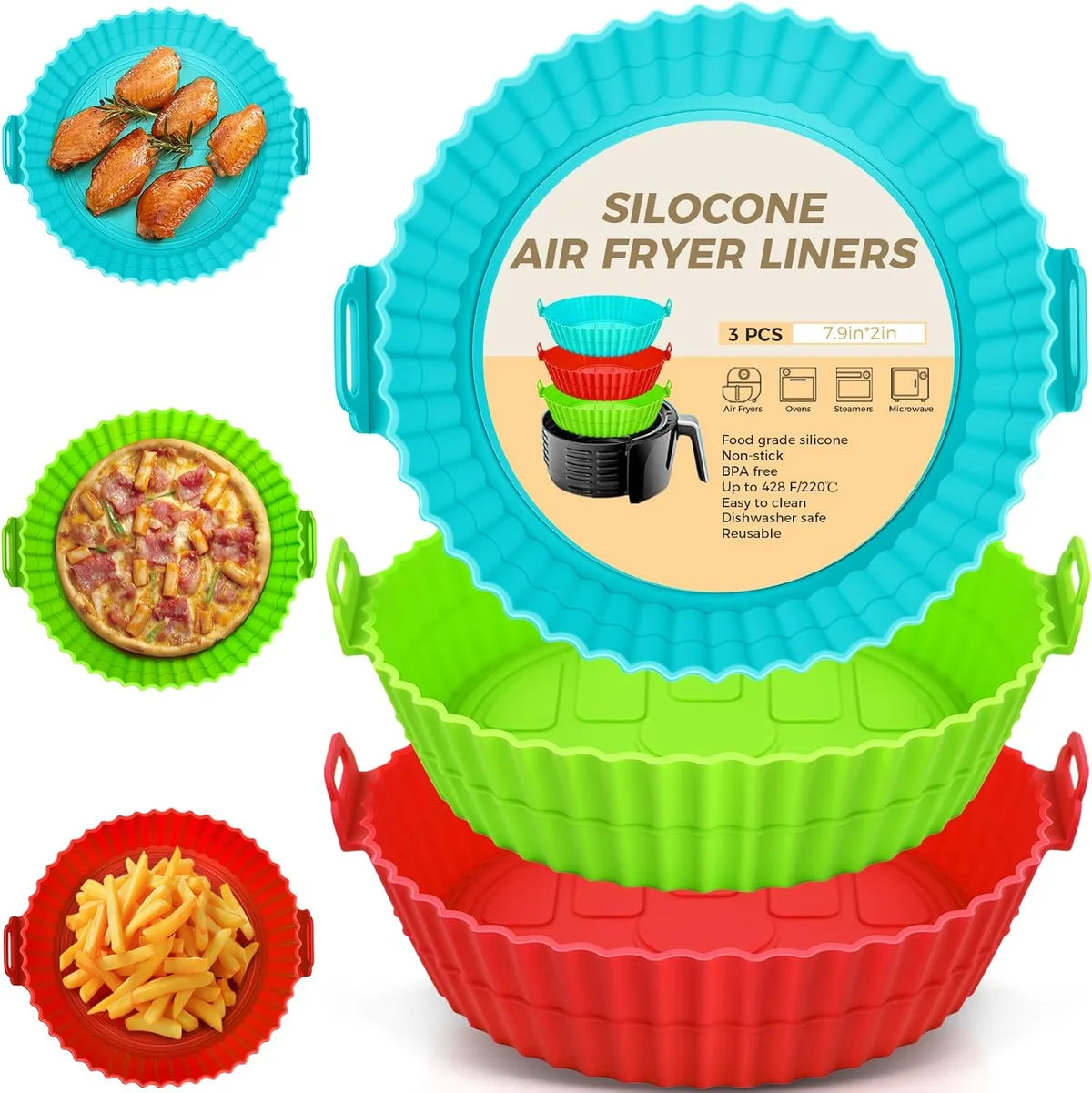
Image source: Web (Bing) / amazon.co.uk (Web image (fair-use with source credit))
Silicone Reusable Liners
These are the gold standard for air fryer safety. They’re made from food-grade silicone, which is rated for continuous use up to 500°F. They’re flexible, non-stick, and heavy enough that the fan won’t lift them.
You can place them directly in the basket, and they’ll catch crumbs and grease without interfering with airflow.
Pros:
- Flame retardant and heat resistant
- Reusable and easy to clean in the dishwasher
- Heavy enough to stay in place
Cons:
- Slightly more expensive upfront
- Can trap moisture if you’re cooking something very watery
Perforated Parchment Paper
Not all parchment is created equal. Look specifically for perforated air fryer parchment liners. These are pre-cut, have holes punched in them for airflow, and are designed to be weighed down by food.
The heat limit is typically 425°F to 450°F, so you need to check your air fryer’s max temperature. If you’re cooking under 400°F, this is a reasonably safe option as long as you follow the instructions: heavy food on top, edges folded down, never leave it empty.
Aluminum Foil (Done Right)
Aluminum foil is a classic kitchen tool, and it’s safe in an air fryer when used properly. It won’t catch fire, but it can blow around and scratch your basket’s non-stick coating if not secured. The safest application is to wrap food directly in foil packets, like a baked potato or salmon filet.
Don’t try to line the entire bottom of the basket with a big sheet. It will block airflow and force the fan to work harder, potentially causing hot spots.
The Bare Basket Approach
The simplest and most foolproof option is to just use the basket as intended, with no liner at all. The non-stick coating on modern air fryers is surprisingly resilient. A quick soak in warm soapy water, and a soft sponge will handle most residue.
It’s one extra minute of cleaning, but it completely eliminates the risk of smoking your kitchen and potentially starting a fire.
If cleanup is your biggest concern, an air fryer with dishwasher-safe parts will save you more time than any paper liner ever could. You just have to invest in a model that prioritizes easy maintenance.
If you still want a liner, the next section breaks down how to use parchment paper without turning it into a fire hazard. It’s the only paper-based option that deserves a closer look, and even then, it comes with strict rules.
How to Use Parchment Paper Safely in an Air Fryer (If You Must)
Let’s be clear: parchment paper is not paper towel. It’s treated with a silicone coating that gives it a higher heat tolerance and a non-stick surface. But it’s still paper at its core.
It will burn, and it will ignite if it touches the heating element. The key difference is that parchment paper is denser and heavier, so it’s less likely to fly around if you follow these rules.
Weighing It Down Properly
The number one rule is that parchment paper never goes in an empty air fryer. It must be weighed down by food, and that food must cover enough surface area to hold the paper flat against the basket. A couple of small fries won’t cut it.
You need something substantial, like a chicken breast, a pile of vegetables, or a piece of fish.
If you’re cooking a single small item, like a slice of toast or a handful of nuts, skip the parchment entirely. The fan will lift the edges, and you’ll be chasing the paper around the basket mid-cycle.
Matching the Shape and Size
Never use a full sheet of parchment paper. It should be cut to fit the bottom of your basket with about a half-inch gap on all sides. This gap allows hot air to circulate and prevents the paper from folding up against the walls of the basket, where it can get pinned against the heating element.
The perforated parchment liners you can buy online are pre-cut to standard basket sizes. They’re convenient, but they combine the heat resistance of parchment with the inability to stay flat. Always check the maximum temperature rating on the box.
Most cap out at 425°F, which means you have to reduce your cooking temperature if your recipe calls for higher heat.
Monitoring the Cook Cycle
If you’re using parchment paper, you are not allowed to walk away. This is a strict safety rule. Parchment paper can brown and scorch, especially around the edges.
That browning is a warning sign. It means the paper is approaching its ignition threshold.
Here’s the rule of thumb: if you see any darkening or smoke coming from the paper, open the air fryer immediately and remove the food. Let the paper cool down, then discard it. Don’t try to salvage the cooking cycle.
The risk isn’t worth it.
The Grease Factor
When parchment paper gets coated in oil or grease, it becomes more combustible. Just like a paper towel, saturated parchment is carrying fuel. If you’re cooking something fatty like bacon or sausage, the grease will pool on the parchment.
It might not burn through immediately, but the combination of high heat, oil, and paper creates a dangerous triangle.
If your recipe involves high-fat foods, use a silicone liner instead of parchment. It handles grease better and won’t break down as quickly. Or just cook directly on the bare basket and clean it afterward.
If you’re new to air frying and want to understand the internal layout before you start experimenting with liners, reviewing some visual references on the air fryer’s internal anatomy can help you make safer decisions.
What to Do If You See Smoke or Flames
You’ve got one shot at this, and the right reaction depends on how far the fire has progressed. Here’s the breakdown.
Immediate Steps (Seconds Matter)
The first thing you do is unplug the air fryer. Don’t open the drawer yet. Opening the drawer introduces fresh oxygen, which can feed the flames and cause them to flare up dramatically.
Instead, keep the drawer closed and simply unplug the unit from the wall.
If the smoke is significant or you see actual flames leaping inside, you need to act fast:
- Stay calm. Keep the drawer closed.
- Unplug the appliance. Never try to move it while it’s still connected.
- Move it away from flammable surfaces. If you can safely slide it off the counter onto a heat-safe surface, like a stovetop or a metal baking sheet, do that. If not, just get some distance between the air fryer and nearby cabinets.
When to Use a Fire Extinguisher vs. Baking Soda
There’s a common rule for kitchen fires: never use water on a grease fire. Water causes the grease to splatter and spread. For an air fryer fire, you have two safe options.
Baking soda is your best first defense. It’s a dry chemical that smothers flames by releasing carbon dioxide when heated. Dump a generous amount directly into the air fryer drawer if you can open it safely, or over the unit if it’s fully involved.
It’s messy, but it’s highly effective on small appliance fires.
A standard kitchen fire extinguisher, rated Class B (flammable liquids) and Class C (electrical equipment), is also effective. Aim at the base of the flames in short bursts. Don’t use a Class A extinguisher, which is designed for wood and paper fires, as the water-based foam can be dangerous on electrical equipment.
When to Call the Fire Department
Here’s the hard truth: if the flames don’t go out within five to ten seconds of smothering, or if they spread beyond the air fryer itself, you need to call emergency services immediately. Don’t hesitate. Don’t try to be a hero and save your kitchen.
A small appliance fire can escalate into a full room fire in under a minute.
Signs you need professional help:
- The flames are taller than the air fryer itself
- The fire spreads to your countertop or nearby items
- There’s thick black smoke filling the room
- You feel any heat radiating from the unit even after smothering
Getting out of the house and calling your local emergency services is always the right call when in doubt. That’s what the professionals recommend, and it’s what any responsible cook should do.
Mistakes That Turn a Close Call Into a Disaster
If you’ve ever had a small fire in your kitchen, you know the panic that sets in. The natural instinct is to do something, anything, to make it stop. But several common reactions make things worse.
Using Grease-Soaked Paper
We mentioned it earlier, but it’s worth repeating: grease-soaked paper is rocket fuel. If your paper towel or parchment has absorbed cooking oil and it starts to smoke, do not assume it will just burn off. That oil is now a liquid fuel source that will sustain the flame and make it hotter and larger than a dry paper fire.
Overfilling the Basket
When you cram too much food into the basket, you block airflow. The fan has to work harder, and the heating element doesn’t cool down as effectively. This creates hot spots and makes the entire cooking chamber run hotter than the set temperature.
The combination of restricted space and high heat can cause paper liners to scorch and ignite, even if they’re relatively safe at normal temperatures.
Walking Away Mid-Cycle
So many air fryer fires happen because someone started the appliance and then wandered off. They went to answer the phone, check the laundry, or watch a show. By the time the smoke alarm went off, the paper liner was already in flames.
Set a timer, stay in the kitchen, and keep an eye on your air fryer. It’s a small sacrifice that prevents a potentially devastating outcome.
Ignoring the “Burnished” Parchment Warning
Some parchment paper brands have a warning label that says “not for use in ovens above 450°F” or “may brown or burn in high-heat applications.” That burnishing, the brown discoloration, isn’t just cosmetic. It’s a chemical change in the paper’s structure. Once that happens, the paper’s ignition threshold drops, making it significantly more flammable.
If you see browning, stop using that sheet immediately.
Maintenance and Inspection After an Incident
Even if you manage to catch the fire quickly, your air fryer might have sustained damage that isn’t immediately visible. You need to inspect it carefully before you even think about using it again.
Cleaning Burnt Residue Off the Coil
The heating element is the most likely place for residue to accumulate. If paper touched it, there will be burnt carbon deposits clinging to the metal. These deposits are not just ugly; they can affect heat distribution and potentially cause hot spots.
To clean it safely:
- Unplug the air fryer and wait for it to completely cool down.
- Use a soft-bristled brush or a pipe cleaner to gently dislodge any loose carbon residue.
- For stubborn buildup, wrap a damp cloth around a chopstick and carefully wipe the coil. Never submerge the element in water.
- Let the unit air dry for at least 24 hours before using it again.
Checking the Fan and Basket for Damage
The high-velocity fan could have been damaged by the heat or the flames. Spin the fan blade manually. If it feels loose, wobbly, or squeaks, the bearing might be compromised.
A damaged fan will cause uneven cooking and might overheat.
The basket’s non-stick coating could also be compromised, especially if the fire got hot enough. Look for peeling, bubbling, or discoloration. If the coating is damaged, it can flake into your food, and you should replace the basket or the entire unit.
When to Replace Your Air Fryer
Here’s the blunt truth: a smoke incident, even a small one, can degrade the internal wiring and insulation. The safety margins are gone, and the next failure could be electrical, not just a paper fire. Most manufacturers recommend replacing the appliance after any fire exposure, even if it looks fine on the outside.
Check your warranty or contact the manufacturer directly. They will likely advise you on whether a replacement is warranted. As of 2026, most major air fryer brands have customer service lines that can assess your specific model’s safety.
If you have any doubts, err on the side of caution and get a new one. The cost of a new appliance is a fraction of the cost of a kitchen fire.
What the Manuals and Safety Standards Say
Every air fryer on the market comes with a user manual, and almost every one of them contains a warning against using paper products inside the cooking chamber. This isn’t a suggestion. It’s a safety directive based on testing.
Manufacturer Warnings You Probably Skipped
Many air fryer manufacturers warn users to keep paper, cardboard, and other flammable materials away from the heating element. Because instructions vary between models, check your owner’s manual before using parchment, foil, silicone liners, or other materials inside the appliance.
NFPA and CPSC Guidance on Kitchen Fires
The National Fire Protection Association (NFPA) consistently reports that cooking is the leading cause of home fires and fire injuries in the United States. Their guidance is straightforward: stay in the kitchen while cooking, keep flammable materials away from heat sources, and never put paper or cloth in a hot appliance.
The Consumer Product Safety Commission (CPSC) has also issued reports on air fryer incidents. While air fryers are generally safe appliances when used correctly, a significant portion of reported incidents involve user misuse, including the use of improper liners. These agencies agree: the paper towel hack is a bad idea.
If you’re wondering about the overall energy efficiency of your air fryer compared to a traditional oven, it’s a separate calculation from fire safety, but it’s still a useful comparison for anyone who cooks regularly.
The Bottom Line: One Rule to Remember
If it’s loose, lightweight, and flammable, it doesn’t belong in an air fryer. Paper towels, napkins, and cardboard have no place near that heating element. Use silicone liners, perforated parchment with food on top, or go bare basket and handle the extra minute of cleaning.
Your kitchen, your home, and your peace of mind are worth more than a shortcut that could end in flames.
Comparing Liner Options at a Glance
Quick reference for what works and what doesn’t:
| Material | Max Heat | Safe in Air Fryer | Reusable |
|---|---|---|---|
| Paper towel | ~450°F | No | No |
| Parchment paper | 425°F | With caution | No |
| Aluminum foil | N/A | Yes, if secured | No |
| Silicone liner | 500°F | Yes | Yes |
The takeaway is simple. If you want zero risk and zero waste, silicone wins every time. It handles grease, stays put, and lasts for years.
If you’re okay with a little caution, parchment works for low-fat foods under 400°F. For everything else, go bare basket.
What to Do After an Air Fryer Fire
If your air fryer has experienced an internal fire or visible damage, stop using it until you’ve contacted the manufacturer or had the appliance properly assessed
The cost of a new unit is worth the peace of mind. Cooking safety isn’t an area to gamble on missed subtleties.
Frequently Asked Questions
Can I use a paper towel to pat food dry before air frying?
Yes, patting food dry with a paper towel before loading it into the basket is completely safe. The paper towel never enters the air fryer. Just toss it in the trash afterward.
The concern with paper towels is only when they’re placed inside the hot cooking chamber.
Is parchment paper safer than a paper towel?
Yes, parchment paper has a higher heat tolerance and is less likely to blow around due to its weight and silicone coating. However, it can still catch fire if it touches the heating element or exceeds its rated temperature of 425°F to 450°F. Always use it with food on top and monitor it closely.
What about using a metal or ceramic plate as a liner?
A metal trivet or a small ceramic ramekin is safe to place inside the air fryer basket. They’re heat resistant and heavy enough to stay put. Just ensure they’re rated for high temperatures and don’t completely block airflow from the bottom.
Avoid glass unless it’s explicitly marked as oven-safe.
Why did my air fryer smoke but not catch fire?
Smoke is often caused by oil residue or food crumbs burning on the heating element, not necessarily a paper towel. It’s a common occurrence, especially if you don’t clean the air fryer regularly. If you see smoke without flames, turn it off, let it cool, and give it a thorough cleaning before using it again.
Do I need a paper towel when reheating food in an air fryer?
No. Most foods can be reheated directly in the basket without a paper towel or liner.
How long does it take for a paper towel to catch fire in an air fryer?
It’s not a fixed timeline. It depends on the paper towel’s proximity to the heating element, the temperature setting, and whether it’s coated in oil. In some cases, it can smolder for a minute before igniting.
In others, it can catch fire within seconds of touching the coil. That unpredictability is exactly why it’s too risky to test.