Skip to content
Traveling can be stressful, especially when you’re unsure about what you can pack. One common question for travelers who cook, camp, or bring souvenirs is: Can I have a kitchen knife in my checked luggage? Many people worry about airport security rules, lost items, or breaking laws by mistake.
If you plan ahead, though, you can carry kitchen knives safely and legally with you on flights. This article will explain the rules, smart packing tips, and what to expect at different airports, so you can travel with peace of mind.
Are Kitchen Knives Allowed In Checked Luggage?
The short answer is yes, you can usually pack a kitchen knife in your checked baggage. Most airlines and airport security authorities, like the Transportation Security Administration (TSA) in the United States, allow knives in checked luggage but strictly ban them in carry-on bags. The main reason for this rule is passenger safety inside the airplane cabin.
However, there are a few important things to know:
- Knives must be packed in checked bags only.
- You should pack knives safely to avoid injury to baggage handlers or inspectors.
- Some countries have extra rules or bans for certain types of knives.
If you don’t follow these rules, your knife could be confiscated, or you may even face fines. Always check both your airline and destination country’s regulations before you travel.
Tsa And International Security Rules
Tsa Rules For Knives
The TSA is clear: All sharp objects, including kitchen knives, must go in checked bags. Here is their official guidance:
- Carry-on bags: Knives are not allowed.
- Checked bags: Knives are allowed but should be securely wrapped.
You can see the latest TSA rules at their official website, or use the MyTSA app for up-to-date information before flying.
Other Countries’ Security Rules
While the TSA rules cover flights in the US, other countries have similar but sometimes stricter rules. For example:
- European Union: Generally follows the same checked bag rule but may ban certain knives (like switchblades or knives with very long blades).
- Australia and New Zealand: Allow kitchen knives in checked bags but have strict import rules for some knife types.
- Middle East and Asia: Some countries have cultural or legal restrictions on knives that can surprise travelers.
Before you fly, check the official government or airport security website for your destination. If you are flying through multiple countries, remember you must follow all transit country rules, not just your final destination.
Types Of Knives And Special Restrictions
Not all knives are treated the same. Most kitchen knives are allowed, but some knives are banned no matter how you pack them. The rules can be confusing, so let’s compare common types:
| Knife Type | Checked Luggage | Carry-On | Notes |
|---|---|---|---|
| Chef’s knife | Allowed | Not allowed | Blade must be wrapped |
| Paring knife | Allowed | Not allowed | Small knives, same rule |
| Bread knife (serrated) | Allowed | Not allowed | Wrap carefully |
| Butter knife (not sharp) | Usually allowed | Sometimes allowed | Check with airline |
| Switchblade / Automatic knife | Often banned | Not allowed | Check country laws |
| Folding knife | Allowed (if not switchblade) | Not allowed | Blade length may matter |
Non-obvious insight: Some countries ban knives based on blade length, opening mechanism, or cultural rules. Even if a kitchen knife is allowed in your home country, it may be confiscated elsewhere.
How To Pack Kitchen Knives Safely
Packing a knife safely is not just about following rules—it’s also about protecting your luggage, the baggage handlers, and yourself. Here are some steps and tips:
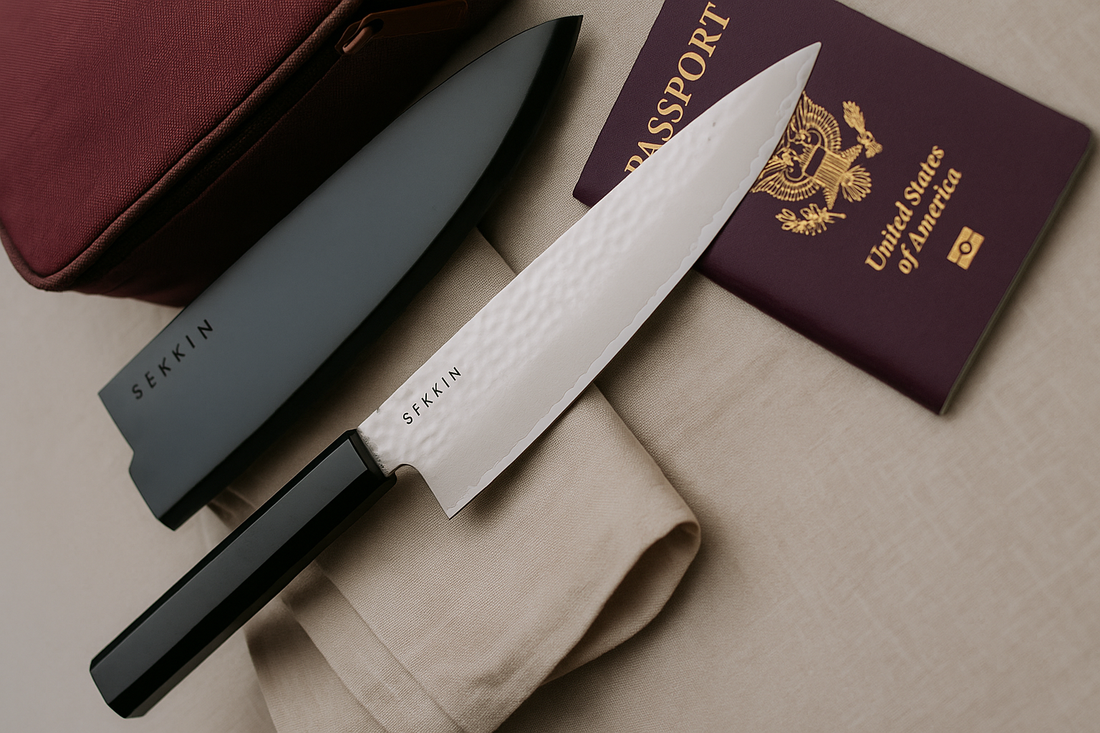
- Use a sheath or blade guard. These are plastic or leather covers that go over the blade. If you don’t have one, use thick cardboard and tape.
- Wrap the knife handle and blade. Use bubble wrap, a dish towel, or thick clothing to keep the knife from moving.
- Place knives in the center of your suitcase. Avoid putting them near the edges, where they could poke through or be a danger if the bag is opened quickly.
- Label the wrapped knife. A simple note, like “Kitchen Knife,” can alert inspectors and reduce confusion.
- Avoid packing with food or liquids. Some countries have extra rules about food imports.
Here’s a packing comparison for safety:
| Packing Method | Safety | Inspector Friendly? | Common Mistake |
|---|---|---|---|
| Loose in bag | Poor | No | High injury risk |
| Blade in cardboard, wrapped in clothes | Good | Yes | Can slide if not taped well |
| Sheath + bubble wrap + suitcase center | Best | Yes | Rarely damaged |
Tip: If you travel often with knives, consider buying a dedicated knife roll or travel case. These products are designed for chefs and make packing much safer and faster.
Customs And Import Considerations
Passing through airport security is just one step. Many travelers forget that customs officers at your destination might have their own rules. A kitchen knife in your checked luggage might be allowed by airline security, but not by customs.
- Some countries treat knives as restricted items. You may need to declare them, pay a fee, or even get a permit.
- Declared knives are less likely to be confiscated if you show they are for cooking, not self-defense.
- If you do not declare a knife and it’s found, you could face fines or worse.
For example, Japan has very strict laws about knives over a certain length, and you must show a legitimate reason for bringing them. In the UK, customs officers may ask about blade length and why you are carrying the knife. Research the rules before you fly to avoid surprises.
What To Do If Your Knife Is Confiscated
Even if you pack your knife properly, there’s always a small risk it could be taken by security or customs. Here’s what you can do:
- Stay calm and polite. Arguing rarely helps and can make things worse.
- Ask if you can mail the item home. Some airports offer a paid service to send items you cannot carry.
- Request a property receipt. This is proof your item was taken, which may help with insurance claims.
- Learn for next time. Make a note of what went wrong so you can avoid the problem in future trips.
Non-obvious insight: Sometimes, knives are not returned—even if you did nothing wrong. This is especially common if you forget to check the specific rules for each country or airline.
Airlines’ Specific Policies
Most airlines follow the general TSA or international rules, but some have their own guidelines. For example:
- Emirates, Singapore Airlines, and Lufthansa all allow kitchen knives in checked bags but ask you to pack them securely.
- Budget airlines sometimes have stricter bag checks and may confiscate items more quickly.
Always check your airline’s website for the latest rules. If you are flying multiple airlines on one trip, follow the strictest policy.
Here’s a quick comparison:
| Airline | Kitchen Knife in Checked Bag | Special Instructions |
|---|---|---|
| American Airlines | Allowed | Wrap blade, no knives in carry-on |
| Emirates | Allowed | Declare at check-in if unsure |
| Ryanair | Allowed | Strict on oversized bags |
| Qantas | Allowed | Check Australian rules for size |
| Singapore Airlines | Allowed | Follow destination laws |
Common Mistakes And How To Avoid Them
Travelers often make the same errors when packing knives. Avoid these to save time and money:
- Forgetting to declare knives at customs or when asked by airline staff.
- Packing knives in carry-on bags by mistake.
- Ignoring blade length rules in the destination country.
- Leaving knives loose in luggage, risking injury to handlers or damage to your belongings.
- Bringing banned knife types (like butterfly knives or switchblades).
Practical tip: Double-check your luggage before leaving for the airport, and print out airline and country rules if you’re unsure.

Credit: santokuknives.co.uk
When Carrying A Knife Is A Bad Idea
Sometimes, even if it’s legal, bringing a kitchen knife on your trip is not worth the hassle. For example:
- Traveling to countries with strict weapon laws. Some Middle Eastern and Asian countries have zero-tolerance policies.
- Short trips or layovers. If you will only use the knife once, consider buying or renting at your destination.
- Multiple connecting flights. Every transfer increases the chance of problems or delays.
When in doubt, ask yourself if you really need the knife, or if you can get by with alternatives.
Practical Alternatives
If you decide not to pack your kitchen knife, here are some options:
- Buy a cheap knife after arrival and leave it behind when you go home.
- Use plastic or disposable knives for simple tasks.
- Check if your hotel or rental has kitchen tools.
- Look for a travel knife designed for airline rules, with a short blade and sheath.
Sometimes, a little flexibility saves you a lot of stress.

Credit: www.wikihow.com
Resources For Up-to-date Rules
Regulations change often. To avoid surprises:
- Visit official airline and airport websites before every trip.
- Check the TSA or your country’s security authority.
- Ask in advance if you have unusual knives (antique, custom, or very large).
For a reliable source on airport security, see the TSA’s official “What Can I Bring?” page.
Wrapping Up
Traveling with a kitchen knife in your checked luggage is possible, but it’s important to plan ahead. Always check the rules for both your airline and destination country. Pack your knife safely, declare it if needed, and avoid common mistakes. If you’re unsure, use alternatives or buy what you need after you arrive. Smart planning means your trip will go smoothly, and you’ll avoid the stress of lost or confiscated items.
Credit: mysekkin.com
Frequently Asked Questions
Can I Pack Any Type Of Knife In My Checked Luggage?
No. While most kitchen knives are allowed, some types—like switchblades, butterfly knives, or knives with very long blades—may be banned. Always check both airline and country rules before packing.
What Happens If I Forget And Put A Knife In My Carry-on Bag?
If security finds a knife in your carry-on, it will be confiscated and you may face delays or fines. You usually cannot get the knife back. Always pack knives only in checked bags.
Do I Need To Declare My Kitchen Knife At Customs?
In some countries, declaring knives is required, especially if the blade is long or considered a weapon. It’s best to ask at customs or check the official rules for your destination.
Is There A Size Limit For Kitchen Knives In Checked Luggage?
Some countries have size limits for knives, even in checked bags. For example, blades over 6 inches may be restricted in some places. Check the rules for your destination before you travel.
What’s The Safest Way To Pack A Kitchen Knife?
Use a sheath or blade guard, wrap the knife in clothing or bubble wrap, and place it in the center of your suitcase. Label the package if possible, so inspectors know what it is and can handle it safely.