Skip to content
A wooden cutting board is a kitchen essential in many homes. It’s durable, looks beautiful, and is gentle on knives. But over time, even the best wooden boards can warp. This means they bend, twist, or no longer sit flat on your counter. If you notice your board rocking or wobbling, it can be annoying and even dangerous when slicing food. The good news: most warped wooden cutting boards can be fixed at home with a few simple methods.
In this guide, you’ll learn why boards warp, how to fix them, and how to prevent warping in the future.
Why Do Wooden Cutting Boards Warp?
Wood is a natural material. It reacts to changes in moisture, heat, and air. When one side of a board dries faster than the other, the wood expands and contracts unevenly. This causes bending or twisting.
Common causes of warping:
- Washing only one side
- Leaving the board in water
- Drying near a heat source
- Not oiling regularly
Understanding these causes helps you avoid making the problem worse.
How To Check If Your Board Is Warped
Before you fix anything, check the board’s flatness:
- Place your cutting board on a flat surface like your kitchen counter.
- Press down on different corners.
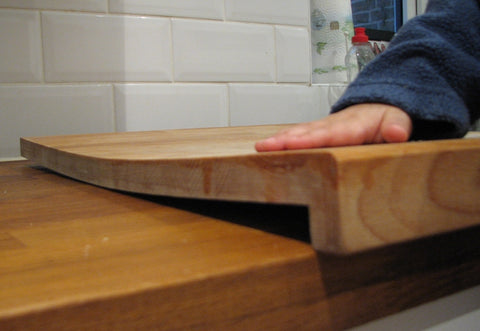
- If the board rocks, spins, or you see a gap, it’s warped.
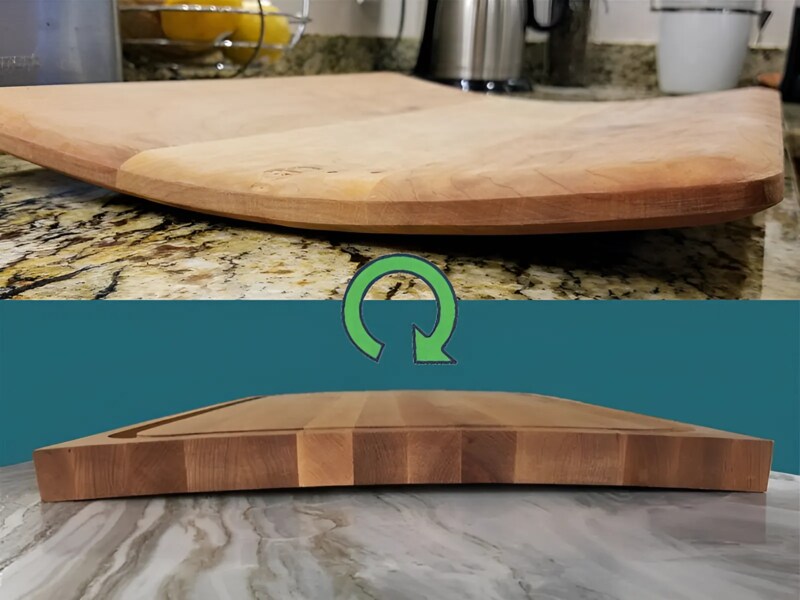
Some boards curve up at the edges (cupping), while others twist corner to corner (warping). The method you use to fix it may depend on the type and degree of warping.
Quick Fixes Vs. Deep Warping
Not all warps are the same. Small bends can sometimes be fixed overnight. Deep warping may take days. Here is a quick comparison:
| Warp Type | Severity | Fix Time | Success Rate |
|---|---|---|---|
| Minor Cupping | Low | 6–12 hours | High |
| Severe Warping | High | 1–3 days | Medium |
| Twisting | Medium | 12–36 hours | Medium |
If your board is cracked or split, fixing the warp alone won’t be enough.
Method 1: The Damp Towel And Weight Technique
This is the most common home method. It uses moisture and pressure to gently flatten the board.
Steps:
- Wet a clean kitchen towel with warm water. Wring out excess water. The towel should be damp, not soaking.
- Lay the towel on a flat surface (like a countertop or table).
- Place your warped cutting board on the towel, with the convex (curved up) side facing down.
- Cover the top of the board with another damp towel.
- Put a heavy, flat object on top (a stack of books, a heavy pot, or a baking sheet with weights).
- Leave for 6–12 hours. For severe warping, you may need to repeat or leave for up to 24 hours.
Practical Tips:
- Check every few hours to make sure the towels remain damp.
- Do not use soaking wet towels—too much water can damage the wood.
- For best results, do this overnight.
Why It Works:
Moisture softens the wood fibers. Pressure helps the board return to its original shape. This method is safe for almost all types of wooden boards.
Method 2: Steam And Clamp
For boards that are thicker or more stubborn, steam is more effective. This method is similar to what woodworkers use.
Steps:
- Boil water in a kettle or large pot.
- Hold the warped side of the board over the steam for 5–10 minutes. Be careful—steam can burn.
- Place the hot, damp board between two flat surfaces (like two cutting boards or baking sheets).
- Use clamps or heavy weights to press the board flat.
- Let it cool and dry for at least 12 hours.
Extra Advice:
- If you don’t have clamps, use heavy books or bricks, but make sure weight is even.
- For very thick boards, you might need to repeat the process.
Important Warning:
Never put your board in the oven or microwave to speed this up. Rapid heat can crack or split the wood.
Method 3: Soak And Sun (for Outdoor Use Only)
This method uses the sun’s heat and moisture from water. It’s best for boards that are not glued-laminate types.
Steps:
- Wet the concave (curved down) side of the board with water.
- Lay the board, wet side down, on a flat surface outside.
- Place the board in direct sunlight for 30–60 minutes.
- The sun will dry the top while the bottom absorbs moisture, often flattening the board.
Cautions:
- Do not leave the board in sun for too long—it can dry out and crack.
- This method is less precise but works for mild warping.
Credit: www.earlywooddesigns.com
When To Sand Or Plane
If you’ve tried the above methods and your board is still warped, sanding or planing may help. This removes wood from the high spots.
Steps:
- Use a hand planer or coarse sandpaper (60–80 grit).
- Sand the convex side until the board sits flat.
- Finish with finer sandpaper (120–220 grit) for smoothness.
- Clean the board and apply food-safe mineral oil.
Downside:
You’ll lose a little thickness, and deep grooves may stay. Use this only if other methods fail.
How To Oil And Condition After Fixing
Whenever you use water or steam, you must restore moisture balance with oil. This keeps your board healthy and prevents future warping.
Steps:
- Dry the board thoroughly.
- Apply a generous amount of food-grade mineral oil or a board cream with beeswax.
- Rub oil into all surfaces, including edges.
- Let it soak in for at least 3–4 hours (overnight is best).
- Wipe off any excess oil.
Oiling is not optional; it’s essential for the wood’s long-term health.
Prevention: How To Avoid Warping Next Time
Fixing a warped board is useful, but preventing warping is even better. Here’s how to keep your board flat:
- Wash both sides: Clean both sides every time, even if only one side was used.
- Dry upright: Stand the board on its edge to let air flow around all sides.
- Never soak: Don’t leave your board in water or the sink.
- Avoid dishwashers: Heat and moisture will warp and crack wood.
- Oil regularly: Once a month, or more if you use the board daily.
- Keep away from heat: Don’t store near stoves, ovens, or dishwashers.
- Use both sides: Flip your board regularly so wear is even.
Here’s a quick comparison of best and worst practices:
| Best Practice | What to Avoid |
|---|---|
| Dry upright after washing | Leaving flat on counter |
| Oil monthly | Letting board dry out |
| Clean both sides | Washing one side only |
| Store in a cool place | Storing near heat |
When To Replace Your Cutting Board
Sometimes, a warped board is a sign of deeper problems. Replace your board if:
- It has deep cracks or splits where bacteria can hide
- The glue joints are coming apart (for laminated boards)
- The surface is too thin or uneven to sand flat
A good wooden board, if cared for, can last 5–10 years or more. If you prepare food for others, safety comes first.
You might find this helpful: Best Wooden Cutting Boards
Credit: www.earlywooddesigns.com
Non-obvious Tips Most People Miss
Many guides skip small details that make a big difference:
- Always let your board come to room temperature before fixing. Cold wood is stiffer and less likely to move.
- If you use board creams (with wax), apply them after oiling but never before. Wax seals in oil but can prevent oil from soaking in if used first.
- For boards with rubber feet, remove the feet before flattening. They can block even pressure or make results uneven.
Common Myths About Warped Boards
Let’s clear up a few misunderstandings:
- Myth: “Warped boards are ruined.”
Fact: Most can be saved unless they’re split or moldy.
- Myth: “Soaking in water overnight is best.”
Fact: Too much water causes swelling, splitting, and more warping.
- Myth: “The dishwasher will flatten it.”
Fact: Dishwashers destroy wood with heat and steam.
Credit: en.chefstudio.vn
Real-world Example
Anna, a home cook in Chicago, noticed her favorite walnut cutting board started rocking after washing. She tried the damp towel method overnight with a cast iron pan as weight. By morning, the board was almost flat. After oiling, it stayed that way for months. She now dries and oils her board regularly and has had no warping since.
Environmental Factors: Humidity And Storage
Wood moves with the seasons. In winter, dry air can pull moisture from boards quickly. In summer, humid air makes boards swell.
- In dry climates, oil your board more often.
- Never store boards above the stove or dishwasher.
- If possible, keep boards in a cabinet, not on the counter, to avoid strong sunlight or heat.
Small changes in storage can have a big impact over years.
Frequently Asked Questions
How Do I Know If My Board Is Too Warped To Fix?
If your board has large cracks, is split in two, or rocks more than half an inch off the counter, it may be too far gone. You can try the damp towel and weight method, but results are not guaranteed. Sometimes, it’s safer and more sanitary to replace it.
Can I Use Olive Oil Or Vegetable Oil To Condition My Board?
No. Only use food-grade mineral oil or specialized board oils. Olive or vegetable oils can go rancid, leading to bad smells and sticky surfaces. Mineral oil is safe, does not spoil, and is easy to find in kitchen stores.
Is It Safe To Sand A Cutting Board At Home?
Yes, as long as you use clean, new sandpaper and finish with a food-safe oil. Always remove sanding dust with a damp cloth before using the board again. Never sand laminated or glued boards too much, as you might reach the glue layer.
Can I Put My Wooden Cutting Board In The Dishwasher If It Is Warped?
Never put wooden boards in the dishwasher, even if they’re warped. The combination of high heat and water will make warping worse and can cause cracking or splitting. Always wash by hand and dry immediately.
Are End-grain Boards Less Likely To Warp?
Yes, end-grain cutting boards are more stable because the wood fibers absorb and release moisture more evenly. However, they can still warp if not cared for properly. Regular oiling and careful washing are important for all types of wooden boards.
For more details on wood care and maintenance, you can visit the Wikipedia page on cutting boards.
A warped wooden cutting board is not the end of the world. With patience, a little moisture, and even pressure, most boards can be restored to flatness and given new life. Remember to oil and care for your board regularly to avoid future problems.
This not only saves money but also keeps your kitchen safe and your cooking enjoyable.