Skip to content
Making waffles at home feels easy—until you pour too much batter and watch it overflow, or too little and end up with thin, dry waffles. Knowing how much batter to put in a waffle maker is a small detail, but it changes everything. It affects the taste, texture, and appearance of your waffles. Whether you use a classic round maker, a Belgian style, or a mini waffle iron, getting the right amount is crucial.
This guide helps you find the perfect batter amount for your waffle maker. You’ll learn how to measure, adjust, and avoid common mistakes. Plus, you’ll get answers to frequent questions and see practical comparisons for different waffle maker types. If you want restaurant-quality waffles at home, read on.
Why Waffle Batter Amount Matters
The amount of waffle batter you pour affects the final result in several ways:
- Texture: Too much batter leads to soggy, undercooked waffles. Too little creates dry, thin waffles.
- Shape: Overflowing batter spills over the edges and makes cleaning harder.
- Even cooking: Proper batter coverage ensures every part cooks evenly.
- Appearance: The right amount produces golden, crisp waffles with a pleasing look.
Beginners often guess the amount or rely on the manufacturer’s suggestions. But factors like recipe thickness and waffle maker shape mean you sometimes need to adjust.
Key Factors That Influence Batter Amount
Several things change how much batter you need:
1. Waffle Maker Size And Shape
There are many styles: classic round, Belgian, square, mini, and novelty shapes. Each holds a different volume.
2. Batter Consistency
Thick batters (like yeast-based or protein waffles) spread less than thin, pourable batters.
3. Waffle Maker Depth
Deeper plates (Belgian style) need more batter to fill the pockets.
4. Recipe Yield
Some recipes make more or less batter per batch. Always check the yield.
5. Desired Waffle Thickness
If you like thick, fluffy waffles, you’ll use more batter than for thin, crispy ones.
Below is a quick comparison of common waffle maker sizes and typical batter requirements:
| Waffle Maker Type | Typical Batter Amount (per waffle) | Waffle Size |
|---|---|---|
| Classic Round (7-inch) | 2/3 to 3/4 cup | Medium |
| Belgian Square (4×4-inch) | 1/2 cup | Thick, Large |
| Mini Waffle Maker (4-inch) | 1/4 cup | Small |
| Novelty Shape (heart, animal, etc.) | 1/4 to 1/3 cup | Varies |

Credit: www.amazon.com
How To Measure Batter For Different Waffle Makers
Let’s break down the process for the most common types:
Classic Round Waffle Makers
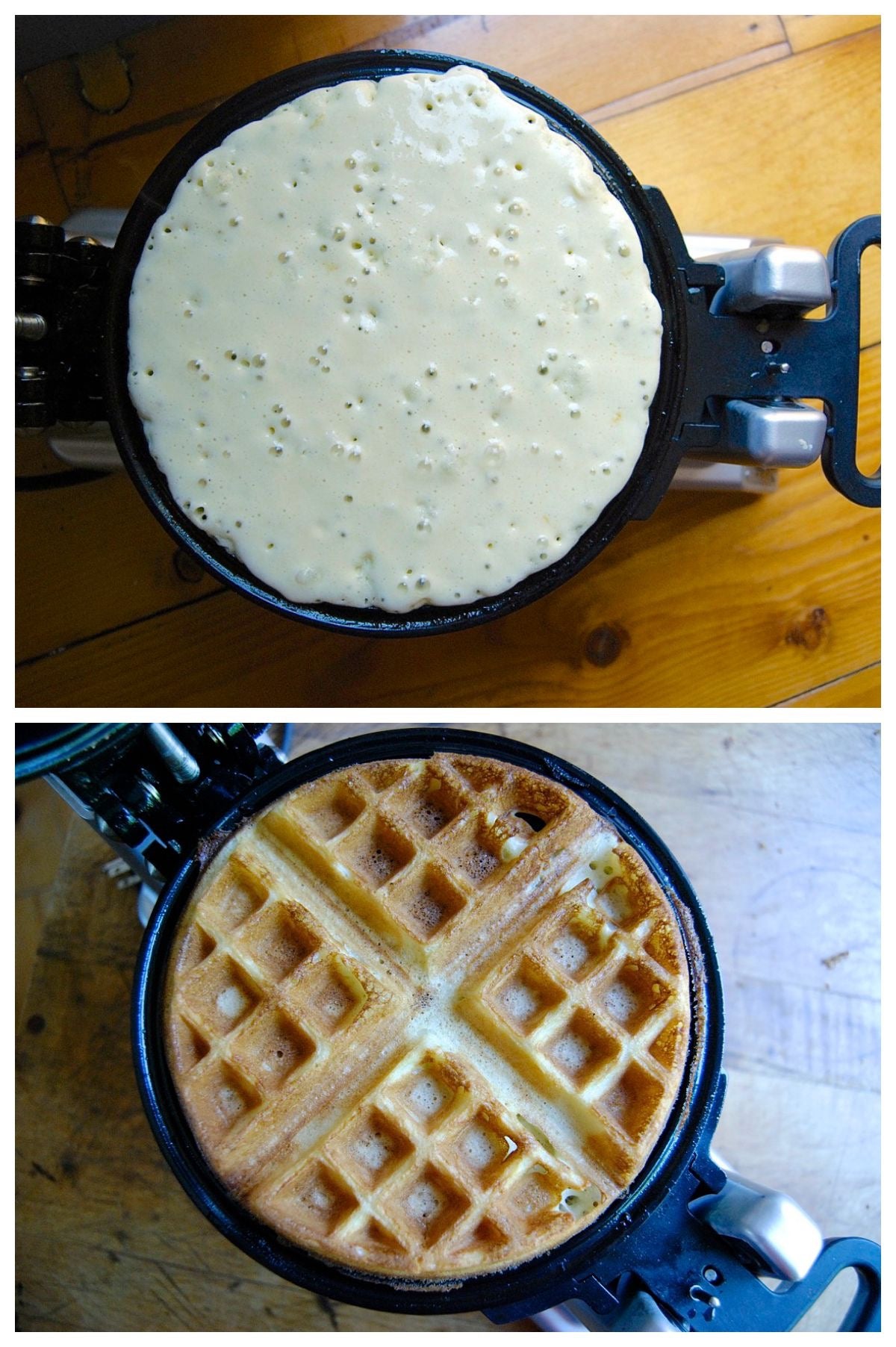
For most classic round waffle makers (about 7 inches across), start with 2/3 cup of batter. Pour it slowly into the center, letting it spread naturally. The batter should reach the edges without overflowing. If your recipe is thick, use a spoon to guide it.
Belgian Waffle Makers
Belgian waffle makers have deeper grooves and larger plates. They usually need 3/4 cup of batter per waffle (sometimes up to 1 cup). Belgian waffles are thick, so avoid pouring too much at once. If the batter is very thick, spread it gently to cover the plate.
Square Waffle Makers
Square waffle makers (like the 4×4 inch plates) use about 1/2 cup of batter per waffle. If your maker cooks four waffles at once, pour 1/2 cup per section. Watch for overflow—some square makers have shallow plates.
Mini Waffle Makers
Mini waffle makers (4 inches across) are popular for quick snacks. Use 1/4 cup of batter. Pour slowly to avoid spilling.
Novelty And Specialty Waffle Makers
Heart-shaped, animal-shaped, or other novelty makers vary in size. Most need 1/4 to 1/3 cup per shape. Check the manual or do a test run to see how much fills the mold.
Here’s a comparison table for easy reference:
| Maker Type | Batter Needed (per waffle) | Tips |
|---|---|---|
| Classic Round | 2/3 cup | Let batter spread from center |
| Belgian | 3/4 cup | Spread thick batter gently |
| Square | 1/2 cup | Pour per section |
| Mini | 1/4 cup | Pour slowly |
Step-by-step: Getting The Batter Amount Right
Follow these simple steps to get perfect waffles every time:
1. Read The Manual
Most waffle makers suggest a batter amount. Start there, but adjust as needed.
2. Preheat The Waffle Maker
Always preheat before pouring batter. Cold plates cause uneven cooking.
3. Use A Measuring Cup
Measuring ensures consistency. Try a liquid measuring cup for pourable batter.
4. Pour Slowly
Start in the center. Let the batter spread naturally. If needed, use a spatula to guide thick batter.
5. Check For Overflow
If batter spills out, reduce the amount next time. If waffles are too thin, add more.
6. Close The Lid Gently
Don’t press hard—let the lid settle. Too much pressure forces batter out.
7. Make Notes
Write down the perfect amount for your maker and recipe.
Example: Making A Classic Round Waffle
Suppose you have a 7-inch round waffle maker. Here’s a sample process:
- Preheat the maker for 5 minutes.
- Lightly grease the plates.
- Pour 2/3 cup of batter into the center.
- Close the lid gently.
- Cook for 4–5 minutes (until golden).
- If the waffle overflows, try 1/2 cup next time.
Credit: www.kingarthurbaking.com
Common Mistakes And How To Avoid Them
Even experienced cooks make mistakes. Here are some to watch for:
1. Overfilling The Plates
This is the most frequent error. Too much batter leads to messy overflow and uncooked centers.
2. Underfilling The Plates
Pouring too little leaves gaps and thin, hard waffles.
3. Ignoring Batter Consistency
Thick batter doesn’t spread well. Thin batter may overflow easily.
4. Pouring Batter All At Once
Pour slowly, not all at once. Fast pouring causes uneven coverage.
5. Not Adjusting For Recipe Changes
Some recipes produce more or less batter. Always check the yield.
You might find this helpful: How to Clean a Waffle Maker
How To Adjust For Different Recipes
Waffle recipes vary. Some use eggs for fluffiness, others use yeast for thickness, and some are gluten-free. Each changes the batter’s consistency.
- Thin batters (like classic buttermilk) spread easily. Start with the lower suggested amount.
- Thick batters (protein waffles, yeast-raised) need help spreading. Use a spatula and start with a higher amount.
- Add-ins (fruit, chocolate chips) increase volume and thickness. Use less batter to prevent overflow.
If you switch recipes, do a test batch before serving guests.
Tips For Perfect Waffles Every Time
Here are some practical tips:
- Grease the plates lightly before each batch to prevent sticking.
- Let the batter rest for 5–10 minutes if the recipe calls for it. This improves texture.
- Don’t open the lid early. Wait until steam slows down—this means the waffle is cooked.
- Use a timer to avoid burning or undercooking.
- Clean the waffle maker after each use to prevent buildup.
Data Comparison: Batter Amount Vs. Waffle Quality
See how batter amount affects the final waffle:
| Batter Amount | Result | Texture | Appearance |
|---|---|---|---|
| Too Little | Thin, incomplete | Dry, hard | Gaps, pale |
| Just Right | Full, crisp | Fluffy, moist | Golden, perfect shape |
| Too Much | Overflow, messy | Undercooked, soggy | Ragged edges, sticky |
Non-obvious Insights For Better Waffles
Many beginners miss these important points:
- Altitude affects batter spread: At high altitudes, batter is thinner and spreads more. Use less batter than usual.
- Temperature changes batter flow: Cold batter is thicker and spreads less. Let it warm up before pouring.
- Using a squeeze bottle or pitcher: For thick batters, a squeeze bottle helps control the pour and avoid spills.
Cleaning Up After Overflow
If you accidentally overfill, unplug the waffle maker and let it cool. Use a damp cloth to wipe off excess batter. Avoid scraping with metal tools, as this damages the nonstick coating. For stuck-on batter, use a soft brush.
When To Experiment With Batter Amount
Once you know your waffle maker and recipe, try small changes:
- Add 1–2 tablespoons more batter for thicker waffles.
- Reduce by 1–2 tablespoons for crispier, thinner waffles.
- For fun shapes or toppings, start with a minimal amount and add extra as needed.
Frequently Asked Questions
How Do I Know The Exact Amount Of Batter For My Waffle Maker?
Most manuals recommend a starting amount. Try this first, then adjust based on your results. If you see overflow, use less. If you see gaps, use more. Write down your ideal amount for future reference.
Can I Use Pancake Batter In A Waffle Maker?
Yes, but pancake batter is usually thinner. Start with less batter than you would for waffle batter. Pancake batter may not crisp up as much, but it works for quick snacks.
What Happens If I Put Too Much Batter In?
Overflow is common. Batter spills over, making cleanup harder. Waffles may cook unevenly and feel soggy. Always start with the suggested amount and increase only if needed.
Should I Fill The Plates Completely?
No. Batter expands when cooking. Leave a small gap around the edges—about 1/4 inch. This prevents overflow and ensures even cooking.
Is There A Universal Batter Amount For All Makers?
No. Each waffle maker is different. Sizes and shapes change how much batter you need. Always check your manual and do a test batch.
Making great waffles at home is simple once you understand how much batter to use. Start with the recommended amount for your maker, adjust for your recipe, and make notes. The difference between a perfect waffle and a messy one is often just a few tablespoons. If you want more in-depth tips, you can find technical details at Serious Eats. With the right batter amount, your waffles will be golden, crispy, and delicious—ready for breakfast, brunch, or anytime you crave a treat.

Credit: www.sonshinekitchen.com