Skip to content
Mopping is one of the simplest ways to keep your floors clean, but even a basic task like this can raise questions. One of the most common: Should you mop with hot or cold water? You may have heard different opinions from your family, cleaning products, or even professional cleaners. Some say hot water cleans better, others claim cold water protects your floor. With so many tips and myths, it’s easy to get confused.
Let’s dive into the science, the practical results, and real-life advice so you can make the best choice for your home.
The Science Behind Cleaning With Hot And Cold Water
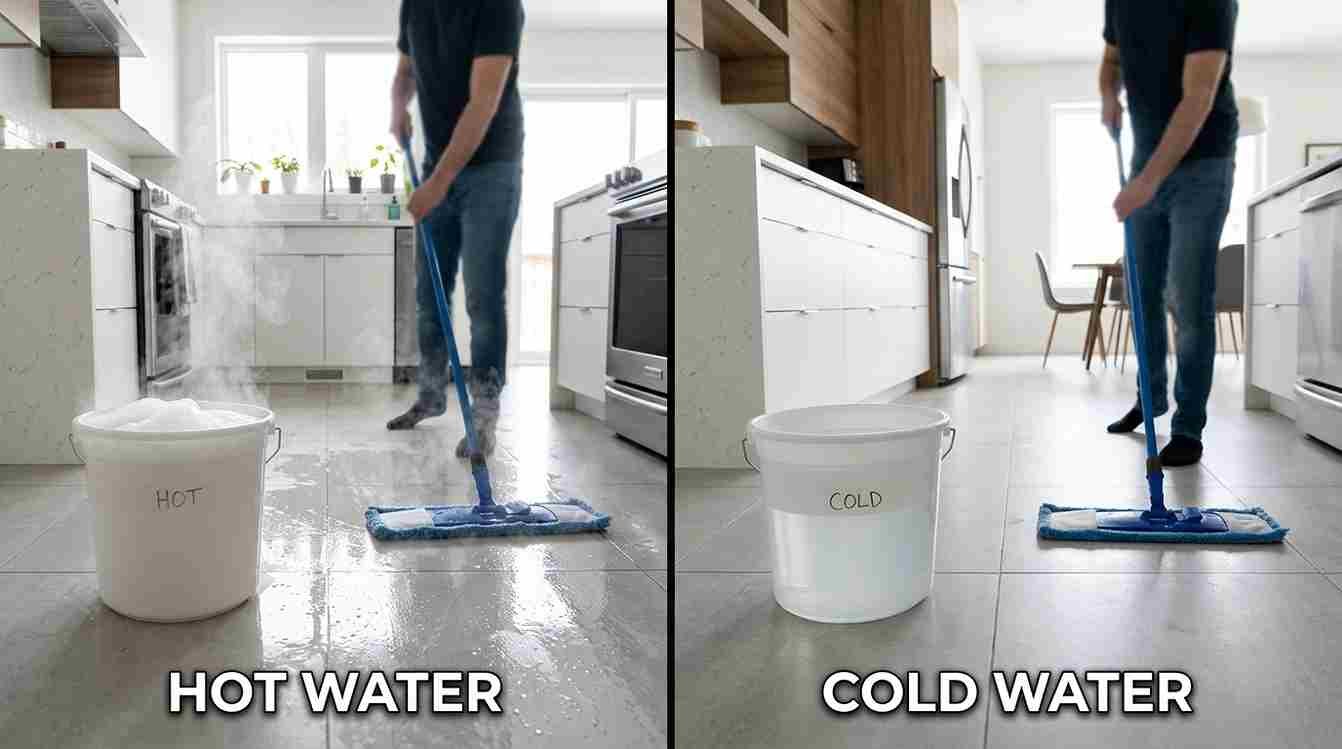
Water temperature changes how well dirt, grease, and bacteria are removed from your floor. Here’s what happens:
- Hot water has more energy. This energy helps break down oils and sticky substances faster. For example, washing a greasy plate in hot water is much easier than using cold.
- Cold water is gentler. It won’t break down tough dirt as quickly, but it’s safer for some floor types and cleaning products.
Many cleaning agents are designed to work best at certain temperatures. Using the wrong temperature can make your mopping less effective or even damage your floors.
Pros And Cons Of Mopping With Hot Water
Hot water is a popular choice for many reasons, but it’s not always the best option. Here’s a closer look:
Benefits Of Hot Water
- Better grease removal: Hot water dissolves oils and sticky messes quickly. If you cook a lot or have pets, you’ll notice a big difference.
- Kills more germs: Most bacteria and viruses can’t survive temperatures above 140°F (60°C). Using hot water (with care) can help sanitize your floors.
- Faster drying: Floors mopped with hot water tend to dry faster, reducing the chance of slipping.
Drawbacks Of Hot Water
- Can damage floors: Hot water can cause wood to warp, vinyl to curl, and some tiles to crack or fade.
- Harms some finishes: Waxed or sealed floors may lose their shine or protective layer.
- Not always safe: Handling hot water can cause burns or injuries, especially for kids or older adults.
Example
If you mop a hardwood floor with water above 130°F, the wood fibers may swell, leading to permanent damage. Many floor manufacturers recommend warm—not hot—water for this reason.
Pros And Cons Of Mopping With Cold Water
Cold water has its own strengths and weaknesses. It’s often the default choice for quick or regular cleaning.
Benefits Of Cold Water
- Safe for all surfaces: Cold water won’t warp, crack, or damage most floors.
- Works with many cleaners: Most everyday floor cleaners are designed for room temperature water.
- Less risk: No burns or steam, safer for families and pets.
Drawbacks Of Cold Water
- Less effective on grease: Cold water can’t break down oils as well, leaving a thin film.
- Doesn’t kill as many germs: Cold water alone won’t sanitize your floor unless you use a disinfectant.
- May leave streaks: On some surfaces, cold water can dry slowly and show streaks.
Example
If you have vinyl flooring, using cold water is usually recommended. Hot water can loosen the glue holding the vinyl down, causing bubbles or peeling over time.
What Really Matters: Floor Type And Cleaning Product
Not all floors are created equal. The best water temperature depends on what kind of floor you have and what cleaner you use.
Common Floor Types
| Floor Type | Recommended Water Temperature | Notes |
|---|---|---|
| Hardwood | Warm (not hot) | Too hot can warp wood; always wring mop well. |
| Laminate | Room temperature | Hot water may cause swelling or separation. |
| Vinyl | Cold to warm | Hot water can loosen adhesive. |
| Tile/Stone | Hot or warm | Can handle heat, but check grout and sealant. |
| Linoleum | Cold to warm | Hot water can damage finish. |
Cleaning Products And Water Temperature
Some cleaning products need hot water to dissolve, while others lose strength if the water is too hot. Always check the label for instructions.
- Enzyme cleaners: Work best in warm water (not above 120°F/49°C).
- Bleach/disinfectants: Some break down in hot water, making them less effective.
- Soap-based cleaners: Often need warm or hot water to mix well.
If you’re not sure, start with warm water (around 100–110°F/38–43°C). This is safe for most surfaces and products.
Common Mistakes When Choosing Water Temperature
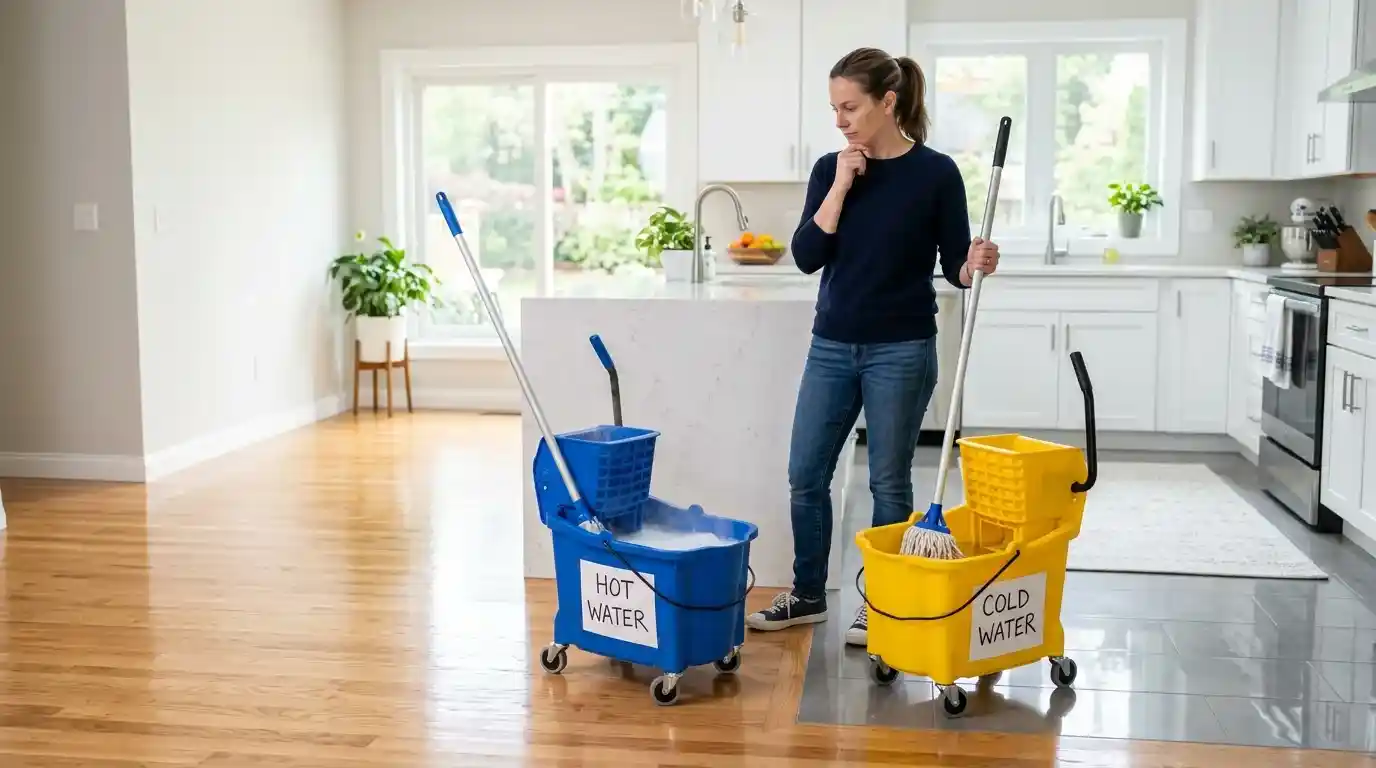
Many people make the same errors when mopping. Avoid these to get the best results:
- Using the hottest water possible: More heat isn’t always better. It can ruin floors and waste energy.
- Ignoring the floor manufacturer’s advice: Always check your floor’s care guide. Some surfaces are sensitive to temperature.
- Not matching cleaner and water: Some cleaning chemicals work best with cold or room temperature water.
- Too much water: Hot or cold, soaking your floor can cause damage—especially to wood or laminate.
A non-obvious tip: Always wring your mop well. Even the right temperature can cause damage if your mop is too wet.
How Water Temperature Affects Disinfection
Many people mop to kill germs, especially during cold and flu season. But does hot or cold water really matter for disinfection?
The Facts
- Hot water can help kill some bacteria and viruses, but only at temperatures above 140°F (60°C). Most people don’t mop with water this hot because it’s unsafe and can damage floors.
- Cold water does not kill germs on its own. You need a proper floor disinfectant for true sanitizing.
- Disinfectants like bleach or hydrogen peroxide often work best in room temperature water.
So, unless you’re using very hot water (which is rare in home cleaning), the cleaning product is more important than the water temperature for killing germs.
Which Is More Eco-friendly?
Energy use is a practical issue. Heating water takes electricity or gas, which adds to your bills and environmental impact.
- Cold water mopping saves energy and money.
- Hot water mopping uses more resources, especially if you mop large areas or often.
If your floors aren’t very dirty or greasy, room temperature or cold water is usually enough and better for the planet.
Real-life Scenarios: When To Use Hot Or Cold Water
Let’s look at some common situations to see what works best.
Scenario 1: After A Cooking Spill
Your kitchen floor is sticky with oil or sauce. Hot water (with a degreasing cleaner) will break up the mess quickly.
Scenario 2: Mopping A Child’s Playroom
Kids play on the floor, so safety matters. Use cold or warm water with a safe disinfectant. Avoid very hot water to prevent burns and damage to toys or floor coverings.
Scenario 3: Routine Cleaning For Hardwood
You want to keep your hardwood shiny and healthy. Use warm water (not hot) and wring the mop well. Never let water pool on the surface.
Scenario 4: Cleaning Bathroom Tiles
Mold and soap scum need strong cleaning. Here, hot water (if your tiles and grout can handle it) plus a targeted cleaner works best.
Scenario 5: Quick Mop Before Guests Arrive
If the floor isn’t very dirty, cold or room temperature water with a bit of floor cleaner is fine. It dries quickly and leaves no residue.
Data: User Preferences And Floor Damage Cases
Studies show most people use whatever water temperature feels comfortable—not always what’s best for their floors.
| Survey Question | Hot Water | Cold/Room Temp Water | Don’t Know |
|---|---|---|---|
| Which do you use for mopping? | 45% | 40% | 15% |
| Have you damaged a floor by mopping? | 14% | 4% | 82% |
The takeaway: More people damage their floors with hot water than with cold. Yet, many are unaware of the risks.
Practical Tips For Safe And Effective Mopping
- Check your floor’s cleaning guide before choosing a water temperature.
- Use the right cleaning product for your floor and water temperature.
- Wring your mop well every time.
- Test a small area if you’re unsure about temperature or cleaner.
- Don’t let water sit on the floor—dry with a clean towel if needed.
- Change the water often to avoid spreading dirt around.
- Ventilate the room so floors dry quickly and prevent mold.
A tip beginners miss: Always rinse your mop in clean water before each new section. Dirty water reduces cleaning power, whether hot or cold.
:max_bytes(150000):strip_icc()/SPR-should-you-mop-with-hot-or-cold-water-11785902-8034a4fa718143caa9fb087a9d1cf7f7.jpg)
Credit: www.thespruce.com
Expert Opinions And Research
Professional cleaners often recommend warm water (not boiling) for most floors. According to the US Environmental Protection Agency, cleaning products work best when used as directed and with water at the suggested temperature. Overheating water can cause damage and reduce cleaner effectiveness. You can read more about cleaning science at the EPA’s Safer Choice program.
Frequently Asked Questions
Does Hot Water Always Clean Better Than Cold Water?
Not always. Hot water is better at removing grease and sticky messes, but it can damage some floors. For most dirt, warm or room temperature water plus the right cleaner is enough.
Is It Safe To Use Boiling Water To Mop?
No. Boiling water (212°F/100°C) is too hot for most floors and can cause burns. It can also damage wood, vinyl, and laminate floors.
What’s The Best Water Temperature For Disinfecting Floors?
Disinfectants usually work best in room temperature or warm water. Very hot water can break down some chemicals and make them less effective. Always follow the cleaner’s instructions.
Can I Use Cold Water For All Types Of Floors?
Cold water is safe for all floors, but may not remove heavy grease or sticky spots as well as warm or hot water. For regular dust and light dirt, cold water works fine.
How Can I Prevent Floor Damage When Mopping?
Use the recommended water temperature and cleaning product for your floor type. Always wring out your mop, avoid soaking the floor, and dry the surface quickly.
Choosing between hot or cold water for mopping isn’t just about cleaning power—it’s about safety, floor type, and the right technique. By understanding the science and following practical tips, you can keep your floors looking their best for years. Remember: when in doubt, warm water and the right cleaner usually offer the best balance of clean and care.