Skip to content
Many people worry about mold spores in their homes. These tiny particles can cause allergies, breathing problems, and even worsen asthma. If you’ve ever smelled a musty odor or seen spots on your walls, you might be dealing with mold. But can air purifiers really remove mold spores from the air and make your home safer? Let’s break down how air purifiers work, which models are effective, and what you need to know to get the best results.
What Are Mold Spores And Why Are They Dangerous?
Mold spores are tiny, lightweight particles released by molds. They float in the air and can survive in many environments. You can’t see them without a microscope, but you might feel their effects. When inhaled, mold spores can trigger allergy symptoms like sneezing, itchy eyes, or a runny nose. For people with asthma or weak immune systems, mold spores can be even more harmful.
According to the Centers for Disease Control and Prevention (CDC), exposure to mold spores can cause respiratory problems and may lead to infections in sensitive people. Mold grows best in damp areas, such as basements, bathrooms, or places with water leaks. It’s important to address mold problems quickly, but removing spores from the air is also important.
How Do Air Purifiers Work?
Air purifiers are devices that clean the air inside your home. They pull in air, trap unwanted particles, and then release cleaner air back into the room. Not all air purifiers are the same. The most common types use HEPA filters, activated carbon, or UV light. Each has strengths and weaknesses when dealing with mold spores.
Hepa Filters
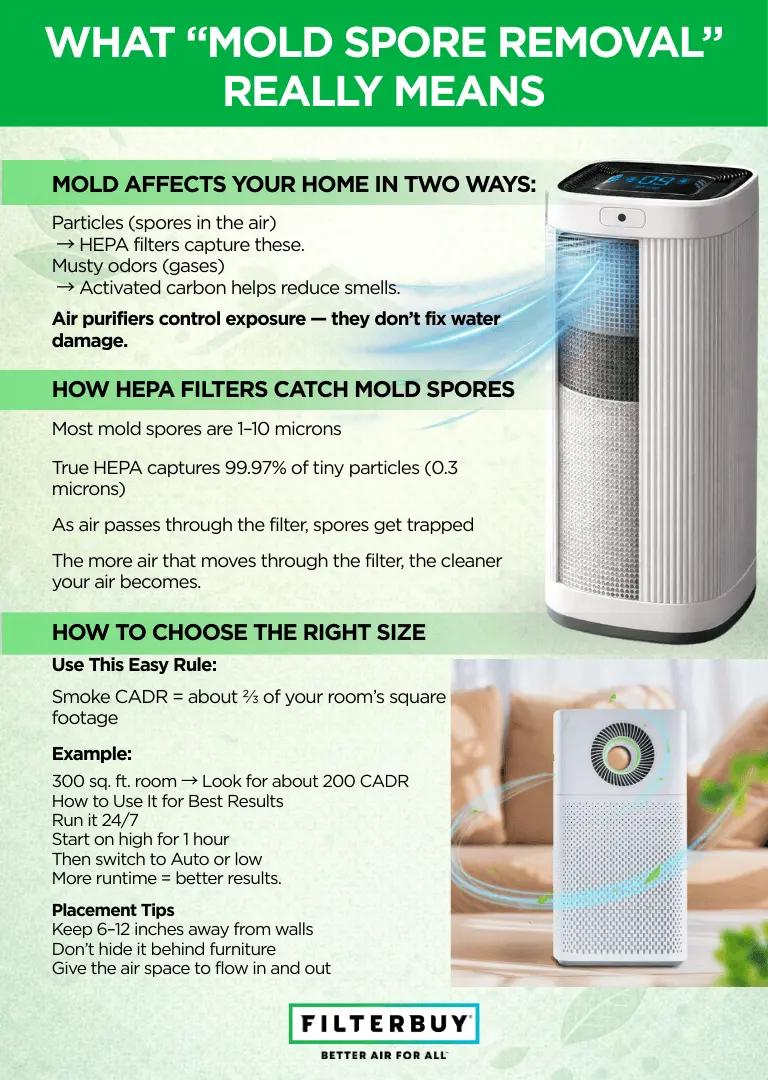
HEPA stands for High Efficiency Particulate Air. These filters are designed to catch at least 99.97% of particles as small as 0.3 microns. Mold spores usually measure between 1-30 microns, so HEPA filters can trap them easily. This makes HEPA-based air purifiers a strong choice for removing mold spores.
Activated Carbon
Activated carbon filters mainly remove odors and gases, not solid particles. Mold often creates a musty smell, so carbon filters can help with the odor. However, they do not remove mold spores as efficiently as HEPA filters.
Uv Light
Some air purifiers use UV-C light to kill germs, bacteria, and mold spores. When mold spores pass through the UV light chamber, the light damages their DNA, making them unable to grow. However, UV-C only works if the spores are exposed long enough to the light. In practice, some spores may not get enough exposure.

Credit: medifyair.com
Do Air Purifiers Remove Mold Spores?
The short answer is yes, but with some conditions. Air purifiers with HEPA filters can capture mold spores floating in the air. This reduces the number of spores you breathe in. However, air purifiers do not remove mold growing on surfaces or hidden behind walls.
To understand how well air purifiers work, look at this comparison:
| Air Purifier Type | Mold Spore Removal Efficiency | Odor Removal |
|---|---|---|
| HEPA Filter | Very High (99.97%) | Low |
| Activated Carbon | Low | High |
| UV-C Light | Moderate | Low |
HEPA filters are best for removing airborne mold spores. If your main concern is the musty smell, activated carbon is a good addition.
Where Do Mold Spores Come From?
Mold spores can enter your home in many ways:
- Through open windows or doors
- On clothing, shoes, or pets
- In dust from outside
- Through ventilation systems
Once inside, spores settle on damp surfaces and start growing. If you have water leaks or high humidity, mold can grow quickly. Air purifiers help by catching spores before they settle.
Credit: filterbuy.com
Choosing The Right Air Purifier For Mold Spores
Not all air purifiers are equal. Here’s what to look for:
- HEPA Certification: Make sure the purifier has a true HEPA filter, not just “HEPA-like.”
- Room Size Coverage: Choose a purifier that matches the size of your room. Check the CADR (Clean Air Delivery Rate) rating. Higher CADR means faster cleaning.
- Multi-Stage Filtration: Some purifiers combine HEPA, carbon, and UV-C for better results.
- Maintenance: Filters need regular cleaning or replacement. Check costs and how often you need to change them.
Let’s compare some popular air purifiers for mold spores:
| Model | Filter Type | Room Size (sq ft) | CADR | Maintenance Cost |
|---|---|---|---|---|
| Levoit Core 300 | HEPA | 215 | 135 | Low |
| Honeywell HPA300 | HEPA + Carbon | 465 | 300 | Medium |
| Winix 5500-2 | HEPA + Carbon + UV | 360 | 243 | Medium |
The Honeywell HPA300 covers a large area and has a high CADR, making it good for bigger rooms. The Levoit Core 300 is affordable for small spaces. The Winix 5500-2 offers multi-stage filtration.
Limitations Of Air Purifiers For Mold
Air purifiers help reduce airborne mold spores, but they have limits:
- They cannot remove mold growing on surfaces.
- Spores trapped in carpets, upholstery, or behind walls stay untouched.
- If humidity is high, mold can keep growing even with an air purifier.
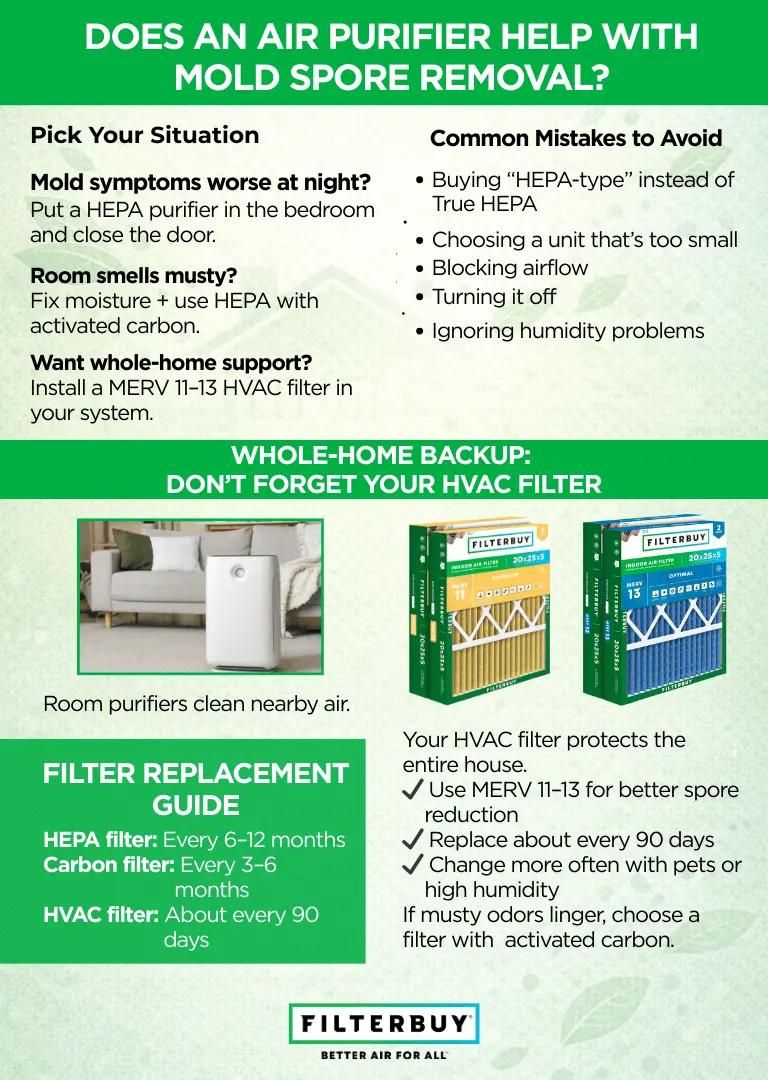
One key insight: Even the best air purifier cannot fix a mold problem at its source. You must clean moldy surfaces and fix leaks or dampness. Otherwise, new spores will keep entering the air.
Credit: filterbuy.com
How To Use Air Purifiers Effectively Against Mold
To get the best results, follow these steps:
- Place the air purifier near mold-prone areas (bathrooms, basements, kitchens).
- Run the purifier continuously, especially during wet weather or after leaks.
- Keep doors and windows closed while the purifier is running.
- Replace filters on schedule. Old filters lose efficiency.
- Fix water leaks and reduce humidity. Use a dehumidifier if needed.
Many beginners forget to check their air purifier’s filter regularly. A clogged filter cannot trap spores. Another common mistake is buying a purifier that is too small for the room. Always check the specifications.
Mold Prevention: Beyond Air Purifiers
Air purifiers are a good tool, but prevention is even better. Mold only grows if there is moisture. Control humidity with these tips:
- Keep indoor humidity below 50%
- Fix leaks quickly
- Ventilate bathrooms and kitchens
- Clean and dry water-damaged areas within 24 hours
Here’s a quick comparison of prevention methods:
| Method | Effectiveness | Cost | Difficulty |
|---|---|---|---|
| Use air purifier | Moderate | Medium | Easy |
| Dehumidifier | High | Medium | Easy |
| Fix leaks | Very High | Low to High | Medium |
| Ventilation | High | Low | Easy |
For lasting results, combine air purification with moisture control.
You might find this helpful: Best Air Purifiers for Mold
Real-life Example
Consider a family living in a humid area. They notice mold spots on the bathroom wall and a musty smell in the basement. They buy a HEPA air purifier and place it in the basement. After one week, the air feels fresher, and allergy symptoms improve. However, mold spots remain on the wall. They realize they also need to clean the wall and fix a leaking pipe. The air purifier helped, but it was only part of the solution.
Scientific Evidence
A study published by the American Society of Heating, Refrigerating and Air-Conditioning Engineers (ASHRAE) found that HEPA filters can reduce airborne mold spores by up to 99.97%. However, the study also notes that removing visible mold is essential for full protection.
The Environmental Protection Agency (EPA) also recommends using HEPA air purifiers as part of a mold control strategy, but stresses the need for moisture control and cleaning.
For more details, check this EPA mold resource.
Frequently Asked Questions
Do Air Purifiers Kill Mold Spores Or Just Trap Them?
Most air purifiers with HEPA filters trap mold spores. Some models with UV-C light can kill spores, but only if exposure is long enough. In general, trapping is more reliable.
Can Air Purifiers Remove Mold Spores From Carpets And Furniture?
No, air purifiers can only remove spores floating in the air. Spores stuck in carpets or furniture need vacuuming and cleaning. Use a vacuum with a HEPA filter for best results.
Is It Safe To Use Air Purifiers Around Children And Pets?
Yes, HEPA air purifiers are safe for children and pets. Avoid ozone-generating purifiers, as ozone can cause respiratory problems.
How Often Should I Replace The Filters In My Air Purifier?
Replace filters every 6–12 months, depending on the model and usage. Check the manufacturer’s instructions. If you notice less airflow or bad smells, change filters sooner.
Will An Air Purifier Help If I Have A Mold Allergy?
Yes, a HEPA air purifier can reduce allergy symptoms by removing mold spores. But you still need to remove visible mold and control humidity for best results.
Final Thoughts
Air purifiers play a key role in making your home safer from mold spores. The most effective models use HEPA filters to trap these particles and reduce allergy risks. However, air purifiers cannot remove mold growing on surfaces or solve moisture problems. For full protection, combine air purification with cleaning, fixing leaks, and controlling humidity. With the right approach, you can breathe easier and protect your health.