Keeping your kitchen pantry organized can feel impossible, especially if you have a busy household or limited space. But a well-ordered pantry saves time, reduces food waste, and makes cooking much easier. Many people start strong but lose motivation when clutter returns.
The good news? With the right approach, you can create a pantry that stays tidy for months, not just days. This guide shares practical steps, real-life examples, and expert tips to help you organize your kitchen pantry and keep it that way.
Assess Your Pantry Space
Before you start, you need to understand your current pantry situation. Take everything out and look at your shelves, drawers, and bins. Are there deep shelves where items get lost? Do you have adjustable racks or fixed cabinets? Knowing your pantry layout helps you plan.
Try to notice how much vertical and horizontal space you have. For example, some shelves may be tall but not very wide, while others might be short and deep. This matters when choosing containers and arranging food. Also, check if there are unused corners or gaps that could fit baskets or racks.
Common Pantry Types
Different homes have different pantries. Here are three common types:
| Pantry Type | Features | Challenges |
|---|---|---|
| Walk-in Pantry | Large space, multiple shelves | Items can get lost at the back |
| Cabinet Pantry | Small, vertical shelves | Limited space, hard to reach top/bottom |
| Pull-out Pantry | Sliding racks, easy access | Not much width, items can fall out |
If you know your pantry’s strengths and weaknesses, you can choose the best organizing tools and strategies. For example, deep shelves often need pull-out baskets or lazy Susans, while narrow cabinets work well with stackable bins.
Declutter And Sort
Pull every item out and check expiration dates. According to the USDA, American households waste about 31% of food each year. Much of this is because items are forgotten in the pantry.
- Toss expired or stale food
- Donate unopened, non-expired items you won’t use
- Recycle empty containers
After removing unwanted items, wipe down shelves and bins. Small crumbs or spills are easy to miss, but they cause mess and attract bugs. Pay special attention to corners and drawer bottoms.
Once you clear out the clutter, group remaining items into categories:
- Grains (rice, pasta, flour)
- Canned goods (beans, vegetables, soups)
- Snacks (chips, crackers, nuts)
- Baking supplies (sugar, baking powder, chocolate)
- Condiments (sauces, oils, vinegars)
- Breakfast foods (cereal, oatmeal)
- Drinks (tea, coffee, juice boxes)
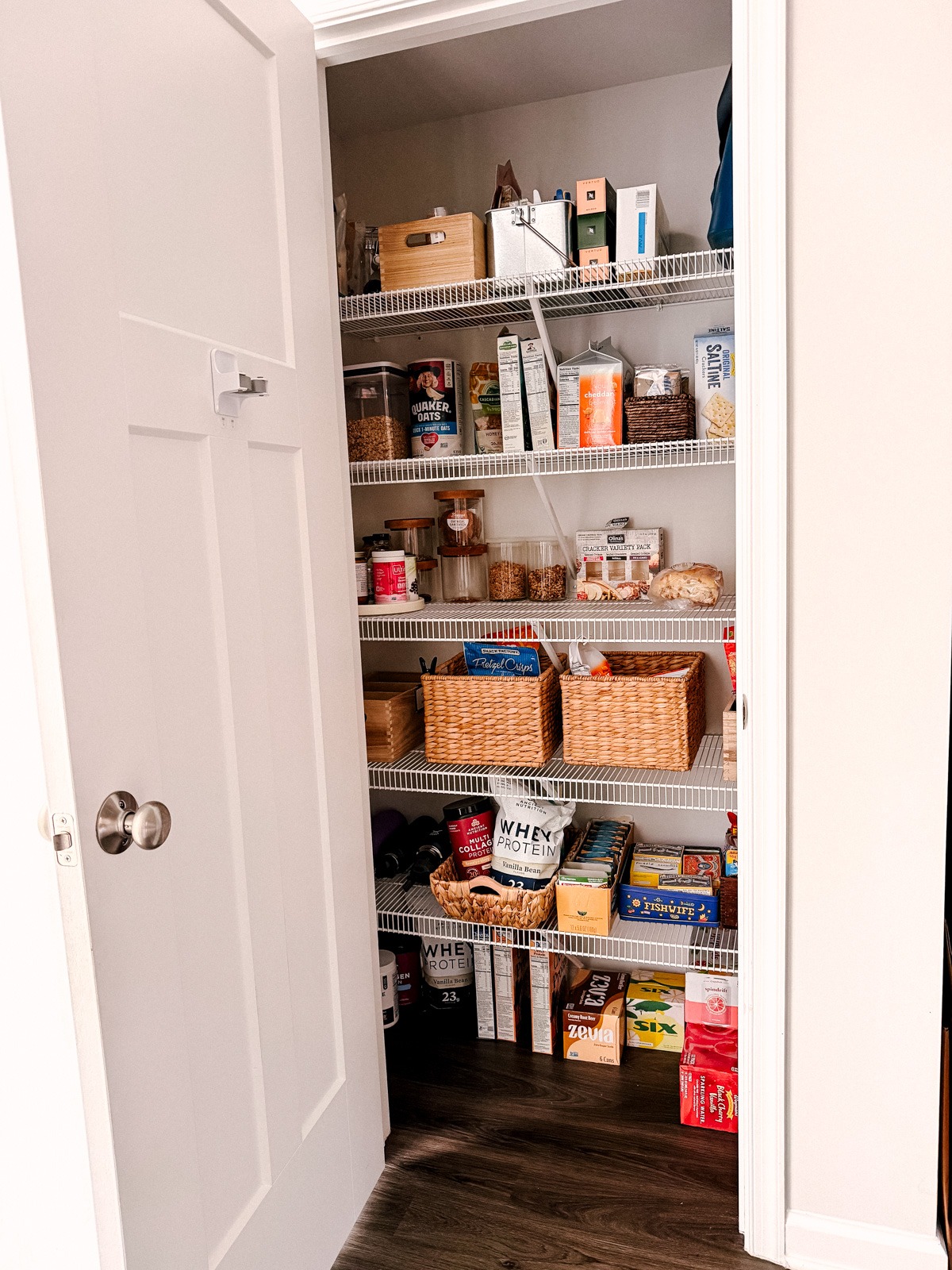
Sorting first helps you see what you have and how much storage you need. If you find you have many snacks but little space, you might need extra bins or a new shelf. Sometimes, you discover duplicates or forgotten items—like three bags of rice or old spices you never use.
A non-obvious insight: Take a quick photo of your sorted items before restocking. This makes it easier to remember what you have and helps with future shopping.
Credit: www.katheats.com
Choose Storage Solutions That Fit
Now it’s time to pick the right containers and tools. The best organizers depend on your pantry type and the food you store.
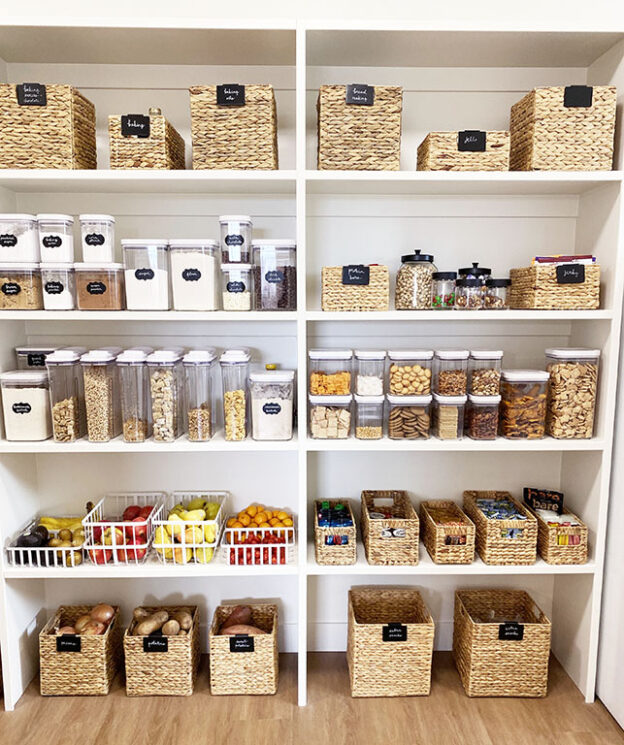
Choose containers based on both size and shape. For example, wide bins suit snacks, while tall jars are perfect for spaghetti. Avoid buying organizers before you measure your shelves—many people end up with containers that don’t fit.
Popular Pantry Storage Options
| Organizer | Best For | Benefits |
|---|---|---|
| Clear bins | Snacks, packets | Easy to see contents |
| Stackable containers | Grains, baking supplies | Saves shelf space |
| Lazy Susans | Bottles, jars | Access in deep corners |
| Can racks | Canned goods | Keeps cans upright and visible |
| Wire baskets | Potatoes, onions | Good air circulation |
Think about mixing types for best results. For example, you can use clear bins for snacks and stackable jars for baking ingredients. If you store bulk items, larger airtight containers will keep food fresh.
Label Everything
Labeling is a small step that makes a big impact. Use simple labels with the food name and expiration date. You can use sticker labels, chalkboard labels, or even masking tape.
If you share your pantry with others, clear labels help everyone put things back in the right place. For families, labels with pictures can help children find snacks or breakfast foods.
Non-obvious Tip
Many people forget to label the back of containers. If you store items facing away, put a label on both sides. This saves time and avoids confusion. Also, consider color-coding labels by category—for example, blue for breakfast, green for snacks.
Arrange Items For Easy Access
Organizing is not just about neatness—it’s about making cooking and shopping easier. Place items based on how often you use them.
Think about your daily routine. If you make coffee every morning, keep coffee and filters at the front. If you bake only on weekends, baking supplies can go higher or further back.
Smart Arrangement Ideas
- Keep daily essentials at eye level (breakfast foods, snacks)
- Put heavy items (flour, canned goods) on lower shelves
- Store rarely used items (holiday baking supplies) up high or at the back
- Use door racks for small bottles and packets
If you have deep shelves, use baskets or lazy Susans to pull items forward. This avoids the “lost at the back” problem, especially in walk-in pantries.
Example Arrangement
A family of four might keep cereal and snacks up front for kids, while baking supplies go higher up. Someone who loves cooking may want spices and oils close to prep areas.
A single person might arrange foods by meal type: breakfast foods on one shelf, dinner ingredients on another. Couples often use smaller bins to separate snacks and cooking basics.
Non-obvious insight: Rotate items every few months. If you find some foods are never used, move them to a more visible spot or plan meals to use them.
Maintain Your Pantry
Even the best-organized pantry needs regular upkeep. Set a reminder to check your pantry every month.
- Remove expired items
- Refill containers
- Wipe shelves and bins
- Return misplaced items to their proper spot
Monthly check-ups only take 10–15 minutes but keep your system working. If you notice certain foods always get messy or spilled, switch to sturdier containers or add a liner.
Common Mistake
People often forget to clean bins and shelves. Crumbs and spills attract pests and make your pantry look messy. Also, many skip checking expiration dates, which leads to waste and clutter.
Maximize Small Pantry Spaces
If your pantry is small, every inch matters. Here are ways to get more from limited space:
- Use vertical space: Stack containers, add extra shelves
- Install hooks for bags or utensils
- Try door-mounted racks for spices and snacks
Think about installing shelf risers or tension rods to divide tall spaces. Hanging baskets under shelves can hold small snacks or produce.
Comparison Of Space-saving Tools
| Tool | Space Saved | Best For |
|---|---|---|
| Over-the-door rack | Up to 20% | Spices, snacks |
| Stacking shelves | Up to 30% | Small items, cans |
| Hanging baskets | Up to 15% | Produce, bread |
Non-obvious Insight
Sometimes, removing a shelf creates more usable space. If you only store tall bottles, take out one shelf and stack them upright. If your shelves are adjustable, experiment with different heights to fit bins or jars.
Another tip: Use corners for round containers or lazy Susans, so you don’t waste awkward spaces.
Credit: www.superhealthykids.com
Organize For Different Households
Pantry needs change based on who lives in your home. Adjust your system to fit your lifestyle.
Families With Kids
- Store snacks and breakfast foods where kids can reach them
- Use bins with pictures for younger children
You can also dedicate a “grab-and-go” shelf for lunch items or after-school snacks. If kids help pack their lunches, keep their favorite foods in easy-to-open containers.
Singles Or Couples
- Keep smaller portions in clear containers
- Group items by meal type (dinner, lunch)
Singles often benefit from using shallow bins—so food doesn’t get buried. Couples can create separate shelves for each person’s favorite foods.
Special Diets
- Dedicate a shelf for allergy-friendly foods
- Separate gluten-free or vegan items from others
If someone in the household has food allergies, use colored bins or shelf tags to show which foods are safe. Keep supplements or special ingredients in labeled containers.
Reduce Food Waste
An organized pantry helps you see what you have, so you buy less and waste less. The Food and Agriculture Organization reports that about one-third of global food is lost or wasted. To fight this:
- Practice First In, First Out (FIFO): Put new items at the back, older ones up front
- Use clear containers to track portions
- Plan meals around pantry items before buying more
Try to keep a simple inventory list taped inside your pantry door. Update it monthly with items you need to use soon.
Practical Example
If you have three cans of beans, use the oldest first. This prevents forgotten food, saving money and reducing waste. If you often forget about dry goods, write the expiration date in big numbers on each container.
Non-obvious insight: Review your meal plans weekly and check what ingredients you already have. This prevents buying duplicates and helps you use up surplus foods.
Safety And Hygiene
Keeping your pantry clean prevents pests and mold. Here’s what to check:
- Store dry goods in airtight containers
- Keep cleaning supplies away from food
- Use wire baskets for items needing air (onions, potatoes)
- Check for leaks or spills monthly
Don’t forget to inspect packaging for signs of moisture or bugs—like holes or sticky spots. If you find any, remove affected foods right away.
Food Safety Data
The CDC estimates that 48 million Americans get sick from contaminated food every year. Proper pantry storage lowers this risk.
Also, wash reusable bins and jars every few months. Even airtight containers can collect dust or crumbs inside.
Upgrade With Smart Technology
Modern pantries can use tech for better organization.
- Smart labels with QR codes track expiration dates
- Apps help manage shopping lists and inventory
- Motion-sensor lights make searching easier
Some smart fridges now offer inventory tracking and can sync with pantry apps. You can scan barcodes or take photos to keep an updated list of what’s inside.
External Resource
For more data-driven pantry tips, visit FoodSafety.gov.

Credit: neatmethod.com
Frequently Asked Questions
How Often Should I Reorganize My Pantry?
It’s best to reorganize your pantry every three to six months. If you notice clutter or expired items before then, do a quick clean-up. Regular maintenance keeps your pantry neat and reduces food waste.
What Containers Are Best For Pantry Storage?
Airtight containers are ideal for dry goods like flour, rice, and pasta. Clear bins work well for snacks and packets because you can see what’s inside. Avoid using flimsy bags, as they tear and spill easily.
How Can I Prevent Pests In My Pantry?
Keep shelves clean and wipe spills immediately. Store grains and flours in airtight containers. Check for signs of pests each month. If you find evidence, remove all food and clean thoroughly before restocking.
What’s The Best Way To Organize Canned Goods?
Use dedicated can racks or stack cans with labels facing out. Arrange by expiration date, with older cans at the front. Group by category (vegetables, beans, soups) for easy access.
How Do I Keep My Pantry Organized Long-term?
Set a monthly reminder to check your pantry. Make sure everyone in your home knows where things go. Practice FIFO (First In, First Out) so older items get used first. Periodically update your system to fit changing needs.
Creating an organized kitchen pantry takes some effort, but the results are worth it. You’ll spend less time searching for food, waste less, and enjoy cooking more. Remember, the best system is one that fits your life and stays flexible.
With these steps, you can turn your pantry into a space that works for you every day.