You’re standing over a pot of hot soup, and the recipe says to blend it until smooth. Your countertop blender is right there, but transferring boiling liquid into a glass pitcher feels like a burn waiting to happen. What is an immersion blender?
It’s the tool that removes that whole problem entirely.
An immersion blender, also called a hand blender or stick blender, is a handheld motor unit with blades at the base of a long metal shaft. You lower it directly into the pot, press a button, and blend everything in place. As of 2026, most models land between 300 and 600 watts, which tells you exactly what this tool is meant to handle.
That wattage range is the key to understanding where it fits in your kitchen, so let’s dig into the debate.
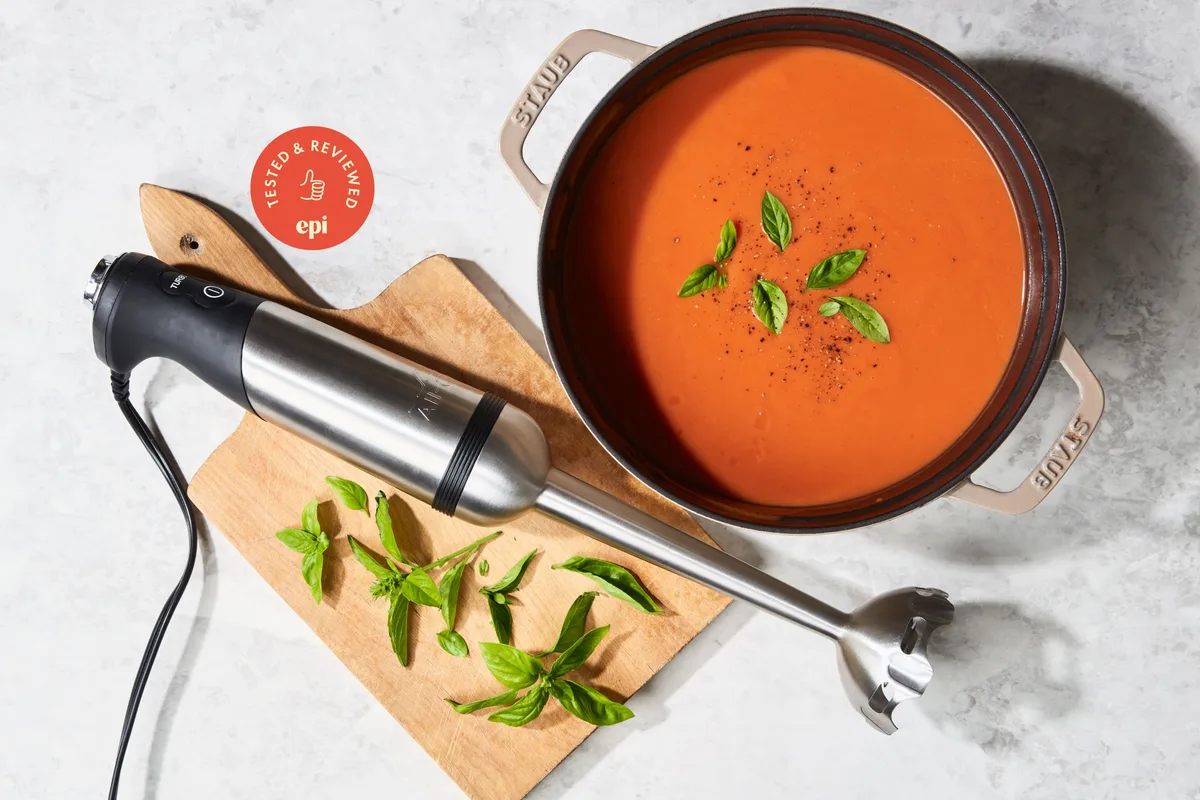
Image source: Bing (Web (fair-use with source credit))
Why Immersion Blenders Spark a Real Debate
Ask a group of home cooks whether an immersion blender is worth owning, and you’ll get two very different answers. One camp says it’s the most-used gadget in the drawer. The other calls it a redundant single-use tool that eats up storage space.
Both sides are right, which is why the debate never really dies.
The confusion starts because the specs look similar on paper. It’s a blender. It’s electric.
It has blades that spin. Your countertop blender already does that, so why add another appliance?
The real difference is about how you cook. If your routine involves simmering big pots of soup, making sauces from scratch, or pureeing vegetables, the immersion blender becomes a daily workhorse. If you mostly make frozen smoothies and crushed ice drinks, it will sit unused.
The full range of jobs this tool handles extends well beyond soup, and that’s where the value starts to show. The key is matching the tool to your actual cooking pattern, not to the idea of a well-stocked kitchen.
Quick Answer: What an Immersion Blender Actually Is
An immersion blender is a handheld stick blender used directly in a pot, bowl, or pitcher. It has a motor at the top and blades at the bottom. You submerge the blade end and press a button to blend in place.
It is ideal for soups, sauces, and small purees.
If you’ve ever wondered whether this device is just a differently shaped version of a regular blender, the short answer is no. It shares the same motor-and-blade concept, but the form factor changes everything about how and when you reach for it. We’ll get into the specifics below.
How It Works: A Stick. A Blade. A Pot.
The core design is almost insultingly simple. The motor sits in the top handle, and a long shaft carries the blades down to the bottom. You press a trigger or button, and the blades spin at high speed, anywhere from 10,000 to 20,000 RPM depending on the model.
The trick is in the bell-shaped guard that surrounds the blades. That bell does two things. It pulls ingredients upward into the blade, creating a small vortex that circulates the mixture.
It also blocks most of the splatter, which is why you can blend hot soup without wearing it.
The technique matters just as much as the hardware. You start with the blade fully submerged, then switch on the motor only after it’s under the surface. From there, you move the stick in a gentle up-and-down motion.
That’s the whole method.
The shape of the shaft matters too. A longer shaft reaches deeper into tall pots, while a shorter one is easier to control in a shallow bowl. Most models run somewhere around 10 to 12 inches, which covers standard cookware without much effort.
What’s Inside: Features That Actually Matter
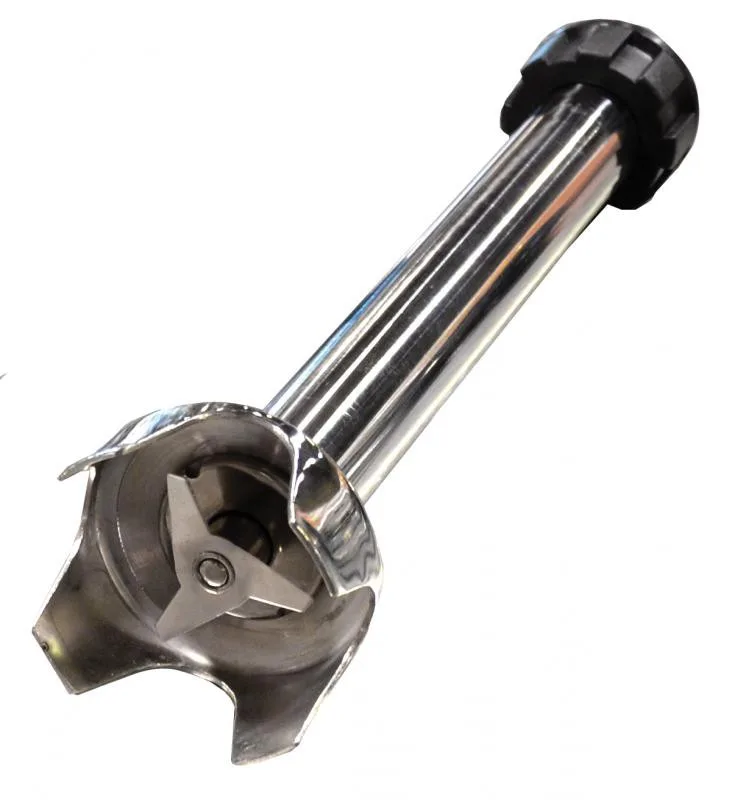
Image source: Bing (Web (fair-use with source credit))
Not all immersion blenders are built the same, and the cheap ones often cut corners in places that affect daily use. The features below are the ones that genuinely change your experience, according to manufacturer specs and aggregate owner feedback.
| Feature | Why It Matters |
|---|---|
| Wattage (300 to 600W) | Determines how thick a mixture it can handle before straining |
| Detachable shaft | Makes cleanup dramatically easier and safer |
| Bell guard design | Controls splatter and pulls food down into the blade |
| Stainless steel blades | Resist rust, staining, and dull over time far better than plastic |
| Whisk or chopper attachments | Turn the tool into a mini food processor or cream whipper |
The detachable shaft is arguably the most important feature of all. If the shaft doesn’t come off, you have to rinse the entire tool under the tap while being careful around the motor housing. That’s awkward and risks water damage.
With a detachable shaft, you simply unclip it and wash it like a regular utensil.
Wattage is the other big one. A 300-watt model is fine for simple purees and light sauces. A 500 to 600-watt unit handles thicker mixtures like hummus or frozen banana soft serve without bogging down.
The truth about power matters more than the marketing numbers, so it’s worth knowing what you actually need.
The attachments often get ignored, but a whisk attachment turns the stick into an electric whisk for cream and eggs. A small chopper bowl turns it into a mini food processor. Those extras don’t replace full-size tools, but they give you more return on the drawer space.
The Honest Pros and Cons
Every serious review of immersion blenders lands in the same place. The tool is brilliant for a specific set of tasks and genuinely wrong for others. Being honest about both sides is what helps you decide.
| Pros | Cons |
|---|---|
| Blend directly in the cooking pot | Struggles with frozen fruit and ice |
| Quick rinse and clean in seconds | Only works well with small batches |
| No risk of transferring hot liquid | Can splatter if you start too fast |
| Takes very little storage space | Needs to stay fully submerged while running |
| Quiet compared to a full blender | Harder to get a perfectly smooth puree |
The biggest win is the safety angle. You never have to pour steaming liquid into a glass jar, which eliminates the scariest part of blending hot soup. The cleanup is also genuinely fast.
Rinse the shaft, wipe the motor base, done.
The pureeing technique takes a little practice. Countertop blenders trap ingredients in a single jar and force them through the blades. An immersion blender relies on you moving the stick around, so you have to be patient and methodical to avoid lumpy patches.
The limitations are real, too. If you try to make a frozen strawberry smoothie in a drinking glass, you’ll just hear the motor whine and watch the blades chew ineffectively. Blending frozen fruit drinks requires liquid and a good countertop machine.
For tasks like that, you want the big blender on the counter, not the stick in the drawer.
That said, the tool earns its place for anyone who cooks soup regularly. Using it directly in the pot for a creamy tomato or butternut squash soup is faster, safer, and cleaner than any alternative. Those are the moments where the stick blender wins outright.
Immersion Blender vs Countertop Blender: The Side-by-Side Breakdown
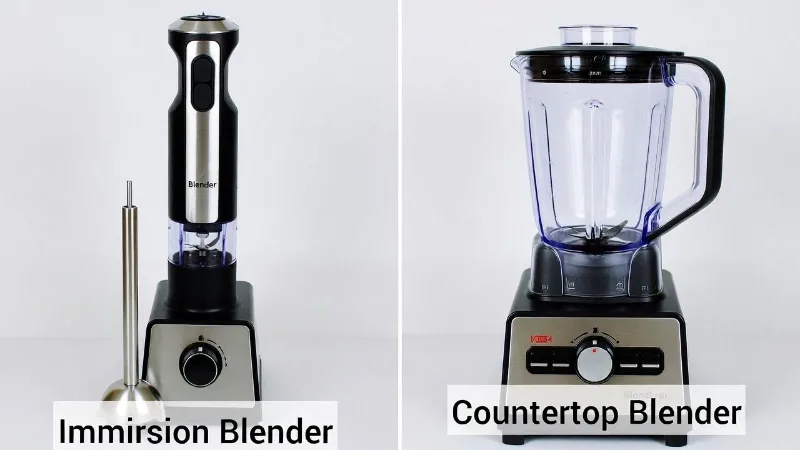
Image source: Bing (Web (fair-use with source credit))
The real question most people are asking is simple. Do I need both? The honest answer depends on what you cook, but the quick answer is that they complement each other far more than they compete.
| Factor | Immersion Blender | Countertop Blender |
|---|---|---|
| Hot soup | Blend directly in the pot, no transfer | Must cool liquid first to avoid cracks and burns |
| Frozen ingredients | Struggles badly with ice and frozen fruit | Designed for ice crushing and thick smoothies |
| Cleanup time | Around 30 seconds with a rinse | 3 to 5 minutes of disassembly and washing |
| Batch size | Small to medium only | Large batches and multiple servings |
| Storage footprint | Fits in a drawer | Takes up permanent counter or cabinet space |
| Noise level | Noticeably quieter | Can be genuinely loud |
The soup test is where the stick blender wins every time. You don’t wait for the pot to cool. You don’t pour hot liquid into glass.
You just plunge and blend. That alone justifies the purchase for anyone who makes soup weekly, and there’s more on that technique in our guide to blending hot soup safely.
The frozen smoothie test is where the countertop blender wins decisively. An immersion blender can handle soft fruits and plenty of liquid, but frozen berries and ice cubes will stall the motor and leave chunks behind. If your mornings start with a thick smoothie, keep the big machine on the counter.
Best Uses for Each Type of Blender
The easiest way to think about it is by task, not by tool. Here’s how the division actually breaks down in a working kitchen.
Reach for the immersion blender when:
- Pureeing soup directly in the pot
- Making mayonnaise or hollandaise by emulsifying oil
- Frothing milk for coffee or hot chocolate
- Blending a single-serving smoothie with soft fruit
- Pureeing cooked vegetables for baby food
Reach for the countertop blender when:
- Making frozen drinks or crushing ice
- Blending large batches for a crowd
- Grinding grains, nuts, or flax seeds
- Making nut butters or thick dips
- Processing fibrous greens into green juice
The honest overlap is small. Most households genuinely use both for different reasons, and the stick blender usually covers the day-to-day quick jobs.
If you’re still unsure, ask yourself what you make most often. Soup lovers and sauce makers will use the stick daily. Smoothie drinkers and entertainers will barely touch it.
Who Should Buy an Immersion Blender (And Who Should Skip It)
This is a decision tool as much as a buying guide. If you recognize yourself in the first group, it’s worth the drawer space. If the second group sounds more familiar, save the money.
You should buy one if:
- You make soup or pureed sauces more than once a month
- You hate cleaning bulky appliances
- You cook for one or two people most of the time
- You want a quick way to emulsify dressings and sauces
- Your kitchen storage is tight
You should skip it if:
- You mostly make frozen fruit smoothies
- You often cook large batches for a crowd
- You already own a food processor you like
- You don’t make soups or sauces regularly
- You’re looking for a single do-everything appliance
Consider the smoothie angle specifically. Many people buy an immersion blender hoping it replaces a full blender, then find out it can’t handle ice. Our detailed look at using an immersion blender for smoothies explains exactly where it works and where it falls short.
A food processor is also a close cousin worth considering. It chops, shreds, and purees differently, and if you already have one you love, some of the immersion blender’s appeal disappears. The two tools serve different roles, so it’s worth knowing the difference before you decide.
Common Mistakes That Ruin the Experience
Most disappointment with immersion blenders comes from user error, not product failure. The mistakes below show up consistently across verified buyer feedback, and they’re all avoidable.
Starting before submerging. If you switch on the motor while the blade is above the liquid, you will spray the walls. Always lower the shaft in first, then pull the trigger.
Blending frozen ingredients. The motor isn’t strong enough for solid ice. You strain the motor and get a chunky mess. Stick to soft ingredients or add plenty of liquid.
Forgetting to move the stick. Leaving it in one spot creates an uneven puree with lumps at the edges. Use a slow up-and-down motion to circulate everything.
Overfilling the pot. Too much hot liquid can splash up the shaft and into the motor housing. Fill no more than two-thirds full for safety.
Running the motor dry. Most units need liquid or food in the container to run safely. Empty running can overheat the motor and damage the seal.
The other classic mistake is mixing hot liquid in a plastic container. The heat can warp cheap plastic, and the spinning blade can scratch the surface. Stick to metal pots, glass bowls, or in some cases a dedicated large measuring cup.
A Quick Guide to Buying Your First Immersion Blender
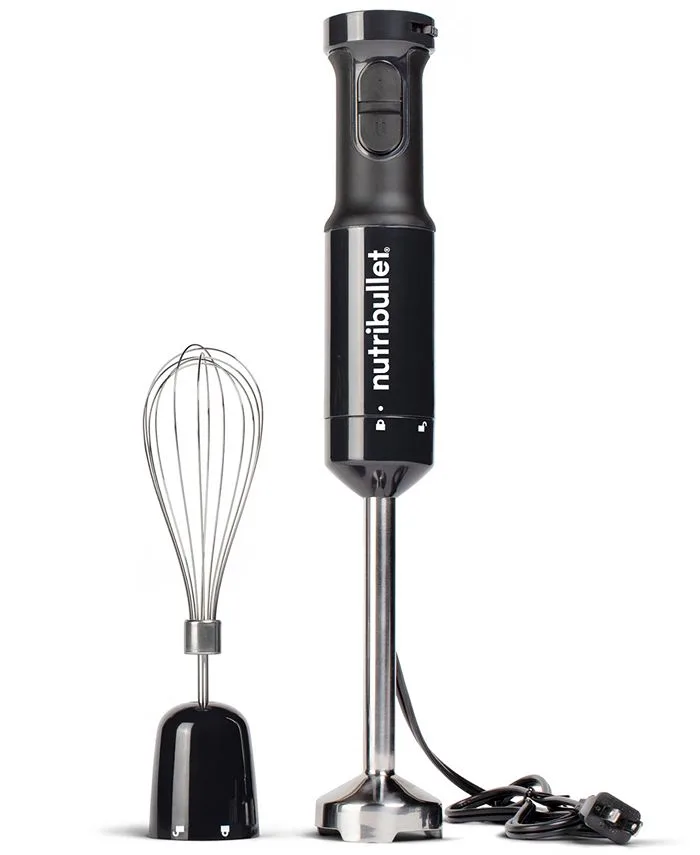
Image source: Bing (Web (fair-use with source credit))
You don’t need the most expensive model to get good results. You do need to prioritize the features that directly affect longevity and ease of use, especially if this is your first one.
| Feature to Prioritize | What to Look For |
|---|---|
| Detachable shaft | Non-negotiable for easy cleaning |
| Wattage | 500W or more for thicker mixtures |
| Blade material | Stainless steel over plastic |
| Attachments | Whisk and chopper add real versatility |
| Speed control | Variable speeds better than single-speed |
A 300-watt unit is fine for light soups and smooth sauces. A 500-watt model handles hummus, pesto, and thicker purees without straining. Our research confirms that the jump to 500W is the single biggest performance upgrade per dollar.
Expect to spend between $30 and $60 on a solid, reliable model from a known brand. Above that price, you’re mostly paying for extra attachments or better build quality, not dramatically better blending. Below $25, you risk weak motors and non-detachable shafts that won’t last.
If you’re choosing between a countertop blender and a food processor as the alternative, the decision gets easier once you know what each does well.
Maintenance and Long-Term Care
The good news is that an immersion blender needs very little upkeep. The motor base should never go in water, but the detachable shaft is built for the sink. Rinse it immediately after use so food doesn’t dry onto the blade assembly.
Most stainless steel shafts are dishwasher-safe, but check the manual before you trust it. The cutting edges stay sharp for years if you handle them normally. Avoid scraping the blade against hard pot bottoms and never run it while touching the metal sides of the cookware.
Store it with the shaft detached if possible. It takes less space and keeps the coupling dry. A loose blade is one of the few real repair jobs, and it usually comes from overtightening or dropping the unit.
Real-World Scenarios: It in Action
Picture a busy Wednesday night. You’ve got a pot of roasted tomato soup simmering, and dinner needs to happen fast. You lower the stick in, blend for thirty seconds, and it’s silky smooth before the grilled cheese finishes.
The weekend batch of mayonnaise is another perfect case. A countertop blender can make it, but it’s easy to over-whip. With the stick, you start the motor, drizzle in oil slowly, and emulsification happens in about sixty seconds flat.
Smoothies are the one place it gets tricky. Soft fruits like banana and mango work well in a tall cup with enough liquid. Frozen berries are a no-go, and that’s exactly the limit to remember before you blame the tool.
Frequently Asked Questions
Can an immersion blender crush ice?
No, not reliably. The motor wattage and blade design aren’t built for solid ice, and you’ll risk overheating the motor and scratching the shaft. For crushed ice or frozen drinks, you need a countertop blender with a dedicated ice-crushing setting.
Is an immersion blender safe to use in hot soup?
Yes, that’s one of its main advantages. You can blend directly in the pot without transferring hot liquid or risking glass shattering. Just keep the blade fully submerged and keep the motor base clear of steam and splatter.
Do I need the whisk attachment?
Only if you plan to whip cream or whisk egg whites regularly. The whisk attachment is genuinely useful for small batches of mayo or hollandaise, but it’s not essential if you already own a hand mixer.
How do I clean an immersion blender?
Detach the shaft and rinse it under warm water immediately after use. Most stainless steel shafts are dishwasher-safe. The motor base only needs a quick wipe with a damp cloth.
Never submerge the motor housing.
Can an immersion blender replace my countertop blender?
Not fully. It handles soups, sauces, and small purees brilliantly, but it can’t crush ice or blend large frozen smoothies. Most kitchens keep both, with the stick covering the quick daily jobs and the countertop handling heavy-duty tasks.
You can also use a food processor or a regular blender as a substitute depending on the task.
Final Verdict: Worth the Drawer Space or Not?
If you cook soups, sauces, or dressings with any regularity, the answer is a clear yes. It’s faster, safer, and easier to clean than any alternative for those exact jobs.
If your kitchen revolves around frozen smoothies and big-batch entertaining, you can skip it without losing much. The countertop blender already covers those tasks.
The honest summary is that this tool earns its place by being the right answer to a specific set of problems. For soup lovers and sauce makers, it’s the best one-tool move you can make. For everyone else, it’s a nice extra that doesn’t need to be a priority.