An immersion blender purees, mixes, and emulsifies food directly in the pot or container you’re already using. What does an immersion blender do best? It handles hot soups, sauces, and smoothies without transferring liquids to a separate appliance. The result depends entirely on your blade speed and the depth of your vessel; shallow bowls cause splashing while tall pitchers contain it. You’ll get smooth textures for soft foods but chunky results if you try crushing ice or frozen fruit with a standard model.
Immersion blender tasks at a glance
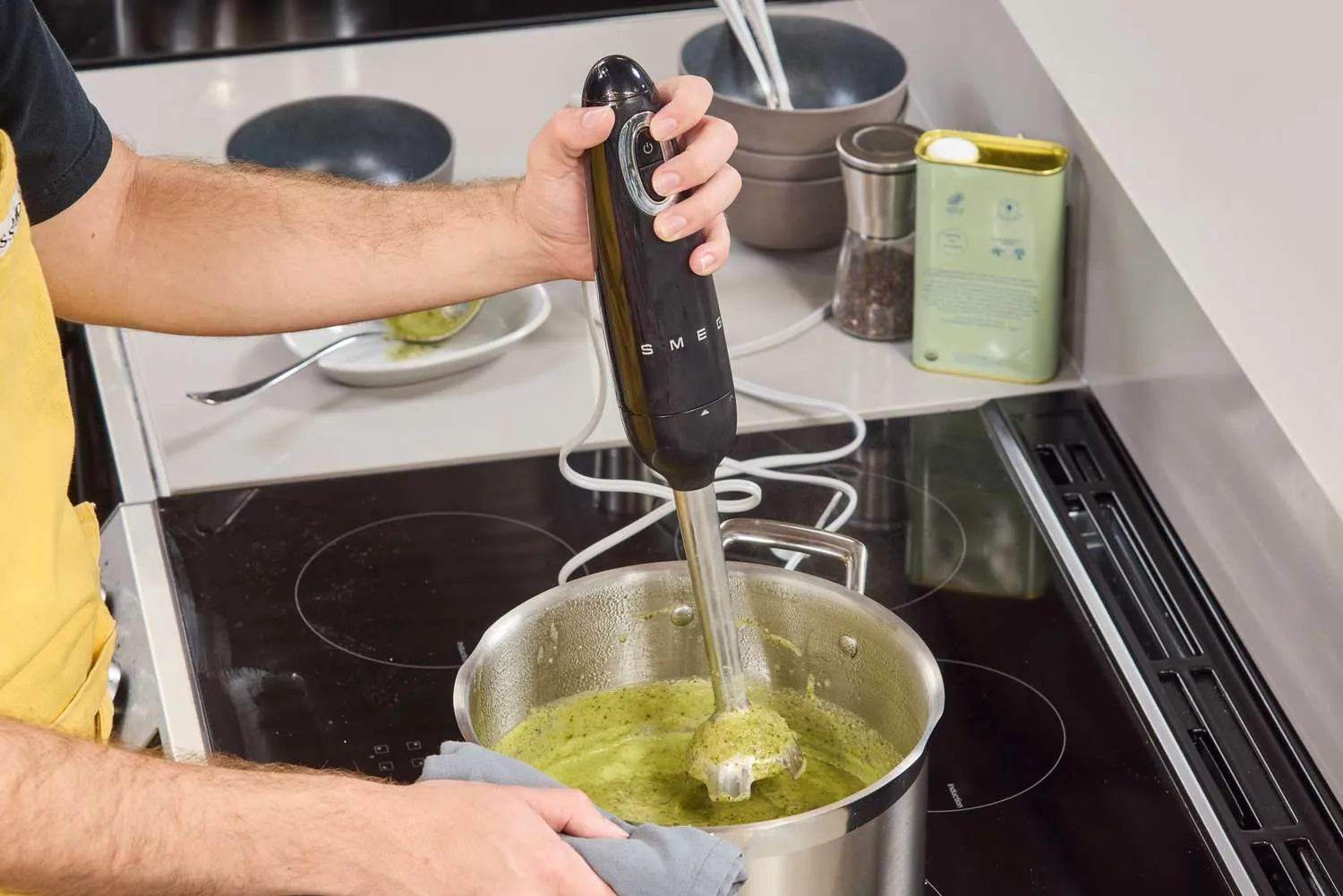
- Purees hot soups directly in the cooking pot to avoid dangerous transfers. Keep blades submerged to prevent splattering boiling liquid onto skin or stovetop.
- Emulsifies salad dressings and mayonnaise in seconds at high speed. Start slow with oil dripping in, then increase speed once emulsion forms to prevent breaking.
- Blends single-serve smoothies straight in your drinking glass or beaker. Use tall, narrow containers to create a vortex that pulls ingredients down into blades.
- Whisks eggs, cream, or batters faster than a hand whisk. Tilt the vessel slightly so blades incorporate air without splashing over the rim.
- Chops soft vegetables or nuts when using the included chopper attachment. Pulse briefly instead of running continuously to achieve even texture without turning food to paste.
- Froths milk for coffee by aerating liquid near the surface.
Why immersion blenders work differently
The motor sits above the blade in an immersion blender, unlike countertop models where blades sit at the bottom of a pitcher. This vertical design lets you bring the cutting action to the food instead of moving heavy, hot liquids into a separate vessel. That difference matters most for safety and cleanup since you aren’t pouring boiling soup through the air.
Blade geometry creates a vortex that pulls ingredients downward rather than pushing them outward against glass walls. Countertop blenders rely on that wall impact to circulate food, but immersion units depend on the user moving the stick through the mixture manually. If you hold it still, only the food touching the blades gets processed while everything else stays whole. You have to sweep it slowly through the pot to ensure even texture throughout the entire batch.
Speed control determines whether you get a silky bisque or a chunky salsa. Low speeds tear and fold ingredients, which works for combining batters or making textured sauces. High speeds create enough shear force to break down cell walls in cooked vegetables or emulsify oil into vinegar. Most models offer two or three settings because one fixed speed can’t handle both delicate folding and aggressive pureeing effectively.
This tool isn’t for everyone who wants perfect results. If you need nut butter, crushed ice, or ultra-smooth green smoothies daily, a high-powered countertop blender delivers consistent texture that an immersion unit simply can’t match. The trade-off is counter space and extra dishes versus accepting slightly less refinement in tough tasks. Read your model’s wattage rating on the base label to know its real limit before attempting hard ingredients.
You might find this helpful: Best Immersion Blender For Daily Use
When immersion blenders fall short

| Situation | What changes | What to do instead |
|---|---|---|
| Crushing ice cubes | Blades dull quickly | Use countertop blender |
| Making nut butter | Motor overheats fast | Use food processor |
| Kneading bread dough | Gears strip under load | Use stand mixer |
| Processing raw root veggies | Texture stays gritty | Cook until fork-tender first |
| Large batches over 4 quarts | Uneven blending occurs | Blend in smaller portions |
| Aerating heavy cream | Splashes everywhere | Use deep narrow vessel |
People ruin immersion blenders trying to force them through tasks meant for heavier machines. The motor on a typical stick blender draws between 200 and 500 watts. A standard countertop model pulls 1,000 or more. That gap decides what survives the job.
Ice is hard on the blade assembly and motor. The metal edges dull quickly against frozen cubes, and the resistance strains the drive components. Countertop jars are built with thicker walls to handle that impact.
Nut butters demand sustained friction. Running a stick blender for the five minutes it takes to release those oils will trip its thermal cutoff switch. Most lack one entirely, so the windings just burn out.
Dough fights back. The resistance strips the small plastic gears inside the housing almost immediately. Raw carrots and beets leave a gritty puree because the short blades can’t pull dense chunks into the vortex.
How to use an immersion blender safely
Submerge the blade guard completely below the liquid surface before pressing any power button to prevent hot splatter. Starting above the line sends droplets flying across your stovetop and skin. Keep the guard angled slightly toward the pot’s center to maintain coverage as you move.
Move the blender slowly up and down through the mixture in steady figure-eight patterns for even processing. Holding it stationary leaves unblended pockets while frantic stirring introduces excess air bubbles. Spend thirty to sixty seconds sweeping systematically depending on your batch size and desired smoothness.
Pulse in short bursts when chopping solids or combining thick batters to maintain control over texture. Continuous high speed turns onions to mush in seconds and overworks gluten in pancake batter. Release the trigger every three to five seconds to check consistency visually before continuing.
Tilt the pot slightly so the blade guard reaches deeper into corners where ingredients collect during mixing. Flat-bottomed vessels leave dead zones around edges that never touch the blades unless repositioned. Angle carefully to keep the blade guard fully submerged and avoid sucking in air.
Unplug the unit immediately after finishing and before wiping the shaft or changing attachments. Wet fingers on the power switch risk accidental activation while cleaning near sharp blades. Let the motor cool for five minutes if it feels warm to the touch before storing.
Clean the detachable shaft and guard right away to prevent dried food from clogging the seal mechanism. Soak stubborn residues in warm soapy water for ten minutes rather than scrubbing forcefully near the blade edge. Never immerse the motor housing itself unless your manual explicitly states it’s dishwasher safe.
Common immersion blender mistakes
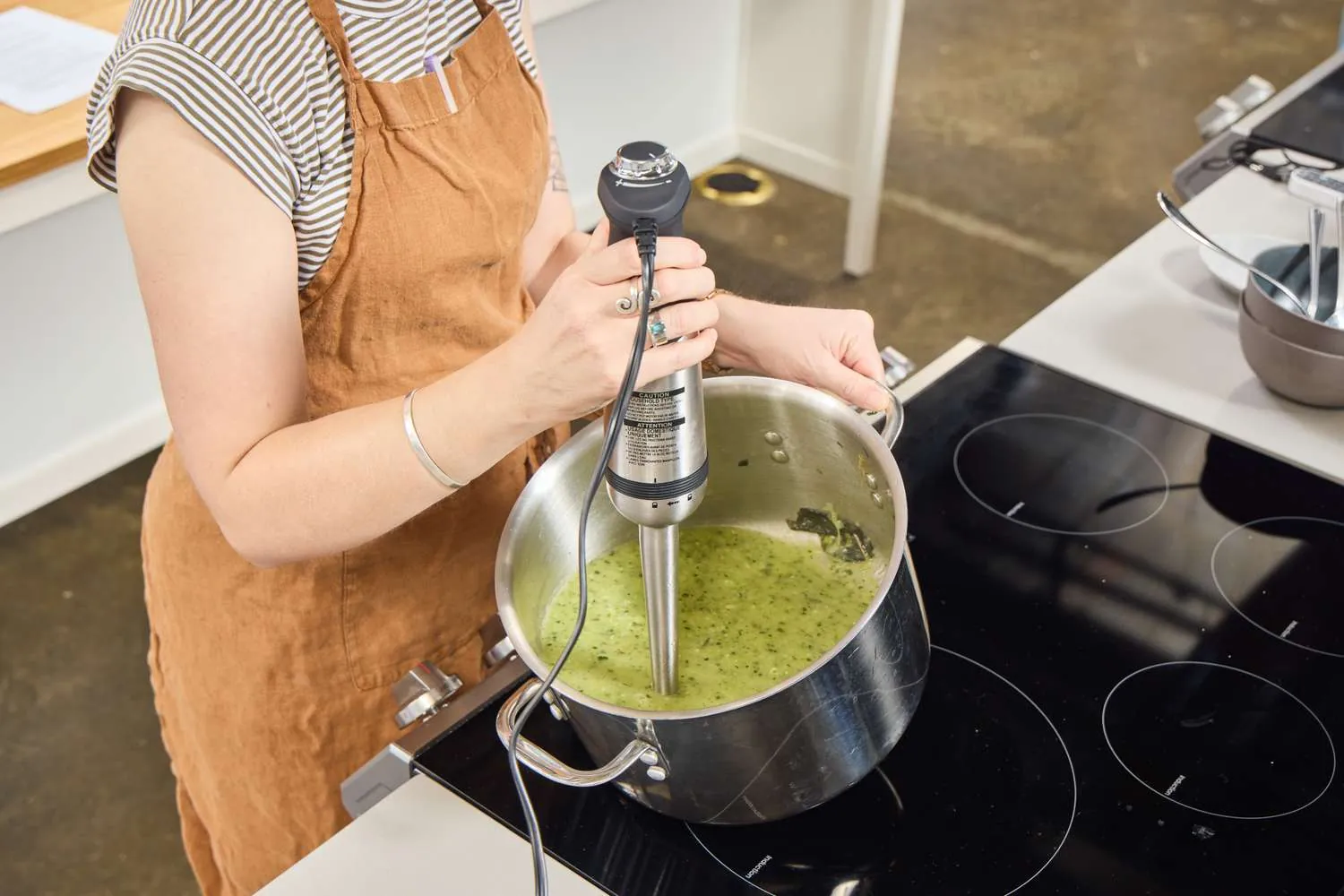
- Starting above the liquid surface causes immediate hot splattering that burns skin and stains surrounding cabinets. Always submerge fully before engaging power to contain the vortex safely within the vessel.
- Using a wide shallow bowl allows the vortex to pull air into the mixture instead of food. Switch to a tall narrow beaker or tilt your pot to deepen the liquid level around the guard.
- Running continuously on high speed overheats motors rated under 200 watts during extended tasks. Check your base label for wattage and pause every thirty seconds to let internal components cool down.
- Ignoring the lock tab when attaching accessories leads to detachment mid-blend and potential injury. Verify the click sound and visual alignment mark before every single use without exception.
- Storing with wet seals trapped inside promotes mold growth in crevices you can’t see or reach. Disassemble completely and air-dry all parts upright before reassembling for next time.
Frequently asked questions
Can an immersion blender crush ice?
No, standard immersion blenders can’t safely crush ice cubes without damaging blades or burning out motors. Only models specifically marketed for ice crushing should attempt this task. Check your manufacturer’s manual for explicit permission before trying, as voiding warranties costs more than buying crushed ice. For regular frozen drinks, a countertop blender remains the correct tool regardless of convenience.
Why does my soup splatter everywhere?
Splattering happens when the blade guard breaks the liquid surface or when you start blending before full submersion. Lower the guard completely beneath the soup line before pressing power and maintain that depth throughout. Tilting the pot slightly helps keep liquid covering the intake area in shallower vessels. Reduce speed immediately if you see droplets escaping the rim.
How long can I run it continuously?
Most household immersion blenders tolerate sixty to ninety seconds of continuous operation before needing a cooldown period. Motors under 200 watts require shorter intervals of thirty seconds maximum to prevent thermal damage. Your specific limit appears in the product manual or printed on the motor housing label. Stop immediately if the body becomes uncomfortably warm to your grip.
Is it safe to blend hot liquids?
Yes, immersion blenders are designed specifically for hot liquids when used correctly with full blade submersion. Unlike countertop blenders, they don’t trap steam pressure that can explode lids off pitchers. Always keep the guard below the surface and angle away from your body as extra precaution. Allow freshly boiled contents to settle for two minutes before starting to reduce violent bubbling.
What happens if I use it in a nonstick pot?
Metal blade guards scratch nonstick coatings permanently upon contact, releasing potentially harmful particles into food. Use silicone-covered guards specifically made for coated cookware or transfer contents to a stainless steel vessel first. Even careful users accidentally tap bottoms while maneuvering through thick mixtures. Protecting your cookware finish requires either the right accessory or a different container entirely.
Does wattage affect performance significantly?
Higher wattage provides better torque for thick mixtures and longer continuous runtime without overheating. Models under 200 watts struggle with anything denser than broth or smoothie liquids. Ratings between 300 and 500 watts handle most home cooking tasks reliably including baby food and pesto. Check the label on your specific unit rather than assuming based on price or brand reputation alone.
Can I whip cream with it?
Yes, immersion blenders whip cream effectively when used in a deep narrow vessel at medium-high speed. Start low to incorporate air gradually then increase once volume builds to avoid splashing. Stop as soon as soft peaks form since overwhipping separates fat into butter within seconds. Chill both cream and beaker beforehand for fastest results and stable foam structure.
Does it replace a food processor?
No, immersion blenders can’t replicate the slicing, shredding, or kneading functions of dedicated food processors. They excel at wet tasks like pureeing and emulsifying but fail at dry or structured prep work. Some include small chopper bowls for mincing herbs or garlic adequately. For anything beyond basic chopping or liquid blending, keep both tools accessible in your kitchen.
Conclusion
Choosing the right tool means matching the task to the machine’s actual strengths rather than hoping one device covers everything. An immersion blender earns its place by simplifying hot prep and reducing cleanup for specific jobs, not by replacing specialized equipment. Test yours on soft foods first to learn its rhythm before attempting thicker mixtures. Respect its limits and it will serve you well for years without frustration or failure.