Skip to content
Ginger is a powerful root that people use for health, flavor, and energy. If you have tried to juice ginger by hand, you know it takes a lot of work for little liquid. Using a juicer changes everything. You can get much more juice, keep the strong flavor, and save time.
But ginger is not like apples or oranges. It is tough, stringy, and often has dirt in its crevices. If you want the best results, you need to know the right way to juice ginger with a juicer. This article guides you through every step, from choosing ginger in the store to cleaning your machine after juicing.
You will also discover tips that most beginners miss, learn how to get the most juice, and avoid mistakes that waste time or money. By the end, you will feel confident to make fresh ginger juice at home for drinks, recipes, or health shots.
Why Juice Ginger?
Ginger is used worldwide for its health benefits and strong taste. People have added ginger to their diets for thousands of years. Today, juicing is a popular way to get ginger’s nutrients quickly and easily.
Health Benefits
Fresh ginger juice is rich in gingerol, a natural compound with anti-inflammatory and antioxidant effects. Studies show that ginger may help:
- Reduce nausea and motion sickness
- Lower muscle pain and soreness
- Support digestion and gut health
- Boost the immune system
- Lower blood sugar and support heart health
A small shot of ginger juice in the morning can wake you up and help you feel energized.
Culinary Uses
Ginger juice is not only for drinking. Many cooks use it to add a spicy, fresh flavor to:
- Smoothies
- Salad dressings
- Marinades for meat or tofu
- Stir-fries and sauces
- Herbal teas
Fresh ginger juice is much stronger than dried ginger powder or bottled juice. You need only a small amount.
Why Not Use Powdered Or Bottled Ginger?
Powdered ginger loses many nutrients and flavor during processing. Bottled juices often contain sugar, preservatives, or artificial flavors. Juicing fresh ginger at home means you get the purest, most powerful taste and health benefits.
Choosing The Right Ginger
Not all ginger roots are the same. The quality of your juice depends on the ginger you select.
Young Vs. Mature Ginger
- Young ginger: Pale skin, less fiber, milder flavor, more moisture. Easier to juice but harder to find in regular stores.
- Mature ginger: Brown, thick skin, spicy and strong taste, more fiber. Most common in supermarkets and works well in a juicer.
What To Look For
Choose ginger that is:
- Firm to the touch (not soft or shriveled)
- Smooth skin (less dried wrinkles)
- No mold or black spots
- Fresh smell (should be spicy, not musty)
Organic Vs. Conventional
Ginger grows underground and can absorb chemicals from soil. If you drink ginger juice often, buy organic ginger when possible to avoid pesticide residues.
Credit: www.alphafoodie.com
Types Of Juicers For Ginger
Not every juicer works well with tough, fibrous roots like ginger. Here’s how different juicers compare for this task.
| Juicer Type | How It Works | Juice Yield | Best For Ginger? | Price Range |
|---|---|---|---|---|
| Centrifugal | Spins blades at high speed | Medium | Fair | $50–$200 |
| Masticating (Slow) | Crushes and presses slowly | High | Excellent | $100–$500 |
| Triturating (Twin Gear) | Grinds between two gears | Highest | Best | $300–$1,000+ |
| Manual Press | Hand-cranked press | Low–Medium | Good for small amounts | $30–$100 |
Key Insights
- Masticating juicers are the best balance of price, juice yield, and ease for ginger.
- Centrifugal juicers work but may leave juice in the pulp because ginger is so fibrous.
- Triturating juicers give the most juice but cost more.
- Manual presses work well if you only need a small amount.
If you are just starting, a good masticating juicer handles ginger and other tough roots easily.
Preparing Ginger For Juicing
You cannot just toss ginger into a juicer and expect perfect results. Proper prep makes a big difference in taste, safety, and juice yield.
Washing
Even if you plan to peel the ginger, always wash it well. Dirt and bacteria can hide in the crevices. Use a scrub brush under running water. For organic ginger, you can keep the skin on for extra nutrients.
Peeling
- Peeling is optional. Most nutrients are just under the skin.
- If the ginger is old or non-organic, peel it to remove chemicals and tough fibers.
- Use the edge of a spoon to scrape off skin instead of a knife. This wastes less ginger.
Cutting
- Chop ginger into pieces about 1 to 2 inches long.
- For juicers with small chutes, make sure pieces fit easily.
- Cutting across the fibers (not with them) helps the juicer process ginger more smoothly.
Removing Bad Spots
Cut away any black, soft, or moldy areas. These can affect the juice’s taste and safety.
Drying
Pat the ginger pieces dry with a towel. Wet ginger can sometimes slip in your hands or make the juicer messier.
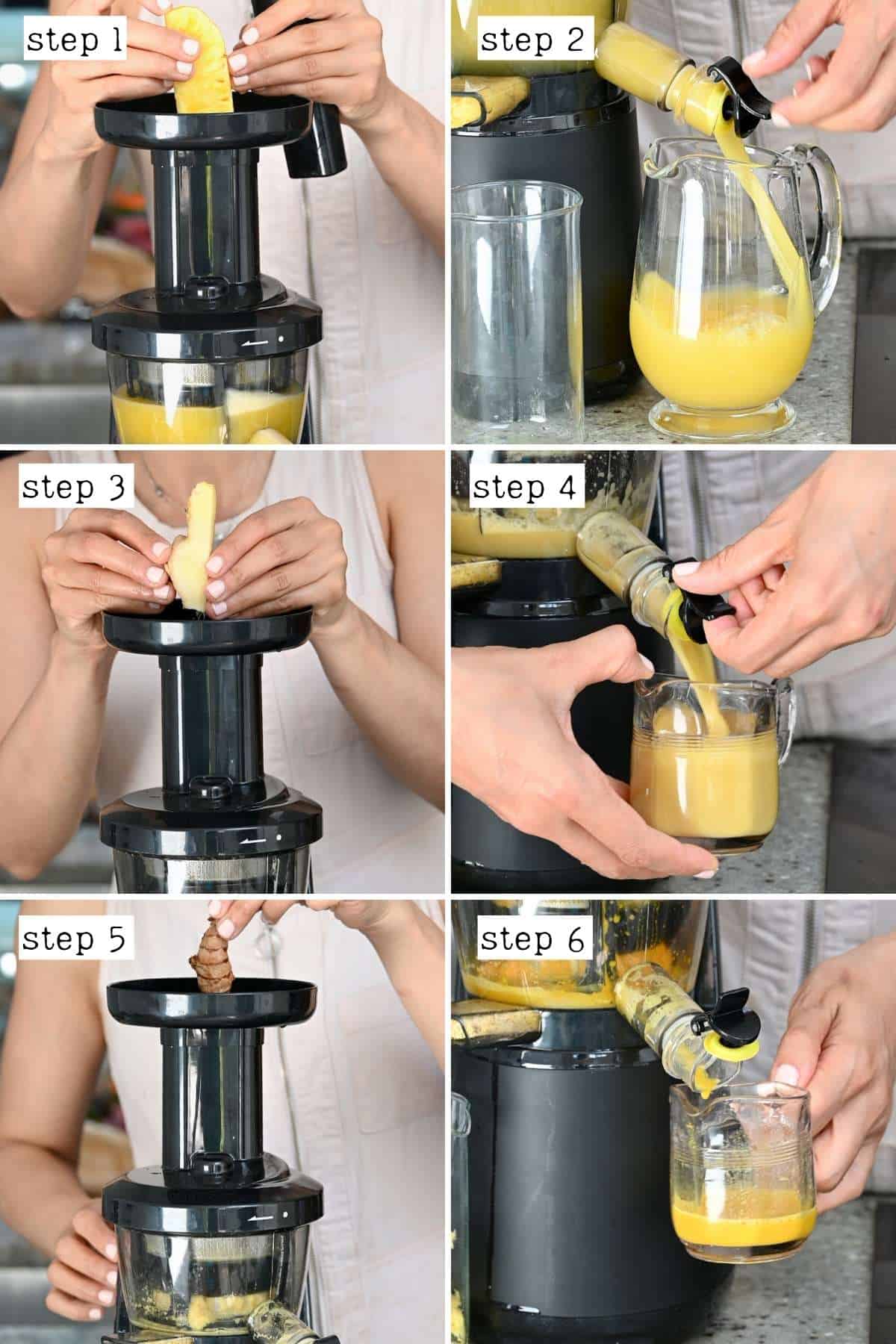
How To Juice Ginger With A Juicer: Step-by-step
Juicing ginger is simple when you know each step. Here is a clear process for best results.
- Assemble and Check Your Juicer
- Make sure all parts are clean and dry.
- Place the juice container under the spout.
- If your juicer has a pulp collector, make sure it is in place.
- Prepare Your Workspace
- Have a bowl for ginger pieces.
- Keep a small bowl for collecting pulp (some people use it in recipes).
- Feed Ginger Into the Juicer
- Start the juicer. If it has speed settings, use a medium or low speed for masticating juicers.
- Feed ginger pieces in one at a time. Do not overload; this can jam the machine.
- Use the pusher tool—never your fingers—to press the ginger down.
- Collect and Mix Juice
- Ginger juice can separate quickly. Stir the juice in the collection container to mix the layers.
- If you want pure ginger juice, you’re done. For a milder taste, add lemon, apple, or carrot pieces through the juicer with the ginger.
- Strain (Optional)
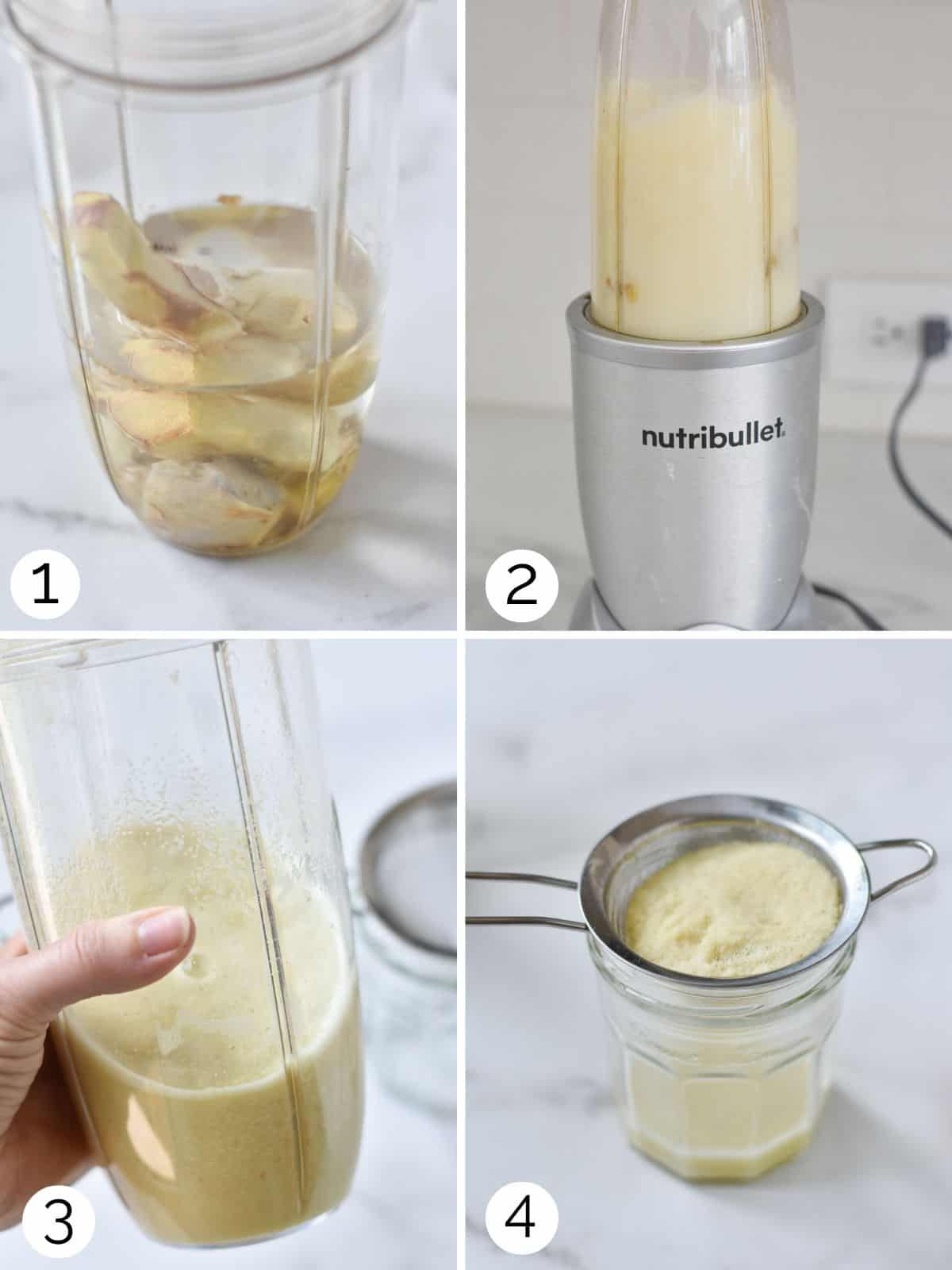
- For extra-smooth juice, pour it through a fine mesh strainer or cheesecloth before serving.
- Serve Immediately
- Fresh ginger juice tastes best right away. The flavor and nutrients fade if left out for long.
- Clean Up Quickly
- Rinse all juicer parts right after juicing. Dried ginger pulp can be hard to remove.
- Scrub the mesh filter with a brush to keep it clear for next time.
Example: Juicing 4 Ounces Of Ginger
If you juice about 4 ounces (115g) of fresh ginger, you can expect to get 2 to 3 ounces (60–90ml) of juice, depending on your juicer. This is enough for 2–4 shots or to flavor a pitcher of tea.
How Much Ginger To Juice?
Ginger is strong. If you have never tried pure ginger juice before, start small.
- For a single shot: Use 1–2 inches of ginger (about 1 ounce).
- For mixing with other juices: Use 1 inch per 8 ounces of fruit or vegetable juice.
- For recipes (salad dressings, marinades): Use 1 teaspoon of ginger juice as a starting point.
If you want a bigger batch, remember that ginger oxidizes quickly. Juice only what you need for the next 1–2 days.
Ginger Juice Recipes And Mixes
Ginger juice is a powerful ingredient. Here are a few ways to enjoy it beyond the simple shot.
Ginger Shot
- 2 ounces (60ml) fresh ginger juice
- 1 tablespoon lemon juice
- 1 teaspoon honey (optional)
Mix and drink in one go. This is a strong, energizing start to the day.
Ginger-lemon Immunity Drink
- 1 ounce (30ml) ginger juice
- 1 ounce (30ml) lemon juice
- 8 ounces (240ml) water
- 1 tablespoon honey
- Pinch of cayenne pepper
Stir and sip for a spicy, healthy drink.
Ginger-apple Juice
- 1 inch ginger root
- 2 medium apples
- Juice both together in your juicer. The apple sweetens the strong ginger.
Ginger-carrot Detox Juice
- 1 inch ginger root
- 3 medium carrots
- 1/2 lemon (peeled)
- Juice together for a colorful, vitamin-rich drink.
Tips For Using Ginger Juice
- Add a teaspoon to smoothies for a health boost.
- Mix into salad dressing with olive oil, vinegar, and herbs.
- Marinate chicken or tofu with ginger juice, garlic, and soy sauce.
Storing Ginger Juice
Fresh ginger juice goes bad quickly. To keep it safe and tasty, follow these storage tips.
| Storage Method | How Long It Lasts | Notes |
|---|---|---|
| Refrigerator (sealed jar) | 2–3 days | Keep air out for best taste |
| Freezer (ice cube tray) | Up to 6 months | Easy to add to drinks or recipes |
| Room temperature | Not recommended | Can spoil or lose flavor quickly |
Practical Tips
- Freeze small portions in an ice cube tray. Pop out a cube when needed.
- Label your containers with the date. Ginger juice looks similar to lemon or apple juice when frozen.
- Do not store juice in metal containers. Use glass or BPA-free plastic.
Credit: thedizzycook.com
Cleaning And Maintaining Your Juicer After Ginger
Ginger is tough and sticky. Clean your juicer right away for best results.
Steps To Clean
- Unplug the Juicer
- Safety first. Do not clean while plugged in.
- Disassemble Parts
- Remove the lid, filter, pulp container, and juice container.
- Rinse Immediately
- Hold parts under running water to remove pulp before it dries.
- Scrub the Mesh
- Use a brush to clean the filter. Ginger fibers can block small holes.
- Soak in Warm Water
- For stubborn bits, soak parts in warm soapy water for 10–15 minutes.
- Dry Thoroughly
- Let all parts air dry before putting the juicer away.
Pro Tips
- Do not use bleach or harsh cleaners.
- If you juice ginger often, clean the juicer thoroughly once a week to prevent build-up.
- Some juicer parts are dishwasher-safe. Check your manual first.
Common Mistakes When Juicing Ginger
Many people run into the same problems when they try to juice ginger for the first time. Here’s how to avoid them.
1. Overloading The Juicer
Feeding too much ginger at once can jam the machine or cause uneven juicing. Always go slowly.
2. Not Cutting Ginger Small Enough
Large, fibrous pieces can get stuck or block the juicer. Cut into 1–2 inch chunks for best results.
3. Skipping The Strainer
Ginger pulp can be stringy. If you want smooth juice, strain it before drinking.
4. Forgetting To Clean Immediately
Dried ginger pulp is hard to remove and can make the juicer smell bad.
5. Juicing Old Or Moldy Ginger
This can make your juice taste bitter or unsafe to drink. Always use fresh, firm ginger.
Non-obvious Insights
- If your juicer struggles with ginger, alternate pieces of ginger with juicier fruits or veggies (like apple or cucumber). This helps push fibers through.
- Save the leftover ginger pulp. It still has flavor and can be used in soups, broths, or composted for your garden.
Maximizing Ginger Juice Yield
Getting the most juice from ginger is not just about the machine. Small changes in your process can make a big difference.
Choose The Right Juicer
As explained, masticating juicers give more juice from ginger than centrifugal models.
Prep Ginger Correctly
Cut across the fibers, not with them. This makes it easier for the juicer to break down the tough root.
Juice Ginger With Other Ingredients
If you want to use ginger in a mixed juice, alternate pieces of ginger with high-water foods like cucumber or apple. This clears the juicer and helps push all the juice out of the pulp.
Re-juice The Pulp
If you want to squeeze out every drop, run the ginger pulp through the juicer a second time.
Keep Juicer Blades Sharp
Dull blades or worn augers can waste juice. Check your juicer manual for maintenance tips.
Is Ginger Juice Safe For Everyone?
Ginger is safe for most people, but not all. Large amounts may cause problems for some.
- Pregnant women: Ginger can help with nausea but ask your doctor before drinking a lot.
- People on blood thinners: Ginger can increase bleeding risk. Check with your doctor.
- Stomach sensitivity: Ginger juice is strong. Start with small amounts.
If you feel burning, nausea, or other problems after drinking ginger juice, stop and talk to a healthcare provider.
Credit: elisetriestocook.com
Environmental Impact: What To Do With Ginger Pulp
Juicing creates leftover pulp. Instead of throwing it away, try these ideas:
- Add to soups or stews for flavor.
- Mix into homemade veggie burgers or fritters.
- Dry and grind for ginger powder.
- Compost for your garden.
Reusing pulp reduces food waste and gets more value from your ginger.
Ginger Juicing: Fun Facts And Data
- The top countries for ginger production are India, China, and Nigeria.
- Ginger contains over 400 natural compounds—not just gingerol.
- Studies show that juicing retains more nutrients than boiling or drying ginger.
- Drinking 1 ounce of ginger juice can have as much anti-inflammatory effect as taking some over-the-counter pills.
For more in-depth research on ginger’s health benefits, you can visit the National Institutes of Health.
Frequently Asked Questions
How Much Ginger Juice Should I Drink Per Day?
Most people start with 1–2 ounces (30–60ml) per day. This is enough to get benefits without strong side effects. If you are new to ginger, start small and see how your body reacts.
Can I Juice Ginger With The Skin On?
Yes, if the ginger is organic and washed well. The skin has nutrients and flavor. If the ginger is old, tough, or non-organic, peel it to remove chemicals and reduce bitterness.
Why Is My Ginger Juice So Strong?
Fresh ginger juice is very concentrated. Mix it with other juices (like apple or lemon) or water to lower the heat. Some people add honey or a pinch of salt for balance.
Can I Use The Leftover Pulp?
Absolutely! Ginger pulp is great for cooking or baking. Add it to soups, muffins, or use as a flavor base for sauces. You can also compost it.
What If My Juicer Is Not Powerful Enough For Ginger?
Cut ginger into smaller pieces and feed slowly. Alternate with juicy fruits or veggies to help push the ginger through. If your juicer still struggles, consider upgrading to a masticating model for better results.
Juicing ginger at home is simple once you know the right steps. With a little practice, you will get strong, fresh juice full of nutrients and flavor. Use it in drinks, recipes, or as a morning shot for energy. Remember, start with small amounts and adjust to your taste and health needs.
Happy juicing!