So, are Cambro containers freezer safe? The short answer is yes, most of them are. Cambro makes some of the toughest food storage containers in the business, and its two main plastic storage lines are both rated for sub-freezing temperatures.
But there’s a catch: you have to know which Cambro you’re holding, and how to prepare it for the cold.
In our research, manufacturer specifications indicate that both Camwear polycarbonate and SmartStore polypropylene containers are rated down to -40°F as of 2026. That means your soup, chili, or prepped proteins will be fine in a freezer. The trouble starts when people grab the wrong container, overfill it, or expect a 20-year-old container to act like a new one.
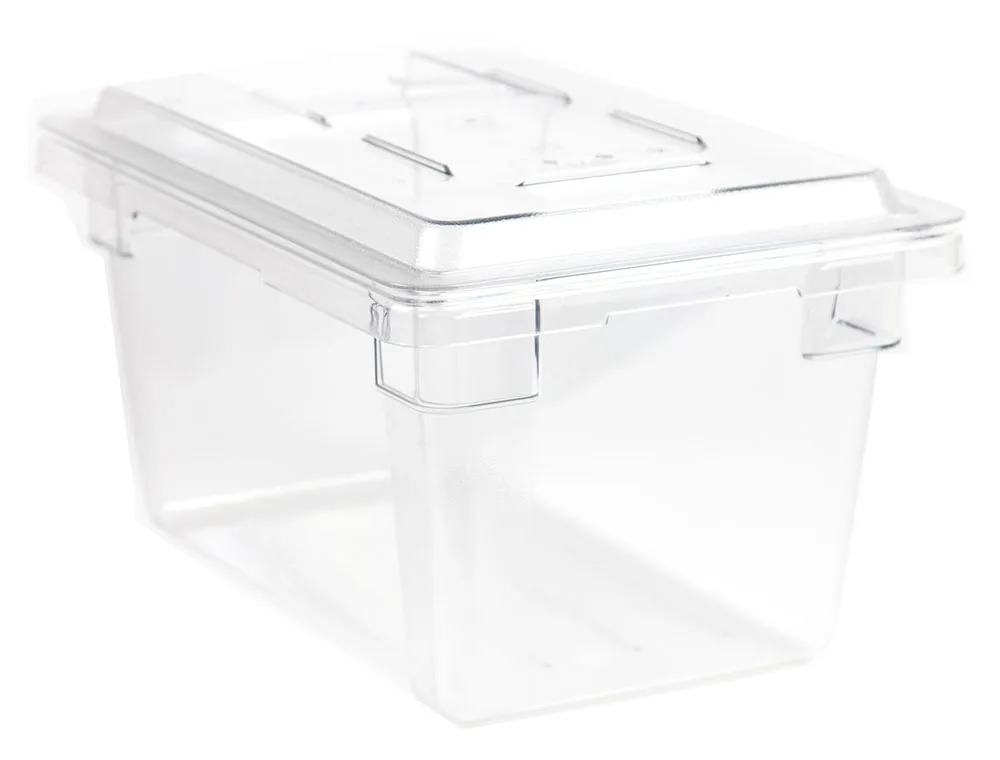
Image source: Bing (Web (fair-use with source credit))
The Quick Answer: Yes, If It’s the Right Cambro
Yes, most Cambro containers are freezer safe. That includes Camwear polycarbonate and SmartStore polypropylene. Both are rated down to -40°F by the manufacturer.
Not every Cambro product is meant for freezing. Check the bottom for the material stamp first.
The Two Cambro Lines That Matter (And Why It’s Not Obvious)
Walk into any restaurant supply store and you’ll see two versions of the same idea. Both say Cambro. Both stack.
Both come in similar sizes. But the plastic is different, and that difference shows up in the freezer.
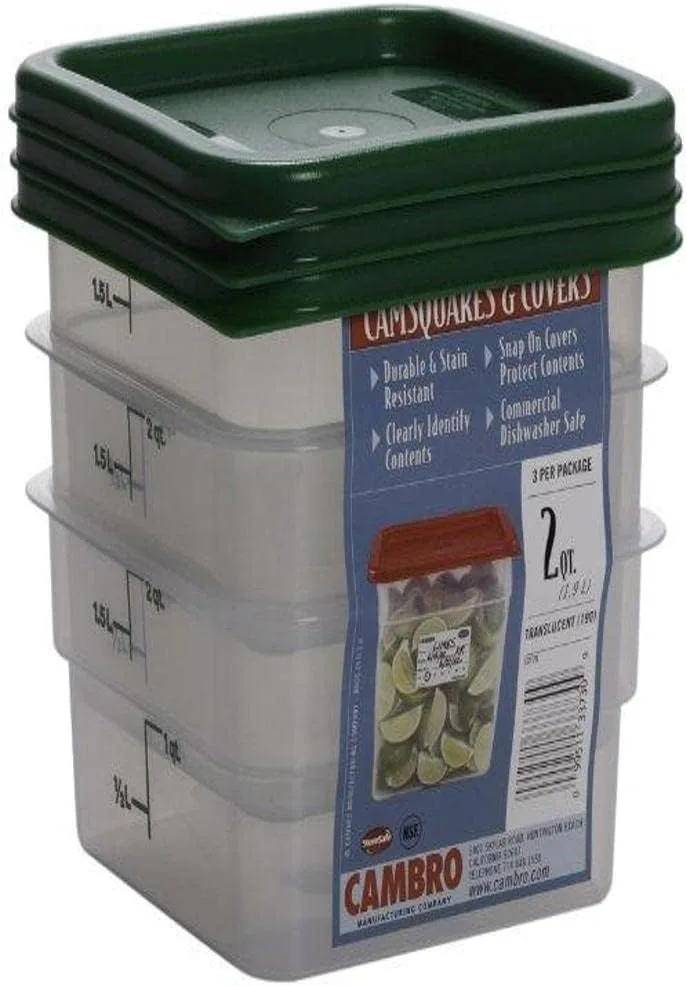
Image source: Web (Bing) / amazon.com (Web image (fair-use with source credit))
Camwear Polycarbonate: The Crystal-Clear Classic
The easiest way to spot Camwear is the clarity. It’s the container that looks almost like glass. Cambro makes it from polycarbonate, and you’ll usually see a “PC” mark molded into the bottom.
The manufacturer rates it down to -40°F, so yes, it’s freezer-friendly. It’s also heavier and more rigid than SmartStore.
SmartStore Polypropylene: The Flexible Workhorse
SmartStore has a slightly frosted look. It’s made from polypropylene, stamped “PP,” and it’s a bit more flexible. Cambro rates it from -40°F to 160°F, which covers every home freezer and most commercial freezers.
This is the line you’ll often see in meal-prep kitchens and catering operations, mostly because it’s affordable and forgiving.
How the Material Changes the Freezer Answer
In a normal freezer, both materials hold up. The real difference is impact. Polycarbonate can crack if you drop it after it’s been frozen.
Polypropylene has more flex, so it’s more likely to survive a bounce. If you’re freezing heavy batches and moving them around, SmartStore is the safer bet. If you need clear visibility, Camwear wins.
How to Check Your Cambro Container in 30 Seconds
Here’s the exact process to use any time you’re staring at a container without a label. No need to guess.
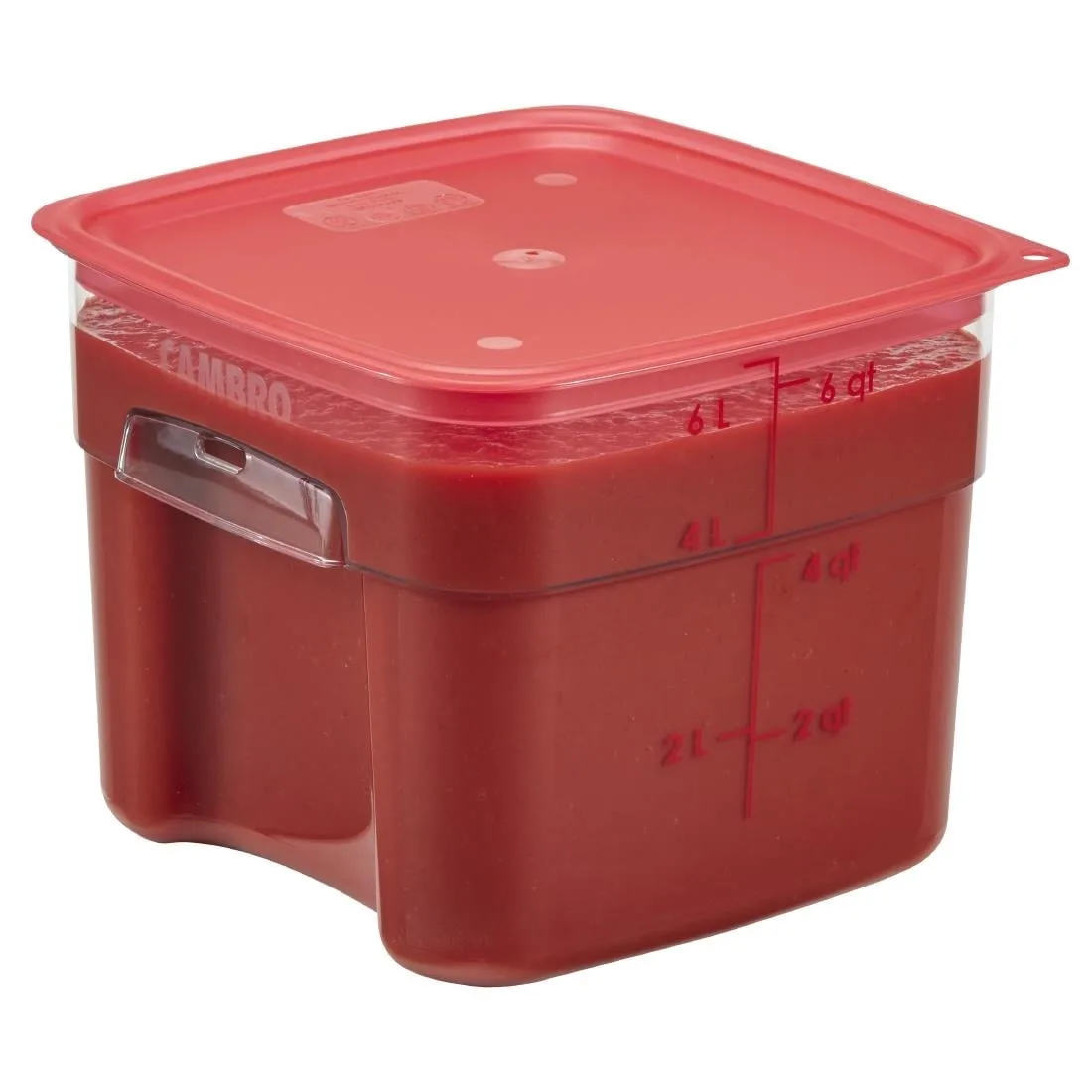
Image source: Web (Bing) / nisbets.ie (Web image (fair-use with source credit))
- Flip it over. Look at the bottom and the sidewalls for molded lettering.
- Find the Cambro name. If it’s not there, you’re holding a knockoff or a much older product.
- Read the material mark. You want “PC” or “PP.” Either one is in the freezer-safe family.
- Look for the snowflake. Many Cambro containers also have a snowflake symbol, but the material mark is the more reliable signal.
- Watch for worn or faded stamps. If the plastic is cloudy, crazed, or has tiny cracks, retire it. Freezer-safe or not, it’s past its prime.
If the container says “PP,” it goes in the freezer. If it says “PC,” it goes in the freezer too. If you can’t find any mark, don’t risk it.
Old or unverified plastic isn’t worth a cracked container and a ruined batch of food.
What Happens When You Freeze the Wrong Cambro
So what is the “wrong” Cambro? It’s not one specific product line. It’s a container that’s damaged, unmarked, or used the wrong way.
Freezing that container is when the problems start.
- Overfilled containers fail first. Water expands when it freezes, and if you fill the container to the rim, the lid will pop or the walls will crack.
- Thermal shock is the second biggest threat. A frozen container dropped into hot water shrinks the plastic unevenly. That’s how you get sudden cracks.
- Old plastic gets fragile. Repeated cycles of freezing, washing, and microwaving break down the resin. Watch for stress lines, whitening, or brittle edges.
- Lids matter more than people think. A loose lid won’t stop freezer burn. You need a snap-tight fit to keep moisture inside the food, not just inside the container.
Polycarbonate has another quirk. It’s tough, but at sub-zero temperatures it loses some of that toughness. A frozen Camwear container that’s bonked on a counter or dropped on concrete can crack in a way you wouldn’t expect.
It’s not a product flaw. It’s just how the material behaves.
The Freezer-Safe Cambro Specs (By Line)
Here are the specs that matter, pulled from Cambro’s official product pages as of 2026.
| Product line | Material | Resin mark | Temperature range | Freezer verdict |
|---|---|---|---|---|
| Camwear | Polycarbonate | PC | -40°F to 210°F | Freezer-safe if in good condition |
| SmartStore | Polypropylene | PP | -40°F to 160°F | Freezer-safe and more impact-resistant |
Both lines meet FDA food-contact guidelines and are listed to NSF/ANSI Standard 2, which is the benchmark for commercial food equipment. That certification matters if you’re prepping for a restaurant, a catered event, or a camp kitchen. It means the containers are built for repeated sanitizing and heavy use, not just one batch of leftover stew.
One more thing: replacement lids have their own temperature ratings. If you’ve swapped in a random lid from another container, check that too. A body rated to -40°F doesn’t help if the lid only handles 20°F and turns brittle in your freezer.