It’s one of those kitchen debates that never really goes away. You’ve probably heard the back-and-forth: ducted vs. ductless range hoods. If you’re asking yourself “are ductless range hoods worth it,” odds are you’re looking at a kitchen with no existing ductwork, or you’re renting and can’t cut a hole in the wall.
Fair question, because the answer isn’t the same for everyone.
Per the International Residential Code (IRC Section M1503), any range hood rated above 400 CFM may require a separate makeup air system, which adds cost and complexity to a ducted installation. That alone makes ductless look like the easy way out. But before you go that route, let’s sort out whether it actually fits your cooking habits and living situation.
Image source: Bing (Web (fair-use with source credit))
Quick Answer
Ductless range hoods are worth it if you can’t install ductwork. They trap grease and odors with charcoal filters. They don’t remove moisture or combustion gases.
For gas stoves or heavy cooking, a ducted hood is better. For electric stoves in apartments, ductless works fine.
The Problem: Why You’re Even Asking This Question
The whole debate usually starts the same way. You’re remodeling a kitchen, moving into an apartment, or trying to improve ventilation in a house that was built before range hoods were standard. You look up at the cabinet above your stove and wonder: is there a pipe hiding up there?
In many older homes and most apartments, the answer is no. Running new ductwork means opening up ceilings, cutting through exterior walls, and possibly dealing with HOA rules that forbid external vents. That’s expensive and messy.
Even if you own the place, the cost of a ducted installation can easily hit $1,000 to $2,000 or more, depending on how far the duct run has to travel. For renters, it’s simply not an option.
That’s where ductless hoods step in. They promise better air quality without the construction headaches. But promises only go so far when you’re dealing with smoke, steam, and the smell of last night’s salmon.
How Ductless Hoods Actually Work (The Charcoal Filter Trick)
A ductless range hood looks almost identical to a ducted one. Same metal body, same fan, same grease filters. The difference is what happens after the air passes through those grease filters.
In a ducted hood, the fan pushes the air up through a pipe and out of your house. In a ductless hood, the air takes a detour. It goes through a secondary filter, one made of activated charcoal, and then gets blown back into the kitchen.
The charcoal is porous and chemically treated to absorb odors and some airborne grease particles. The air that comes back out is cleaner and smells significantly less like dinner, but it’s still room-temperature air that never left the building.
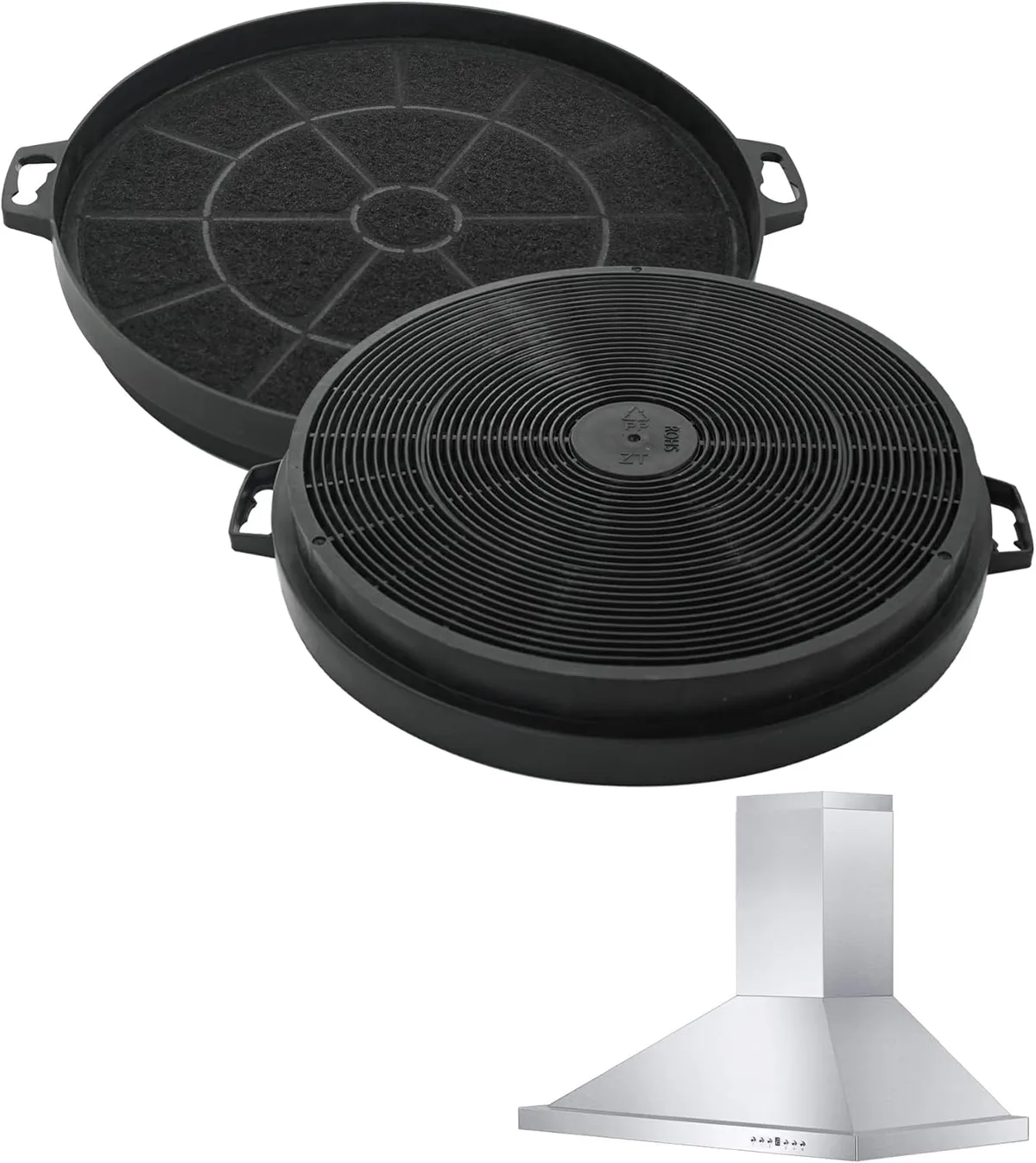
Image source: Web (Bing) / amazon.com (Web image (fair-use with source credit))
Here’s what that means in practice. A ductless hood is great at capturing grease before it settles on your cabinets. It’s decent at reducing cooking smells.
But it doesn’t remove moisture, heat, or combustion byproducts like carbon monoxide and nitrogen dioxide. Those stay in the room and have to be handled by your general home ventilation system. If you want a deeper technical breakdown, we cover the full cycle in more detail in our guide on how a ductless range hood actually works.
The charcoal filter is the hero of this system, and also its main weakness. It only works when it’s fresh. Once the carbon pores are filled (usually after three to six months of normal use), the filter stops adsorbing odors.
Dirty filters can even become a source of smells themselves, since trapped grease and food particles start to break down.
You might find this helpful: Best Ductless Range Hoods
The Decision Tree: 4 Questions That Tell You Everything
Instead of giving you a generic yes or no, let’s run through four questions. Your answers will point you toward the right choice.
Can you install ductwork?
This is the biggest fork in the road. If you own your home and have access to the ceiling or an exterior wall, ducted is almost always better. If you’re in a condo on the 14th floor or renting a place where the landlord says no holes, ductless is your only real option.
Some newer apartments do have pre-installed duct runs, so it’s worth checking behind the soffit or above the cabinet before assuming you’re stuck. In that case, consider a convertible model that can be used either way.
What kind of stove do you have?
This one is serious, and it’s backed by the EPA’s indoor air quality guidelines. Gas stoves produce carbon monoxide, nitrogen dioxide, and fine particulate matter, even when they’re burning cleanly. A ductless hood does not remove these pollutants.
If you cook with gas, especially daily, a ducted hood that vents outside is strongly recommended for health reasons. Induction and electric cooktops produce no combustion byproducts, so ductless is a much safer match there.
How do you cook?
Be honest with yourself here. If you sear steaks in cast iron, deep-fry fish, or stir-fry at high heat several times a week, ductless will struggle. Steam from boiling pasta or simmering soup is manageable, but heavy grease and smoke overwhelm the charcoal filter quickly.
Light to moderate cooking, reheating, sautéing, boiling, is where ductless performs adequately.
What’s your budget and timeline?
Ductless hoods are cheaper to install. The unit itself costs about the same as a comparable ducted model, but installation is usually $150 to $400 versus $500 to $2,000+ for ducted. If you need a solution this weekend and can’t wait for a contractor, ductless wins on speed alone.
That said, keep in mind the ongoing cost: replacement charcoal filters run $15 to $40 each, and you’ll need two to four per year.
Branch 1: Ductless Is Your Best Bet
If you answered “no” to ductwork availability, “electric or induction” for your stove, “light to moderate” cooking, and “fast and affordable” for budget, you’re squarely in the ductless camp. This branch covers a lot of people: apartment dwellers, renters, small kitchen remodels, and anyone who primarily boils, bakes, or steams.
What can you expect? A good ductless hood in the 400 to 600 CFM range will noticeably reduce cooking odors. Your kitchen will feel less greasy over time.
You won’t need to wipe down cabinets as often. And the installation is clean, no external vent pipe required.
The trade-offs are real, though. Your kitchen will still get humid when you boil a big pot of water. In humid climates, that moisture can linger and lead to mold if the room doesn’t have good natural ventilation.
And if you ever upgrade to a gas stove, you’ll probably want to revisit the ductless decision. For now, though, a quality ductless hood is a practical solution that does most of what a home cook needs.
We have a list of top-performing models if you’re looking at options, but the key is picking one that matches your cooktop width (the hood should be at least as wide as your stove) and has easily replaceable charcoal filters. Some brands require proprietary filters that are harder to find and more expensive, so check availability before you buy. Routine upkeep like cleaning the grease filters every month keeps performance strong, and if you ever skip that step, grease buildup can actually reduce airflow by more than half.
Knowing how to clean a range hood properly is a skill worth having.