Skip to content
Are immersion blenders worth it? In our research, the honest answer is yes for most home cooks, but only when you know the jobs they do well. The tool is not a countertop blender replacement.
It’s a different instrument for different tasks.
Manufacturer specifications indicate that typical immersion blenders produce between 200 and 600 watts. That’s well below the 800 to 1500 watts found in most full-size blenders. The power gap explains a lot.
It’s why a stick blender shines with soups and sauces yet struggles with frozen fruit. Let’s break down exactly where this tool earns its place.
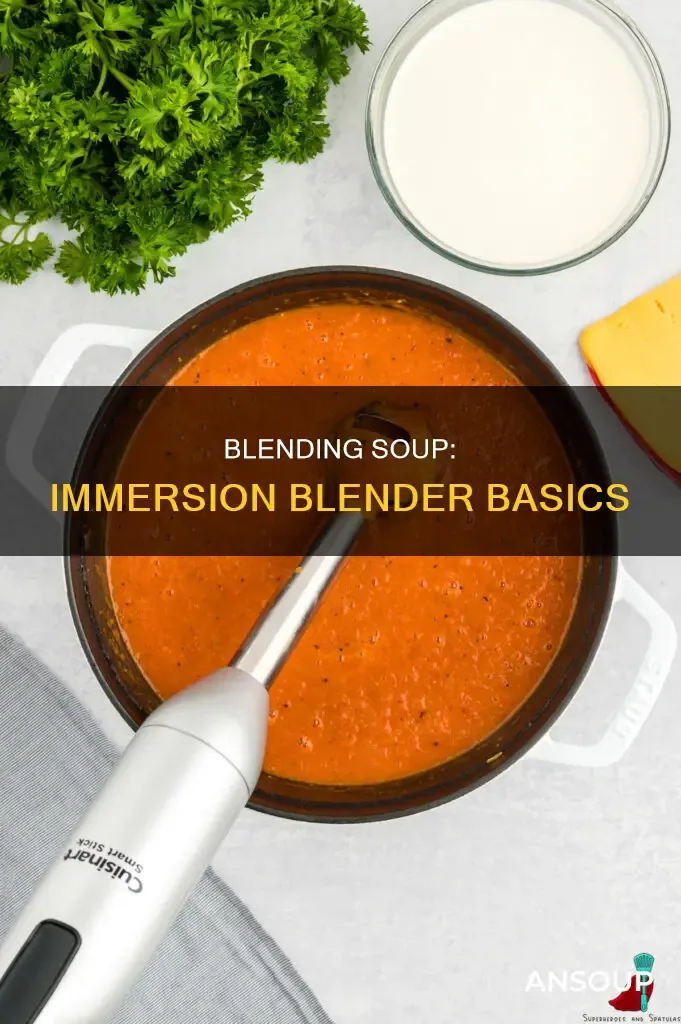
Image source: Bing (Web (fair-use with source credit))
Quick Answer: Are Immersion Blenders Worth It
Immersion blenders are worth it for most home cooks. They blend soup directly in the pot. They take up almost no storage space and clean up in seconds.
They are the right call for small batches. Skip them if you mainly make thick smoothies or crush ice daily.
Immersion vs. Countertop Blender: The Side-by-Side That Matters
The real question isn’t whether immersion blenders are worth it. It’s whether they beat a countertop model for your specific cooking style. We compared both across the factors that actually influence daily use.
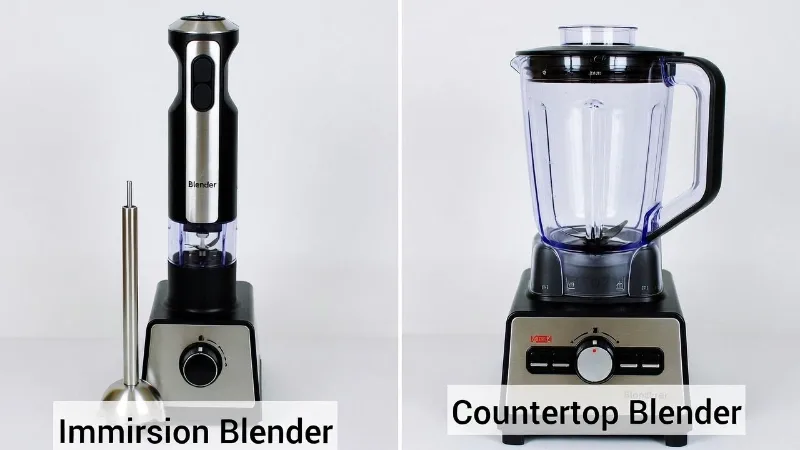
Image source: Bing (Web (fair-use with source credit))
Start with space. A stick blender fits in a drawer or a small caddy. A countertop unit takes up permanent counter real estate.
If you work in a tight kitchen, that difference alone can decide the matter.
Hot liquids matter too. With a countertop blender, you must cool soup before blending to avoid a steam explosion. An immersion blender works directly in the pot, no transfer and no waiting.
| Factor | Immersion Blender | Countertop Blender |
|---|---|---|
| Counter space | Takes up none | Needs a permanent spot |
| Hot soup | Blend directly in the pot | Must cool first |
| Cleanup | Rinse the shaft | Disassemble and wash parts |
| Power | 200 to 600W typical | 800 to 1500W typical |
| Price | $20 to $150 | $50 to $600+ |
In our research, the best use case for a stick blender is the small batch. Soups, sauces, dressings, and single-serving smoothies all fall into its sweet spot. For heavy work like ice crushing or nut butter, the countertop model wins.
- Immersion blender: soup lovers, small households, minimal kitchens
- Countertop blender: smoothie enthusiasts, big batches, ice and frozen fruit
Before you decide, it helps to understand the jobs it handles best. Most of those duties fall outside what a countertop blender does well.
How an Immersion Blender Actually Works (And Why It’s Different)
The design is simple. A motor sits inside the handle. The shaft ends in a bell guard that covers the blades.
You plunge the bell into the food and press the trigger.
Unlike a countertop unit, the blade doesn’t spin at extreme speeds to pull ingredients down through a vortex. Instead, the bell creates suction at the base, drawing food upward and past the blades. Keep it moving in a slow up-and-down pattern and you get an even puree.
If you ever run into blending performance issues, the fixes start with the same basic checks.
That mechanism is why it handles hot food safely. There is no sealed jar, no lid, and no pressure buildup. Steam escapes naturally, which matters because expansion is what causes countertop blender explosions.
The wattage really does affect performance, so the power requirements deserve attention before you buy. For safe food handling practices, the USDA’s food safety guidance covers everything from proper cooling to reheating leftovers.
What Can You Make With an Immersion Blender?
An immersion blender can do more than make soup. It is great for sauces, purees, dressings, and small smoothies too. Think of it as a quick kitchen helper for jobs that do not need a full blender.
For me, the biggest win is soup. You can blend it right in the pot, so there is no need to pour hot food into another jar. That saves time, cuts down on mess, and makes cooking feel much easier.
Here are some of the jobs an immersion blender handles well:
- Soups: Blend cooked veggies into a smooth, creamy soup.
- Sauces: Mix tomato sauce, gravy, or pasta sauce with ease.
- Purees: Make smooth fruit or vegetable purees in small batches.
- Salad dressings: Blend oil, herbs, and other soft items fast.
- Mayonnaise: An immersion blender can emulsify small batches well.
- Baby food: Puree cooked foods to the texture you want.
- Small smoothies: It works best with soft fruit and thin mixes.
The key is to match the tool to the job. An immersion blender is not built for large amounts of ice or very thick frozen mixes. For those jobs, a countertop blender is still the stronger choice.
So, if your kitchen routine includes soups, sauces, and small batches, an immersion blender can be surprisingly useful. It may look like a small tool, but for the right jobs, it can earn its spot in the drawer.
What Actually Matters in Specs: Wattage, Shaft Material, and Build Quality
The wattage spec matters more than any marketing line. In our research, 300 watts is the practical floor for home users. Below that, blending stays lumpy.
Above 500 watts, you’re paying for extra processing speed you may never need.
Shaft material matters too. Stainless steel resists scratching and cleans up easily. Plastic shafts weigh less but can leave grey marks on nonstick pans.
Most manufacturers list the material in the spec sheet, so don’t skip that line.
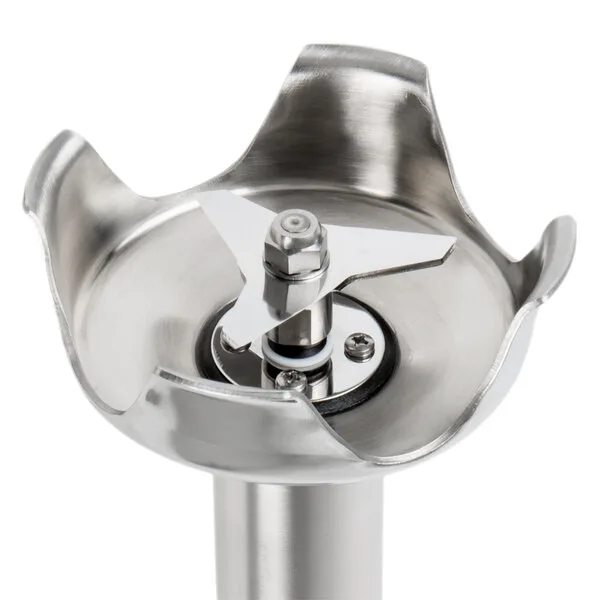
Image source: Bing (Web (fair-use with source credit))
Check these details before you buy:
- detachable shaft, which makes dishwasher cleaning simple
- variable speed dial, which gives you texture control
- a turbo button, which helps with stubborn chunks
If soup is your main job, the technique for a silky texture matters as much as the hardware.
What You Get at Each Price Tier: Budget, Midrange, and Premium
As of 2026, the market splits cleanly into three tiers. Each one targets a different kind of buyer.
| Tier | Price Range | Typical Features |
|---|---|---|
| Budget | $20 to $40 | Fixed shaft, plastic bell, single speed |
| Midrange | $50 to $80 | Stainless shaft, variable speeds, detachable shaft, useful kit |
| Premium | $100 to $150+ | Higher wattage, better ergonomics, longer warranty |
Budget models work fine for occasional soup nights. But they wobble on thick mixtures and often have short cords.
The midrange tier is where most people should land. You get a stainless shaft, variable speeds, and often a whisk or chopper attachment. That’s the sweet spot in our research.
Premium models add power, better balance, and quieter motors. They matter for daily heavy use. Casual cooks rarely need them.
If you want to use one for frozen fruit smoothies, check the motor rating first. The lower tiers simply won’t handle a thick frozen mix without straining.
That brings us to the real question: who actually gets enough use out of this tool? Let’s look at the use cases.
Who Should Buy an Immersion Blender?
An immersion blender is a great buy if you make soups, sauces, or small batches often. It is also a smart pick for small kitchens. You get useful blending power without giving up much space.
I would choose one if easy clean-up matters to you. It is also handy when you often blend food right in the pot. For many home cooks, that simple perk makes the tool worth having.
You should consider an immersion blender if you:
- Make soups and sauces often
- Cook small batches or single servings
- Have little counter or storage space
- Want fast and easy clean-up
- Need to blend hot food in the pot
- Want a simple tool for purees and dressings
- Do not need to crush ice or blend large frozen mixes
If that sounds like your kitchen, an immersion blender can be a very useful sidekick. It may not replace a full blender, but it can handle many everyday jobs with less fuss. For the right cook, that small bit of convenience adds up fast.
Who Should Skip an Immersion Blender?
An immersion blender may not be worth it if you need heavy blending power. If thick smoothies, ice, or large batches are part of your daily routine, a countertop blender is a better fit. It has more power and is built for bigger jobs.
I would also skip one if you want very smooth results every time. An immersion blender can leave some small bits behind, especially with tough or frozen foods. A full-size blender will usually give you a finer blend.
You may want to skip an immersion blender if you:
- Crush ice often
- Make thick frozen smoothies
- Blend large batches at once
- Make nut butter or other thick mixes
- Need very smooth blends every time
- Want one blender for heavy-duty tasks
In short, an immersion blender is not the right tool for every kitchen. If your recipes need serious power, go with a countertop blender. It is better to choose the tool that fits your cooking style than to buy a tool you rarely use.
Final verdict
So, are immersion blenders worth it? For most home cooks, yes. They are simple, handy, and great for soups, sauces, and small batches. They also save space and make clean-up much easier.
But I would not treat one as a full blender swap. If you make thick smoothies, crush ice, or blend large batches often, a countertop blender is still the better pick. Think of an immersion blender as a handy sidekick, not the whole kitchen team.
For most people, a midrange immersion blender offers the best balance of power, ease, and price. If you cook soups or sauces often, it can earn its place in your kitchen very quickly.