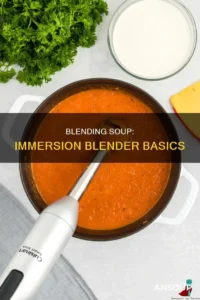
Picture the scene. You’re following a recipe that calls for finely chopped onions, but the food processor is buried somewhere behind the stand mixer. You glance at the blender sitting on the counter and wonder, can I use a blender as a food processor instead?
It’s a fair question, and millions of home cooks have asked it with varying results.
The short version: it works great for wet tasks and poorly for dry ones. In our research, standard consumer blenders deliver 500 to 1,500 watts. Motor speeds hit 20,000 to 30,000 RPM, far faster than typical food processors.
Those numbers explain everything that follows.
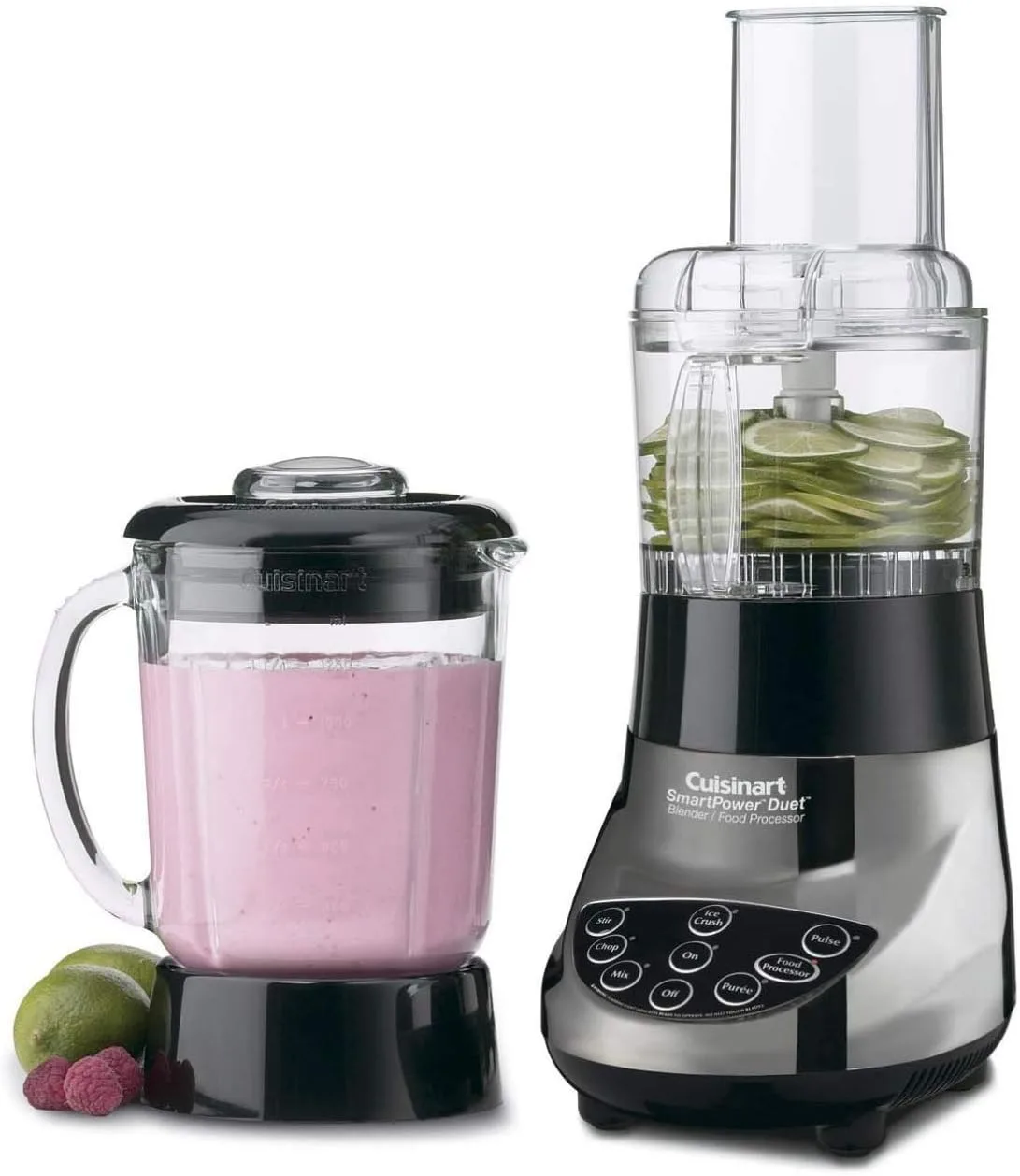
Image source: Bing (Web (fair-use with source credit))
Quick Answer: Yes, But Only for Some Jobs
Yes, you can use a blender as a food processor for wet tasks. Soups, sauces, dressings, smoothies, and purées work great. But chopping or shredding vegetables turns into mush.
Use pulse mode with small batches for rough chunks. Otherwise, keep the food processor for dry jobs.
Why Blenders and Food Processors Aren’t Interchangeable
A blender’s cross-shaped blade sits at the bottom of a tall, narrow jar. That geometry creates a vortex that pulls everything down and forces it through the blades at high speed. It’s designed to turn solids into liquids, and it does that exceptionally well.
A food processor, by contrast, uses a short, wide bowl with a flat S-shaped blade near the base. There’s no vortex involved. Ingredients fall by gravity and get chopped in short, controlled bursts.
Swappable disks allow slicing and shredding, which ablender simply cannot do. That single difference shapes every decision in this article.
The Core Rule: Wet vs. Dry — That’s the Real Split
Think of it as a simple condition. If your task involves plenty of liquid, the blender wins. If it relies on gravity and controlled chopping, the food processor wins.
Every recipe lands on one side of that line.
The reason comes down to blade speed and jar shape. Blenders spin fast enough to whip air into ingredients and break cell walls into purée. Food processors spin roughly ten times slower, which matters when you want distinct pieces of food.
So here’s your mental flowchart. Is the final texture supposed to be smooth, creamy, or pourable? Use the blender.
Is it supposed to be chunky, shredded, or uniform small bits? Reach for the food processor. If you just chopped aromatics for a stir-fry, blending them would turn the dish into a paste.
This rule also explains why recipes behave the way they do. Salsa in a blender becomes a smooth, almost drinkable sauce. The same recipe in a food processor holds visible tomato chunks.
Both versions work, but they’re completely different dishes.
What Your Blender Does Well: The “Wet Zone” Tasks
The blender earns its keep on anything that ends up wet. Soups, smoothies, salad dressings, marinades, batters, nut milk, and fruit purées all fall into the wet zone. These tasks need the vortex and high speed that a blender naturally provides.
Take the humble home-style tomato soup. Start with roasted tomatoes and a splash of vegetable broth, and the blender pulls everything into a velvety liquid in under a minute. Let yourself blend hot soup the safe way, and you’ve got a restaurant-grade result from a machine you already own.
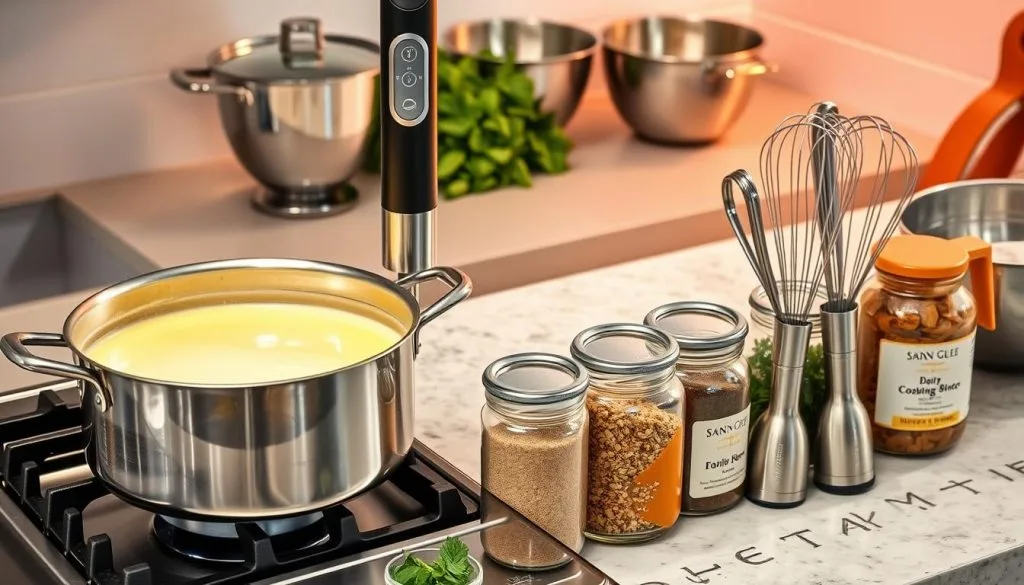
Image source: Bing (Web (fair-use with source credit))
Emulsifying dressings is another strength. A blender forces oil and vinegar together so completely that the mixture stays combined for days. Try that by hand and you’ll be whisking for twenty minutes.
Aggregated reviews consistently rank blending as the fastest route to creamy dressings.
Nut butters and hummus also belong on the wet side. Both need heavy scraping and patience, but the blender’s power handles the job. The trick is adding liquid in small increments while the machine runs.
If you’re curious about grinding seeds or making smooth bases, the same logic applies to trusted blender recipes.
What Your Blender Can’t Do: When to Walk to the Cupboard
Here’s where the blender falls apart. Any task that needs discrete pieces of food, like dicing onions, shredding cheese, or slicing potatoes, requires the food processor. The blender’s blades chop too fast and too unevenly for these jobs in a narrow jar.
The main culprit is the jar’s height. Onions sit in layers, and only the bottom layer meets the blade. The top layer stays untouched while the bottom gets puréed.
You end up with a bowl of uneven mush that needs repeated scraping and shaking.
Shredding is even more impossible. A blender has no grating disk, so cheese, carrots, and cabbage come out bruised rather than shredded. The food processor’s interchangeable disks handle those tasks precisely.
There’s no workaround in a standard blender jar.
Breadcrumbs, nut meal, and cookie crumbs are the borderline cases. They work in a blender with pulse mode, as long as the batch is small and dry. But flour-like grinding, like turning oats into oat flour, works better in a coffee grinder or processor.
The blender tends to scorch or over-process fine grains.
How to Chop in a Blender Without Making Soup
If you need a rough chop and only have a blender, pulse mode is your friend. Fill the jar no more than one-third full. Cut everything into one-inch pieces first.
Then run two-second pulses, shaking the jar after every two or three bursts.

Image source: Web (Bing) / cbsesamplepapers.info (Web image (fair-use with source credit))
Space the pieces out so they tumble freely. Overcrowding traps food against the blade, forcing it to puree instead of chop. Many people make this exact mistake and blame the blender.
In our research, the fill level and pulse timing matter more than blade sharpness.
Add a tablespoon of liquid if the food refuses to move. Water, oil, or broth creates just enough momentum to pull pieces through without turning them into a paste. That’s the difference between chopped salsa and blended salsa.
Remember the pulse-and-shake routine. It’s tedious, but it delivers edible results quickly. For a single onion or a small handful of herbs, this works well enough.
For big batches, though, the food processor wins every time.
If your blades sit loose and cause uneven chopping, that’s a separate fix. Adjust the base so it grips tightly before you start. A wobbly blade is a safety hazard and a performance killer.
When a Food Processor Is Worth the Wash-Up (Decision Branch)
Let’s build the decision tree clearly. If you’re blending more than two cups of liquid, skip the processor entirely. If you’re chopping more than one cup of onion, skip the blender entirely.
Use the blender for sauces, soups, batters, drinks, purees, and dressings. Use the food processor for slicing, shredding, dicing, and large-batch chopping. If your task is dough or pastry, neither is ideal, but the processor handles it better.
The processor’s wide bowl lets you work on four cups at once. The blender’s narrow jar forces you into small batches. For weekly meal prep, that extra bowl capacity saves real time.
For a quick single meal, the blender’s speed makes it the practical choice.
You’ll also want to consider cleanup. The processor has a lid, bowl, blade, and often a disk. The blender has a jar and a lid.
For sticky jobs like hummus, the processor’s flat bottom scrapes clean easily. The blender’s deep jar needs more attention.
If your kitchen has limited space, a high-performing blender covers 70 percent of food processor tasks. That’s the honest ratio. You lose slicing and shredding, but you gain smooth textures and easy cleanup.
If you rarely batch-cook, the blender alone is a perfectly good setup.
Smart Alternatives: Immersion Blenders, Chopper Cups, and Manual Tools
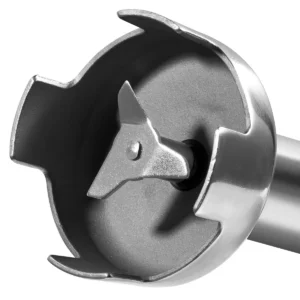
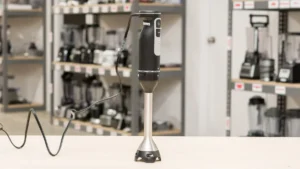
Before you buy anything new, consider the immersion blender with its chopper attachment. It’s a stick blender that bolts onto a small cup, essentially becoming a mini food processor. For herbs, nuts, and single-portion sauces, it’s a compact miracle.
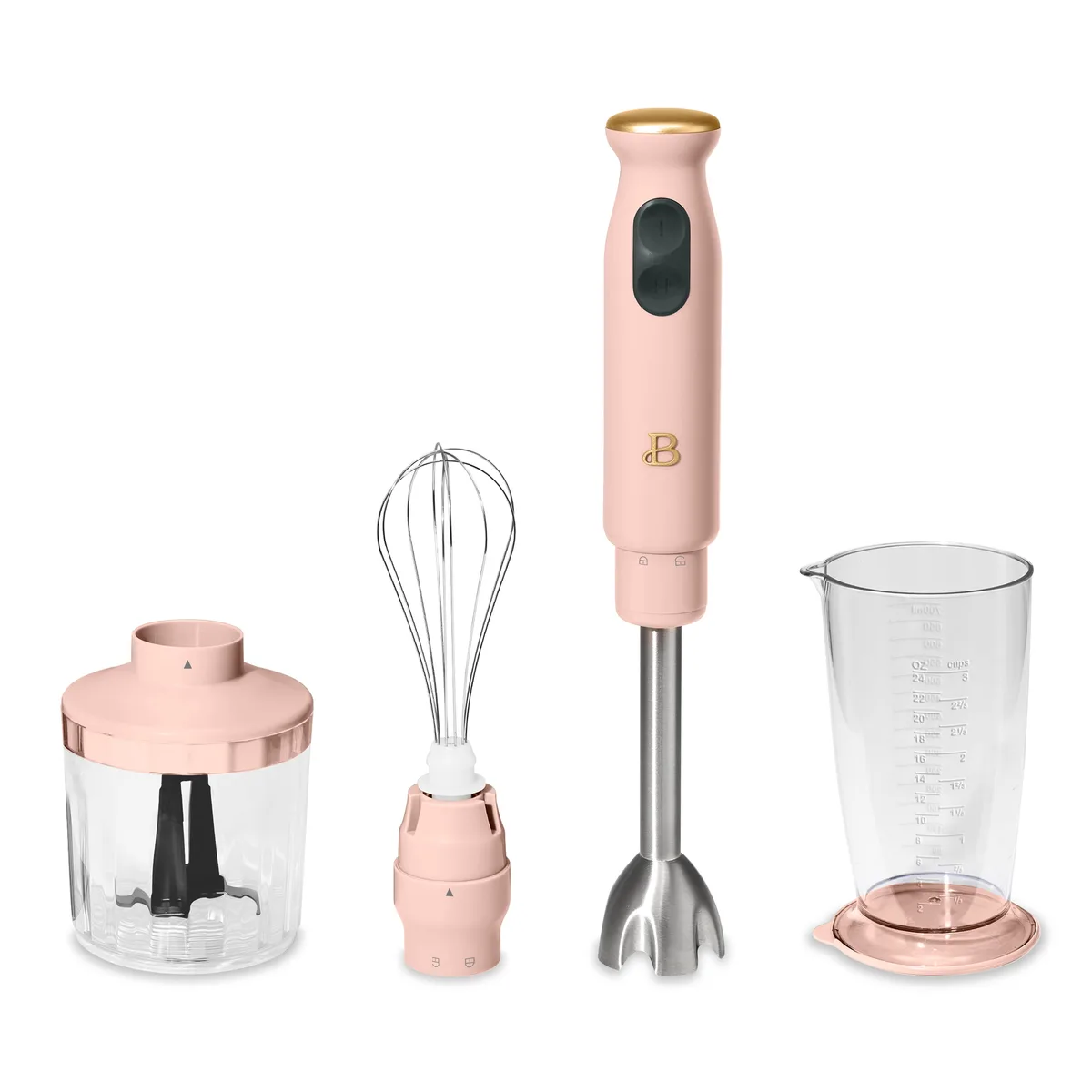
Image source: Bing (Web (fair-use with source credit))
This style of stick blender handles soup directly in the pot, and its chopper cup gives you that dry grinding ability without a second machine. If you’re deciding whether a stick blender matches your needs, our research suggests it’s the best middle ground for small kitchens.
Manual tools also deserve a spot. A box grater handles cheese and vegetables in seconds. Kitchen shears speed through herbs.
A mortar and pestle crushes garlic and spices with zero electricity. For most households, a blender plus a box grater covers nearly every food processor task.
The classic trade-off stays the same. You can save counter space by using the blender alone, but slicing tasks will always send you back to manual prep. That’s an honest compromise, and it works.
Mistakes That Will Ruin Your Blender (Or Your Meal)
Overfilling the jar is the number one blunder. Too much food stops the vortex, and the motor strains or stalls. Rest the motor between bursts, and keep batches small for any chopping job.
Blending hot liquids without venting the lid is another classic. Steam builds pressure, and the lid can pop off with splash-burn risk. Let hot soup cool below 175°F before blending, or hold the lid slightly ajar with a folded towel.
The safe method is worth reading about before you attempt it.
Blending frozen fruit dry is also risky. Dense, hard ingredients can crack a plastic jar if they jam the blade. Add liquid first, pulse, and let the fruit soften before running it at full power.
Your jar can be repaired if it cracks, but prevention beats patching.
Finally, don’t run the blender for minutes at a time. Most consumer models need a rest after three or four long bursts. If motor strain worries you, pay attention to heat and smell.
That’s the universal warning signal that you’ve asked too much of it.
Safety Checks: Heat, Pressure, and Motor Limits
Never blend hot liquids in a sealed jar. The pressure buildup alone can cause serious burns. Vent the lid, or better yet, cool the liquid first.
Splash burns are among the most common kitchen accidents involving blenders.
If you’re using a plastic jar, watch for cloudy scratches from grinding hard ingredients. Damaged plastic can release microplastics into your food. Check the jar before each use, and replace it if it looks worn or cracked.
Motor limits matter too. Blend in short bursts, not continuous runs. Rest the machine for one full minute after three or four pulses.
If it smells hot or sounds strained, stop and redistribute the contents.
Look for certification markers on your appliance. UL listing confirms basic electrical safety. For food-contact parts, NSF certification indicates hygiene testing.
These aren’t guarantees of performance, but they separate responsible products from risky ones. Manufacturer manuals remain your best guide for duty cycles and limits.
FAQ: Can I Make Hummus, Grate Cheese, or Crush Biscuits?
Can I make hummus in a blender?
Yes, a blender makes excellent hummus. Add cooked chickpeas, tahini, lemon juice, and olive oil, then blend with a few tablespoons of water. Scrape the sides twice.
The result is silkier than most food processor hummus because the high speed breaks down chickpeas completely.
Can a blender grate cheese?
No, a blender cannot grate cheese properly. It will crush and bruise the cheese, producing a sticky mass instead of shreds. Use a box grater or a food processor with a shredding disk.
That’s the only reliable route to even, fluffy cheese shreds.
Can I crush biscuits or cookies in a blender?
Yes, pulse dry biscuits in small batches. Two-second pulses with shaking produce fine crumbs quickly. Don’t overfill the jar, and avoid running the motor continuously.
For large batches, a food processor with a steel blade works faster and more evenly.
Can a blender slice vegetables like a food processor?
No, blenders have no slicing disk. They can only chop, purée, or liquify. For uniform slices of cucumbers, potatoes, or carrots, you need a food processor with a slicing disc or a mandoline.
The physics of a blender jar makes slicing impossible.
Is it safe to blend hot soup in a blender?
Yes, with precautions. Cool the soup below 175°F, vent the lid, and start on low speed. Never seal the lid completely while blending warm liquids.
The pressure can pop the lid and cause serious burns. Following the safe method prevents accidents.
The Decision Guide: One Table to Rule Them All
| Task | Blender | Food Processor | Best Pick |
|---|---|---|---|
| Smoothies & shakes | Excellent | Poor | Blender |
| Soups & purées | Excellent | Good | Blender |
| Hummus & nut butter | Excellent | Good | Blender |
| Dressings & sauces | Excellent | Fair | Blender |
| Chopping onions | Poor | Excellent | Food Processor |
| Slicing vegetables | Impossible | Excellent | Food Processor |
| Shredding cheese | Impossible | Excellent | Food Processor |
| Breadcrumbs | Good (small batches) | Excellent | Food Processor |
| Pie dough | Poor | Good | Food Processor |
| Single meal prep | Good | Good | Blender |
| Large batch prep | Poor | Excellent | Food Processor |
If you’re still weighing whether to buy a dedicated processor, read our full breakdown of using a blender as a food processor. The same logic that divides wet from dry guides that decision.
For most home kitchens, the blender handles the liquids and the box grater covers the shredding. That combination stays small, cheap, and effective. It’s the honest answer to one of the most common kitchen questions, and now you know exactly where the line is drawn.
The Core Rule: Wet vs. Dry — That’s the Real Split
Think of it as a simple condition. If the final texture should be smooth, creamy, or pourable, the blender wins. If it should be chunky, shredded, or uniform small bits, the food processor wins.
Every recipe lands on one side of that line.
The reason comes down to blade speed and jar geometry. Blenders spin at 20,000 to 30,000 RPM, pulling food through the blades repeatedly in a vortex. Food processors run near 1,500 RPM, slow enough for ingredients to fall between passes and get cut cleanly.
That’s why salsa behaves so differently in each machine. A blender turns it into a smooth, almost drinkable purée. A processor keeps visible tomato chunks.
Both are fine, but they’re not the same dish.
What Your Blender Does Well: The “Wet Zone” Tasks
Soups, smoothies, salad dressings, marinades, and batters all live in the wet zone. These tasks need the vortex. Roasted tomatoes and broth become velvety soup in under a minute.
An emulsified vinaigrette stays combined for days.
Hummus and nut butters also work beautifully. The high-speed blade breaks down chickpeas and nuts completely. Add liquid slowly while the machine runs, then scrape the sides twice.
The texture ends up silkier than most food processors can manage.
USDA food safety guidance applies when you’re working with hot liquids or batch-prepping for storage. Let soups cool below 175°F before blending. For the full technique, our step-by-step soup guide walks through the whole process safely.
What Your Blender Can’t Do: When to Walk to the Cupboard
Dicing onions, grating cheese, and slicing vegetables are impossible in a blender. The tall, narrow jar stacks food in layers. Only the bottom layer meets the blade, and the top stays untouched while the bottom becomes paste.
A food processor solves this with its wide, flat bowl. Ingredients spread out evenly, and the slower blade cuts them into distinct pieces. Swappable disks handle grating and slicing, which the blender cannot replicate.
Even simple breadcrumbs come out uneven. Fine crumbs fly to the top and never touch the blade again. The full comparison of machine capabilities covers exactly where each one fails.
How to Chop in a Blender Without Making Soup
Pulse mode and tiny batches are the only way. Fill the jar one-third full at most. Cut everything into one-inch pieces first.
Run two-second pulses, then shake the jar and repeat.
Add one tablespoon of liquid if food stalls. Water or oil creates enough momentum to pull pieces down. Stop before the mixture turns to paste.
This works for one onion, a few garlic cloves, or a small handful of herbs.
It’s not practical for large batches. For bulk prep, the processor wins every time. A blender version of salsa still comes out delicious, just smoother than the chunky restaurant style.
When a Food Processor Is Worth the Wash-Up (Decision Branch)
Here’s the branching logic. If you’re making more than two cups of liquid, use the blender. If you’re chopping more than one cup of solids, use the food processor.
That rule covers most of what happens in a normal kitchen.
For dough and pastry, the processor wins. Its wide bowl distributes cold butter evenly through flour. For single meals, the blender wins on cleanup alone.
The processor’s multiple parts take longer to wash.
If you only have room for one appliance, the blender covers roughly 70 percent of typical tasks. Add a box grater, and you close most of the gap. Just accept that slicing will always be manual.
Smart Alternatives: Immersion Blenders, Chopper Cups, and Manual Tools
An immersion blender with a chopper cup attachment is the best middle ground. It blends soup right in the pot, then swaps to a small bowl for herbs or single-portion sauces. It takes up half the space of either full-size machine.
Image source: Bing (Web (fair-use with source credit))
A box grater handles cheese and vegetables in seconds. Kitchen shears speed through herbs. For most households, a blender plus one manual tool covers nearly every food processor task.
Mistakes That Will Ruin Your Blender (Or Your Meal)
Overfilling the jar stops the vortex and strains the motor. Keep batches small, and rest the machine after a few long bursts. Never blend hot liquids with the lid sealed.
Steam pressure can pop the lid and cause burns. Use a vent or cool the liquid first.
Frozen fruit packed dry can crack a plastic jar. Always add liquid before blending hard or frozen items. If your blades wobble, fix that before anything else.
A loose blade is dangerous and chops unevenly.
Safety Checks: Heat, Pressure, and Motor Limits
Let hot soup cool below 175°F before blending. Vent the lid and start on low speed. Never seal the lid completely over warm ingredients.
The pressure buildup is a real burn risk.
Inspect the jar for cracks or cloudiness before each use. Scratched plastic can release microplastics into your food. Look for UL certification on the appliance and NSF certification on food-contact parts.
Manufacturer manuals still give the clearest duty-cycle limits.
FAQ: Can I Make Hummus, Grate Cheese, or Crush Biscuits?
Can I make hummus in a blender?
Yes, a blender makes excellent hummus. Cooked chickpeas, tahini, lemon juice, and olive oil blend into a silky purée. Just add a few tablespoons of water and scrape the sides twice.
Can a blender grate cheese?
No. It crushes and bruises cheese into a sticky mass. Use a box grater or a food processor with a shredding disk for clean, even shreds.
Can I crush biscuits or cookies in a blender?
Yes, pulse dry biscuits in small batches. Two-second bursts with shaking produce fine crumbs without overheating. Don’t overfill the jar.
Can a blender slice vegetables like a food processor?
No. Blenders have no slicing disk. You need a food processor with a slicing disc or a mandoline for uniform vegetable slices.
The Decision Guide: One Table to Rule Them All
| Task | Blender | Food Processor | Best Pick |
|---|---|---|---|
| Smoothies & shakes | Excellent | Poor | Blender |
| Soups & purées | Excellent | Good | Blender |
| Hummus & nut butter | Excellent | Good | Blender |
| Dressings & sauces | Excellent | Fair | Blender |
| Chopping onions | Poor | Excellent | Food Processor |
| Slicing vegetables | Impossible | Excellent | Food Processor |
| Shredding cheese | Impossible | Excellent | Food Processor |
| Breadcrumbs | Good (small batches) | Excellent | Food Processor |
| Pie dough | Poor | Good | Food Processor |
| Single meal prep | Good | Good | Blender |
| Large batch prep | Poor | Excellent | Food Processor |
That’s the honest breakdown. Keep the blender for anything liquid, pull out the processor for anything chunky, and you’ll never waste time cleaning the wrong machine again.