Skip to content
You’ve got a pot of soup simmering and a bag of flour on the counter, and you’re staring at one kitchen drawer. Is a hand mixer the same as an immersion blender? It’s a fair question, because they look like cousins at a family reunion.
Same handle. Same motor hum. Totally different jobs.
The short answer is no, and knowing why will save you a ruined batch of cream and a kitchen covered in hot soup.
Manufacturer specifications draw the line clearly. A typical immersion blender spins at 10,000 to 20,000 RPM at the blade tip, while a hand mixer’s beaters turn slower but pull air deep into the mixture. As of 2026, most household models in both categories land between 200 and 400 watts.
That tells you they’re built for separate work. Let’s break down the real differences, starting with the blunt version of the truth.
The Short Answer: They’re Not the Same
No. A hand mixer and an immersion blender are different tools. A hand mixer whips and aerates batters and creams.
An immersion blender purees and chops food in place. They share a handle and a motor. They do not share a job.
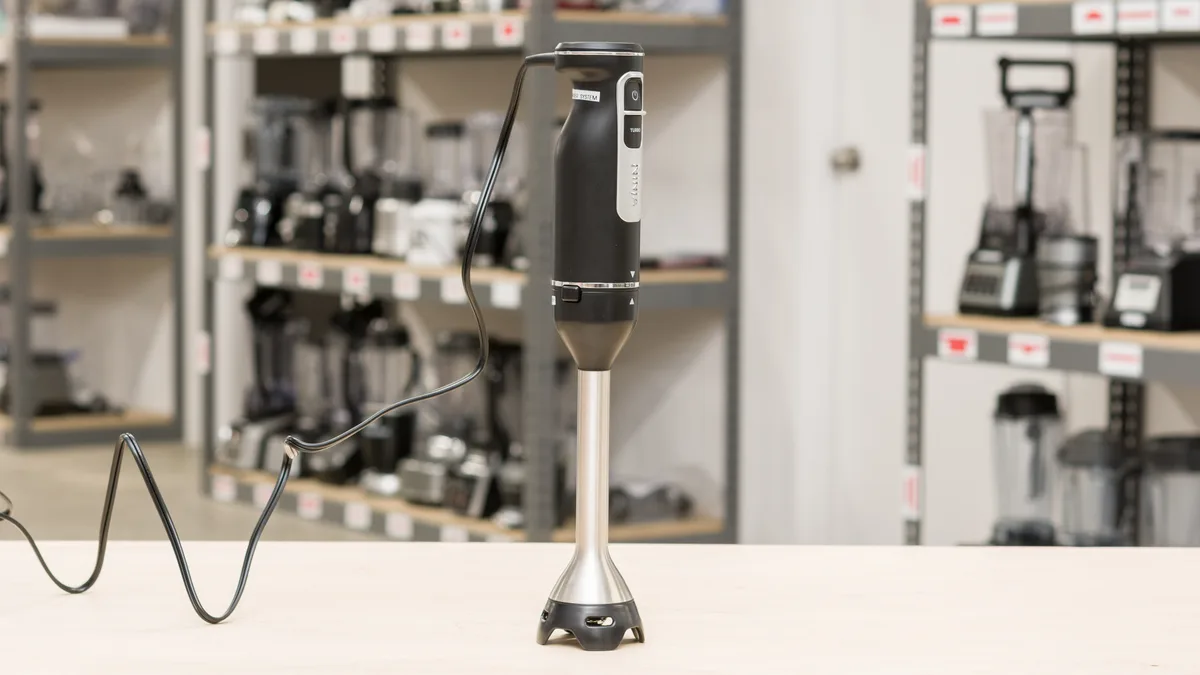
Image source: Bing (Web (fair-use with source credit))
If you need a one-glance summary, here’s the simplest way to separate them:
| Tool | Core Job | Typical Use |
|---|---|---|
| Hand mixer | Aeration | Whipping cream, beating eggs, creaming butter |
| Immersion blender | Pureeing | Blending soup, making smoothies, emulsifying sauces |
A hand mixer pulls air into food with spinning wire beaters. An immersion blender chops food down into a smooth liquid with a fixed blade. One builds texture up.
The other breaks it down. That core difference drives everything else, from the attachments to the correct way to clean each tool.
Why the “Blender” Name Confuses Everyone
The naming problem is real. Manufacturers call the immersion blender a “hand blender” on some boxes and a “stick blender” on others. Meanwhile, people use “hand mixer” for the tool with beaters.
The two names sound like they describe the same thing, which explains most of the confusion.
The immersion blender’s shape makes it worse. It’s a long wand with a motor on top and a blade at the bottom. It looks like a mixer that lost its bowl.
A hand mixer has two beaters sticking out of the bottom, which makes its purpose obvious at a glance.
The terminology drift matters here. Search results for “hand blender” often mix both tools together, and product listings blur the line further. If you’ve ever wondered about the naming overlap, we’ve covered the same name confusion in more detail.
The practical takeaway is simple. Check the attachments before you trust the label.
Core Mechanics: Aeration vs. Pureeing
The mechanical difference is what settles this debate. A hand mixer’s wire beaters rotate and pull air into whatever you’re mixing. That trapped air is what makes whipped cream hold its peaks and cakes rise in the oven.
It’s an aeration machine.
An immersion blender does the opposite. Its blade spins horizontally at the bottom of the shaft, chopping food into smaller and smaller pieces. The motion creates a vortex that pulls food down into the blade.
It purees rather than aerates.
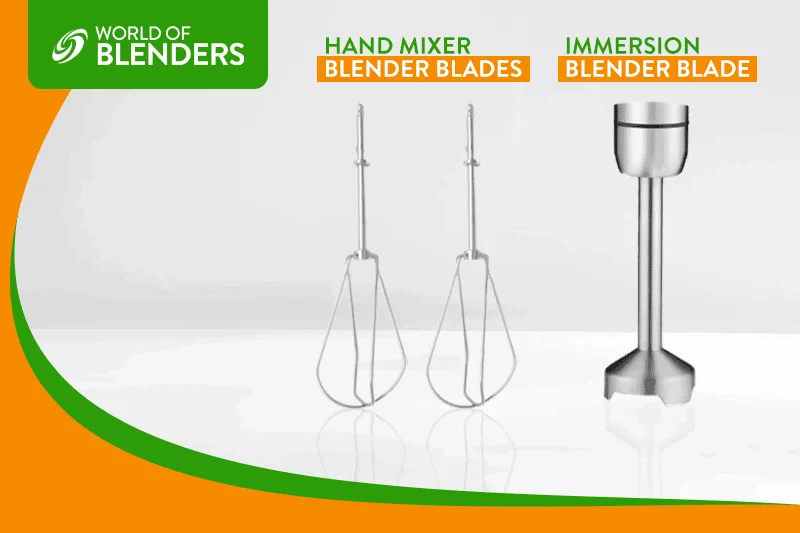
Image source: Bing (Web (fair-use with source credit))
Try to make meringue with an immersion blender and you’ll see the problem. The blade chops the egg whites’ protein structure instead of stretching it. You get a dense, watery mess instead of stiff peaks.
Similarly, a hand mixer dropped into hot soup will splash boiling liquid everywhere because its beaters aren’t designed to pull soup down into a vortex.
This isn’t a minor detail that only affects professionals. It’s the reason the tools evolved separately. One exists to add air, the other exists to remove chunks.
They’re like a bicycle pump and a blender having the same handle. The resemblance doesn’t make them the same machine. If you’re wondering whether an immersion blender can handle smoothies, the short version is yes, but it works differently from a countertop model, and we’ve written about the smoothie technique separately.
Breaking Down the Hand Mixer: The Whipping Workhorse
The hand mixer is the lighter, portable cousin of the stand mixer. It’s built for tasks that need air, volume, and a gentle touch. Most units ship with two wire whisks for whipping and a pair of balloon beaters for general mixing.
Some include dough hooks for heavier jobs like cookie dough.
Its strength is speed with aeration. You can turn cold cream into soft peaks in about two minutes. Egg whites become a stiff, glossy meringue without much effort.
The beaters angle slightly so air gets pulled into the mixture from the bottom and sides of the bowl.
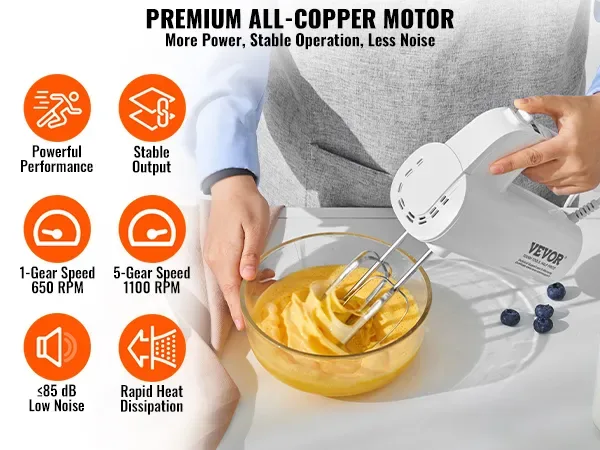
Image source: Bing (Web (fair-use with source credit))
Here’s what a hand mixer handles well:
- Whipping cream and egg whites
- Creaming butter and sugar for cakes
- Beating pancake and waffle batter
- Mixing cookie dough and frosting
- Mashing potatoes smoothly
There’s a catch. It requires a bowl that’s deep enough to contain splatter. Too shallow a bowl and you’ll have batter on your counter within seconds.
It also works best with one batch at a time. Large quantities need more effort, which is where a stand mixer earns its keep.
Aggregate user reviews consistently highlight the same downside. Arm fatigue sets in during longer mixing sessions. A batch of thick cookie dough can take several minutes of sustained work.
The tool is still the right choice for any recipe that depends on trapped air for its texture, but it’s not a set-and-forget appliance.
Breaking Down the Immersion Blender: The One-Pot Wonder
The immersion blender is the lazy cook’s best friend. You stick the shaft directly into a pot of soup, press the button, and the blade chops everything into a silken puree. No transferring hot liquid into a countertop blender.
No extra container to clean.
Its signature advantage is that the food never leaves the pot. That makes it ideal for hot soups, creamy sauces, and gravies. You can blend while the pot is still on the stove, just keep the shaft fully submerged and the heat source on low or off.
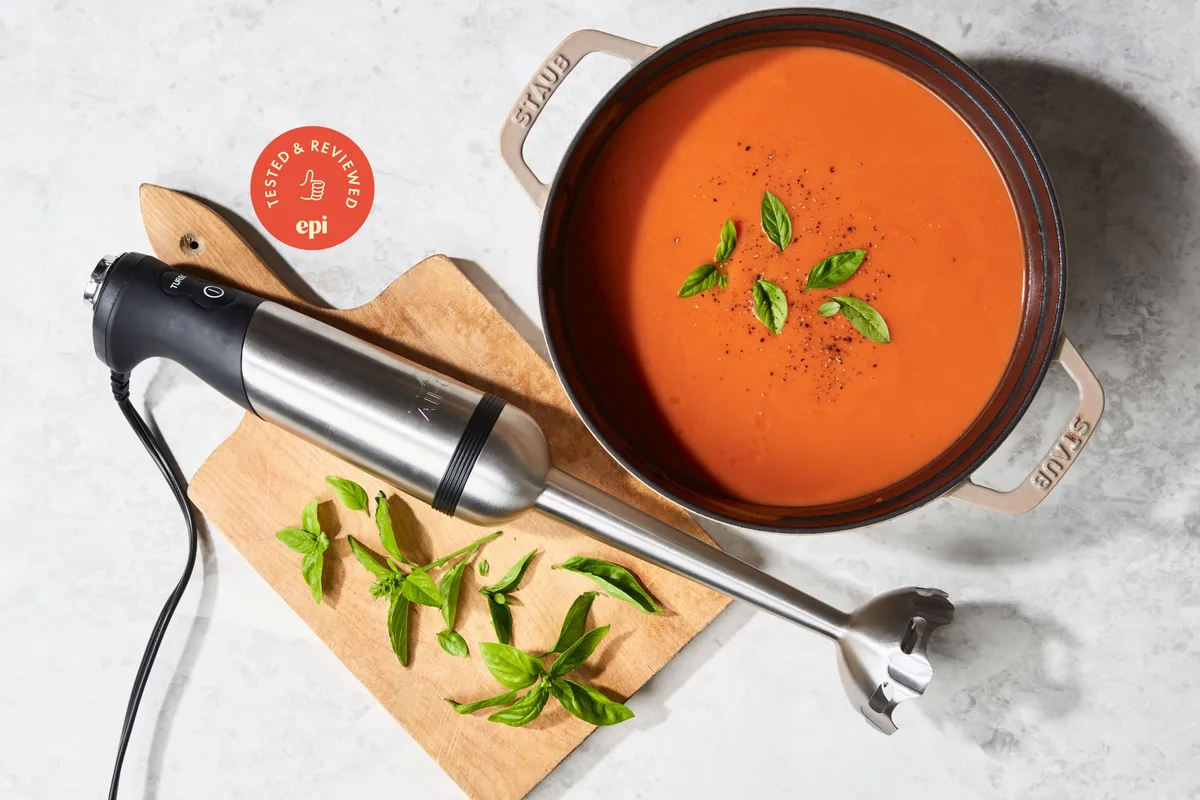
Image source: Bing (Web (fair-use with source credit))
A few jobs where it shines:
- Pureeing butternut squash or tomato soup directly in the pot
- Making mayonnaise and vinaigrettes in a narrow jar
- Blending smoothies and protein shakes in the cup
- Pureeing baby food in small batches
- Emulsifying hollandaise without a double boiler
Most models include more than the blending shaft. A whisk attachment turns one into a passable hand mixer for small tasks like whipping a single egg white. Some come with a mini chopper for nuts, herbs, or onions.
That versatility is why the immersion blender gets so much mileage in small kitchens.
The honest weakness is the blade. It’s exposed and sharp, so you have to think about what container you’re using. A thin plastic bowl will scratch.
A glass or stainless steel pot gives you the best results and protects the blade from chipping. If you’re new to the tool, we’ve laid out the everyday uses of an immersion blender in plain terms.
Side-by-Side: The Differences That Matter Most
Once you understand the mechanics, the practical differences become obvious. The table below lines them up so you can see what each tool actually brings to your counter.
| Feature | Hand Mixer | Immersion Blender |
|---|---|---|
| Primary action | Aerates and whips | Purees and chops |
| Best for | Cakes, cream, egg whites | Soups, sauces, smoothies |
| Needs a bowl | Yes, deep and wide | No, works in any pot or cup |
| Attachments | Wire whisks, beaters, dough hooks | Blending shaft, whisk, chopper |
| Hot liquids | Unsafe, splatters badly | Safe, use fully submerged |
| Cleanup | Beat and rinse, plus the bowl | Rinse the shaft, no extra vessel |
| Motor range | 150 to 400 watts | 200 to 400 watts |
The blade and beater designs tell the whole story. A hand mixer’s beaters sit at a shallow angle, pulling air from the bottom of the bowl. An immersion blender’s blade mounts flat at the shaft’s end, cutting and pulling food down.
That geometry is why one tool can’t do the other’s job well. If you’re blending a big batch of soup and wondering whether a countertop blender would work, the process is different, and we’ve covered blender-based soup separately. For now, trust the table above as your decision guide.
Best Uses for a Hand Mixer
Reach for the hand mixer whenever your recipe depends on trapped air. That’s cakes, cookies, meringues, and any frosting that needs to hold its shape. The beaters do the work, so your arm doesn’t have to.
Here’s where a hand mixer saves the day:
- Whipping cream to soft or stiff peaks
- Beating egg whites for meringue or souffle
- Creaming butter and sugar until light and fluffy
- Mixing cookie dough, brownie batter, and quick breads
- Making smooth mashed potatoes without overworking them
One important check before you start. Make sure your bowl is tall enough to stop splatter. A 3-quart bowl works for most jobs, but a shallow pie dish will end badly.
Aggregate reviews also suggest keeping the speed low when you start. High speed right away sprays batter across the counter and pushes ingredients up the beaters. Start slow, then ramp up once the mixture has combined.
Best Uses for an Immersion Blender
Grab the immersion blender when you want to blend food without moving it. It’s the tool for one-pot cooking, small batches, and anything too hot to transfer safely.
The classic example is soup. You cook vegetables in the same pot, then blend them right there. No ladling hot liquid into a countertop blender, no waiting for it to cool.
The detailed technique matters though, and our guide to immersion blender soup walks through the proper motion and speed.
Other jobs where it shines:
- Mayonnaise and hollandaise, emulsified right in the jar
- Smoothies and protein shakes, blended in the cup
- Baby food and purees in tiny batches
- Tomato sauce with a silky, even texture
- Whipped cream if your model has a whisk attachment
Keep the shaft fully submerged while it runs. That prevents splatter and keeps air out of the mix, which matters for emulsions. Move it in a gentle up-and-down motion so the vortex pulls everything through the blade.
When Substituting One for the Other Goes Wrong
Substitution is a trap. Both tools sit in the same drawer, so the urge to swap them is strong. The results range from annoying to genuinely dangerous.
Hot soup with a hand mixer is the worst case. The beaters aren’t shielded, and they throw boiling liquid in every direction. Burn risk is real.
If you have a countertop blender, you need to vent the lid and work in batches, which we’ve explained in our piece on blending hot soup safely. The immersion blender exists precisely to avoid that hazard.
The other failure is meringue with an immersion blender. The blade chops the egg whites’ protein structure into a watery mess. You’ll never get a stable peak, no matter how long you run it.
Same goes for whipped cream, which turns into butter if you over-process it.
Even a mixed batch can fail. Trying to fold flour into cake batter with an immersion blender overworks the gluten, giving you a dense, tough crumb. If the recipe says beat, use the tool designed to beat.
Which One Should You Buy First?
If you’re starting your kitchen toolkit from zero, pick the immersion blender. It does more unique work that you can’t easily replicate with another tool. You can always mix cake batter by hand with a wooden spoon, but you really don’t want to blend hot soup in a countertop blender.
That reasoning holds for most home cooks. The immersion blender covers soups, sauces, dressings, and smoothies, which covers a lot of weeknight cooking. A hand mixer is easier to skip because many of its jobs, like whipping cream, you can also do with a whisk and some patience.
Budget changes the math though. Decent hand mixers start around $20. A quality immersion blender with attachments pushes toward $50 or more.
If money is tight and you bake weekly, the hand mixer is the more practical first buy.
The strongest argument for the immersion blender is the whisk attachment. Many models include one, turning the stick into a passable hand mixer for small jobs. That versatility gives you two tools in one footprint, which is hard to beat in a small kitchen.
Buying on a Budget: What You Get at Each Price Point
Price shapes the decision more than most people expect. You don’t need premium gear for either tool, but you should know what each tier actually delivers.
| Price Range | Hand Mixer | Immersion Blender |
|---|---|---|
| Under $25 | Basic speeds, no extras | Bare shaft, no attachments |
| $25 to $60 | More speeds, better ergonomics | Detachable shaft, whisk, chopper |
| $60+ | Quieter motor, more power | Higher wattage, smoother texturing |
Budget hand mixers around $20 handle standard baking jobs fine. Their motors run 150 to 250 watts, which whips cream and beats eggs without drama. The main tradeoff is noise and build quality.
For immersion blenders, the jump from $30 to $60 matters more. The extra money buys a detachable shaft that cleans properly plus a whisk attachment. That whisk is what turns the stick blender into a stand-in hand mixer, which makes the higher price worth it.
Your Biggest Questions, Answered
Can I use an immersion blender to whip cream?
No, not with the standard blending shaft. The blade chops the cream into butter instead of incorporating air. Some models include a whisk attachment that works, but it’s slower and less reliable than a dedicated hand mixer.
Is a hand mixer safe to use on hot soup?
No. The exposed beaters fling boiling liquid everywhere, creating a serious burn hazard. If you must blend hot soup and don’t own an immersion blender, a countertop blender with a vented lid is the safer route.
Let the soup cool slightly before blending.
Does an immersion blender replace a hand mixer completely?
Only if your model includes a whisk attachment, and only for small jobs. Whipping a single egg white works fine. Whipping a full cup of cream or making a meringue will strain the motor and take much longer than a hand mixer.
Which tool is easier to clean?
The immersion blender wins. You rinse the shaft under running water, and some models allow you to detach the blade for a deeper clean. A hand mixer forces you to wash the beaters and the mixing bowl, adding an extra dish to the pile.
Final Verdict: Think About Your Next Meals
The decision comes down to your actual cooking routine, not which tool looks better on the counter. Look at what you’ve made in the past month. If that list is heavy on soups, sauces, and smoothies, the immersion blender is the obvious pick.
If cakes, cookies, and whipped cream dominate, the hand mixer earns its place.
For most home cooks, the immersion blender offers more versatility. It handles hot liquids safely, works in the same pot, and takes up less drawer space. The whisk attachment on many models covers light hand mixer duty too.
But the honest answer is that both tools deserve a spot in a well-equipped kitchen. They solve different problems, and neither fully replaces the other. Start with whichever matches your next planned meal, then add the second one down the road.
Your cooking will expand to justify it soon enough.