Making yogurt at home is a rewarding kitchen project, but what if you need a dairy-free option? Many people are cutting back on dairy or avoiding it for health reasons. The good news is, you can make dairy free yogurt in a yogurt maker, and the results can be creamy, tangy, and satisfying. Whether you’re lactose intolerant, vegan, or just exploring new foods, learning how to make your own yogurt opens up a world of possibilities. Let’s dive into how it works, which ingredients to use, and what to expect along the way.
How Dairy Free Yogurt Differs From Dairy Yogurt
Traditional yogurt relies on animal milk, usually cow’s milk. This milk contains lactose and proteins like casein that help yogurt thicken naturally when fermented. Dairy free yogurts use plant-based milks, such as soy, almond, coconut, or oat. These alternatives often lack the same protein and sugar structure, so the fermentation and thickening process is a bit different.
One key thing to remember: dairy free yogurts often need added thickeners for the familiar texture. The fermentation time and starter cultures might also be different. But with the right approach, you can get results that are just as tasty as the classic version.
Choosing Your Dairy Free Milk
Your choice of plant-based milk affects the flavor, texture, and nutrition of your homemade yogurt. Here’s how the most popular options compare:
| Type of Milk | Texture | Flavor | Protein (per cup) | Best For |
|---|---|---|---|---|
| Soy Milk | Creamy, thick | Neutral, mild | 7g | Greek-style yogurt |
| Coconut Milk | Very creamy | Rich, coconutty | 0-2g | Desserts, parfaits |
| Almond Milk | Light, thin | Nutty, mild | 1g | Low-calorie yogurt |
| Oat Milk | Medium, smooth | Slightly sweet | 2-3g | Breakfast bowls |
Soy milk is a top choice for homemade yogurt because of its higher protein, which helps create a thicker consistency. Coconut milk gives a rich, creamy texture, but the flavor may be too bold for some. Almond and oat milks are lighter and may need more thickeners to reach the right texture.
Pro Tip: Always use unsweetened, plain plant-based milk. Added flavors or sweeteners can interfere with fermentation.
The Role Of Yogurt Makers
A yogurt maker keeps your mixture at a steady, warm temperature (usually around 110°F or 43°C), which is ideal for the growth of good bacteria. This environment is essential for lactic acid bacteria to convert sugars into the tangy, thick yogurt we love.
Most yogurt makers work well for dairy free recipes, but some models offer better temperature control, which is important for delicate plant-based milks. If your device allows you to set the temperature, aim for 110°F for most cultures.
Can All Yogurt Makers Handle Dairy Free Recipes?
Almost any yogurt maker can be used, but a few features make the process easier:
- Adjustable temperature control: Helps you set the perfect environment.
- Multiple jars: Allows you to make small batches and experiment with flavors.
- Timer function: Ensures consistent fermentation.
If you only have a basic yogurt maker or even an Instant Pot with a yogurt function, you can still make delicious dairy free yogurt. Just monitor the texture and taste during your first few tries.
Ingredients Needed For Dairy Free Yogurt
Making dairy free yogurt at home requires a few basic ingredients. Here’s what you’ll need for one quart (about 4 cups) of yogurt:
- Plant-based milk (4 cups): Choose unsweetened and plain.
- Starter culture (1–2 tablespoons): Use store-bought dairy free yogurt with live cultures or a freeze-dried yogurt starter.
- Thickener (optional, 1–2 teaspoons): Common options include agar agar, tapioca starch, cornstarch, or gelatin (for non-vegans).
- Sweetener (optional, 1–2 teaspoons): Maple syrup, agave, or sugar can help feed the bacteria.
Some plant-based milks thicken well on their own (like full-fat coconut milk or soy milk). Others need a little help from thickeners.
Non-obvious insight: Some brands of plant-based milk add stabilizers or gums, which can affect your yogurt’s final texture. If you want to control every ingredient, make your own nut or oat milk at home.
Step-by-step: How To Make Dairy Free Yogurt In A Yogurt Maker
Making your own yogurt is simple, but you need to follow each step carefully for the best results.
1. Prepare Your Ingredients
- Shake or stir your plant-based milk well.
- If using homemade milk, strain it to remove any pulp.
2. Heat The Milk (optional, But Recommended)
- Pour the milk into a saucepan and heat gently to around 180°F (82°C). This step helps create a thicker, creamier yogurt and kills any unwanted bacteria.
- Let it cool to 110°F (43°C), the right temperature for adding your starter.
Tip: Skip this step for ultra-pasteurized milk, but heating improves texture in most cases.
3. Add The Starter And Thickener
- If using a powdered starter, dissolve it in a little cooled milk before mixing it in.
- For store-bought yogurt, whisk 1–2 tablespoons into the cooled milk.
- Add your thickener now. Agar agar should be dissolved in boiling water before adding.
4. Incubate In The Yogurt Maker
- Pour the mixture into your yogurt maker’s jars or container.
- Set the temperature to 110°F and let it incubate for 8–12 hours. The longer the time, the tangier the yogurt.
- Check the texture at 8 hours. Continue if you want a thicker or tangier yogurt.
5. Chill And Thicken
- Once fermentation is done, move the yogurt to the fridge for at least 4 hours.
- The yogurt will thicken more as it cools.
6. Flavor And Serve
- Add sweeteners, fruit, vanilla, or nuts after chilling.
- Store in sealed jars for up to 7 days.
Troubleshooting Common Problems
Homemade dairy free yogurt can be a bit unpredictable at first. Here’s how to solve the most common issues:
| Problem | Possible Cause | Solution |
|---|---|---|
| Yogurt too runny | Not enough thickener; low protein milk | Add more thickener next time; try soy or coconut milk |
| Sour taste missing | Starter not active; fermentation too short | Check starter’s live cultures; incubate longer |
| Grainy texture | Milk overheated; improper mixing | Heat milk gently; whisk thoroughly |
| No thickening at all | Wrong temperature; old starter | Use fresh starter; check yogurt maker temp |
Expert tip: Each brand of plant milk reacts differently. Don’t be discouraged by imperfect batches. Adjust your process based on what you see and taste.
Comparing Homemade And Store-bought Dairy Free Yogurt
Why go through the effort of making yogurt at home? Here’s how homemade compares with popular store-bought brands:
| Factor | Homemade Dairy Free Yogurt | Store-Bought Dairy Free Yogurt |
|---|---|---|
| Ingredients | Fully controlled, no additives | Often contains gums, stabilizers |
| Cost | Lower per serving | Higher (especially premium brands) |
| Flavor | Customizable | Limited to available options |
| Texture | Can vary batch to batch | Usually consistent |
| Probiotics | Depends on starter and incubation | Standardized, but may have fewer strains |
Most people find that homemade yogurt is more affordable and tastes fresher. The biggest challenge is getting the perfect texture, especially with low-protein milks. But with a little practice, you can match or even improve on store-bought versions.
Tips For Perfect Dairy Free Yogurt
- Use fresh starter: Old or weak cultures can lead to failure.
- Experiment with time: Longer incubation makes tangier yogurt.
- Try different thickeners: Agar is best for vegans, but tapioca or cornstarch work well.
- Avoid flavored milks: Vanilla or sweetened milks can interfere with bacteria.
- Sterilize equipment: Clean jars and utensils help prevent unwanted bacteria.
Non-obvious insight: For thicker Greek-style yogurt, strain your finished batch through a cheesecloth for a few hours in the fridge. This removes extra liquid and concentrates the flavor.

Credit: godairyfree.org
Health Benefits Of Dairy Free Yogurt
Dairy free yogurts offer more than just a substitute for traditional yogurt. Here are a few advantages:
- Lower in saturated fat (when made from almond or oat milk)
- Lactose free and suitable for people with lactose intolerance
- Vegan-friendly and suitable for plant-based diets
- Probiotic-rich, supporting gut health (if live cultures are used)
Many commercial options are fortified with calcium and vitamin D, but homemade yogurt will only contain what’s in your plant-based milk. Some studies suggest that fermented non-dairy yogurts can help support digestion and immunity, though more research is still needed. For more information, see National Institutes of Health.
Flavor Variations And Serving Ideas
Dairy free yogurt is a blank canvas for creativity. Here’s how to change it up:
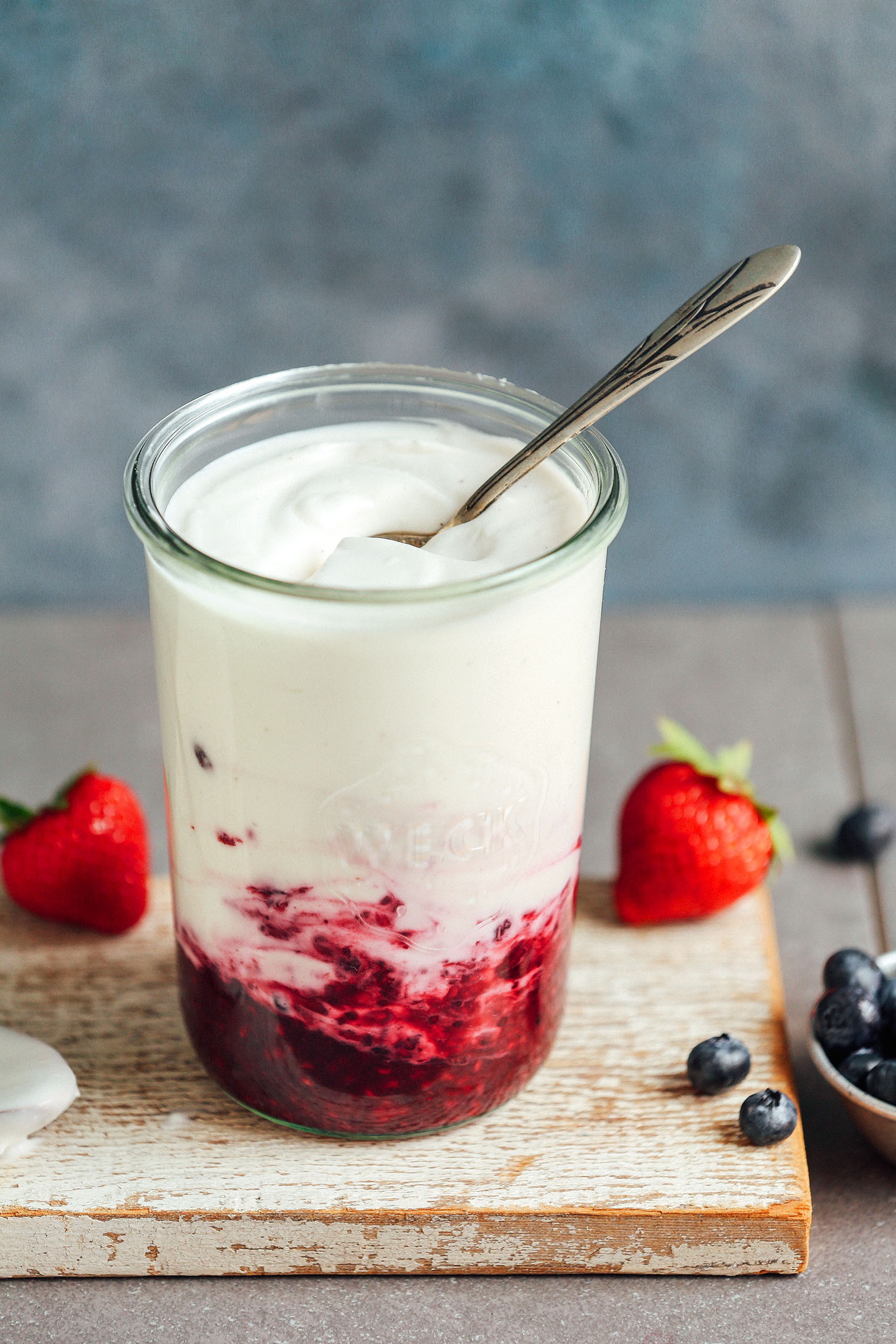
- Fruit compote: Swirl in berries, mango, or apple for natural sweetness.
- Granola parfaits: Layer yogurt with granola and nuts for a hearty breakfast.
- Savory dips: Mix with garlic, herbs, and lemon for a dairy free tzatziki or ranch.
- Smoothies: Blend with fruit and greens for a probiotic boost.
- Desserts: Use as a base for dairy free cheesecake or frozen yogurt.
Credit: minimalistbaker.com
Common Mistakes To Avoid
- Skipping the heating step: Even if not required, heating the milk usually leads to better texture.
- Not checking temperature: If your yogurt maker is too hot or cool, the cultures won’t grow well.
- Using flavored or sweetened starter: Always use plain, unsweetened yogurt or starter cultures.
- Rushing fermentation: Give your yogurt enough time to develop flavor and consistency.
- Not experimenting: Every kitchen and milk type is different. Small changes make a big difference.
Frequently Asked Questions
How Long Does Homemade Dairy Free Yogurt Last?
Homemade dairy free yogurt usually stays fresh in the fridge for 5 to 7 days. Always store it in a sealed container and use clean utensils to avoid contamination.
Can I Use Probiotic Capsules As A Starter?
Yes, you can open a probiotic capsule and stir it into your milk as a starter. Make sure your probiotics contain Lactobacillus bulgaricus and Streptococcus thermophilus for best results.
Why Is My Yogurt Not Thickening?
The most common reasons are not enough thickener, low-protein milk, or weak starter cultures. Try a different thickener or use soy milk for better results.
Can I Make Yogurt With Homemade Nut Milk?
Yes, but homemade nut milks may be thinner than store-bought versions. You’ll likely need to add more thickener and experiment with ratios.
Is Dairy Free Yogurt As Healthy As Dairy Yogurt?
Dairy free yogurt can be just as healthy, especially if made with live cultures and quality ingredients. Check your plant-based milk for calcium and vitamin D if these nutrients are important to you.
Making your own dairy free yogurt is both simple and rewarding. With the right ingredients, a reliable yogurt maker, and a bit of patience, you can enjoy delicious, customizable yogurt that fits your dietary needs. Whether you’re after a thick, Greek-style treat or a light breakfast base, homemade dairy free yogurt is worth trying.

Credit: godairyfree.org