If you’ve ever stood in front of your air fryer holding a glass baking dish and wondered whether it will survive the next 20 minutes, you’re not alone. The short answer is yes — but only with the right glassware, placed in the basket the right way.
Regular drinking glasses, mason jars, and many thin glass dishes are not safe in an air fryer. Put the wrong glass in, and you can end up with shattered glass in your food, a scratched basket, and a very stressful cleanup. This guide covers exactly which glassware works, which types you should never use, and how to cook with glass safely. You can also read our guide on why does my air fryer smoke.
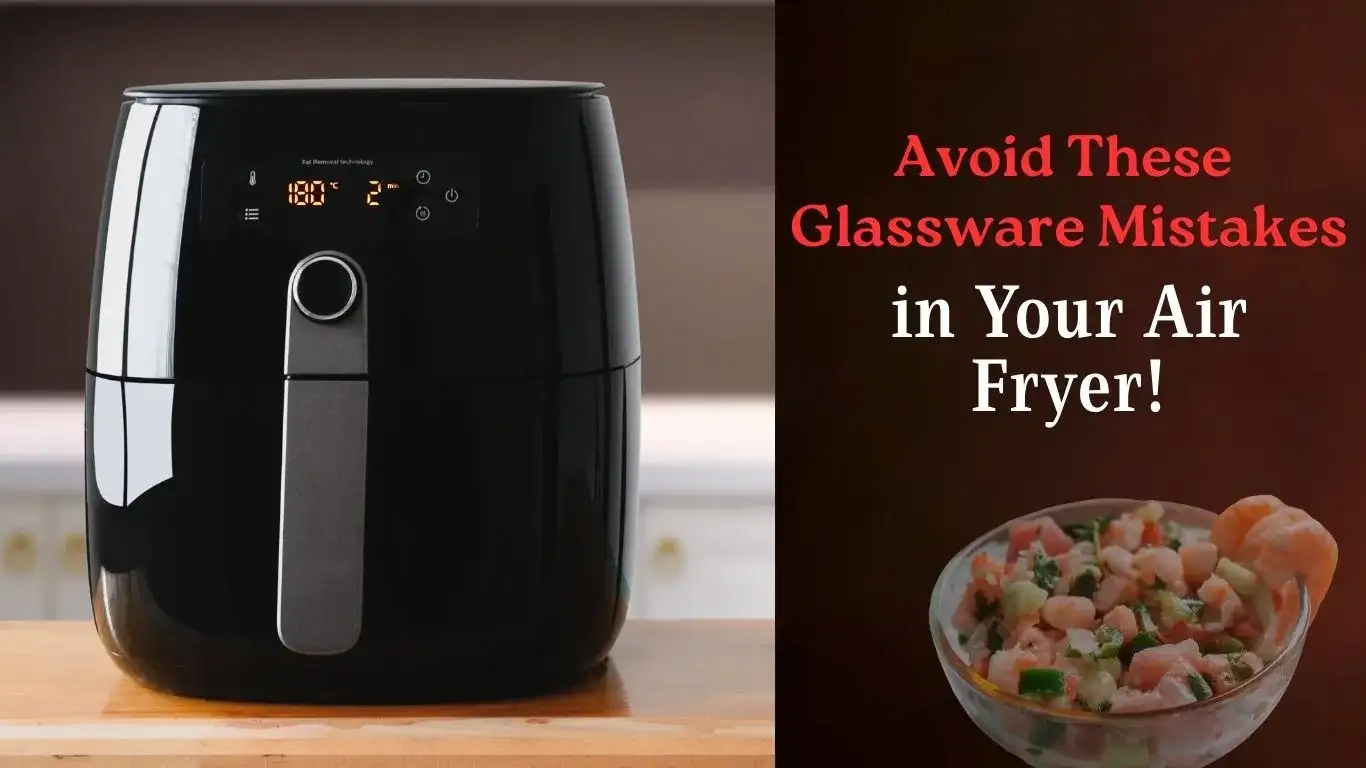
A typical air fryer basket with an oven-safe glass dish inside
How an Air Fryer Treats Glass Differently From an Oven
An air fryer is not a mini oven. It is more like a countertop convection oven on fast-forward. A heating coil at the top warms the air, and a strong fan pushes that hot air around the food at high speed. This rapid circulation is what gives food a crispy exterior without deep frying.
That speed is also what makes glass risky. In a regular oven, glass heats up gradually because the air moves slowly. In an air fryer, glass can be blasted with hot air within seconds. If one part of the dish expands faster than the rest, the glass can crack or shatter. You can also read our guide on common mistakes to avoid when using an air fryer.
Most air fryer baskets are made of metal, often with a non-stick coating. These materials handle fast temperature changes much better than glass. Glass is a poor conductor of heat, which means it absorbs heat unevenly and holds stress longer.
6 Shocking Risks of Using Glassware in an Air Fryer
Glass can work in an air fryer, but it can also go badly. These are the six risks I watch for before putting any glass dish into a basket.
1. Thermal Shock Shattering
Thermal shock is the number one reason glass breaks in an air fryer. Glass expands when it heats, and contracts when it cools. When a cold dish from the fridge meets a preheated 400°F blast of air, the sudden temperature difference creates internal stress. The result can be a loud crack or a full shatter.
A common mistake is placing a cold Pyrex dish into a hot air fryer basket. Even oven-safe glass can break under that kind of rapid temperature swing.
2. Glass Shards in Food
If glass breaks while cooking, tiny fragments can land directly in your food. Some shards are nearly invisible. Removing all of them is difficult, and eating them is dangerous. This is not a risk worth taking with unmarked or thin glassware.
3. Hidden Cracks After Repeated Use
A glass dish may survive one cook cycle and fail on the sixth. I have seen dishes come out perfectly the first time, then develop a hairline crack the next day. That crack is the glass telling you it is done. Never use a dish with chips, cracks, or cloudy stress marks in an air fryer.
4. Scratches in the Air Fryer Basket
Glass is hard. When a dish shifts inside the basket, it can scrape the non-stick coating. Once that coating is scratched, food starts sticking, and the basket becomes much harder to clean. Over time, the damaged coating can also flake into your food.
5. Uneven Cooking and Blocked Airflow
Glass blocks airflow. If a wide glass dish takes up most of the basket, the hot air cannot reach the food underneath or around the sides. Your food may cook unevenly, and you may be tempted to crank the temperature higher to compensate. That extra heat puts even more stress on the glass.
6. Smoke, Fire, or Electrical Damage
When glass breaks during a cook, juices and oil can spill onto the heating element. That can produce smoke, burning smells, and in rare cases, flames. It can also damage the air fryer’s internal components. A glass failure is not just a mess — it can ruin the appliance itself.
| Risk | Why It Happens | How to Avoid It |
|---|---|---|
| Shattering | Sudden temperature changes | Only use oven-safe glass, heated gradually |
| Shards in food | Glass breaks during cooking | Never use chipped or unmarked glass |
| Hidden cracks | Repeated heat stress weakens glass | Inspect before every use and discard at first sign of damage |
| Basket scratches | Glass rubs against non-stick coating | Use a silicone mat or smaller dish |
| Uneven cooking | Glass blocks air circulation | Leave at least 1 inch of space around all sides |
| Smoke or fire | Spilled liquids hit the heating element | Cook food with a little moisture and never run the fryer empty |
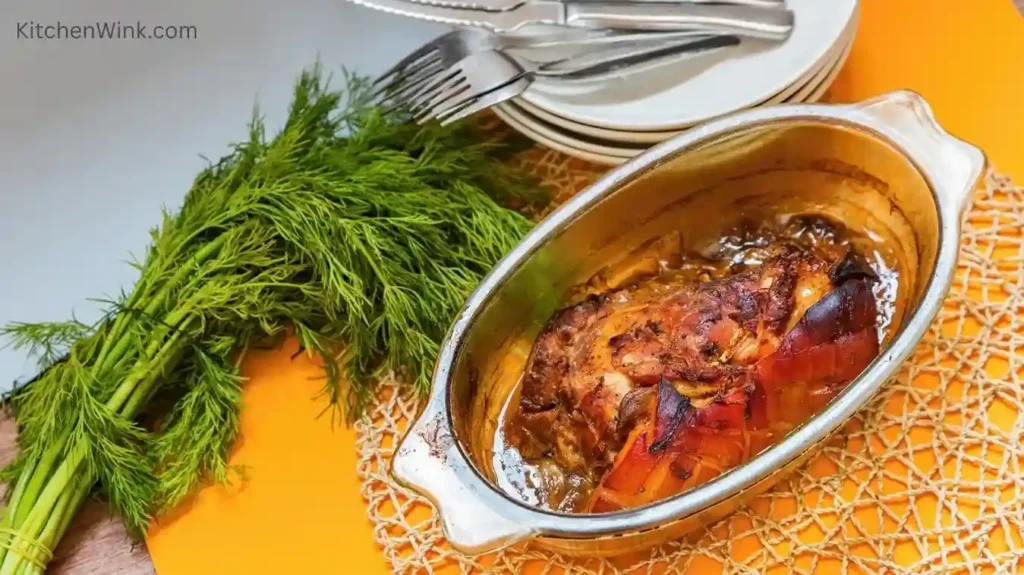
A glass baking dish needs enough clearance around the sides for hot air to circulate
What Kinds of Glass Can You Put in an Air Fryer?
Not all glass is the same. The glassware in your cabinet falls into different categories, and only some of them are safe for high-heat cooking.
Safe: Tempered and Borosilicate Glass
Tempered glass is heat-treated to handle high temperatures and sudden changes better than ordinary glass. Most modern oven-safe glass bakeware is tempered.
Borosilicate glass is even better. It contains materials that reduce thermal expansion, so it resists cracking under temperature swings. This is the type of glass commonly sold under European Pyrex and brands like Simax.
If a dish says “oven-safe” and has a temperature rating above your air fryer’s maximum heat, it is generally safe to use in an air fryer.
Not Safe: Regular Glass, Jars, and Glass Lids
Regular drinking glasses, dessert glasses, and thin glass plates are not heat-treated. Even at a moderate temperature, they can crack.
Mason jars are designed for water-bath canning, not dry oven heat. They can become brittle and shatter in an air fryer. Glass lids are also risky because they are usually thin and not rated for direct high heat.
| Glass Type | Typical Heat Rating | Air Fryer Verdict |
|---|---|---|
| Tempered soda-lime glass (many US Pyrex dishes) | Up to 425°F (218°C) | Safe if the air fryer is not preheated with the dish inside |
| Borosilicate glass (European Pyrex, Simax) | Often 450–500°F (232–260°C) | Best choice for glass in an air fryer |
| Oven-safe glass bakeware with temperature marking | 350–450°F | Safe only if the rating is higher than your air fryer’s max |
| Regular glass drinking glasses | No heat rating | Never use |
| Mason jars | No oven rating | Never use |
| Glass lids | No oven rating | Never use |
Oven-safe glass bakeware works well for bakes like french toast casserole. A wide, shallow dish lets the hot air reach the food on top and gives you a crisp, golden finish.
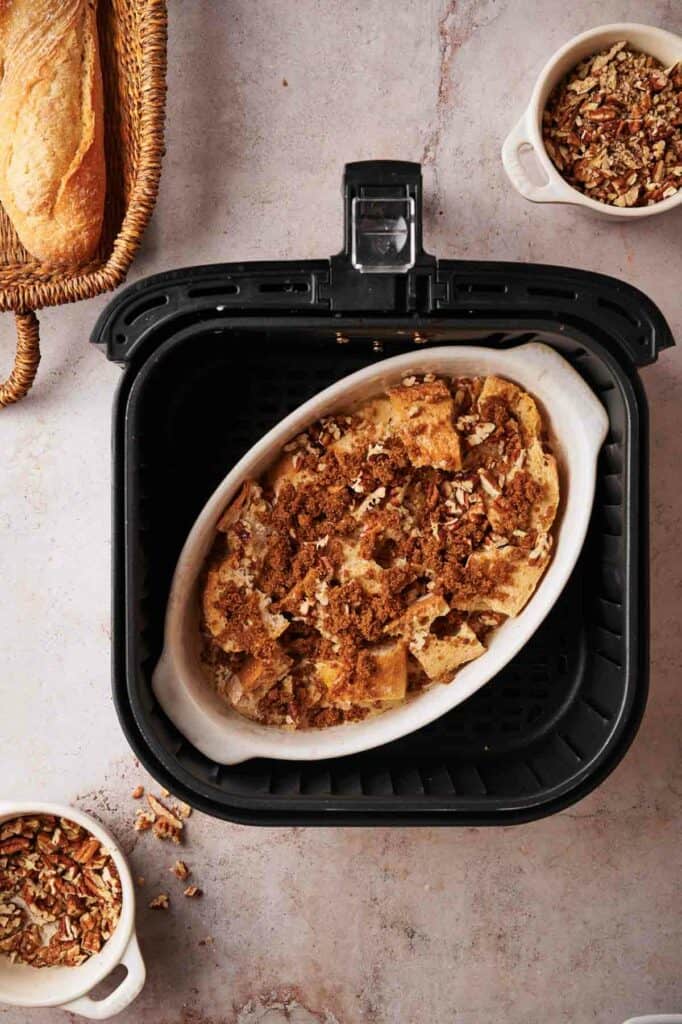
French toast baked in an oven-safe glass casserole dish
Image source: www.splashoftaste.com
How to Check If a Glass Dish Is Air Fryer Safe
Before you put any glass in an air fryer, run through this quick checklist.
- Look for the words “oven-safe” on the bottom of the dish.
- Check for a temperature rating. Most air fryers reach 400°F, so the glass should be rated to at least 425°F.
- Look for a symbol that looks like a small oven with wavy heat lines.
- If the label only says “microwave-safe,” do not use it in an air fryer.
- If the marking is worn off, check the manufacturer’s website using the brand name and model number.
- Inspect the glass for chips, cracks, bubbles, or tiny scratches. If you see any, throw it out or use it only in the microwave.
In 2026, there is still no universal “air fryer-safe” label on regular glassware. The oven-safe mark is the closest thing you have to a reliable indicator.
How to Safely Air Fry with Glass Step by Step
Using glass in an air fryer is not just about picking the right dish. How you handle the cook cycle matters just as much.
Step 1: Let the Glass Come to Room Temperature
Do not move a glass dish from the fridge or freezer directly into an air fryer. Let it sit on the counter for 15 to 20 minutes first. The closer the glass temperature is to the air fryer temperature, the lower the risk of thermal shock.
Step 2: Place the Dish in a Cold Basket
Do not preheat the air fryer first. Put the glass dish into the cold basket, then set the temperature and start the cook. This lets the glass heat up gradually as the air fryer warms.
Step 3: Leave Room for Airflow
The glass dish should not touch the sides of the basket. Leave at least 1 inch of space on every side. If the dish is too large, choose a smaller one.
Step 4: Keep the Temperature Below the Glass Rating
If your glass is rated to 425°F, keep the air fryer at 400°F or lower. If it is rated to 400°F, keep the air fryer at 375°F. Giving yourself a safety margin reduces stress on the glass.
Step 5: Do Not Run the Air Fryer Empty
Glass can overheat when there is no food to absorb some of the heat. Always cook something in the dish. A moist ingredient like a casserole, egg bake, or leftovers is ideal.
Step 6: Remove the Dish with Dry Oven Mitts
Wet mitts transfer steam and can cause sudden cooling. Use dry oven mitts, and place the hot glass on a dry wooden cutting board or wire rack. Avoid setting it directly on a cold countertop.
Step 7: Let It Cool Before Washing
Never plunge a hot glass dish into cold water. That is practically guaranteed to cause thermal shock. Let the dish cool completely, then wash it gently.
Better Alternatives to Glassware for Air Frying
If you want to remove the risk entirely, choose materials that are more forgiving than glass.
Silicone Molds and Bakeware
Silicone is flexible, non-stick, and can usually handle temperatures up to 450°F. It bounces instead of breaking. It is great for egg bites, muffins, and small bakes. If you use silicone, it helps to know whether silicone pans need greasing before pouring in batter.
Metal Pans
Aluminum and stainless steel heat quickly and crisp food better than glass. Use small metal pans without plastic handles. A sturdy metal spatula helps you lift food out without scratching the pan.
Ceramic Dishes
Oven-safe ceramic and stoneware heat evenly and look presentable at the table. They can crack too, so check for oven-safe markings. Many newer air fryer inserts are ceramic-coated, and they are a good compromise between glass and metal.
| Material | Why It Works | Watch Out For |
|---|---|---|
| Silicone | Flexible, non-stick, heat-resistant | Needs a rigid pan under it for stability |
| Metal | Heats fast, gives crispy results | Avoid plastic handles and non-stick coatings that scratch |
| Ceramic | Even heat, attractive for serving | Can chip or crack if dropped or heated too fast |
If you bake muffins often, choosing cleaner bakeware materials that are free of PFAS is a safer long-term investment than relying on glass. You can also use these makeshift baking cups when you do not want to use a pan at all.
One way to build confidence inair frying without glass is to start with silicone molds. They are flexible, nearly impossible to shatter, and release food cleanly. I use silicone cups for egg bites and muffin-style snacks almost every week. If your silicone pan is new, it is worth checking whether it needs a light spray before the first batch.
For recipes that normally call for a glass casserole dish, swap in a small ceramic or metal pan instead. Metal gives the crispiest edges and conducts heat quickly. Ceramic is gentler and more attractive for serving. A small ceramic dish is also the best vessel for baked camembert — it heats evenly and goes straight to the table.
Whichever material you choose, food safety still comes down to temperature. The USDA's Food Safety and Inspection Service recommends cooking egg dishes to a safe internal temperature of 160°F. Use a probe thermometer rather than guessing by look.
How to Clean and Maintain Glassware for Air Fryer Use
If you do decide to cook with glass, the way you handle it after cooking matters as much as the cook itself.
Let the glass cool completely before you even think about washing it. Placing a hot dish under cold water is one of the fastest ways to crack glass. Wait until it reaches room temperature, then wash with warm, soapy water and a soft sponge. Harsh abrasive scrubbers leave microscopic scratches, and every scratch is a weak point the next time the glass heats up.
Dry the glass with a soft towel and store it so it is not stacked under heavy metal pans. Inspect your glassware before every air fryer use. A dish with a chip, a hairline crack, or any visible flaw should stop being used in the air fryer immediately.
Check the temperature rating again. If your air fryer's highest setting is 400°F and your dish is only rated to 425°F, you have almost no margin for error. Aim for glass rated to at least 450°F so you are never running it right at its limit.
Keep Your Kitchen Air Clean When Air Frying
Glassware is only one part of air fryer safety. Every air fryer releases steam, grease, and cooking odors, and that residue has to go somewhere. Air fryers produce less smoke than stovetop frying, but grease still collects on the basket and inside the fan housing.
Wash the basket after every few uses with warm, soapy water, and clean the heating element area according to your manual's instructions. The filters in your air fryer also trap grease — they deserve the same routine upkeep that you give your kitchen's vent hood. Grease build-up in a range hood reduces airflow and makes the whole kitchen smell stale.
Your kitchen ventilation matters too. Even a perfectly safe air fryer cook can leave the kitchen smelling like fried food if the vent is blocked. If your kitchen ventilation is struggling, steam and smoke will hang around long after the timer goes off. And if you cook in a small space with no outside vent, a recirculating hood with charcoal filters is a worthwhile addition.
Final Thoughts: Can You Put Glassware in an Air Fryer?
Yes, you can put glassware in an air fryer — but only oven-safe, temperature-rated glass, heated gradually and inspected before every use.
The safer approach in 2026 is to reserve glass for the occasional casserole and reach for silicone, ceramic, or metal for everyday cooking. Those materials handle the air fryer's aggressive heat far better, and they remove the shattering risk entirely.
If you must use glass, follow the rules: keep the temperature well below the rated limit, never preheat with an empty glass dish inside, always leave space around the sides for airflow, and retire any dish at the first sign of damage.
An air fryer failure is rarely a small event. A cracked dish can ruin dinner, damage your basket, and create a dangerous cleanup. Pick the right material, respect its limits, and your air fryer will keep turning out crisp, even results for years.
FAQs About Using Glass in an Air Fryer
Can glassware safely go inside an air fryer?
Only heat-resistant, oven-safe glassware rated for temperatures at or above your air fryer's maximum setting. Regular glass — including drinking glasses, mason jars, and thin dessert dishes — is not safe.
What types of glassware are best for air frying?
Tempered glass and borosilicate glass are the best options. Borosilicate glass handles rapid temperature changes better than standard glass, which is why it is widely considered the safest type for air fryers.
Can regular glassware crack in the air fryer?
Yes. Regular glass can crack or shatter from sudden heat changes, especially when a cold dish goes straight into a preheated basket. Even some oven-safe glass can break if it is heated past its rating or already damaged.
How do I check if glassware is air fryer safe?
Look for an "oven-safe" label, a temperature rating, or a small oven symbol on the bottom of the dish. If the marking has worn off, check the manufacturer's official care instructions online — many brands such as Pyrex publish their heat ratings directly.
Does glassware affect cooking time in an air fryer?
Yes. Glass conducts heat more slowly than metal, so food often needs a few extra minutes. Use a probe thermometer to check for doneness instead of relying on the timer.
Can glassware cause damage to the air fryer basket?
Glassware itself will not damage the basket, but sliding or dropping a heavy dish can scratch the non-stick coating, and a shattered dish can clog the fan or damage the heating element. Place a silicone mat or small rack between the glass and the basket to reduce the risk.