Can you put Tupperware in an air fryer? No — not the plastic food-storage containers most people mean when they say "Tupperware." Air fryers cook with very hot, rapidly circulating air, and that combination is far harder on plastic than a microwave. Before you use a leftover container as a cooking vessel, here are the seven risky truths, the difference between microwave-safe and air fryer-safe, and the cookware that actually works.
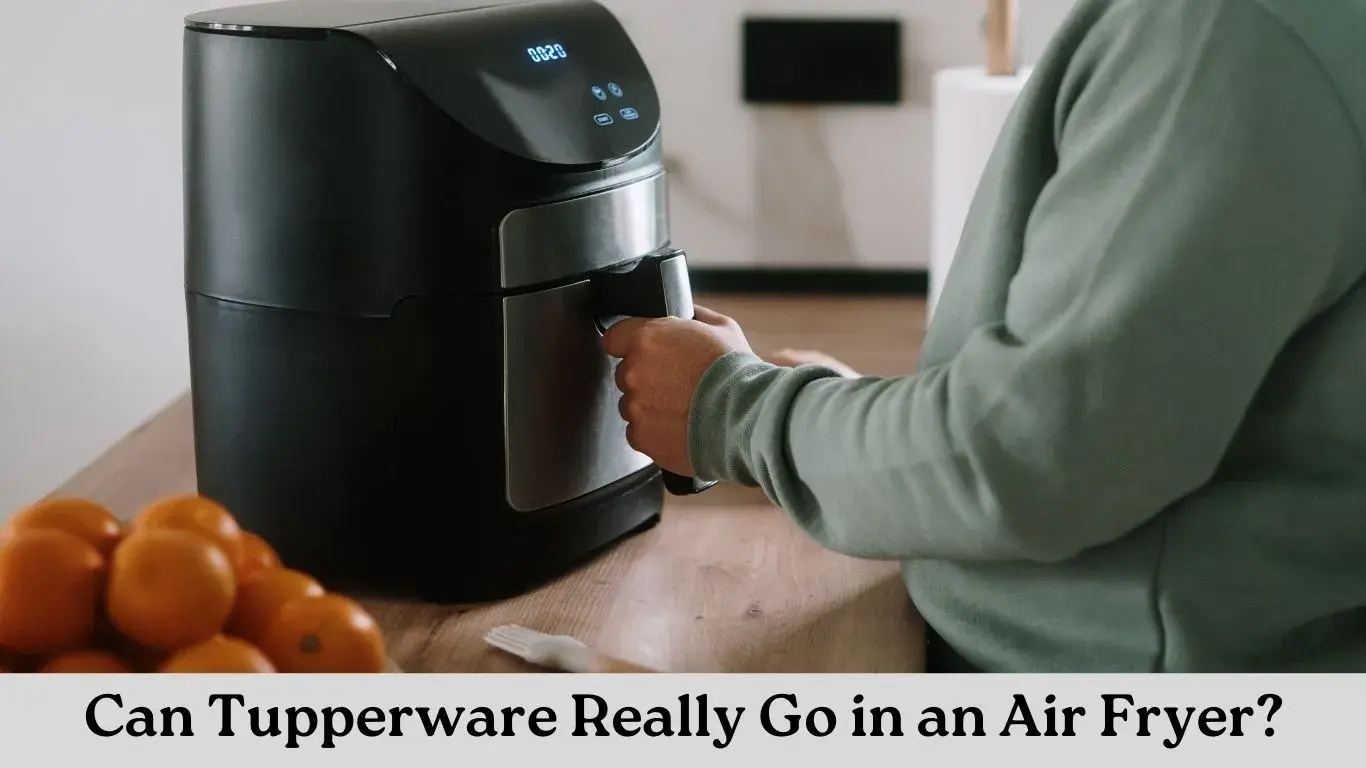 Plastic storage containers are built for the fridge, not for the inside of an air fryer.
Why Air Fryers and Plastic Storage Containers Don't Mix
Air fryers are basically small convection ovens. Most models run between 200°F and 400°F (93°C to 204°C), and the fan pushes heat directly onto both your food and whatever container holds it. Tupperware-style containers are designed for storing leftovers in the fridge or freezer, and "microwave-safe" doesn't mean "oven-safe." Many food-storage plastics, including polypropylene, begin to soften well below an air fryer's maximum temperature. You can also read our guide on can pyrex go in the air fryer.
In practice, the first sign of trouble is usually a faint plastic smell, not a dramatic melt. By the time you smell it, the plastic has already been exposed to enough heat to weaken it. The base may sag, the lid may warp, and the plastic can stick to the basket.
The 7 Risky Truths
1. Air Fryers Get Hot Enough to Soften and Warp Plastic
Most air fryers hit temperatures near 400°F. Many common storage plastics soften and warp well before that point. The result isn't always an obvious puddle of melted plastic — sometimes the container just loses its shape, the lid no longer seals, or the base leans to one side. You can also read our guide on why does my air fryer smoke.
2. "Microwave-Safe" Is Not the Same as "Air Fryer-Safe"
Microwave-safe means a container can handle microwave energy and the heat of reheating food, which usually stays around the boiling point of water. An air fryer surrounds the container with dry 350–400°F air. That's a much more demanding heat test, and many microwave-safe containers fail it.
3. Plastic Can Leach Into Hot Food
High heat can cause additives in plastics to migrate into food, especially fatty or acidic dishes. Regulators approve food-contact plastics only for their intended conditions of use, and ordinary storage containers aren't intended for air frying. The FDA's food-contact standards exist for a reason: a container that's safe for cold leftovers isn't automatically safe for 400°F cooking.
4. Melted Plastic Is Hard to Clean Out of an Air Fryer
Melted plastic doesn't stay in one spot. It spreads, cools, and bonds to the basket, the tray, and sometimes the heating element. Once that happens, the smell can linger, and the plastic is very difficult to remove without scratching the nonstick coating.
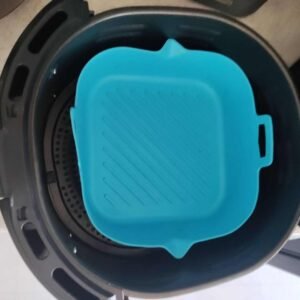 A warped storage container shows why plastic has no place in an air fryer.
5. Plastic Fumes Are a Health and Comfort Issue
Overheated plastic can produce smoke and irritating fumes. If it happens, turn the air fryer off, move it to a well-ventilated area or open a window, and let everything cool completely before touching the basket. Don't eat food that came into direct contact with melted or smoky plastic.
6. Plastic Can Damage the Air Fryer Itself
When melted plastic reaches the heating element, it can create hot spots, reduce airflow, and affect how evenly the fryer cooks. In a worst-case scenario, the plastic can catch fire. That turns a convenient appliance into a safety hazard.
7. It Defeats the Whole Point of Air Frying
Air fryers make food crispy by circulating hot air around it. A plastic container blocks that airflow and can trap steam, leaving food soggy instead of browned. Even if the plastic didn't melt, you'd still get worse results than using a basket, a metal tray, or an oven-safe dish.
Microwave-Safe vs. Air Fryer-Safe: The Difference
| Microwave | Air Fryer | |
|---|---|---|
| How it heats | Excites water molecules in food | Blows hot, dry air over food |
| Typical heat around food | Roughly 212°F (100°C) | 200–400°F (93–204°C) |
| Plastic risk | Moderate if labeled safe | High: warping, melting, chemical release |
| Best container types | Microwave-safe plastic, glass, ceramic | Oven-safe glass, ceramic, silicone, metal |
Don't assume a container is safe just because it's been through the microwave a hundred times. A storage dish that handles leftovers perfectly can still fail in an air fryer because the heat is higher and dry.
Which Plastics Are Actually Safe in an Air Fryer?
The honest answer for Tupperware-style containers is none. "BPA-free" is not a heat rating. Some air fryer accessories are made from high-temperature materials such as silicone or heat-resistant nylon, and those may be explicitly labeled "air fryer safe." If a container doesn't have a temperature rating and an "oven-safe" or "air fryer-safe" label, treat it as unsafe.
Safe Containers to Use Instead
| Material | What to Look For | Best Used For | Watch Out For |
|---|---|---|---|
| Oven-safe glass | Labeled oven-safe, no plastic lid | Casseroles, roasted sides | Cold glass going into a hot basket can shatter |
| Ceramic / stoneware | Oven-safe, undamaged glaze | Small bakes, egg dishes | Chipped or cracked pieces may fail under heat |
| Food-grade silicone | Heat-rated to at least 450°F | Muffins, egg bites, small loaves | Soft sides can flop, so place it on a flat tray in the basket |
| Stainless steel | Plain metal, no plastic handles | Meat, vegetables, crisping | Metal gets hot quickly; use mitts when removing |
Oven-safe glass and ceramic are reliable choices because they distribute heat evenly and won't release chemicals. If you use silicone, remember it's flexible — a sturdy base or a tray underneath can keep it stable. And a single small ceramic dish can handle sides, baked eggs, and even a melted cheese appetizer in the air fryer.
For small-batch baking, safer small bakeware beats flimsy plastic containers every time. With silicone molds specifically, how much prep silicone bakeware requires depends on the recipe, but the material itself handles air fryer heat without melting.
Pro Tips for Safe Air Fryer Cooking
Give the Air Room to Move
Leave at least an inch of clearance around any dish you put in the basket. Overcrowding reduces airflow and turns crisp food into steamed food.
Use a Heat-Safe Turning Tool
Wooden spoons can't reach the corners of a deep basket, and plastic utensils can soften. A heat-safe turning tool makes it easier to flip food without leaving melted marks or scratching the coating.
Don't Preheat an Empty Glass Dish
Oven-safe glass can crack from sudden temperature change. Let it warm up with the air fryer instead of placing cold glass into a fully preheated basket.
Clean Up While the Basket Is Warm
The easiest way to protect your air fryer is to clean the basket after every use with warm soapy water and a non-abrasive sponge. If the same kind of spilled-food mess happens in your regular oven, keeping the oven floor protected is a good habit for easier maintenance.
Air Fryer and Tupperware FAQs
Can I put Tupperware in an air fryer?
No. Standard plastic Tupperware should not go in an air fryer. The heat can warp or melt it, and the plastic can release chemicals into your food.
What containers can you put in an air fryer?
Use heat-resistant options like oven-safe glass, ceramic, food-grade silicone, and stainless steel. Avoid regular glass, plastic containers, cardboard, and paper products unless they are specifically labeled for air fryer use.
What should I do if I accidentally put plastic in an air fryer?
Turn it off immediately and let it cool completely. Ventilate the kitchen, remove the container with mitts, and throw away the food. Check the basket for melted plastic and clean it carefully. If plastic reached the heating element, contact the manufacturer before using the fryer again.
Are Tupperware lids safe if the tub is not?
No. Lids are often thinner and less heat-tolerant than the container body, so they can warp or melt even faster.
Is BPA-free plastic safe in an air fryer?
Not necessarily. BPA-free only means the container is made without BPA. It doesn't mean the plastic can withstand 400°F dry heat.
Final Verdict: Can You Put Tupperware in an Air Fryer?
No. Regular Tupperware and other plastic food-storage containers do not belong in an air fryer. The heat is too high, the airflow is too dry, and the risks include ruined food, chemical migration, appliance damage, and even smoke or fire.
Stick with oven-safe glass, ceramic, food-grade silicone, or stainless steel. Check for clear temperature labels, leave room around your dish, and clean the basket after every cook. When in doubt, cook directly in the basket or use a container you'd trust in a 425°F oven.
For more practical kitchen guidance, explore our latest kitchen guides and make your cookware setup safer from the start.