Skip to content
Using Regular Flour in a Bread Machine: What You Need to Know
Many people enjoy baking fresh bread at home, and bread machines make this process much easier. However, a common question comes up: Can you use regular flour in a bread machine? Some recipes call for special bread flour, while others mention all-purpose flour or simply “regular flour.” If you have a bag of regular flour in your kitchen, you might wonder if it’s suitable for your machine or if you need to buy something different. Let’s explore how regular flour works in bread machines, when it’s a good choice, and what results you can expect.
Understanding Flour Types
Before deciding which flour to use, it helps to know the differences between regular flour and bread flour.
What Is Regular Flour?
Most people use the term regular flour to mean all-purpose flour. This is the most common flour in American kitchens. It’s made from a mix of hard and soft wheat and has a moderate protein content—usually between 9% and 11%. All-purpose flour works well for cakes, cookies, pancakes, and some breads.
What Makes Bread Flour Special?
Bread flour is made mainly from hard wheat and has a higher protein content, typically around 12% to 14%. That extra protein forms more gluten when mixed and kneaded, helping bread rise higher and giving it a chewy texture.
Protein Content Comparison
Here’s how the main flour types compare:
| Flour Type | Protein Content (%) | Common Uses |
|---|---|---|
| All-purpose (Regular) Flour | 9–11 | Cakes, cookies, pancakes, some breads |
| Bread Flour | 12–14 | Yeast breads, pizza dough |
| Cake Flour | 7–8 | Cakes, pastries |
| Whole Wheat Flour | 13–15 | Whole wheat breads |
Can You Use Regular Flour In A Bread Machine?
The short answer is yes—regular flour can be used in most bread machines. However, your results may not always be the same as when using bread flour. Here’s what happens:
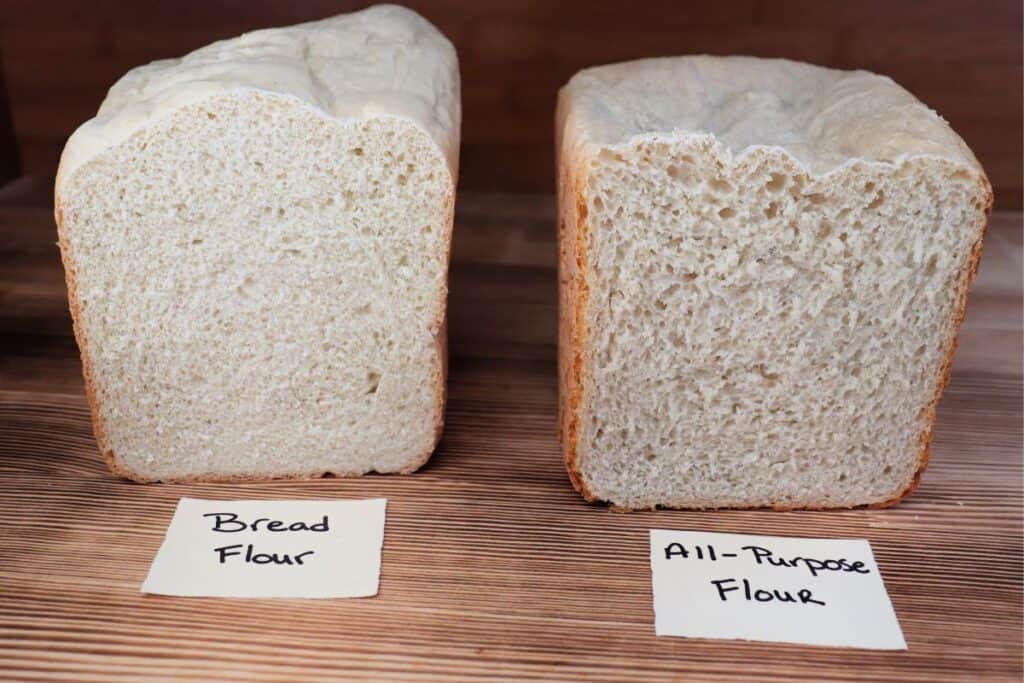
- All-purpose flour will still rise and bake into bread, but the loaf may be less tall and more dense.
- The crust may be softer instead of chewy.
- The texture can be slightly crumbly.
These differences are not always bad. Some people prefer softer bread or denser loaves for sandwiches. For many simple recipes, using regular flour is perfectly fine.
Bread Machine Recipes: Regular Flour Vs. Bread Flour
Many bread machine recipes are designed for bread flour, but you can often substitute regular flour without major issues. Let’s look at a basic bread machine recipe using each flour:
| Ingredient | Bread Flour (grams) | All-purpose Flour (grams) |
|---|---|---|
| Flour | 350 | 350 |
| Water | 240 | 240 |
| Sugar | 25 | 25 |
| Salt | 6 | 6 |
| Butter | 15 | 15 |
| Yeast | 7 | 7 |
When substituting all-purpose flour for bread flour, use the same amount. Sometimes, you may need to add a little more yeast or reduce water slightly if your bread doesn’t rise as much.
Why Bread Flour Is Recommended
Bread machines knead dough quickly and efficiently. Bread flour works best because its higher protein forms strong gluten, helping the dough hold air bubbles and rise higher. This makes for a lighter, taller loaf. If you use regular flour, the dough may not trap air as well, so your bread can be flatter.
Gluten Strength Comparison
Here’s a comparison of gluten strength in typical bread recipes:
| Flour Type | Gluten Formation | Bread Height (Typical) |
|---|---|---|
| Bread Flour | Strong | High (fluffy) |
| All-purpose Flour | Moderate | Medium (denser) |
Advantages Of Using Regular Flour
There are several reasons to use regular flour in your bread machine:
- Convenience – All-purpose flour is easy to find and cheaper than bread flour.
- Versatility – You can use it in many recipes beyond bread.
- Softer Texture – Some people prefer the softer, less chewy bread made with all-purpose flour.
- Less Chewy Crust – If you dislike chewy crusts, regular flour may suit your taste.
Potential Drawbacks
While regular flour works, there are some downsides to consider:
- Less rise – Your bread may not rise as much.
- Denser crumb – The inside of the bread can be heavier.
- Shorter shelf life – The loaf may dry out faster.
- Less flavor – Bread flour sometimes gives a richer, nutty flavor.
Tips For Using Regular Flour Successfully
If you want good results with regular flour, follow these practical tips:
- Use fresh flour – Old flour can lose its strength and freshness.
- Try adding vital wheat gluten – Mix 1 tablespoon per cup of regular flour to boost gluten and mimic bread flour.
- Monitor dough texture – If dough feels too sticky or dry, adjust water or flour by a tablespoon at a time.
- Let dough rest – Allowing dough to rest before baking can improve gluten development.
- Use the right cycle – Choose a basic or white bread setting for best results.
Example: Improving Results With Vital Wheat Gluten
If you want a taller loaf, add vital wheat gluten to your regular flour. For each cup of flour (about 120 grams), add 1 tablespoon (about 8 grams) of gluten. This increases protein and helps the bread rise better.
Common Mistakes When Using Regular Flour
Beginners often make these mistakes when baking with regular flour:
- Ignoring protein content – Not all all-purpose flour brands have the same protein. Low-protein flour leads to weak dough.
- Using too much liquid – Regular flour absorbs less water than bread flour. If your dough is too wet, the bread can be gummy.
- Not measuring accurately – Small changes in flour or water can make a big difference.
- Skipping salt – Salt helps strengthen gluten and control yeast activity. Don’t leave it out.
How To Choose The Right Flour For Your Bread Machine
When picking flour, check the protein content on the package. If you want light, fluffy bread, use bread flour or boost regular flour with gluten. For softer bread, regular flour is fine.
- Look for all-purpose flour with 10–11% protein for best results.
- Avoid self-rising flour – It contains baking powder and salt, which can ruin bread machine recipes.
- Whole wheat flour works but produces denser bread. Mix with regular flour for lighter results.
Special Cases: Gluten-free And Other Flours
Some bread machines allow you to use gluten-free flours. These do not behave the same as regular or bread flour.
- Rice, oat, or potato flour need special recipes and added binders like xanthan gum.
- Gluten-free bread may be flatter and more crumbly.
If you want to try gluten-free bread in your machine, use recipes designed for your flour type.
Practical Example: Using Regular Flour In A Bread Machine
Let’s walk through a simple recipe using all-purpose flour in your bread machine.
Ingredients:
- 3 cups all-purpose flour (360 grams)
- 1 cup warm water (240 ml)
- 2 tablespoons sugar (25 grams)
- 1 teaspoon salt (6 grams)
- 2 tablespoons butter (28 grams)
- 2 teaspoons active dry yeast (7 grams)
Instructions:
- Add water and butter to the bread machine pan.
- Add flour, sugar, and salt.
- Make a small well in the flour, add yeast.
- Set the bread machine to the basic/white bread cycle.
- Start and let the machine mix, knead, and bake.
- When finished, remove bread and cool before slicing.
Estimated time: 3 hours
Serving size: 8–10 slices
If you want a lighter loaf, add 1 tablespoon vital wheat gluten with the flour.
Non-obvious Insights Beginners Miss
Most beginners don’t realize:
- Flour brand matters – Different brands of all-purpose flour have different protein levels. King Arthur’s all-purpose flour, for example, has higher protein than most store brands.
- Humidity affects dough – On humid days, flour can absorb more moisture, changing dough consistency. You may need to adjust water.

Credit: www.cravethegood.com
Real Data: Bread Flour Vs. Regular Flour Loaf Height
A study by the Home Baking Association found that bread made with bread flour rises about 15% higher than bread made with all-purpose flour. If your bread machine produces loaves 5 inches tall with bread flour, expect about 4. 2 inches with regular flour.
Expert Advice: When Regular Flour Is Good Enough
If you’re making bread for everyday use, sandwiches, or toast, regular flour works well. For special occasions or recipes needing a light, airy loaf—like French bread or sourdough—choose bread flour or boost all-purpose flour with gluten.
Credit: kneadygirl.com
Frequently Asked Questions
Can I Use Regular Flour For All Bread Machine Recipes?
Yes, you can use regular flour (all-purpose) for most recipes, but the bread may be denser and less tall. Adjust water and yeast if needed.
Do I Need To Add Gluten To Regular Flour?
Adding vital wheat gluten improves results but is not required. If you want a taller loaf, add 1 tablespoon per cup of regular flour.
Will Regular Flour Change The Taste Of Bread?
The taste difference is small. Bread flour can give a slightly richer flavor, but regular flour is mild and works for most bread machine recipes.
Can I Mix Regular Flour With Bread Flour?
Yes, mixing both flours can balance texture and flavor. Try half bread flour and half all-purpose flour for a good result.
What If My Bread Is Too Dense With Regular Flour?
If your bread is too dense, try adding more yeast, use vital wheat gluten, or reduce water slightly. Also, check your flour’s protein content.
For deeper information on flour types and baking science, visit King Arthur Baking.
Final Thoughts
You can confidently use regular flour in your bread machine for most recipes. While your bread may be a bit denser or less tall than with bread flour, it will still taste good and be easy to slice. If you want to improve your results, try adding vital wheat gluten or mix regular flour with bread flour.
By understanding flour types, checking protein content, and watching your dough’s texture, you can bake delicious bread at home without special ingredients. Experiment, adjust, and enjoy the process—fresh bread is always worth it.
Credit: breaddad.com