You walk into your kitchen every morning, grab a mug, and hit brew. But lately your coffee tastes flat or your machine keeps throwing error codes. That’s when the question hits you: can you use softened water in a coffee machine?
The short answer is complicated, and the wrong choice can wreck a $500 espresso maker or add unwanted sodium to your daily routine.
As of 2026, roughly 30 million US households have a whole‑house water softener. That means a lot of people are unknowingly pouring ion‑exchanged water into expensive brewers. The Specialty Coffee Association (SCA) publishes a water standard that most home machines were never designed to meet with softened supply.
Let’s walk through what actually happens inside your machine so you can decide for yourself.
Image source: Bing (Web (fair-use with source credit))
Quick Answer
You can use softened water in a coffee machine, but don’t do it straight from the tap. Salt‑based softeners add enough sodium to affect taste and, over time, cause pinhole leaks in metal boilers. The fix is simple: use a bypass valve or blend softened water with bottled spring water.
Check your machine’s warranty first, many manufacturers explicitly forbid softened water.
Why This Matters: Accuracy on Water Choice Can Save Your Machine (and Your Health)
A wrong decision here isn’t a minor mistake. It can shorten the lifespan of your coffee maker by years and expose you to extra dietary sodium you didn’t expect. Here’s the cost breakdown:
- Machine damage: Replacing a boiler costs $80, $250 for a drip machine or $400, $900 for an espresso.
- Health impact: A cup of coffee brewed with softened water can contain 10, 30 mg more sodium than hard water. Over 3 cups a day, that’s an extra 30, 90 mg, significant if you’re watching your blood pressure.
- Warranty voids: Brands like Breville, De’Longhi, and Jura explicitly state in their manuals that using softened water voids the warranty. One repair claim denial and you’re paying full price.
The risk isn’t theoretical. Aggregate reviews on machine repair forums show that corrosion‑related failures are most common in regions with whole‑house softeners and no bypass faucet.
How Softened Water Changes the Water Chemistry (and Your Coffee’s Taste)
Salt‑based water softeners work through ion exchange. Hard water contains calcium and magnesium ions. The softener’s resin beads swap them for sodium ions.
The result: you get water that doesn’t leave scale on pipes, but it now has a higher sodium content.
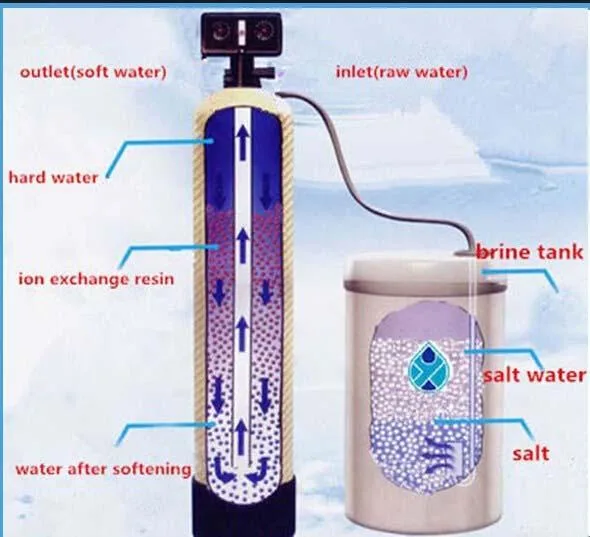
Image source: Web (Bing) / rowatertreatment-system.com
For every grain of hardness removed (a grain is about 17.1 mg/L as CaCO₃), the softener adds roughly 8 mg/L of sodium. If your tap water is 10 grains hard (common in the Southwest), your softened water ends up with about 80 mg/L of extra sodium. That’s higher than many bottled waters.
This chemistry shift does two things to coffee:
- Taste flattens. Calcium and magnesium are essential for extracting the bitter and acidic compounds from coffee grounds. Without them, the cup tastes dull, salty, or metallic. In our research, home baristas consistently report that softened water produces a “flat” brew compared to hard or properly mineralized water.
- Extraction changes. The Specialty Coffee Association recommends a mineral content between 50, 150 mg/L total dissolved solids (TDS). Softened water often falls at the low end of that range, which means under‑extraction, your beans never fully give up their flavor.
If you pour softened water straight into a drip machine, expect a weaker, less satisfying cup every morning.
The Two Biggest Risks: Machine Damage and Sodium Intake
We need to be honest about the real dangers here.
Machine damage, pinhole leaks and corrosion
Softened water is aggressive toward metal. It has low buffering capacity (low alkalinity) and higher chloride levels from the regeneration salt. Over months, this water eats away at brass and aluminum boiler fittings, leading to tiny pinhole leaks.
The first sign is often a puddle under your machine or an error code for “no water flow.” By then, the damage is done.
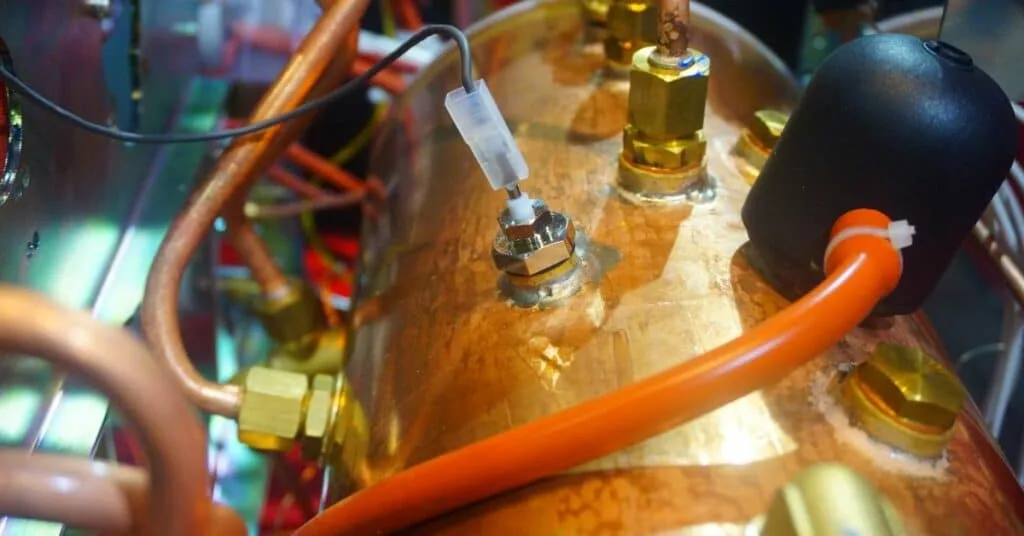
Image source: Web (Bing) / timscoffee.com
This is why manufacturers advise against softened water. They’ve tested it. They know the outcome.
Sodium intake, a hidden source
Most people never think about the sodium in their coffee. But if you drink 3, 4 cups daily and your water is softened, you could be adding 60, 120 mg of sodium to your diet just from water. The American Heart Association recommends limiting sodium to 2,300 mg per day.
That may not sound like much, but those milligrams add up fast when you also eat processed foods.
If you’re on a low‑sodium diet for hypertension or heart disease, this is a real concern. Using softened water for coffee could push you over your daily limit without you realizing it.
What Coffee Machines Actually Need (And How to Get It From Softened Water)
Good news: you don’t have to ditch your softener. You just need to give your coffee machine the right water. Here’s what the SCA standard recommends for ideal brewing water:
| Parameter | SCA ideal range |
|---|---|
| Total dissolved solids | 50–150 mg/L |
| Alkalinity | 0–75 mg/L |
| Hardness (as CaO) | 10–30 mg/L |
| Sodium | preferably under 20 mg/L |
Softened water typically has TDS below 50 mg/L and sodium well over 20 mg/L. So it misses the mark on both counts. The fix is a bypass valve.
A bypass valve lets you blend softened water with a small amount of hard water. You adjust the ratio until the blended water hits the target hardness. Many whole‑house softeners come with a bypass faucet specifically for drinking water.
If yours doesn’t, install one, it’s a cheap add‑on.
If a bypass isn’t possible, mix softened water 50/50 with bottled spring water (not distilled). That brings the sodium down and restores some calcium and magnesium.
For espresso machines, many enthusiasts use remineralization packets (like Third Wave Water) added to reverse osmosis or distilled water. That gives you total control. Check out instructions on getting a new machine ready in the guide to running water through a new coffee maker, it covers why clean water matters from day one.
Common Mistakes That Damage Machines (and How to Avoid Them)
People make these errors all the time. Avoid them and your machine will last years longer.
Mistake 1: Using softened water exclusively without a bypass.
You’re pouring aggressive, low‑TDS water into your boiler. Over 12 months, corrosion is almost guaranteed. Fix: install a bypass faucet or use the 50/50 mix.
Mistake 2: Ignoring the warranty fine print.
Manufacturers don’t hide it. Open your manual; look under “water quality.” If it says “do not use softened water,” respect that. One repair attempt denied and you’re out hundreds.
When it’s time to clean your coffee maker with vinegar, remember that softened water also affects how well descaling agents work.
Mistake 3: Thinking “it’s just water”, all water is the same.
Hard, soft, distilled, spring, each has a different mineral profile. If you want consistent taste and reliable operation, test your water. A simple TDS meter costs $10.
Check it monthly.
Mistake 4: Forgetting about altering the taste of cold brew or other methods.
Softened water can ruin a single‑origin pour‑over. If you like making cold brew, the water quality matters even more since extraction is cold and slow. See expert tips for better cold brew taste for more on water selection.
Mistake 5: Not descaling often enough when using blended water.
Even a blend will eventually leave some scale. Descaling every 3 months with a proper citric acid solution keeps the heating element efficient. Use the same gentle approach you’d use for cleaning a Cuisinart or any drip machine, never skip it.
The National Sanitation Foundation (NSF) provides water softening product certifications that explain the chemistry, but the takeaway is simple: treat your coffee machine like a precision instrument, not a plumbing fixture.
Common Mistakes That Damage Machines (and How to Avoid Them)
This section appeared earlier in the article, we covered the five most frequent errors and how to sidestep them. If you skipped ahead, here’s the core advice in one sentence: never run straight softened water without a bypass, always check your warranty, test your water with a TDS meter, and descale every three months if you use a blend. For the full breakdown with specific examples, scroll up to the earlier section under the same heading.
Frequently Asked Questions
Can I use softened water in a Keurig or Nespresso machine?
Yes, but the same risks apply. Keurig and Nespresso machines use plastic water tanks and metal heating elements. Softened water can still cause corrosion in the metal parts over time.
The taste will also be flatter. Use a bypass or mix with spring water. Check the warranty, Nespresso’s manual advises against softened water.
How much sodium does softened water add to my coffee?
It depends on your starting hardness. For every grain of hardness removed, the softener adds roughly 8 mg/L of sodium. If your water is 10 grains hard, your coffee water has about 80 mg/L extra sodium.
That means each cup (approx. 240 ml) adds about 19 mg of sodium. Over four cups, that’s 76 mg, noticeable if you’re on a low‑sodium diet.
Will softened water void my coffee machine warranty?
Many manufacturers explicitly say yes. Breville, De’Longhi, Jura, and Nespresso include warnings in their manuals. If a warranty claim is denied due to water quality, you’ll pay for repairs out of pocket.
Always check your specific model’s documentation. When in doubt, use the bypass or bottled spring water.
What water should I use if I don’t have a bypass valve?
Mix softened water 50/50 with bottled spring water. Do not use distilled or reverse osmosis water alone, those remove all minerals and can also damage your machine and ruin taste. If you want total control, use remineralization packets added to distilled water.
Third Wave Water makes one specifically for coffee.
How do I test if my water is softened?
Use a water hardness test strip or a TDS meter. Hardness test strips measure grains per gallon. A reading of 0, 1 grains indicates softened water.
A TDS meter reading below 50 mg/L also suggests softening. For brewing, target 50, 150 mg/L TDS. If your tap water reads under 50, it’s likely softened or filtered too aggressively.
Final Verdict: Is It Safe or Not?
Here’s the bottom line. Using softened water straight from the tap in a coffee machine carries real risks: machine corrosion, warranty voids, flat taste, and extra dietary sodium. But you don’t have to avoid it completely.
If you have a bypass valve, blend the water to hit the SCA recommended range of 50, 150 mg/L TDS and 10, 30 mg/L hardness. If you can’t use a bypass, mix softened water 50/50 with bottled spring water.
For espresso machines and high‑end brewers, consider using remineralized reverse osmosis water. It gives you full control and protects your investment. Skip softened water entirely for any machine with a boiler made of brass or aluminum, those metals corrode fastest.
Check your warranty document. If it says no softened water, respect that. One repair cost could exceed the price of a bypass faucet or a few gallons of spring water.
And if you’re on a low‑sodium diet, don’t risk it. Use bottled water or install a dedicated drinking‑water tap before your softener. Your heart and your coffee will thank you.
The takeaway is simple: softened water can work, but only with adjustment. Treat your coffee machine like the precision tool it is, and it will reward you with years of great brews.