Everyday kitchen appliances are becoming smarter and more convenient. One device that is gaining popularity is the hot water dispenser. People use these for instant tea, coffee, soup, or even cooking. But a question often arises: Do hot water dispensers use a lot of electricity? If you’re worried about your energy bills or the environmental impact, this article breaks down the facts in clear, simple language. We’ll look at how these devices work, compare them to other ways of heating water, share real-world data, and offer tips to help you save energy.
How Hot Water Dispensers Work
Hot water dispensers are designed to provide hot water instantly. Most units have a tank that keeps water hot all day, so you don’t have to wait for boiling. This is different from kettles, which heat water only when you need it.
Inside the dispenser, an electric heating element keeps the water at a set temperature (usually between 140°F and 190°F). When you push the lever or button, hot water flows out immediately. Some advanced models allow you to adjust the temperature or set timers.
This convenience comes at a cost: keeping water hot all the time uses electricity. But how much?
How Much Electricity Do Hot Water Dispensers Use?
To understand the energy usage, it helps to look at numbers. Most hot water dispensers in homes range from 450 to 1500 watts. The wattage tells you how much power the device draws when heating.
Let’s break down typical usage:
- If a dispenser uses 1000 watts (1 kW) and runs for 6 hours per day, it uses 6 kWh per day.
- In the US, the average cost per kWh is about $0.16.
- So, 6 kWh × $0.16 = $0.96 per day.
However, most dispensers don’t run at full power the whole time. They heat up, then switch to a maintenance mode to keep the water hot, using less energy.
Real-world Example
Suppose you have a 4-liter dispenser. It takes about 15 minutes to heat up the water. That’s 0.25 hours × 1 kW = 0.25 kWh for initial heating.
To maintain the temperature, it uses about 0.1 kWh per hour. If you leave it on for 8 hours, that’s:
- 0.25 kWh (initial) + (0.1 kWh × 8 hours) = 1.05 kWh per day
Annually: 1.05 kWh × 365 days = 383 kWh per year.
Cost: 383 Kwh × $0.16 = $61.28 Per Year
This is a rough estimate. Actual usage depends on the model, tank size, and how often you dispense water.
:max_bytes(150000):strip_icc()/sea-tier-3-primary-hot-water-dispensers-wdickey-0475-f2ecfe7074374cfa93a4e6f1d79cf052.jpeg)
Credit: www.seriouseats.com
Hot Water Dispensers Vs. Other Methods
Is a hot water dispenser more efficient than a kettle, microwave, or stove? Let’s compare.
| Method | Typical Power | Time to Heat (1 cup) | Energy Used |
|---|---|---|---|
| Hot Water Dispenser | 1000 W | Instant | 0.05 kWh |
| Electric Kettle | 1500 W | 2-3 min | 0.05 kWh |
| Microwave | 1200 W | 2 min | 0.04 kWh |
| Stove | 2000 W | 5 min | 0.17 kWh |
For single cups, the energy use is similar. The main difference is how often and how long the dispenser stays hot.
Continuous Heating Vs. On-demand
- Hot water dispensers keep water hot all day, so they use energy even when you’re not using them.
- Kettles and microwaves heat water only when needed, using energy for a few minutes.
If you need hot water many times a day, a dispenser can be more convenient and efficient. If you only use hot water once or twice, a kettle or microwave uses less energy overall.
Energy Use For Different Sizes And Models
Not all dispensers are the same. The size of the tank and the insulation quality affect energy use.
| Dispenser Size | Heating Power | Maintenance Power | Estimated Daily Use |
|---|---|---|---|
| Small (2 liters) | 700 W | 30 W | 0.7 kWh |
| Medium (4 liters) | 1000 W | 40 W | 1.0 kWh |
| Large (6 liters) | 1500 W | 50 W | 1.3 kWh |
Better insulation means less heat escapes, so the dispenser doesn’t need to reheat as often. Some models have energy-saving modes or timers to reduce electricity use overnight.
Non-obvious Insights About Electricity Use
- Standby loss is a hidden factor. Even when not dispensing water, the device uses energy to maintain temperature. If you leave it plugged in 24/7, this adds up.
- Many people forget that the location of the dispenser matters. If it sits near a cold window or draft, it loses heat faster, using more electricity. Placing it in a warmer spot saves energy.
Comparing Commercial Vs. Home Dispensers
Commercial dispensers, such as those in offices or cafes, are larger and more powerful. They can use 2000–3000 watts and run all day.
| Type | Power | Tank Size | Estimated Daily Use |
|---|---|---|---|
| Home | 1000 W | 4 liters | 1 kWh |
| Office | 2000 W | 10 liters | 2.5 kWh |
| Café | 3000 W | 20 liters | 4 kWh |
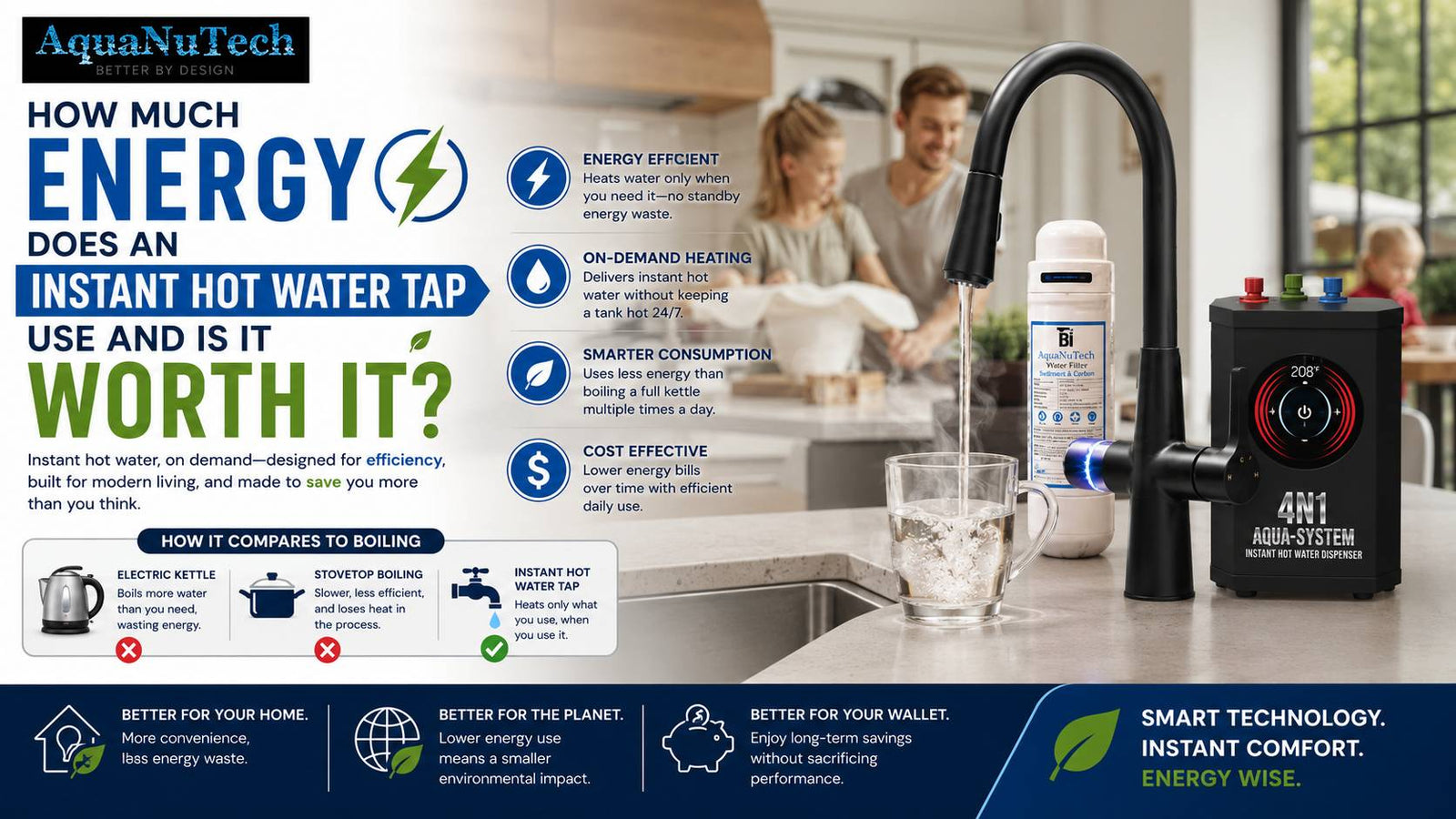
For homes, the impact is smaller, but in busy places, the electricity use is much higher. If you run a dispenser in a business, consider models with timers or smart controls.
Credit: www.aquanutech.com
Environmental Impact
Electricity use isn’t just about money. It also affects the environment. Most electricity in the US comes from fossil fuels, which produce carbon dioxide.
- Using 383 kWh per year (from our earlier example) produces about 273 kg of CO2 (using US average emission rates).
To reduce your impact, consider:
- Using energy-saving features
- Turning the dispenser off when not needed
- Choosing models with good insulation
Every small change helps lower your carbon footprint.
Tips To Save Electricity With Hot Water Dispensers
You can use your dispenser smartly without wasting energy. Here are practical tips:
- Turn off overnight. If you don’t need hot water at night, unplug or turn off the dispenser.
- Use timers. Some dispensers have built-in timers to switch on and off automatically.
- Fill only what you need. Heating a full tank uses more energy. If you use little hot water, fill less.
- Insulate the area. Keep the dispenser away from cold drafts or direct sunlight.
- Clean regularly. Limescale builds up on the heating element, making it less efficient. Clean as recommended.
These steps can reduce electricity use by 15–30%, depending on your habits.
Common Mistakes That Increase Electricity Use
Many people waste energy without realizing it. Here are some mistakes to avoid:
- Leaving the dispenser on 24/7 even when not needed
- Overfilling the tank for small households
- Ignoring the energy-saving mode
- Placing the dispenser in cold areas
- Not cleaning regularly, causing inefficiency
If you fix these mistakes, you’ll see lower bills.
Is A Hot Water Dispenser Right For You?
The answer depends on your needs. If you drink tea or coffee often, or have a large family, the convenience may be worth the extra energy cost. For occasional use, a kettle or microwave is more efficient.
Some new models have smart controls that only keep water hot during busy hours. This can save energy while still providing convenience.
If you’re considering buying, look for:
- Energy-saving features
- Good insulation
- Adjustable temperature
- Timers or smart controls
Reading reviews and checking specs helps you find a model that fits your habits.
For more detailed information on energy-efficient appliances, you can visit the ENERGY STAR official site.
Frequently Asked Questions
How Much Does It Cost To Run A Hot Water Dispenser?
The cost depends on the size, usage, and local electricity rates. For a typical 4-liter unit used 8 hours per day, the yearly cost is around $60–$80 in the US.
Is A Hot Water Dispenser More Efficient Than A Kettle?
For frequent use, yes. If you need hot water many times a day, a dispenser is more efficient. For one or two cups, a kettle uses less energy.
Can Hot Water Dispensers Be Turned Off To Save Energy?
Yes. Turning off or unplugging the dispenser when not needed saves energy. Many models have timers or energy-saving modes.
Do Hot Water Dispensers Use Electricity Even When Not Dispensing?
They use electricity to maintain the water temperature, called standby loss. This is less than the heating phase but can add up over time.
What Features Help Reduce Electricity Use In Dispensers?
Look for good insulation, energy-saving modes, timers, adjustable temperature, and smart controls. Proper cleaning also keeps them efficient.
Final Thoughts
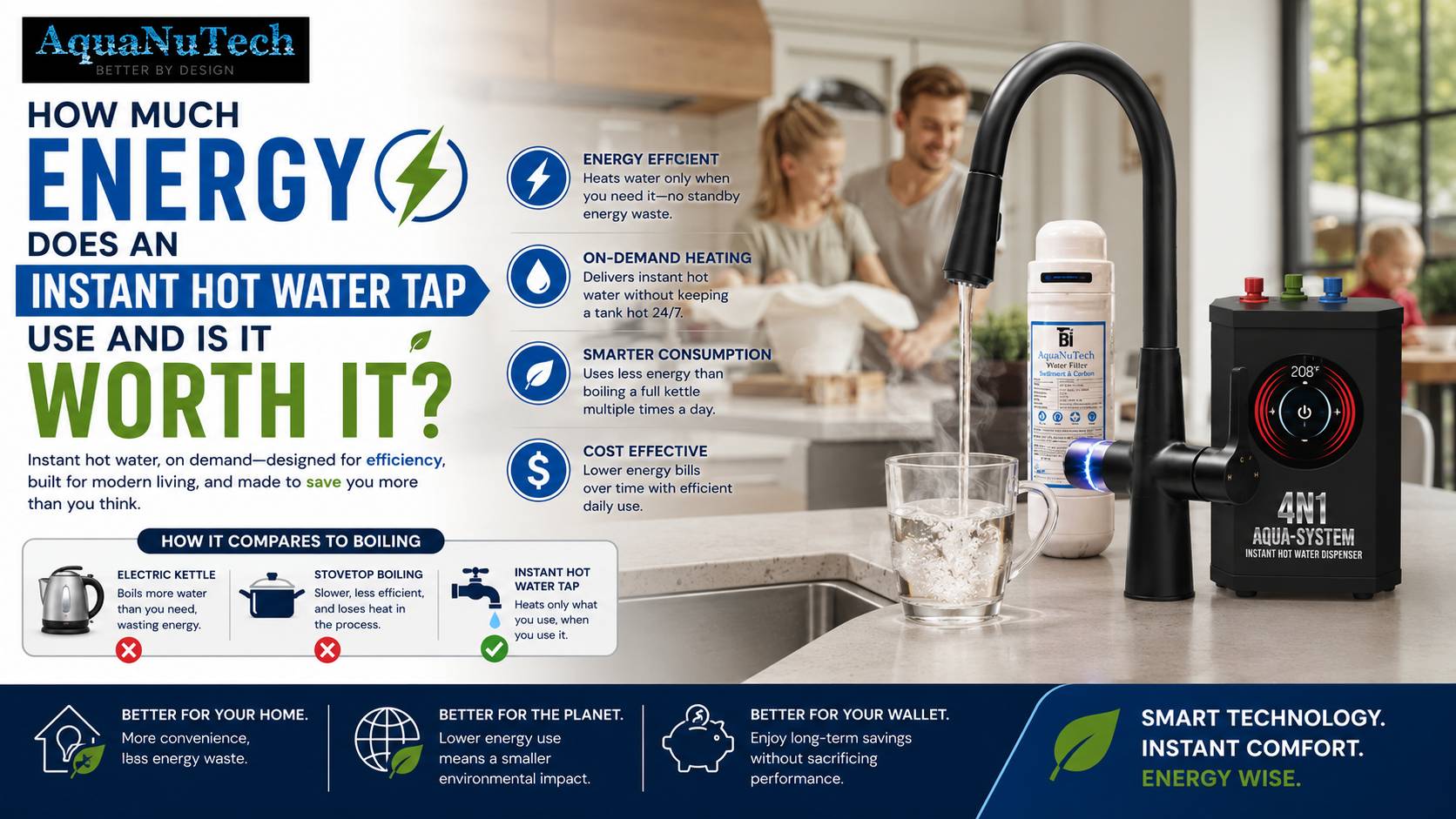
Hot water dispensers offer instant convenience, but they do use electricity—sometimes more than you expect. For heavy users, the savings in time and effort can balance the energy cost. For light users, kettles or microwaves are more efficient. The key is to choose a model that suits your habits, use energy-saving features, and avoid common mistakes.
By understanding how these appliances work and how to use them wisely, you can enjoy hot water anytime while keeping your bills and environmental impact low.
Credit: www.aquanutech.com