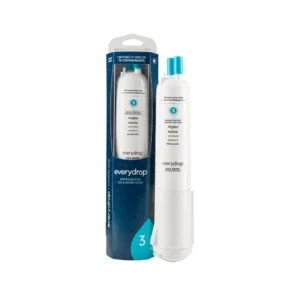
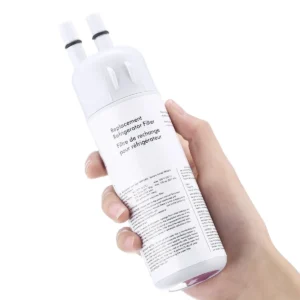
Most standard fridge units remove PFAS only when certified specifically for it under NSF/ANSI Standard 53 or 58. Basic models only carry NSF 42, which targets chlorine taste and odor, leaving “forever chemicals” untouched. Your filter won’t clear these chemicals unless the packaging states it reduces PFOA and PFOS.
Can refrigerator filters actually remove them
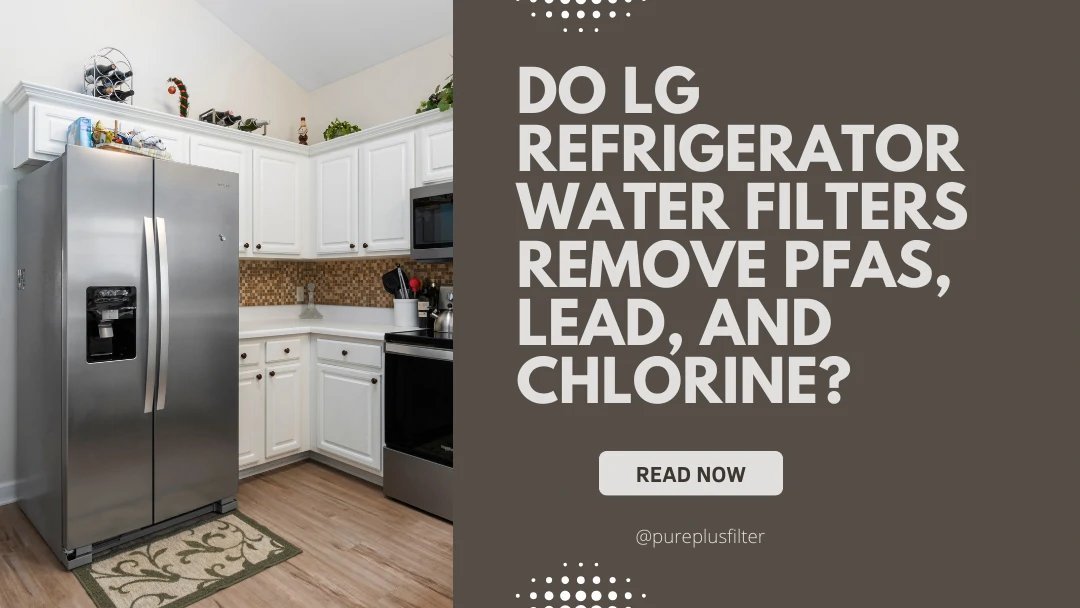 Photo: pureplusfilter.com
- Check the cartridge label for NSF/ANSI 53 or NSF/ANSI 58 certification; NSF 42 alone doesn’t stop PFAS.
- Look for explicit claims on PFOA and PFOS reduction on the manufacturer performance data sheet.
- Activated carbon blocks trap some compounds, but thin or fast-flow fridge cartridges let smaller PFAS chains slip through.
- If your filter is rated for PFAS, replace it regularly; if it’s unrated, don’t rely on it for chemical removal.
- When your fridge can’t take a certified block, install a dedicated under-sink reverse osmosis system instead.
Why standard fridge cartridges struggle
Standard refrigerator cartridges rely on a small block of activated carbon to clear drinking water. Carbon filters pull contaminants from water through adsorption, where chemicals stick to the porous surface of the carbon grains.
PFAS (per- and polyfluoroalkyl substances) carry extremely strong carbon-fluorine bonds that resist natural breakdown. Standard fridge cartridges usually hold too little carbon and move water too fast to trap these compounds well. A chemical molecule needs prolonged contact with the carbon pore structure to bind securely. When water rushes through a slim filter at high pressure, short-chain PFAS compounds wash right into your cup.
A basic fridge filter handles aesthetic problems like chlorine, rust, and foul smells. Catching micro-pollutants requires denser carbon blocks or dual-stage filtration. The EPA guidelines on drinking water standards note strict limits on forever chemicals because they accumulate in human tissue over decades. If a manufacturer builds a cartridge dense enough to trap PFOA, they submit it to independent testing labs to prove it. This varies by model — check the label to confirm third-party testing before trusting your built-in dispenser.
When the answer is different
 Photo: rkin.com
Water filtration changes based on cartridge design, household plumbing, and regional water supply quality.
| Situation | What changes | What to do instead |
|---|---|---|
| Filter lists only NSF 42 | No tested chemical capture | Switch to an NSF 53 rated cartridge |
| Well water with heavy sediment | Sediment clogs dense blocks fast | Add a sediment pre-filter line |
| Short-chain PFAS in supply | Standard carbon misses smaller molecules | Install an under-sink reverse osmosis unit |
| Filter past six-month limit | Saturated carbon releases trapped chemicals | Swap cartridge every six months immediately |
| Generic unbranded replacement used | Performance claims lack laboratory validation | Buy OEM filters with verified certifications |
How to do it properly
- Remove your current filter cartridge from the refrigerator housing by turning it counterclockwise a quarter-turn, then read the part number on the side.
- Search your exact model number in the online NSF or WQA certification database to verify its chemical reduction claims.
- If the search confirms NSF 53 or 58 for PFOA/PFOS, keep using that model; if it only shows NSF 42, purchase an upgraded certified block.
- Insert the new cartridge into the receiver slot, pushing firmly until you hear the locking click, then twist it clockwise to secure the seal.
- Dispense 3 to 4 gallons of water directly into a pitcher to clear factory air pockets and loose carbon fines from the fresh block.
- Reset the water filter light on your refrigerator display panel by holding the setup button for three seconds until the icon turns blue.
- Write the installation date on a piece of tape on the cartridge face so you replace it at exactly six months or 200 gallons.
The mistakes that ruin it
 Photo: www.onithome.com
- Buying cheap aftermarket knockoffs online: non-certified copies often skip the dense binder material, leaving your family unprotected against toxic compounds.
- Running cartridges longer than six months: once the internal carbon pores fill up, water carves channels through the media and carries old trapped pollutants back into your glass.
- Assuming clean-tasting water means safe water: PFAS chemicals have no taste, color, or smell, so crisp water can still carry heavy chemical loads.
- Skipping the initial 4-gallon flush: dry media channels water unevenly, reducing the overall contact time needed to bind industrial chemicals.
Frequently asked questions
Can boiling tap water remove PFAS chemicals?
No, boiling tap water actually concentrates PFAS rather than removing it. Forever chemicals withstand extreme heat, so boiling merely evaporates clean water molecules while leaving every chemical compound behind in a smaller volume of liquid.
How long does an NSF 53 filter last?
About six months or 200 gallons under normal home use, whichever arrives first. Hard water or high sediment levels clog the fine pores faster, which lowers water pressure and forces you to replace the cartridge sooner.
Is reverse osmosis better than fridge filtration?
Yes, reverse osmosis strips out over 90 percent of both short-chain and long-chain PFAS compounds. While a high-end fridge block targets specific large molecules, a membrane physically rejects chemicals down to 0.0001 microns wide.
What happens if I never change my fridge filter?
The filter stops collecting chemicals and can start shedding trapped material back into your drinking water. Old wet carbon also becomes a breeding ground for harmless but foul-tasting bacteria that ruin your ice and water taste.
Does a Brita pitcher filter out forever chemicals?
Standard Brita pitchers don’t remove PFAS because they only hold gravity-fed loose carbon meant for chlorine. Only specific high-density models will capture forever chemicals.
Who is a refrigerator water filter not for?
A fridge filter isn’t for homes with high industrial contamination or private wells near industrial runoff sites. Dedicated whole-house units or multi-stage reverse osmosis setups are necessary when raw water tests show extreme PFAS levels.