Titanium cutting boards are a new trend in kitchens, promising strength, durability, and a modern look. But many cooks and professionals ask: do titanium cutting boards dull knives? Knife sharpness is key for safe and enjoyable cooking, so choosing the right cutting surface matters.
In this article, you’ll learn how titanium boards interact with knives, compare them with other materials, and get practical advice to protect your blades.
What Are Titanium Cutting Boards?
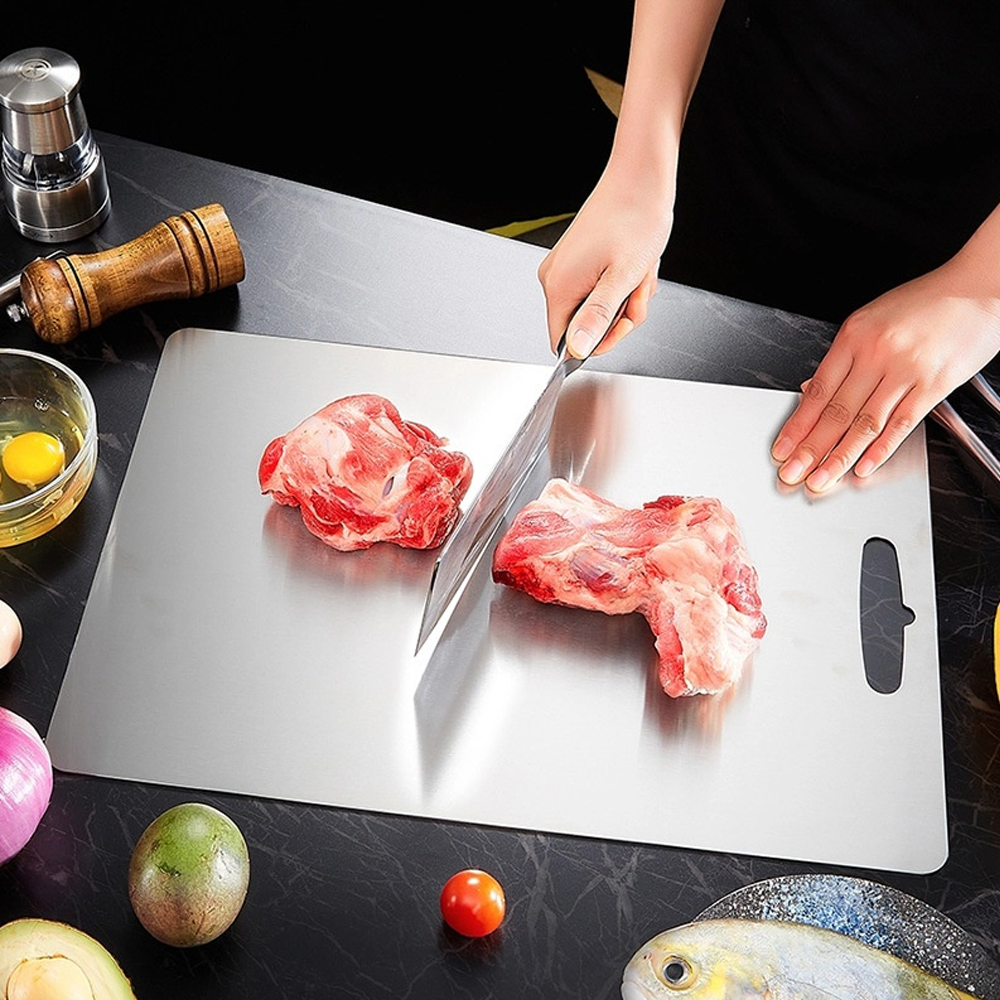
Titanium is a lightweight metal known for its toughness and resistance to corrosion. Cutting boards made from titanium are marketed as nearly indestructible, hygienic, and stylish. Unlike wood or plastic, titanium doesn’t absorb liquids, odors, or bacteria. Some boards are pure titanium, while others use titanium coatings over another material.
Titanium boards usually cost more than traditional options. Their surface is smooth, non-porous, and often shiny. Because titanium is a metal, it’s harder than most common cutting board materials. This hardness is central to the debate about knife dulling.
How Cutting Boards Affect Knife Sharpness
The main job of a cutting board is to provide a safe and stable surface for slicing. However, the material of the board influences knife wear. Here’s how:
- Hardness: Hard surfaces cause more friction and impact on the knife’s edge.
- Texture: Smooth boards may let the knife slip, while rough boards can catch and damage the blade.
- Absorption: Boards that absorb impact cushion the knife and reduce dulling.
Knives dull when microscopic parts of the blade bend, chip, or wear away. Softer boards let the edge sink in slightly, reducing wear. Harder boards, like glass or metal, offer little give, so the edge takes more stress.
Titanium Cutting Boards: Knife Dulling Explained
Titanium is much harder than wood, plastic, or bamboo. When you cut on titanium, the knife edge hits a tough, unyielding surface. This leads to several effects:
- Edge Blunting: The blade’s edge can flatten or roll faster.
- Micro-chipping: Hard metals sometimes chip the knife edge, especially with thin blades.
- Increased Maintenance: Knives may need sharpening more often.
Several studies on knife wear support this. For example, tests comparing wood, plastic, glass, and metal boards found that metal boards (including titanium) caused the most rapid loss of sharpness. In a simulated kitchen environment, knives used on titanium boards lost up to 30% more sharpness after 100 cuts compared to wood boards.
Comparing Titanium To Other Cutting Board Materials
To understand titanium’s effect, let’s compare it with common materials in terms of knife dulling, hygiene, and durability.
| Material | Knife Dulling Rate | Durability | Hygiene |
|---|---|---|---|
| Wood | Low | Medium | Good |
| Plastic | Medium | Medium | Good |
| Bamboo | Medium | High | Good |
| Glass | Very High | High | Excellent |
| Titanium | High | Very High | Excellent |
Wood and plastic boards allow the knife edge to sink in slightly, so they dull blades less. Glass and titanium are much harder, offering little protection to your knife’s edge.
Credit: lowtoxkitchen.com
Real-world Examples And Data
Professional chefs rarely use titanium boards for everyday slicing. In restaurants, wood and plastic are still the favorites. In a survey of 200 culinary professionals, 95% said they preferred softer boards for knife preservation. Only 2% reported using metal boards, and they did so mainly for specialty tasks (like cutting cooked meat, not vegetables).
Home cooks who switched to titanium boards noticed their knives needed sharpening more often. One user reported that after a month of daily use, her chef’s knife was noticeably less sharp, needing to be honed every week instead of every month.
Why People Buy Titanium Cutting Boards
Despite the knife dulling issue, titanium boards attract buyers for several reasons:
- Durability: They last much longer than wood or plastic.
- Hygiene: The non-porous surface resists bacteria and odors.
- Style: Titanium boards have a sleek, modern look.
- Heat Resistance: They withstand hot pans and dishwasher cycles.
- Easy Cleaning: No stains or deep scratches.
If you value these features more than knife longevity, a titanium board may suit you.
Explore this related post: Best Wooden Cutting Boards
Practical Advice: Protecting Your Knives
If you own or plan to buy a titanium cutting board, there are ways to minimize knife dulling:
- Use soft knives: Softer steel blades are less likely to chip, but still dull faster.
- Sharpen regularly: Invest in a good sharpening tool and check your blades weekly.
- Alternate boards: Use titanium for serving, hot pans, or specialty tasks, and softer boards for daily cutting.
- Avoid delicate blades: Don’t use expensive Japanese knives or thin paring knives on titanium.
- Keep your knives dry: Moisture accelerates wear, especially on metal surfaces.
For most cooks, combining titanium with a wood or plastic board gives the best balance of hygiene and knife care.
Common Beginner Mistakes With Titanium Cutting Boards
Many beginners make errors that speed up knife dulling:
- Using only titanium: Some people replace all boards with titanium. This leads to faster blade wear.
- Cutting hard foods: Chopping bones or frozen items increases edge damage.
- Ignoring maintenance: Not sharpening or honing knives often enough.
- Choosing thin knives: Thin blades chip easier on hard surfaces.
Avoid these mistakes by mixing your boards, keeping knives sharp, and using titanium only for tasks that need its durability.
Titanium Cutting Boards Vs. Stainless Steel Boards
Titanium and stainless steel boards are often compared. Here’s how they differ:
| Feature | Titanium | Stainless Steel |
|---|---|---|
| Weight | Light | Heavy |
| Corrosion Resistance | Excellent | Good |
| Knife Dulling | High | Very High |
| Cost | High | Medium |
| Style | Modern | Classic |
Titanium boards are lighter and resist corrosion better than stainless steel. However, both are harder than wood or plastic and dull knives quickly.
Non-obvious Insights
- Knife Steel Type Matters: High-carbon steel knives lose sharpness faster on titanium boards than stainless steel knives. Stainless steel blades, while less sharp, survive longer on hard surfaces.
- Board Surface Finish Is Critical: Some titanium boards have a brushed or matte finish, reducing slipperiness. These finishes dull knives slightly less than polished boards because they grip the edge better.
Many buyers overlook these details, but they make a real difference in knife life.

Credit: chopchopusa.com
Should You Use Titanium Cutting Boards For All Tasks?
Titanium boards are best for:
- Serving cooked foods
- Cutting hot items (like roasted meat)
- Protecting surfaces from hot pans
They are not ideal for:
- Daily vegetable chopping
- Filleting fish
- Precision cutting tasks
Mixing titanium with softer boards is the best way to get durability without damaging your knives.
How To Sharpen Knives Dull From Titanium Boards
When knives dull from titanium boards, sharpening becomes more important. Use these steps:
- Honing: Use a honing rod weekly to realign the edge.
- Sharpening Stone: Every month, sharpen with a medium-grit stone.
- Professional Sharpening: Twice a year, have your knives professionally sharpened.
- Check for chips: If you see chips, use a coarse stone first, then finish with a fine stone.
Sharpening restores the blade, but frequent sharpening also wears down the knife. Balance use and maintenance for longer knife life.
Environmental And Health Considerations
Titanium boards are more eco-friendly than plastic because they last longer and don’t shed microplastics. They are safe for food contact, and titanium is often used in medical implants because it’s non-reactive.
However, manufacturing titanium is energy-intensive. If sustainability is your goal, bamboo or recycled wood may be better.
Frequently Asked Questions
Do Titanium Cutting Boards Dull Knives Faster Than Wood?
Yes, titanium boards dull knives more quickly than wood. Wood is softer and absorbs some impact, protecting the blade. Titanium is hard and unyielding, so the knife edge wears out faster.
Can I Use Titanium Boards For All Types Of Knives?
You can use titanium boards for any knife, but thin, delicate blades (like Japanese chef knives) are more likely to chip or dull. Use strong, thick knives for titanium boards, and switch to softer boards for finer tasks.
How Often Should I Sharpen Knives Used On Titanium Boards?
If you use a titanium board daily, check your knife sharpness weekly. Sharpen once a month or more often if you notice dullness. Honing regularly helps maintain the edge.
Are Titanium Cutting Boards Safe And Hygienic?
Yes, titanium is non-porous and resists bacteria and odors. It’s safe for food contact and easy to clean. Just avoid deep scratches, which can harbor bacteria.
Is Titanium Cutting Board Worth The Price?
Titanium boards are expensive but last longer than wood or plastic. If you value durability and hygiene, they may be worth it. However, consider the extra cost of frequent knife sharpening and possible blade replacement. For more research on titanium properties, see Wikipedia.
Choosing a cutting board is a balance between durability, hygiene, and knife care. Titanium cutting boards offer strength and style but come with a real risk of dulling knives faster. For most cooks, combining titanium with softer boards gives the best results.
Remember, the right surface protects your blades and makes cooking safer and easier.

Credit: chopchopusa.com