Watching a full-size oven preheat for ten minutes just to cook a single chicken breast is one of the least efficient habits in a modern kitchen. An air fryer promises crispy results in less time, but does an air fryer save electricity in a way that actually shows up on your utility bill?
For most everyday meals, the answer is yes—but it depends on what you compare it to, how many people you feed, and how you use the appliance. This guide explains the real energy consumption of air fryers, how they compare with ovens, microwaves, and slow cookers, and the practical habits that determine whether you save money or not. You can also read our guide on best air fryers for apartment.
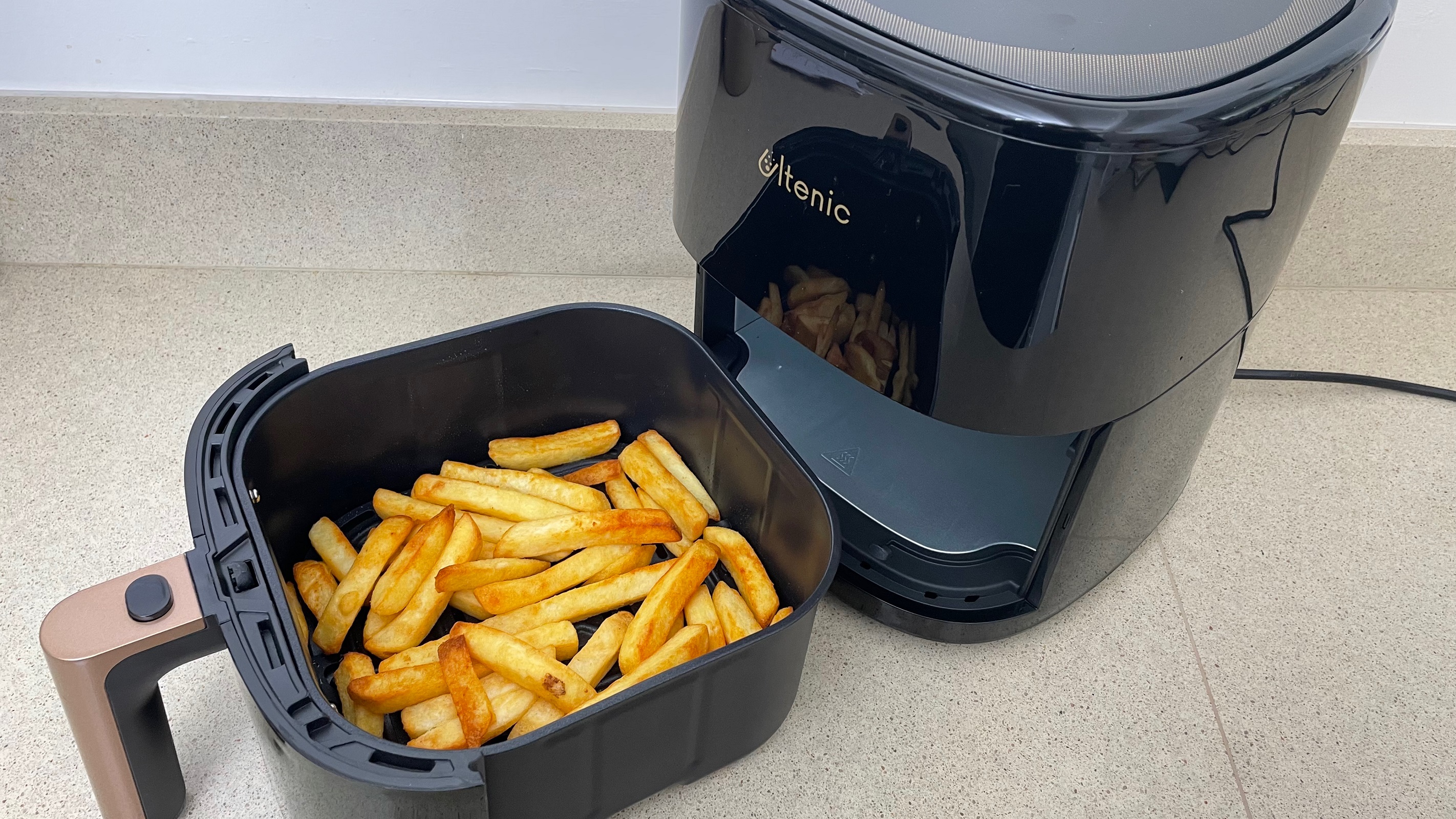
A compact air fryer can finish a small meal before a full-size oven finishes preheating.
Image source: www.techradar.com
What an Air Fryer Actually Does
An air fryer is, at its core, a small convection oven. A heating element warms the air inside a compact chamber, and a high-speed fan circulates that hot air around the food. The rapid airflow produces the Maillard reaction—the same browning process behind roasted and fried flavor—with a fraction of the oil used in deep frying.
There are two common designs:
- Basket-style air fryers: Compact, affordable, and ideal for one- or two-person portions.
- Air fryer ovens: Larger units with a front door and multiple racks. They can handle bigger batches, whole chickens, and even some baking tasks.
Because the cooking cavity is small, the appliance needs less energy to heat a large volume of air. That single design feature is the main reason an air fryer can be more efficient than a conventional oven. You can also read our guide on why does air fryer keep turning off.
The Simple Math: How Much Electricity an Air Fryer Uses
Most air fryers draw between 1,200 and 1,800 watts. Your actual cost depends on wattage, cooking time, temperature, and your local electricity rate.
The formula is straightforward:
Cost = (Wattage ÷ 1,000) × Hours Used × Electricity Rate per kWh
For example, a 1,500-watt air fryer running for 25 minutes is 0.42 hours of use. If your electricity rate is around $0.17 per kWh, the cost is roughly:
(1,500 ÷ 1,000) × 0.42 × $0.17 = $0.11 per meal
Now compare that with a conventional electric oven. A typical oven draws about 3,000 watts. With a 15-minute preheat and 35 minutes of cooking, it runs for 50 minutes, or 0.83 hours:
(3,000 ÷ 1,000) × 0.83 × $0.17 = $0.42 per meal
That is roughly four times the cost of the air fryer meal. If you replace several oven meals per week with air fryer meals, the savings accumulate quickly. You can also read our guide on how does an air fryer work without oil.
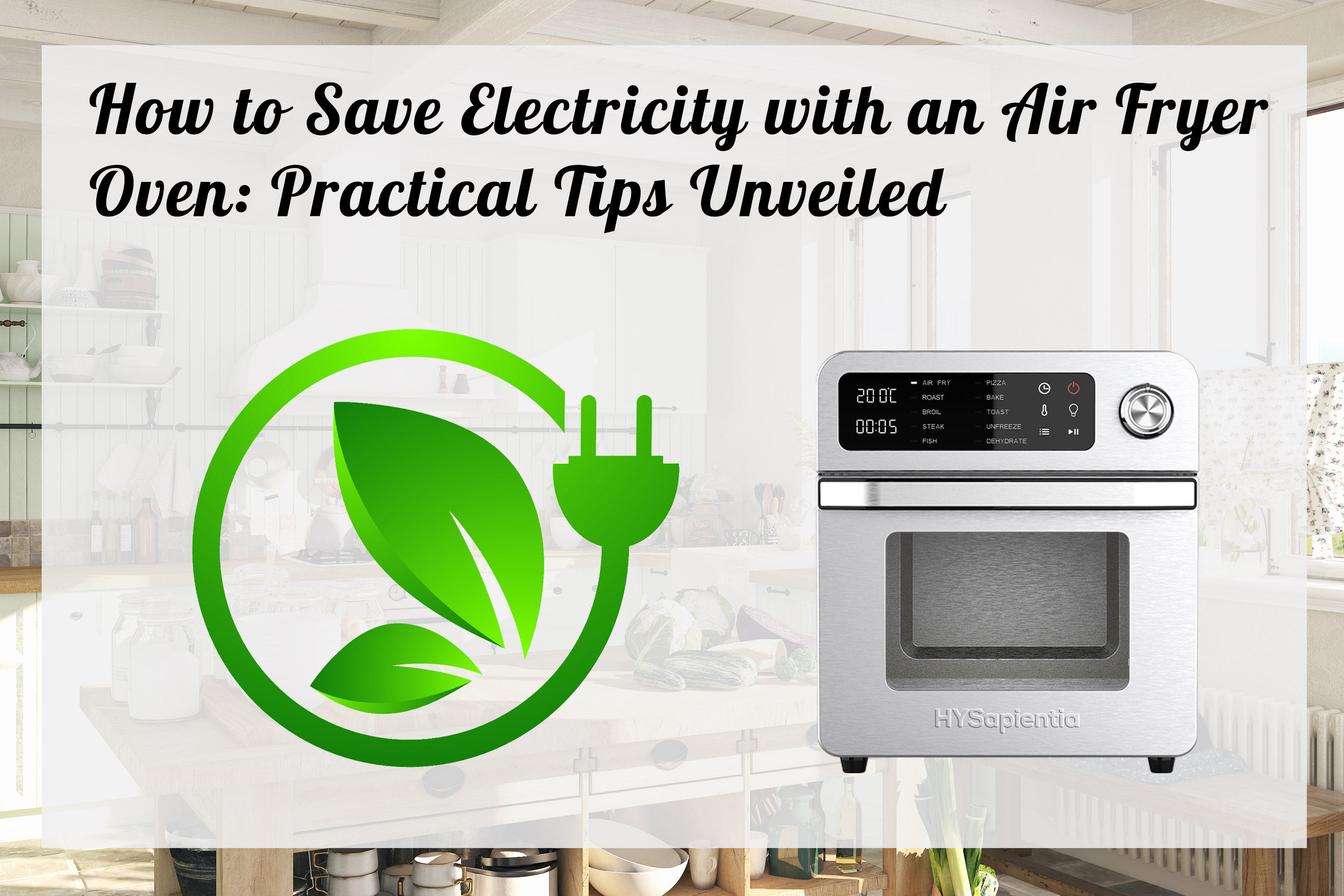
Wattage and cooking time together determine the real cost per meal.
Image source: hysa.store
Air Fryer vs. Oven vs. Microwave: A Direct Comparison
The air fryer is efficient, but it is not the most efficient appliance in every situation. The table below shows realistic estimates for a small meal.
| Appliance | Typical Wattage | Typical Time for a Small Meal | Estimated Cost per Meal |
|---|---|---|---|
| Air Fryer | 1,400–1,700W | 20–30 minutes | ~$0.10–$0.15 |
| Convection Oven | 2,400–3,200W | 10–15 min preheat + 25–35 min cooking | ~$0.30–$0.50 |
| Conventional Oven | 2,400–4,000W | 10–15 min preheat + 30–40 min cooking | ~$0.40–$0.60 |
| Microwave | 800–1,200W | 5–10 minutes | ~$0.02–$0.05 |
| Slow Cooker | 150–300W | 6–8 hours on low | ~$0.15–$0.30 |
These are estimates based on an electricity rate of around $0.17 per kWh. Your exact numbers will depend on your local utility pricing. You can also read our guide on best way to air fryer steak.
If you have a gas oven, compare fuel prices carefully. An air fryer can still use less energy by volume, but the effect on your bill depends on the relative cost of gas and electricity in your area.
Why a Higher-Wattage Air Fryer Does Not Always Cost More
There is a common misconception that a higher-wattage air fryer always uses more electricity. That is only partly true.
A 1,800-watt model cooks faster than a 1,200-watt model. It heats the chamber more quickly and recovers temperature faster after you shake the basket. For the same food, total energy use can end up similar—or even lower—with the more powerful unit. You can also read our guide on frozen cheese sticks in air fryer.
Think of it like a car: a powerful engine burns more fuel at full throttle, but if it gets you to your destination sooner and spends less time idling, your total fuel consumption can still be lower.
What matters more is how well the cooking chamber size matches your typical portions. A large 8-quart air fryer needs more energy to heat than a compact 3-quart model. In practice, the most reliable savings come from matching the appliance to the amount of food you actually cook.
The Hidden Factors That Affect Your Savings
Wattage is only one part of the story. Several real-world variables can change the outcome.
Basket Loading and Portion Size
An overfilled basket blocks airflow, which slows cooking and forces you to run the appliance longer. For best results, arrange food in a single layer with some breathing room. If you cook for a family of five and need multiple batches, the air fryer may use more energy than a single oven load.
Cooking From Frozen vs. Fresh
Frozen food takes longer to cook because the air fryer first has to thaw the food and then cook it. Depending on the item, cooking time can increase by roughly a third or more. Skipping a preheat cycle for frozen snacks offsets some of that extra time, because the gentle initial temperature rise works like a thawing phase.
Temperature and Time Choices
Higher temperatures require more energy. Some recipes work fine at 350°F instead of 400°F, especially for fish fillets, roasted nuts, and reheated pizza. Lowering the temperature by 25–50°F will not ruin most air fryer meals, but it will reduce the electricity used per session.
Kitchen Heat and Ventilation
An air fryer rejects heat and moisture into the room. In winter, that is a minor bonus. In summer, it can add a small load to your air conditioner. Good ventilation helps. If the fan above your stove is struggling, vent airflow problems can make the kitchen feel hotter than it should, encouraging you to turn up the cooling. Checking your range hood’s exhaust path is worth doing if you cook with countertop appliances often.
When the Air Fryer Wins—and When the Oven Is Smarter
The air fryer is not always the right tool. Knowing which appliance to reach for keeps your energy bills lower.
Use the air fryer for:
- Cooking for one or two people
- Frozen snacks like fries, nuggets, and mozzarella sticks
- Reheating pizza and leftovers so they stay crisp
- Small batches of roasted vegetables
- Quick proteins like chicken breasts, fish fillets, and meatballs
Use a full-size oven for:
- Large roasts, whole turkeys, and multiple trays of baked goods
- Cooking for a crowd
- Recipes that need even heating across a large surface area
- Baking where a big, stable oven cavity is essential
A large air fryer oven can handle some of these tasks, but for true batch cooking, the conventional oven is often more practical. If you are remodeling or replacing kitchen equipment, the installation process for a good range hood matters just as much as the cooking appliance itself—proper ventilation keeps kitchen heat and odors from spreading through the house.
Energy-Saving Habits That Actually Make a Difference
Getting the most from an air fryer is about building smart habits, not just owning one.
- Skip the preheat for most foods. Vegetables, frozen fries, and many proteins do not need a preheat cycle. For breaded items, a three-minute preheat helps with initial crispness, but it is often optional.
- Open the basket less often. Every time you slide the basket out, hot air escapes and the heating element has to compensate. Use a window if your model has one.
- Cook in strategic batches. Choose foods that cook at the same temperature so you can cook multiple batches without waiting for the appliance to heat up between rounds.
- Fill the basket reasonably. A half-empty basket is inefficient. Save air frying for meals where you can cook an amount that fills the basket without overcrowding.
- Choose the right size. A single person does not need a family-sized air fryer. A compact model heats faster and uses less electricity.
- Keep the heating element clean. Grease buildup insulates the heating element and slows heat transfer. The same logic applies to your kitchen exhaust, so routine vent maintenance helps keep your whole kitchen running efficiently.
- Unplug it when idle. Air fryers can draw a small amount of standby power if left plugged in. Unplugging the unit when it is not in use removes that phantom load.
- Turn it off a minute early. Residual heat inside the chamber will finish delicate foods like fish or vegetables without using extra electricity.
Beyond the air fryer, consider replacing other wasteful habits. Heating water in a small electric kettle uses far less energy than boiling a full pot on the stove. A small electric kettle is a simple addition to an efficiency-minded kitchen.
Potential Drawbacks to Keep in Mind
An air fryer is not perfect. These limitations are worth considering before you rely on it for every meal.
Limited Capacity
Most basket-style air fryers hold between 2.5 and 6 quarts. A 5-quart basket cooks roughly two to four servings. For larger families, cooking in multiple batches increases total time and energy use. In that case, an air fryer oven with multiple racks—or a full-size oven—may be more efficient overall.
Noise Levels
The internal fan generates a steady hum, often comparable to a dishwasher. It is not disruptive in most kitchens, but it is noticeable in open-plan living spaces, especially if you are watching television or have a baby sleeping nearby.
Texture Limitations
Air fryers excel at crisping, but they can dry out delicate foods like fish, and thicker cuts of meat may cook unevenly without careful timing. Learning the right temperature and cook time for your specific model is part of the process. If you want to bake in an air fryer oven, keep expectations realistic and choose safer bakeware choices for small muffin pans and baking dishes.
Environmental Benefits Beyond the Electrical Bill
Energy efficiency is not just about saving money. Lower electricity demand means fewer emissions from power plants, especially in regions that still rely heavily on fossil fuels. The U.S. Department of Energy’s Energy Saver hub explains how appliance choices affect both household budgets and national energy demand.
Air fryers also use far less cooking oil than deep frying. That reduces waste and lowers the resources needed to produce, package, and transport cooking oil. The U.S. Environmental Protection Agency similarly links reduced energy demand with cleaner air and lower greenhouse gas emissions. For a small countertop appliance, the cumulative effect can be meaningful if it replaces regular oven use.
Frequently Asked Questions
Does an air fryer consume less electricity than an oven?
For most small meals, yes. A 1,500-watt air fryer used for 25 minutes uses about 0.6 kWh, while a 3,000-watt oven running for 50 minutes including preheat uses about 2.5 kWh. The air fryer uses roughly a quarter of the energy.
How much does it cost to run an air fryer for one hour?
A 1,500-watt air fryer running for one hour uses 1.5 kWh. At $0.17 per kWh, that is about $0.26. Most cooking sessions last only 15 to 30 minutes, so a typical meal costs between $0.06 and $0.13.
Can an air fryer lower my monthly electricity bill?
It can, if it replaces oven cooking rather than just adding another appliance. A household that regularly swaps oven meals for air fryer meals may save a noticeable amount each month. The exact figure depends on local rates, portion sizes, and how many meals you convert.
Are larger air fryers less efficient?
Generally, yes. A larger cooking chamber takes more energy to heat. Choose a model that closely matches the portion sizes you actually prepare.
Is a microwave more efficient than an air fryer?
Yes, a microwave uses less electricity for reheating and simple cooking. However, it cannot deliver the crisp texture an air fryer produces. The most efficient approach is to use each appliance where it works best.
Final Verdict: Does an Air Fryer Save Electricity?
For small and medium meals, an air fryer is one of the most energy-efficient cooking appliances you can own. It heats a small space quickly, cooks faster than a conventional oven, and avoids wasting energy on a large empty cavity.
The savings are not automatic. They depend on portion size, meal type, and whether you use the air fryer in place of a less efficient appliance. Cooking for one or two? The air fryer will almost always win. Reheating leftovers? The microwave is still cheaper to run. Cooking a holiday turkey? The oven is irreplaceable.
Ready to see the difference on your utility bill? Replace one oven meal per week with an air fryer meal, keep the basket reasonably full, and compare your next bill. It is a simple experiment with a surprisingly visible result. Browse our kitchen guides for more practical ways to make every appliance work harder without wasting energy.