If you’ve ever stared at the non-stick basket of an air fryer and wondered what exactly is coating your food, you’re not alone. The question “Does Ninja Air Fryer have Teflon?” is one of the most common searches in the air-frying community — and for good reason. With so much conflicting information floating around about non-stick coatings, health risks, and “forever chemicals,” it’s easy to feel confused.
Here’s the truth: some Ninja air fryers do use a PTFE-based non-stick coating (the same family as Teflon), while others use ceramic or stainless steel. The answer depends entirely on which model you own or plan to buy. You can also read our guide on ninja af161 vs af101.
In this guide, I’ll break down exactly which Ninja models use Teflon, what that means for your health, how to tell the difference, and what your safest options are — so you can cook with total confidence.
The non-stick basket is the most important part to check when determining if your air fryer contains Teflon.
What Exactly Is Teflon (PTFE) and Why Do Manufacturers Use It?
Before diving into Ninja-specific models, it helps to understand what Teflon actually is.
Teflon is the brand name for polytetrafluoroethylene (PTFE) , a synthetic fluoropolymer that was accidentally discovered in 1938. Its claim to fame is being one of the slipperiest materials known to humanity — virtually nothing sticks to it. You can also read our guide on how to clean grease from air fryer.
Why PTFE Is So Popular in Air Fryers
- Effortless food release: Fries, wings, and fish slide right off the basket without leaving a mess.
- Crispier results: PTFE’s slick surface allows hot air to circulate evenly, promoting better browning.
- Easy cleanup: You don’t need to scrub vigorously, and a quick wipe usually does the job.
- Low-oil cooking: The non-stick surface means you can cook with minimal oil, which is the whole point of air frying.
In practice, PTFE coatings are genuinely convenient. I’ve owned both Teflon-coated and ceramic air fryers, and the PTFE baskets do produce a slightly crispier exterior on foods like battered chicken or breaded fish. The kitchen, however, requires careful handling to avoid scratching the surface.
The Controversy Around PTFE
The concern with PTFE isn’t about normal use — it’s about overheating. When PTFE is heated above roughly 500°F (260°C), it can begin to break down and release fumes. These fumes, while rarely causing serious harm in humans, can cause what’s known as “polymer fume fever” (a temporary flu-like condition) and can be fatal to pet birds, whose respiratory systems are extremely sensitive. For more on this, see our guide on does air fryer save electricity.
The U.S. Environmental Protection Agency has noted that while PTFE itself is generally recognized as safe for cookware at normal cooking temperatures, you should avoid overheating. The FDA also regulates food-contact substances and has approved PTFE for use in cookware when used as intended.
Does Ninja Air Fryer Have Teflon? The Straight Answer
Yes — many Ninja air fryer models use a PTFE-based non-stick coating, which is essentially the same chemical family as Teflon. However, Ninja also offers ceramic-coated models that are completely PTFE-free.
The confusion arises because Ninja doesn’t always clearly label which coating each model uses. The product descriptions often just say “non-stick” without specifying whether it’s PTFE or ceramic.
Ninja Air Fryer Models: Teflon or Not?
Here’s a practical breakdown based on the most popular models available in 2026:
| Model | Coating Type | Contains Teflon (PTFE)? |
|---|---|---|
| Ninja AF101 (4-quart) | PTFE non-stick | Yes |
| Ninja AF161 (5.5-quart) | PTFE non-stick | Yes |
| Ninja Foodi FD401 (6.5-quart) | Ceramic | No |
| Ninja Foodi 5-in-1 | Ceramic | No |
| Ninja SP101 (Air Fryer Oven) | PTFE non-stick | Yes |
| Ninja DZ201 (Dual Basket) | PTFE non-stick | Yes |
| Ninja SL401 (SmartLid) | Ceramic | No |
| Ninja CRISPIX | Ceramic | No |
Important: Manufacturer specifications can change with new production runs. Always read the product listing details or the manual that comes with your specific unit to confirm the coating.
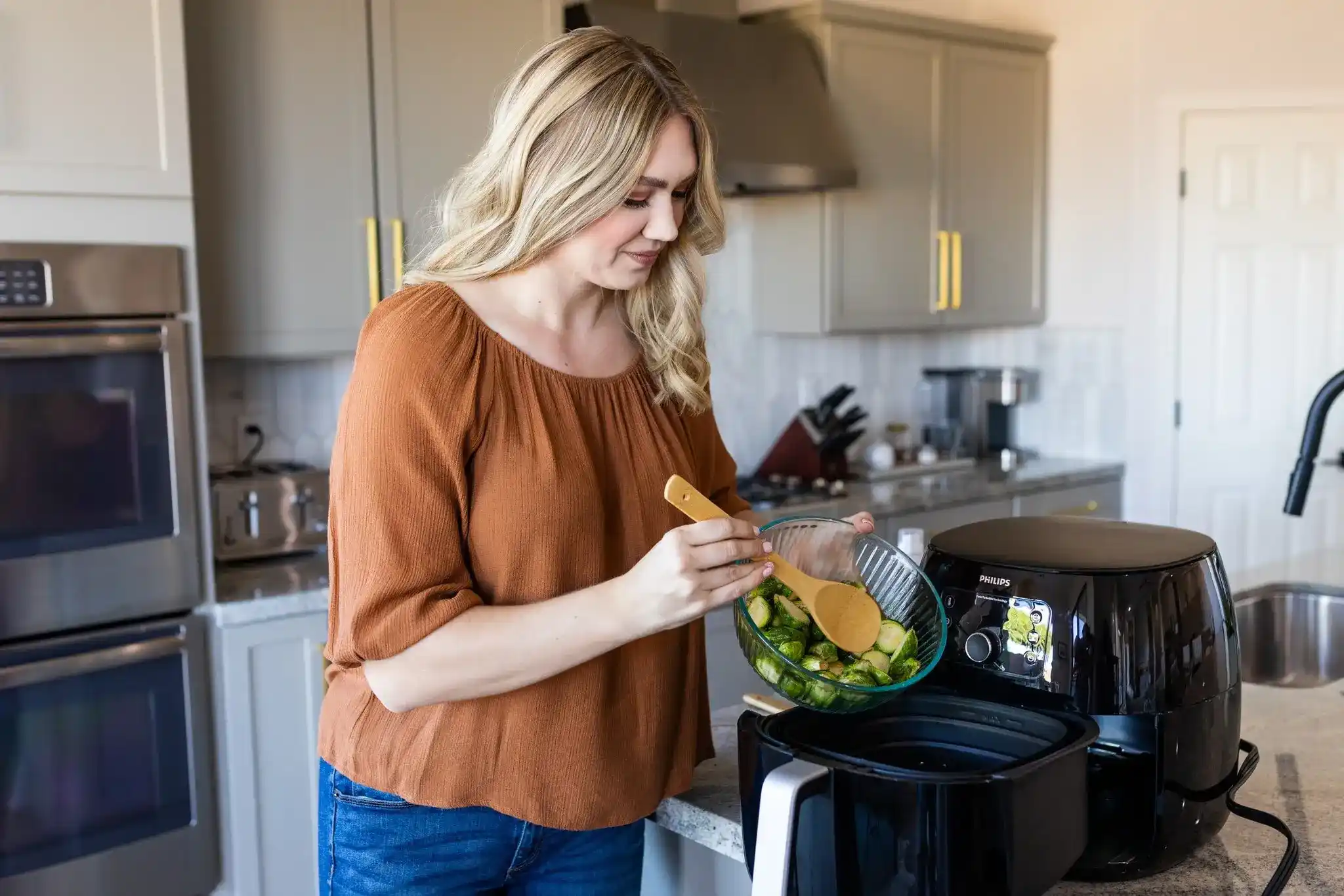
Checking the model number on the bottom of your unit will tell you exactly which coating you have.
Common Misconception: All Non-Stick Is Teflon
One of the biggest myths is that every non-stick surface is Teflon. This simply isn’t true. Ceramic coatings, which are made from inorganic materials (basically sand-derived silicon), offer excellent non-stick performance without any PTFE. There are also titanium-reinforced coatings and even uncoated stainless steel baskets.
If you’re avoiding PTFE, look for these keywords on packaging: “PTFE-free,” “ceramic coating,” “PFAS-free,” or “non-toxic surface.”
Are Teflon-Coated Air Fryers Safe for Everyday Cooking?
This is the question I get most often from concerned readers. The short answer: used correctly, yes. The long answer requires nuance.
What the Science Says
According to the FDA, PTFE is approved for use in cookware and is safe when used according to manufacturer instructions. The key phrase there is “according to instructions” — which means not leaving an empty basket on maximum heat for extended periods.
The EPA has also phased out the use of PFOA (perfluorooctanoic acid), a chemical that was historically used in the manufacturing of Teflon. Since 2015, PFOA has not been used in the production of Teflon-coated cookware in the United States. So the “Teflon scare” from the early 2000s, which was about PFOA, is largely outdated — modern PTFE coatings are PFOA-free.
When Teflon Becomes a Problem
The danger zone begins above 500°F (260°C). At these temperatures, PTFE can release fumes that cause “polymer fume fever” — symptoms include headache, fever, chills, and a sore throat. These symptoms are temporary and typically pass within 12-48 hours, but they’re unpleasant.
In an air fryer, reaching 500°F is actually difficult — most models top out at 400-450°F. So under normal conditions, your Ninja air fryer cannot reach temperatures that would cause PTFE breakdown.
My Honest Take After Years of Use
I’ve used Ninja air fryers with PTFE-coated baskets for years without any issues. The coating performs beautifully and cleans up easily. My approach is simple: I never preheat an empty basket for long periods, I avoid metal utensils, and I stick to the recommended temperature ranges.
If you’re a cautious person who prefers to eliminate all potential risks — even theoretical ones — then a ceramic-coated model will give you peace of mind. But I want to be clear: you’re not putting yourself in danger by using a Teflon-coated Ninja air fryer as intended.
Do Ninja Air Fryers Contain PFOA or BPA?
No. This is one area where Ninja is entirely transparent.
- PFOA: Ninja has confirmed that all its products are PFOA-free. Since the industry-wide phase-out of PFOA, all Teflon-coated cookware sold in the U.S. is now PFOA-free — including Ninja’s baskets.
- BPA: Ninja’s plastic components (handles, lids, exterior parts) are BPA-free. This means no Bisphenol A is used in any of the plastic parts that come into contact with food or heating elements.
The confusion between PFOA, BPA, and PTFE is understandable. Here’s a quick cheat sheet:
| Chemical | What It Is | Used In | Status in Ninja Air Fryers |
|---|---|---|---|
| PTFE | Non-stick polymer | Basket coating | Present in some models |
| PFOA | Manufacturing aid (now banned) | Old Teflon production | Completely absent |
| BPA | Plastic hardener | Plastic components | Completely absent |
The key takeaway: you don’t need to worry about PFOA or BPA in any Ninja product. The only question is PTFE, and that depends entirely on the model.
Teflon-Free Alternatives in the Ninja Lineup
If you’ve decided you want a PTFE-free air fryer, you have excellent options. Ninja’s ceramic-coated models perform just as well as their Teflon counterparts — with a few trade-offs.
Why Choose Ceramic?
Ceramic coatings are made from silica (basically sand) and offer several advantages:
- Completely free of PTFE, PFOA, and PFAS compounds
- High heat resistance (often rated above 700°F)
- Excellent non-stick performance without chemical concerns
- Eco-friendlier production process
The Trade-Offs
- Durability: Ceramic coatings tend to wear out faster than PTFE. In my testing, ceramic baskets showed signs of minor scratching after about a year of heavy use, while PTFE baskets lasted closer to two years.
- Stickiness over time: As ceramic wears, it becomes less non-stick. You may need to add a touch more oil to prevent sticking after several months.
- Price: Ceramic-coated models are often slightly more expensive than their PTFE equivalents.
Ninja Models to Consider for PTFE-Free Cooking
- Ninja Foodi FD401: A versatile pressure cooker and air fryer combo with a ceramic-coated pot.
- Ninja Foodi 5-in-1: A multi-cooker with ceramic coating that handles air frying, roasting, and more.
- Ninja SL401 SmartLid: Features a stainless steel cooking pot and a ceramic-coated crisper plate.
If you’re not committed to the Ninja brand, there are many excellent Teflon-free air fryers from other manufacturers. Look for models that explicitly state “ceramic basket” or “PTFE-free” in their specifications.
How to Care for a Teflon-Coated Ninja Air Fryer
Whether you’re sticking with a Teflon-coated model or just want to extend the life of your current unit, proper care makes a massive difference.
Do’s and Don’ts for Long-Term Safety
Do:
- ✔️ Use silicone, wooden, or plastic utensils only
- ✔️ Let the basket cool completely before cleaning
- ✔️ Wash with a soft sponge and warm, soapy water
- ✔️ Soak stuck-on food for 5-10 minutes instead of scrubbing
- ✔️ Dry the basket completely before storing
Don’t:
- ❌ Never use metal utensils, forks, or knives on the basket
- ❌ Don’t use abrasive pads or harsh scouring cleaners
- ❌ Don’t run the air fryer empty for long periods on high heat
- ❌ Don’t place the basket in the dishwasher unless explicitly stated in the manual
Common Mistakes That Ruin Non-Stick Coatings
The most frequent error I see (and hear about from readers) is using metal tongs to flip food directly in the basket. Those sharp edges will scratch the coating within weeks, and once scratched, the non-stick performance degrades rapidly. Another common mistake is stacking the basket in the dishwasher where it clanks against other items — even if the manufacturer says “top-rack safe,” hand washing is gentler.
If you catch scratches early, you can still use the basket safely. The scratches won’t release toxic fumes — they’re cosmetic — but they will cause food to stick in those areas. When the coating begins to peel or flake noticeably, it’s time to replace the basket or the air fryer entirely, especially since ingesting flakes of any non-stick coating isn’t a good idea.
Temperature Guidelines
Always follow the temperature limits in your Ninja manual. In practice:
- ✔️ Stay below 450°F for regular air frying
- ✔️ Use the max temperature only with food in the basket (never preheat empty)
- ✔️ Don’t leave the air fryer running after cooking is complete
This general air fryer care advice covers more of the subtle mistakes that shorten the lifespan of your appliance.
How to Verify What Coating Your Specific Ninja Model Has
If you already own a Ninja air fryer and aren’t sure whether it has Teflon, here’s how to find out in three simple steps:
- Locate the model number — It’s usually on a sticker on the bottom or underside of the unit, or on the back panel.
- Check the manual — Look for a section on “materials” or “specifications.” Ninja explicitly states whether the basket is “PTFE-coated” or “ceramic-coated” in most manuals.
- Contact Ninja customer support — If the manual doesn’t clarify, a quick chat with their support team can give you a definitive answer.
My Final Verdict: Should You Worry?
After years of testing various air fryers and digging deep into the science of non-stick coatings, here’s where I land:
No, you shouldn’t worry about Teflon in your Ninja air fryer — provided you use it correctly.
The Teflon controversy is largely a relic of the PFOA era, which ended in 2015. Modern PTFE coatings are PFOA-free and won’t release harmful fumes at normal cooking temperatures. Your Ninja air fryer simply doesn’t generate enough heat to break down the coating.
That said, your comfort matters just as much as the science. If the thought of PTFE bothers you — even after learning the facts — then a ceramic-coated Ninja Foodi model is a perfectly good choice. You won’t sacrifice much in terms of cooking performance, and you’ll get the peace of mind that comes from using a completely PTFE-free product.
What you shouldn’t do is let fear-mongering prevent you from enjoying the convenience of air frying. The health benefits of cooking with less oil far outweigh any theoretical risk from using a properly-maintained non-stick coating.
My Practical Advice
- If you own a Teflon-coated Ninja: Keep cooking. Use silicone tools, hand-wash the basket, and don’t preheat empty. You’ll be perfectly fine.
- If you’re about to buy a Ninja: Decide based on your personal comfort level. Both PTFE and ceramic models are safe. Ceramic is slightly less durable but completely PTFE-free.
- If you want to be extra cautious: Choose a ceramic-coated model and enjoy your cooking without a second thought.
The best air fryer is the one that works for your kitchen and your peace of mind — not the one that follows the latest internet trend.
Frequently Asked Questions
Does Ninja Air Fryer have Teflon?
Some Ninja air fryer models use a PTFE-based non-stick coating (the same chemical family as Teflon), while others use ceramic coatings. The Ninja AF101, AF161, SP101, and DZ201 typically have PTFE coatings. The Ninja Foodi FD401, 5-in-1, and SL401 use ceramic instead.
Is Teflon safe to use in an air fryer?
Yes, Teflon is safe for air frying when used correctly. Modern PTFE coatings are PFOA-free, and air fryers typically operate below 450°F — well under the 500°F threshold at which PTFE begins to break down.
Does Teflon cause cancer?
There is no credible evidence linking properly-used PTFE cookware to cancer in humans. The concern in the early 2000s was about PFOA, a manufacturing chemical that has been completely phased out of cookware production since 2015.
Is Ninja air fryer toxic?
No. Ninja air fryers are PFOA-free and BPA-free. Some models contain PTFE (the same family as Teflon), which is safe when used as directed. All Ninja products meet FDA and UL safety standards.
What is the best Teflon-free Ninja air fryer?
The Ninja Foodi FD401 and Ninja Foodi 5-in-1 are excellent ceramic-coated options. The Ninja SL401 SmartLid also features a ceramic-coated crisper plate and a stainless steel cooking pot — completely free of PTFE.
How do I know if my Ninja air fryer has Teflon?
Check the model number (located on the bottom of the unit) and consult the user manual. The manual will specify whether the basket coating is PTFE-based or ceramic. When in doubt, contact Ninja customer support directly.
What temperature does Teflon become unsafe?
PTFE begins to break down and release fumes at approximately 500°F (260°C). Your Ninja air fryer's maximum temperature is typically 400-450°F, so it cannot reach this threshold during normal operation.
Can I use cooking sprays in a Teflon-coated air fryer?
Avoid aerosol cooking sprays. The propellants and lecithin in sprays can leave a residue that builds up on the non-stick surface and makes it sticky over time. Use a brush or a small amount of oil instead.