If you’ve typed how long do fries take in air fryer into a search box, you’ve seen answers all over the map. Nine minutes here, twenty minutes there. Both can be right, because the timing depends more on what you start with than on the machine itself.
Frozen shoestring fries cook completely differently than thick fresh-cut wedges.
In our research across air fryer manuals and aggregate kitchen reviews, one rule shows up again and again: temperature and cut thickness drive everything. As of 2026, most manufacturers land between 375°F and 400°F for fries, with times running anywhere from 8 to 20 minutes. Get those two dialed in and the rest is easy technique.
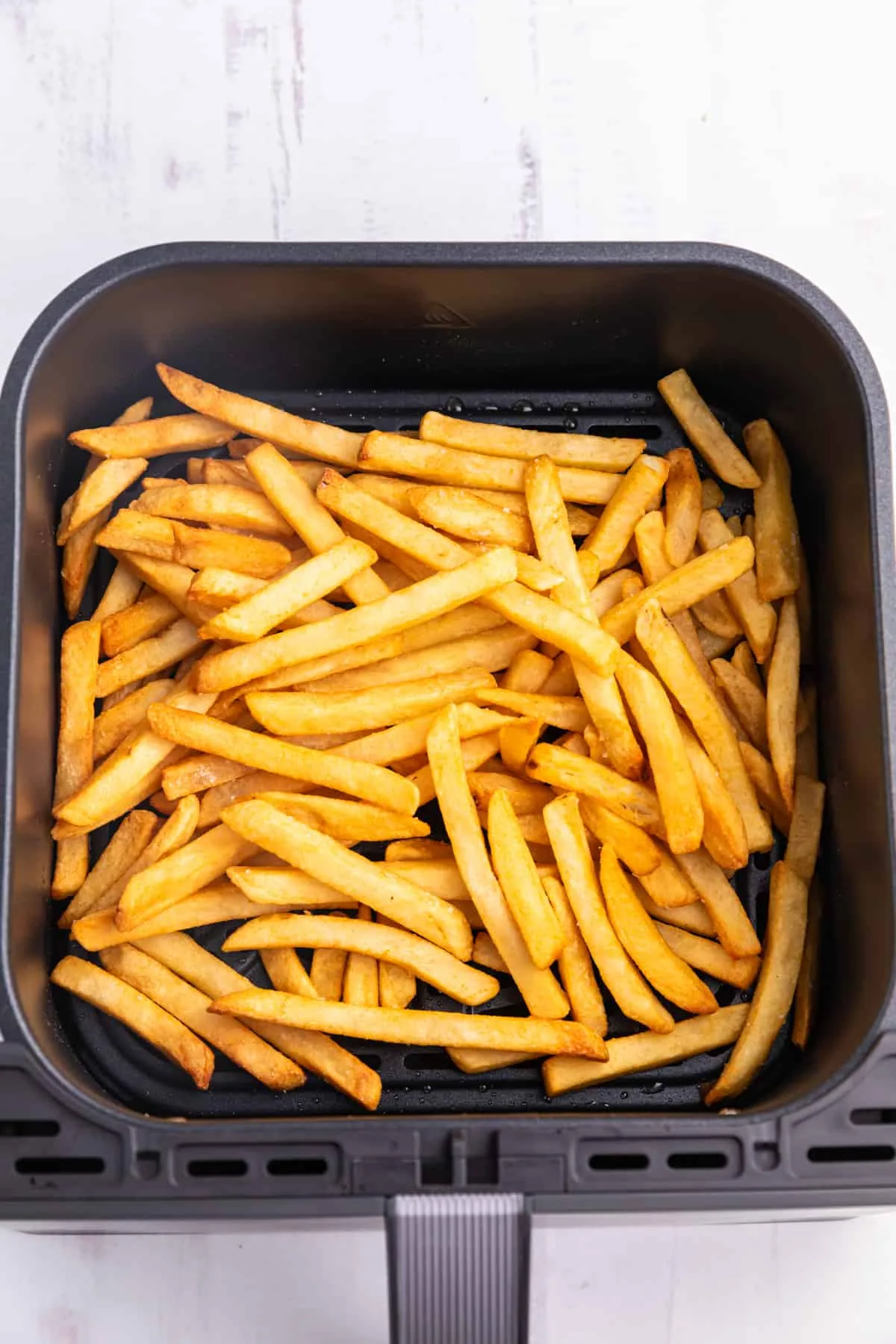
Image source: Web (Bing) / busydaydinners.com (Web image (fair-use with source credit))
The Problem: Why “8-12 Minutes” Is Rarely Right
Those short times you see everywhere usually trace back to one source: the bag. Frozen potato products carrya recommended cook time printed right on the package. That number assumes a specific cut, a typical batch size, and a machine pushing a certain wattage.
Your air fryer might not match any of those assumptions.
The bigger issue is that “fries” is a broad label. Shoestring, crinkle-cut, steak fries, hand-cut wedges, sweet potato strips. Each one cooks at a different pace.
Treating them all the same is how you end up with a burnt exterior and a raw middle.
So forget the one-size-fits-all answer. Learn what changes the timing, and you’ll nail it every time without checking the bag.
Quick Answer
Frozen fries take 8 to 12 minutes at 400°F. Fresh-cut fries take 15 to 20 minutes at 375°F. Thick cuts take longer.
Thin cuts cook faster. Always shake the basket halfway through.
What Actually Changes Cook Time: The Core Variables
Five variables control your total cook time. Get these straight and the timings start to make sense.
Frozen or fresh. Frozen fries start below freezing, so they need time to thaw and crisp. Fresh-cut fries need extra time to cook through from raw. That single difference explains most of the time gap between recipes.
Cut thickness. A thin shoestring fry cooks in minutes. A thick steak fry needs nearly double the time. More surface area means a faster crisp.
Batch size. Overcrowding drops the air temperature inside the basket. Your “10 minute” cook becomes an “18 minute” cook because the fries are steaming instead of crisping.
Your machine’s wattage. A 1500W air fryer runs hotter and holds temperature better than a 1200W model. Higher wattage means faster fries.
Preheating. Some machines want it. Some don’t. When you skip a preheat on a model that needs it, add about 3 minutes to your total.
First Branch: Frozen Fries vs. Fresh-Cut Fries
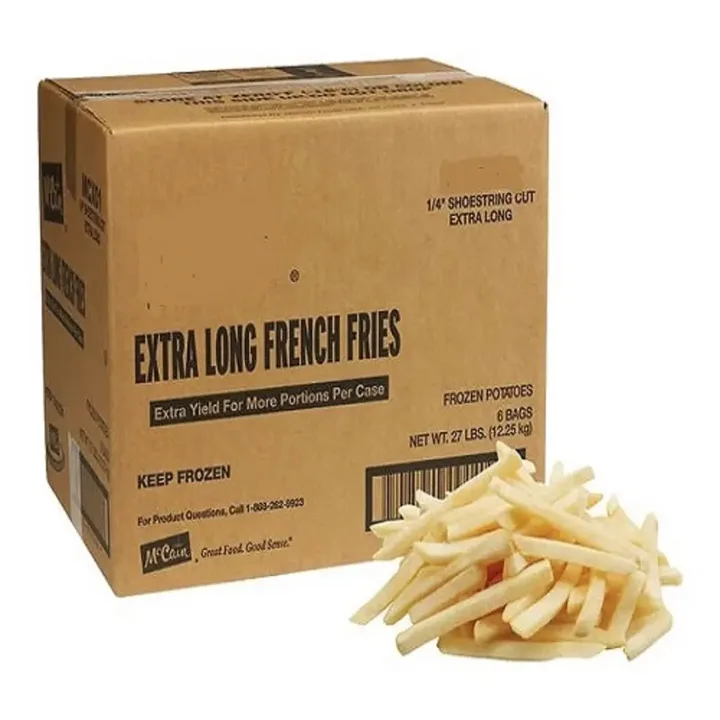
Image source: Bing (Web (fair-use with source credit))
If you’re starting with frozen fries
Frozen fries are already blanched and partially cooked. Your job is just to crisp them up. That’s why they cook fast.
In our research, the standard range lands at 8 to 12 minutes at 400°F. Shoestring fries hit the low end around 8 minutes. Crinkle-cut and thicker frozen cuts run closer to 12 minutes.
Shake the basket at the halfway mark. Add salt right after they finish, while the oil is still warm, and it’ll stick better.
If you’re cutting fresh potatoes
Fresh-cut fries need more time because they start raw. You’re cooking the potato all the way through while building a crust on the outside.
Our guidance: 15 to 20 minutes at 375°F to 400°F. Soak your cut strips in cold water for at least 30 minutes first. That pulls out surface starch and helps them crisp instead of stick.
Dry them thoroughly before adding oil.
Beyond texture, there’s a health angle worth mentioning. Air frying generally produces less acrylamide than deep frying, according to the FDA. That makes it a solid everyday choice for crispy potatoes.
Sweet potatoes are a different story entirely. They’re denser and cook on their own schedule, so check the specific timing for sweet potato fries before you swap them into a standard recipe.
Step-by-Step: The Air Fryer Basket Workflow
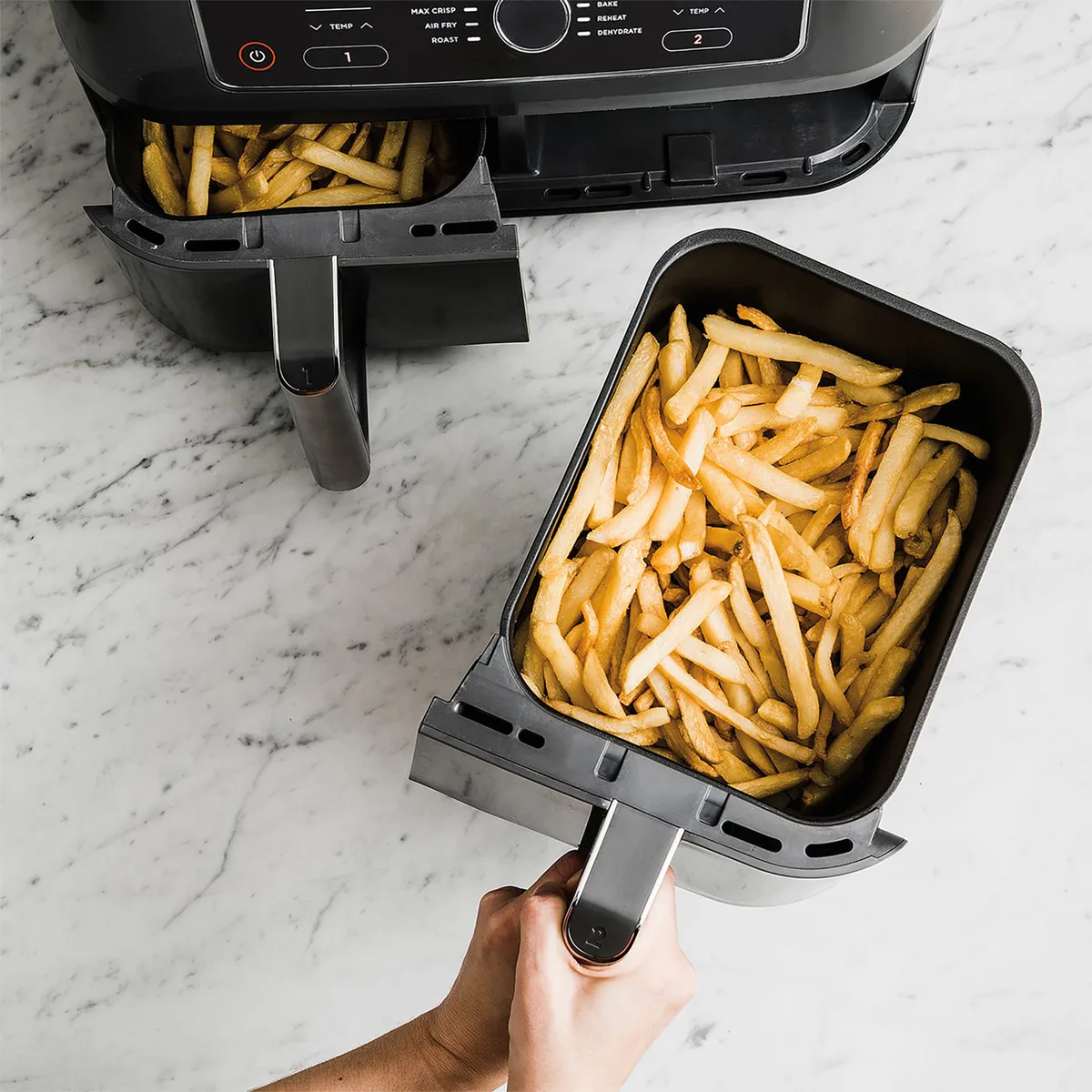
Image source: Web (Bing) / inkl.com (Web image (fair-use with source credit))
Whatever you’re cooking, the workflow stays the same. Nail this and the timing tables become optional.
- Preheat if your machine needs it. Check your manual. Most basket-style models want 3 to 5 minutes at the cook temperature.
- Prep your fries. Frozen fries go straight in. Fresh-cut fries need the soak, a thorough dry, and a light oil toss.
- Load in a single layer. This is the step everyone skips. Overlap the fries and they turn to steam. Cook in batches if you have to.
- Set the initial time. Start at the low end of the range for your fry type.
- Shake at the halfway point. Pull the basket, give it a good toss, and slide it back in.
- Add time in 2 to 3 minute jumps. Check for color after each jump. Don’t walk away for another 10 minutes.
You can also cut cook times across the board by preheating properly and keeping batches small, but texture comes first. A fast batch of soggy fries isn’t a win.
The Golden Check: How to Know They’re Done
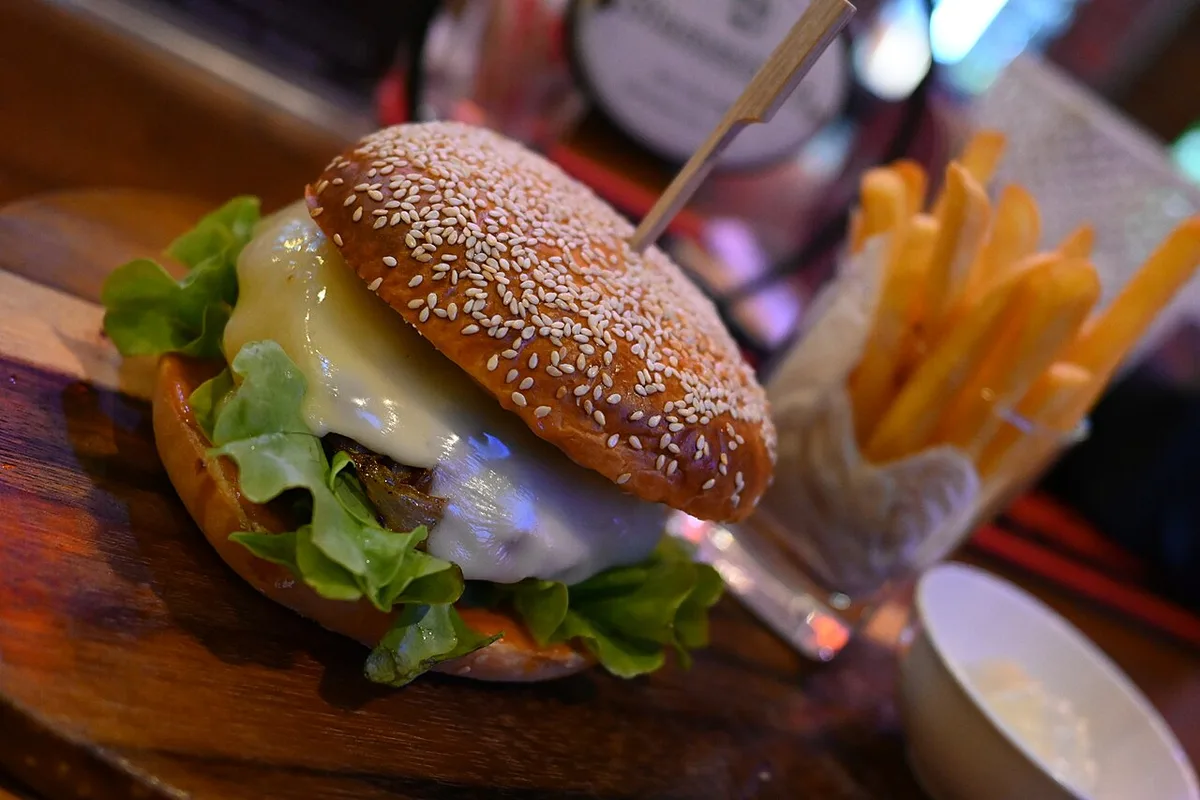
Image source: Wikimedia Commons / PattayaPatrol (CC BY-SA)
Honestly, the timer is just a suggestion. Your eyes and your fingers tell you the truth.
Done fries look golden brown with slightly darker edges. They should feel firm and crisp when you pick one up. A floppy fry needs more time.
Give one a gentle squeeze. The outside should crackle. The inside should be soft and tender with no raw potato crunch.
If the fries are browning but still soft in the middle, lower the temperature by 25 degrees and add 4 to 5 minutes. That lets the inside finish cooking before the outside burns.
Mistakes That Ruin Air Fryer Fries (and How to Fix Them)
Every bad batch of air fryer fries comes down to one of these five issues.
Overcrowding the basket. The number one killer. Fries piled on top of each other never crisp. Cook in batches.
It adds time but changes the result completely.
Skipping the shake. Fries sit flat against the basket. Without a shake, one side stays pale and soft. Set a timer for halftime and make it part of the routine.
Too much oil on fresh cuts. A light coating on the surface is all you need. Slather them and you’re basically steaming the potato. One to two teaspoons per pound, tossed in a bowl before loading.
Not drying fresh fries. Water on the surface turns to steam in the basket. Steam means soggy fries. Dry them with a kitchen towel after their soak, then add oil.
Using the wrong temperature. Too low and you’ll never get a crust. Too high and the outside scorches before the inside cooks. Stick with 375°F to 400°F and adjust from there.
If your machine starts acting odd mid-cook, it might be beeping to tell you something. Shake reminders and overheating alerts both sound the same.
Your Machine Matters: Capacity, Wattage, and Basket Size
All air fryers are not created equal. The exact same fries can cook 5 minutes faster in one model than another. Here’s what matters most.
Wattage. More watts means more heat. A 1700W air fryer will crisp faster and hold temperature better than a 1200W model. If your fries run long every time, check your wattage first.
Basket capacity. A 5 to 6 quart basket handles about 1 to 1.5 pounds of fries in a single layer. Smaller baskets require smaller batches. Working with a 2 to 3 quart machine means cutting your batch roughly in half.
Airflow design. Basket-style fryers circulate air more efficiently than air fryer ovens. The oven style cooks evenly too, but often adds a few minutes because the heating element sits farther away. Understanding how heat flows inside helps you estimate cook times on any new machine.
Basket shape. Round baskets give fries better airflow than square baskets with tucked corners where heat sits unevenly.
For fries, wattage and batch size make up about 80 percent of your result. Everything else is minor tuning.
The Time Chart: A Quick Reference for Every Fry Type
Bookmark this. Print it out. Stick it on the fridge.
| Fry Type | Temperature | Cook Time | Shake At |
|---|---|---|---|
| Frozen shoestring | 400°F | 8–10 min | 4 min |
| Frozen crinkle-cut | 400°F | 10–12 min | 5 min |
| Frozen steak fries | 400°F | 12–15 min | 6 min |
| Fresh-cut thin fries | 375°F | 15–18 min | 8 min |
| Fresh-cut thick wedges | 375°F | 18–20 min | 9 min |
| Frozen sweet potato fries | 375°F | 10–12 min | 5 min |
Use these as a starting point, not a finish line. Always check for doneness at the low end and add time in small jumps.
Reheating Leftover Fries: The Underrated Win
Fresh-cooked fries are great. Reheated air fryer fries might be the real reason you own one.
Cold fries go back in at 350°F for 4 to 6 minutes. Shake the basket halfway. They come out nearly as crispy as when they first cooked.
No microwaved sogginess.
Leftover fries work best in a single layer. If you have a big batch, reheat in two rounds rather than stacking them.
This same trick works beyond potatoes. Reheated wings come out perfectly at the same 350°F mark.
For day-old fast food fries, add an extra 2 minutes. They need more time to draw out the moisture that settled in during fridge storage.
The Final Verdict: Your Go-To Rule of Thumb
Here’s the simple version you’ll actually remember.
Frozen fries: 400°F for 8 to 12 minutes. Fresh fries: 375°F for 15 to 20 minutes. Shake once at halftime.
Cook in a single layer. Add time in small jumps until the fries look golden and feel crisp.
That’s the whole secret. The exact number on your machine matters far less than watching the fries and trusting the visual cues. Do that, and you’ll nail it every time, with any air fryer and any bag of fries.
If you’re still getting inconsistent results, keep a quick note right on your phone with the exact time that worked for your specific brand of fries. It sounds like overkill, but your favorite grocery store bags might always run a minute longer than the label claims. Every air fryer has its own personality.
Learn yours and the guesswork disappears.
The next time someone asks you how long fries take in an air fryer, you’ll have a real answer instead of a lucky guess. Start cold, cook hot, shake once, and trust what you see. That’s the whole method, and it works every time.
One last thing worth noting: if you’re cooking for a crowd, keep finished batches warm in a 200°F oven while the next round cooks. Everything lands on the table hot, crisp, and ready at the same time. That’s the kind of detail that separates good fries from great ones.
Second Branch: Match the Cut to the Cook Time
Now that you know frozen versus fresh, look at the cut. Thin fries crisp in minutes. Thick fries need more time and lower heat.
A waffle fry cooks differently than a shoestring.
Our research shows the cut determines exactly where you land in the time range. Shoestring and thin crinkle cuts lean toward the 8 minute mark. Steak fries and wedges stretch to 20 minutes.
Sweet potato fries fall somewhere in between because they have more sugar, so they brown faster.
The rule holds across brands. A 1/4-inch fry at 400°F hits crisp around 10 minutes. A 1/2-inch wedge needs closer to 18 minutes.
Step-by-Step: The Air Fryer Basket Workflow
The workflow stays the same for every cut. Start with a preheat if your machine needs it. Load the fries in a single layer, leaving space between each piece for air to move.
Set the timer at the low end for your fry type. Shake the basket at the halfway point. Add time in 2 minute leaps until the golden brown texture shows up.
For fresh-cut fries, soak and dry first. Then toss them in a bowl with one teaspoon of oil per pound. That tiny amount is enough to get a crunch.
The Golden Check: How to Know They’re Done
You can’t trust just the timer. A thick fry might look ready while the middle is still raw. Pick one out and squeeze it.
It should feel firm on the outside and give slightly inside.
Color matters too. Golden brown with a few darker spots means the surface sugars are caramelizing. Pale fries are undercooked.
Dark brown fries are one step from burnt.
If the outside browns before the inside finishes, drop the temperature by 25 degrees and add 4 minutes.
Mistakes That Ruin Air Fryer Fries (and How to Fix Them)
Beyond overcrowding, the biggest error is using too much oil on fresh cuts. That creates steam instead of crisp. Use a teaspoon or two per pound, not a pour.
Skipping the soak for fresh potatoes is another one. Surface starch turns gluey when heated. Soak the cut strips for 30 minutes, then dry them completely.
Finally, don’t walk away. Air fryers cook fast. A minute can make the difference between perfect and burnt.
Your Machine Matters: Capacity, Wattage, and Basket Size
Your air fryer’s wattage changes everything. A 1500W machine will crisp at 400°F in 9 minutes. A 1200W model may need 12 minutes at the same temperature.
Basket size limits batch size. A 5 quart basket fits about 1.5 pounds of fries in a single layer. Any more, and you’re steaming.
Air fryer ovens cook a little slower because the heating element sits farther away. Add 2 to 3 minutes if you’re using one.
The Time Chart: A Quick Reference for Every Fry Type
| Fry Type | Temperature | Cook Time | Shake At |
|---|---|---|---|
| Frozen shoestring | 400°F | 8–10 min | 4 min |
| Frozen crinkle-cut | 400°F | 10–12 min | 5 min |
| Frozen steak fries | 400°F | 12–15 min | 6 min |
| Fresh-cut thin fries | 375°F | 15–18 min | 8 min |
| Fresh-cut thick wedges | 375°F | 18–20 min | 9 min |
Use the low end for smaller batches, the high end for a full basket. Check visually before adding more time.
Reheating Leftover Fries: The Underrated Win
Cold fries go back in at 350°F for 4 to 6 minutes. Shake once halfway through. They’ll come out almost as crisp as fresh.
The same trick works for reheated chicken wings and other fried leftovers. Just keep them in a single layer.
Frequently Asked Questions
Why are my air fryer fries soggy?
Sogginess usually means overcrowding or excess moisture. Reduce your batch size and make sure frozen fries go in straight from the freezer. For fresh-cut fries, dry them thoroughly after washing and use less oil.
Can I cook fresh fries without soaking them first?
You can, but they won’t crisp as well. The soak pulls out surface starch, which is what makes fries stick and soften. Soak for 30 minutes, dry completely, then toss with a light layer of oil.
How long do sweet potato fries take in the air fryer?
Frozen sweet potato fries take 10 to 12 minutes at 375°F. Fresh-cut ones take 15 to 18 minutes at the same temperature. Their natural sugar makes them brown faster, so watch them closely near the end.
Is it safe to stack fries in the basket?
No. Stacked fries steam instead of crisp because the air can’t reach every surface. Cook in a single layer, even if that means working in batches.
The extra few minutes are worth it.
Why does my air fryer beep during a cook cycle?
A beep usually means the timer finished or the machine is reminding you to shake the basket. Some models also beep to signal overheating. If it’s a shake reminder, just pull the basket and toss the fries.
The Final Verdict: Your Go-To Rule of Thumb
Frozen fries cook at 400°F for 8 to 12 minutes. Fresh fries cook at 375°F for 15 to 20 minutes. Shake once at halftime, cook in a single layer, and trust your eyes over the timer.
Every air fryer runs differently. After one or two batches, you’ll know exactly what yours needs. That’s the whole secret.