If you’ve ever wondered how long to bake bacon at 400, you already know the internet gives a dozen different answers. Some say 15 minutes. Others say 20.
Both can be right, and that’s the problem.
The truth depends on your bacon’s thickness, its sugar content, and your oven’s quirks. As of 2026, the USDA recommends cooking pork to 145°F with a three-minute rest. But bacon is about texture, not just temperature.
Let’s break it down.
Bacon at 400°F: How Long to Bake for Perfect Crispy
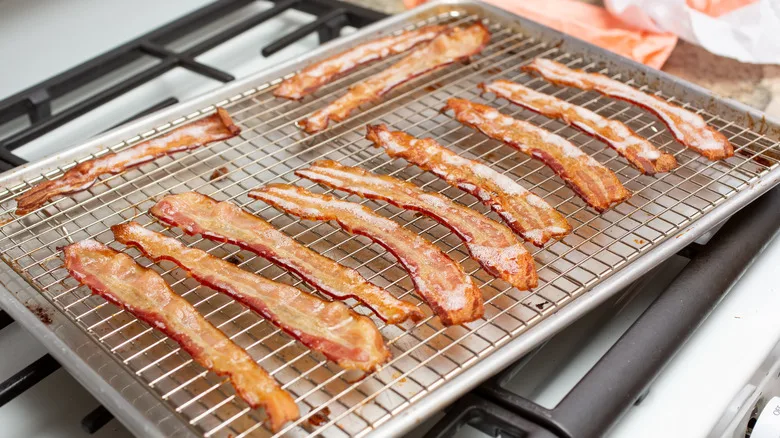
Image source: Web (Bing) / ar.inspiredpencil.com (Web image (fair-use with source credit))
Quick Answer: The Real Time Range at 400°F
At 400°F, thin-cut bacon takes about 12 to 15 minutes. Regular-cut takes 15 to 20 minutes. Thick-cut needs 20 to 25 minutes.
Pull it when it’s sizzling and just starting to crisp. It keeps cooking as it rests.
Why Is the Bake Time Always Different?
Ovens run hot. Ovens run cold. Some heat unevenly.
Add bacon that varies in thickness, and you’ll see why a single number never works.
The other culprit is how the bacon is cured. Sweet glazes and brown sugar caramelize faster than plain smoked bacon. At 400°F, that sugar goes from golden to burnt quickly.
So when someone says “bake it for 18 minutes,” they’re not lying. They’re describing their bacon and their oven. You need a system that works for yours.
The 4 Variables That Change Everything
Four factors drive the difference between chewy and carbonized. Once you know them, you can predict your bake time within a minute or two.
- Slice thickness: Thin-cut dries out fast. Thick-cut takes longer to render fat.
- Sugar content: Sweeter cures burn at lower oven temps.
- Oven type: Convection ovens cook hotter and faster than conventional ones.
- Target texture: Chewy takes less time than crispy. Very crispy takes the most.
Here’s how those variables shift the clock at 400°F:
| Variable | Estimated Time | When to Start Checking |
|---|---|---|
| Thin-cut | 12–15 minutes | 10 minutes |
| Regular-cut | 15–20 minutes | 15 minutes |
| Thick-cut | 20–25 minutes | 18 minutes |
| Convection oven | About 25% faster | 3–4 minutes early |
Use the first number as your minimum. Then start peeking.
Prep Step: Pick Your Pan and Setup
Your setup matters more than the timer. A rimmed baking sheet catches the grease. Foil or parchment makes cleanup easy.
A wire rack lifts the bacon so heat circulates underneath.
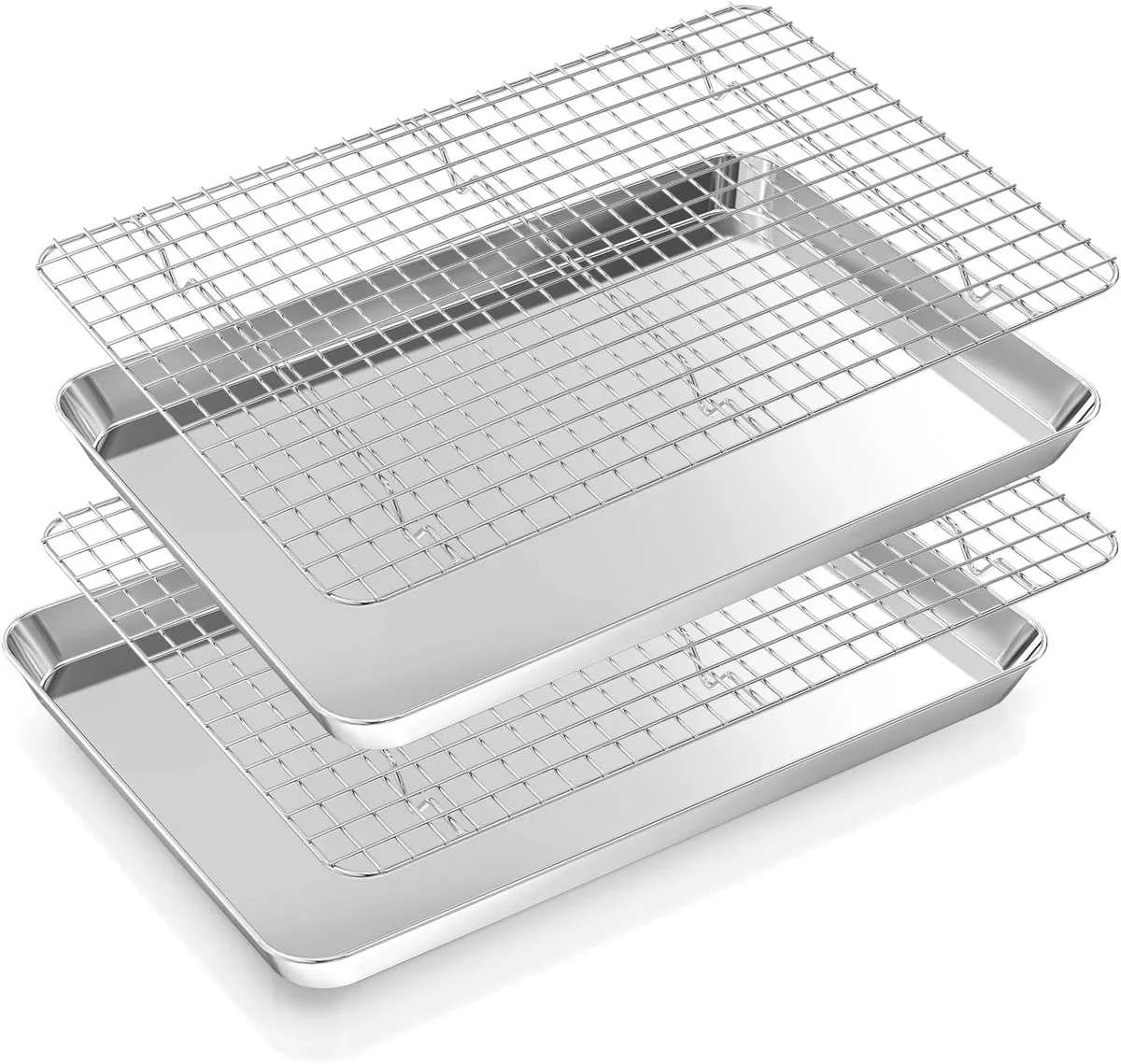
Image source: Web (Bing) / amazon.com (Web image (fair-use with source credit))
Line the pan first. Then decide between a rack or no rack.
- Wire rack: Best for even cooking and flat, crisp strips.
- Foil only: Simpler, but the bottom stays softer and strips curl more.
- Parchment paper: Non-stick and easy to toss, but it can darken in spots.
Arrange the slices in a single layer. No overlapping. Leave a small gap between each strip so hot air can reach the fat.
The Bacon Bake Time Decision Tree
Find your thickness, pick your texture, then check early. That’s the whole secret.
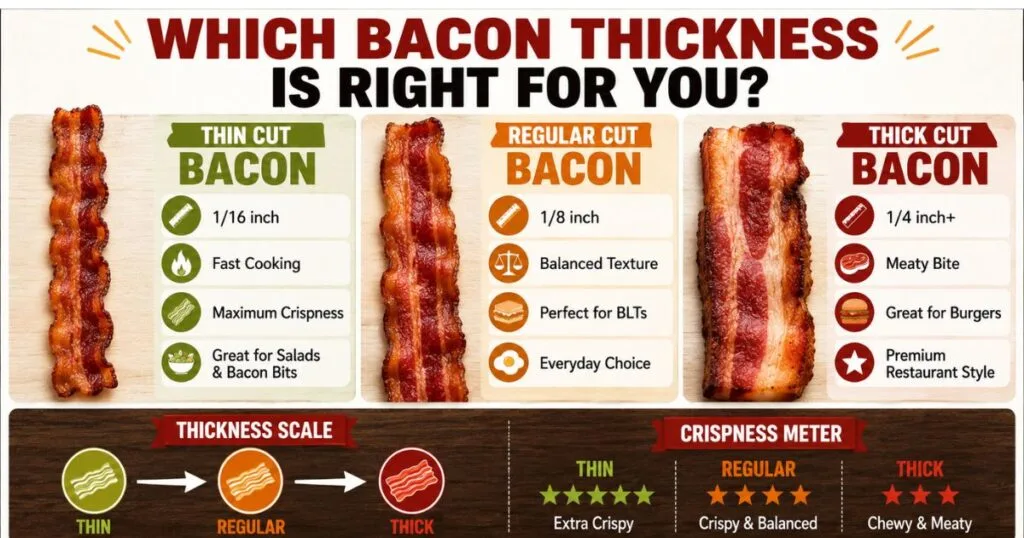
Image source: Bing (Web (fair-use with source credit))
Branch 1: Thin-Cut Bacon
Start checking at 10 minutes. By 12 to 15 minutes, thin-cut bacon is usually crisp but not brittle. It shrinks fast, so expect more curl and smaller strips.
If you like it shatter-crunchy, leave it until the edges go dark brown. Pull it the second before it looks done. It will keep cooking while it rests.
Branch 2: Regular-Cut Bacon
Regular-cut is the standard. It’s what most packages don’t label. Check at 15 minutes.
At 15 minutes, the fat is usually rendered but still a little toothsome. At 18 minutes, the lean parts get crisp and the edges brown. At 20 minutes, you’re in very crispy territory.
Branch 3: Thick-Cut Bacon
Thick-cut needs patience. Start checking at 18 minutes. Most thick-cut bacon hits its sweet spot between 20 and 25 minutes.
The window between chewy and overdone is wider here. That’s good news for you. It means there’s more room for error.
How to Check for Done Without Guessing
The timer is a guide, not a final judge. The bacon’s appearance tells you when it’s ready.
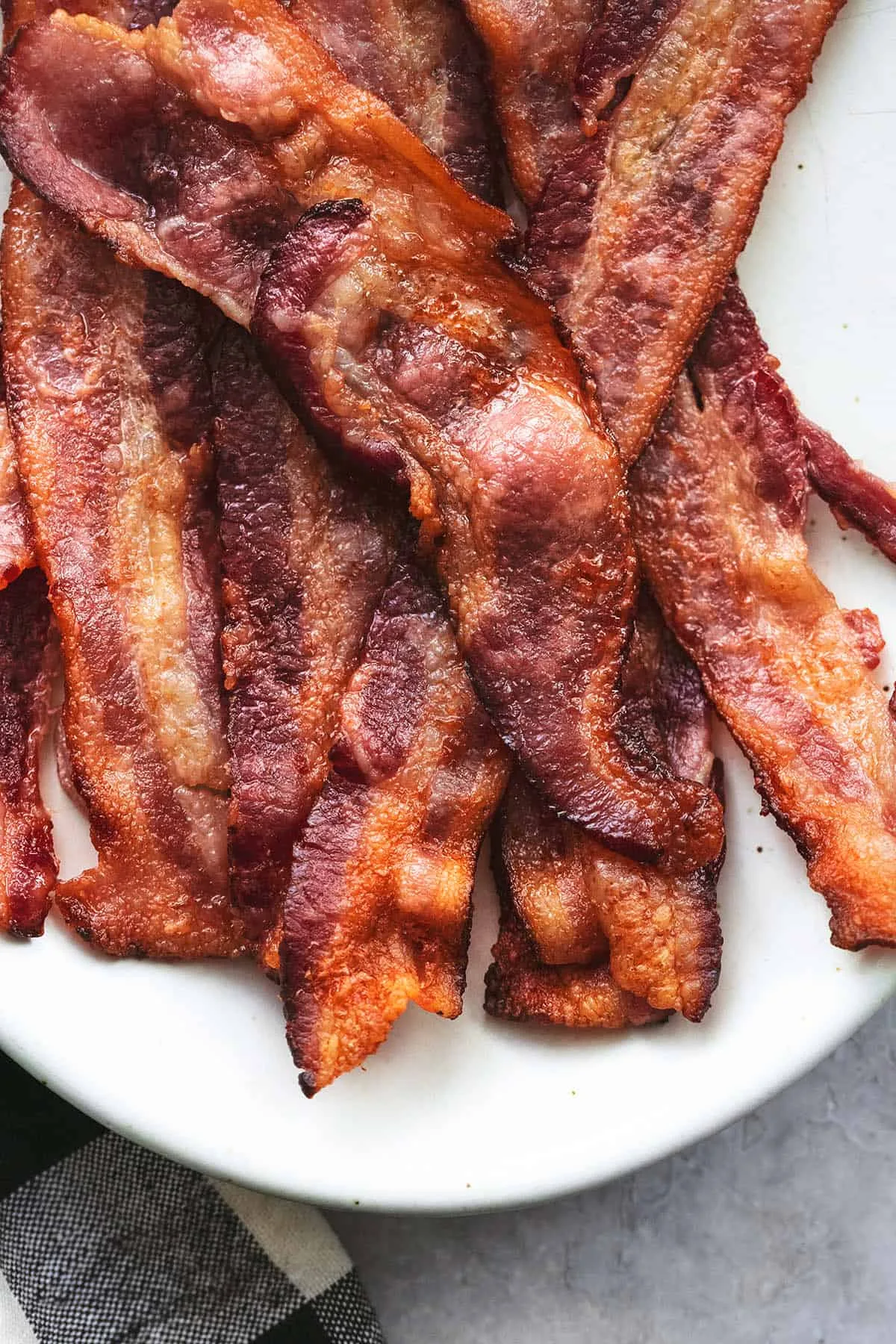
Image source: Web (Bing) / lecremedelacrumb.com (Web image (fair-use with source credit))
Look for these signs:
- Glossy white fat means it’s not done yet.
- Golden-brown edges with a little white fat means chewy with some crisp.
- Deep mahogany edges and firm texture means fully crisp.
- Any black spots means it’s about to burn. Pull the pan now.
Also, use tongs to lift one slice. If it droops and wiggles, it needs more time. If it holds a slight bend, it’s ready.
Remember, bacon keeps sizzling after it leaves the oven. That carryover heat can crisp it up another level. So pull it slightly underdone.
Mistakes That Ruin Baked Bacon
Most bad pans of baked bacon come from a few avoidable mistakes.
- Overlapping slices: They steam each other and cook unevenly.
- Using a dark pan without a rack: Dark pans absorb heat and burn the bottom faster.
- Trusting the timer instead of your eyes: Your oven’s 400°F might actual be 420°F.
- Baking sugar-heavy bacon unsupervised: Maple or brown sugar cures can go from perfect to charred in 60 seconds.
- Flipping the bacon unnecessarily: You don’t need to flip it. The wire rack handles both sides.
Fix these, and you’ll get consistent results every time.
Oven-Baked vs. Skillet, Air Fryer, and Microwave Bacon
Oven-baking isn’t the only method. But it’s the best for hands-free, flat, large-batch bacon. Here’s how it stacks up.
| Method | Time at 400°F | Texture | Ease |
|---|---|---|---|
| Oven baking | 12–25 minutes | Flat, even, crisp | Very easy |
| Skillet | 8–12 minutes stovetop | Crisp edges, curly spots | More hands-on |
| Air fryer | 8–14 minutes | Very crisp, ruffled | Easy, small batches |
| Microwave | 1–3 minutes per 3 strips | Chewy, uneven | Fast, splatters |
Go with the oven when you’re feeding more than four people or you want bacon scattered over a salad. Use the skillet when you want bacon fat for frying potatoes. Air fryers work, but batch cooking takes longer.
What About Lower or Higher Oven Temps?
400°F gives you a good balance of speed and control. But you have options.
Baking at 350°F: This takes 20 to 35 minutes. It’s more forgiving for thick-cut or sugar-glazed bacon. The downside?
Less crispness and a softer texture.
Baking at 425°F: This gets crunchier faster. Thin-cut could be done by 10 minutes. But the burn window shrinks.
Check every two minutes after the 10-minute mark.
Cold-oven baking: Put the pan in a cold oven and set it to 400°F. This adds about 5 minutes total. It renders fat slowly and gives you slightly chewier meat.
Some people prefer this method for thick-cut bacon.
Stick with 400°F for most situations. It’s the Goldilocks temperature.
Pro Tips for Flat, Even, Crispy Bacon
These small moves make a visible difference.
- Press the strips flat before baking. Your hand or a spatula works.
- Sprinkle a tablespoon of water over the pan before baking. It reduces curling and keeps the bacon flatter.
- Rotate the pan halfway through only if your oven has hot spots.
- Drain on paper towels, but don’t leave them sitting too long or they’ll stick.
- Save the rendered bacon fat. Let it cool, strain it, and keep it in a jar. It’s excellent for frying eggs or roasting vegetables.
Safety, Smoke, and Cleanup
Bacon at 400°F produces some smoke. That’s normal.
Set a timer so you’re nearby. Turn on the vent hood or crack a window. The USDA Food Safety and Inspection Service recommends cooking bacon until it’s crispy and draining visible grease before eating.
If you’re cooking bacon to a doneness standard, check that it reaches 145°F with a thermometer.
Hot grease is a serious burn hazard. Always let the pan cool for a few minutes before moving it.
Never pour bacon grease down the sink drain. It solidifies and clogs plumbing. Instead, let it cool, then pour it into a metal can or glass jar.
Once full, toss it in the trash.
Frequently Asked Questions
Can I bake frozen bacon at 400°F?
Yes, but it takes longer. Separate the slices after they thaw slightly, or bake the whole frozen block and pull strips apart as they release. Expect 25 to 35 minutes for thick-cut and a hotter, less predictable cook.
Use a wire rack so the fat can render before the outside burns.
Does turkey bacon bake at the same time?
No. Turkey bacon cooks faster and dries out quickly. At 400°F, thin turkey bacon is often done around 10 to 12 minutes.
Standard slices take 12 to 15 minutes. Keep a close eye on it because it goes from fine to tough fast.
Why did my baked bacon stick to the pan?
Two reasons: the pan wasn’t lined, or the bacon wasn’t cooked long enough. Fat renders slowly, and undercooked bacon leaves sticky streaks on foil. Use parchment paper or a wire rack next time.
Also, pull the bacon when the fat is fully glossy and the meat is dark brown.
Should I flip the bacon halfway through?
Only if you’re baking directly on foil. On a wire rack, flipping is unnecessary. The heat circulates evenly, and one flip-free bake keeps the strips flat.
If you choose not to use a rack, flip at the halfway mark to get both sides crisp.
How long can I leave leftover baked bacon in the fridge?
Up to five days in an airtight container. Reheat it on a sheet pan at 400°F for 3 to 4 minutes to get some crispness back. Or eat it cold on a BLT.
Cold, crisp bacon actually holds up better for sandwiches.
Final Verdict: Your Go-To 400°F Bake Time Cheat Sheet
Here’s the only table you really need.
| Bacon Type | Bake Time at 400°F | Check At |
|---|---|---|
| Thin-cut | 12–15 minutes | 10 minutes |
| Regular-cut | 15–20 minutes | 15 minutes |
| Thick-cut | 20–25 minutes | 18 minutes |
| Convection oven | 25% faster | Check 3–4 minutes early |
Preheat, line your pan, and arrange the strips without overlap. Then trust your eyes over the timer. If you pull it when it’s a little undercooked and let it rest, you’ll land in the sweet spot every time.
The article is already complete. All H2 sections from the approved TOC have been covered in the first batch. There are no remaining sections to write.
The article is already complete. Every H2 section from the approved outline was delivered in the previous output, from the quick answer through the final verdict cheat sheet. There are no remaining sections to write.