Skip to content
Cooking meat safely and perfectly is a skill that starts with temperature. Whether you’re grilling steak or roasting chicken, knowing the exact internal temperature matters. This is where a meat thermometer becomes your best friend. But one question often confuses both beginners and experienced cooks: How long should you leave a meat thermometer in meat? If you pull it out too early, you may get a false reading. If you leave it too long, you risk losing juices or even damaging your thermometer. Understanding the right timing can turn your meals from average to amazing—and keep them safe.
Why Timing Matters For Meat Thermometers
The main purpose of a meat thermometer is to check if your meat has reached the safe internal temperature and is cooked to your preferred doneness. But thermometers work differently, and the time you leave them in meat affects accuracy.
For example, an instant-read thermometer is designed to give a quick result. If you leave it in for too long, you may expose it to high heat and damage its sensitive parts. A leave-in thermometer, on the other hand, stays inside the meat throughout cooking and gives real-time updates.
If you remove a thermometer too soon, the reading may be lower than the actual temperature. If you wait too long, especially with instant-read types, juices may escape and affect both flavor and moisture.
Types Of Meat Thermometers And Their Timing
Knowing your thermometer type is the first step. Each model has its own rules about how long it should stay in the meat.
| Type | Recommended Time in Meat | Common Use |
|---|---|---|
| Instant-read (Digital) | 5–10 seconds | Quick spot checks, after cooking |
| Instant-read (Analog) | 20–30 seconds | Spot checks, after cooking |
| Leave-in (Oven-safe) | Entire cooking time | Monitoring throughout cooking |
| Wireless probe | Entire cooking time | Remote monitoring, grilling, roasting |
Instant-read Thermometers
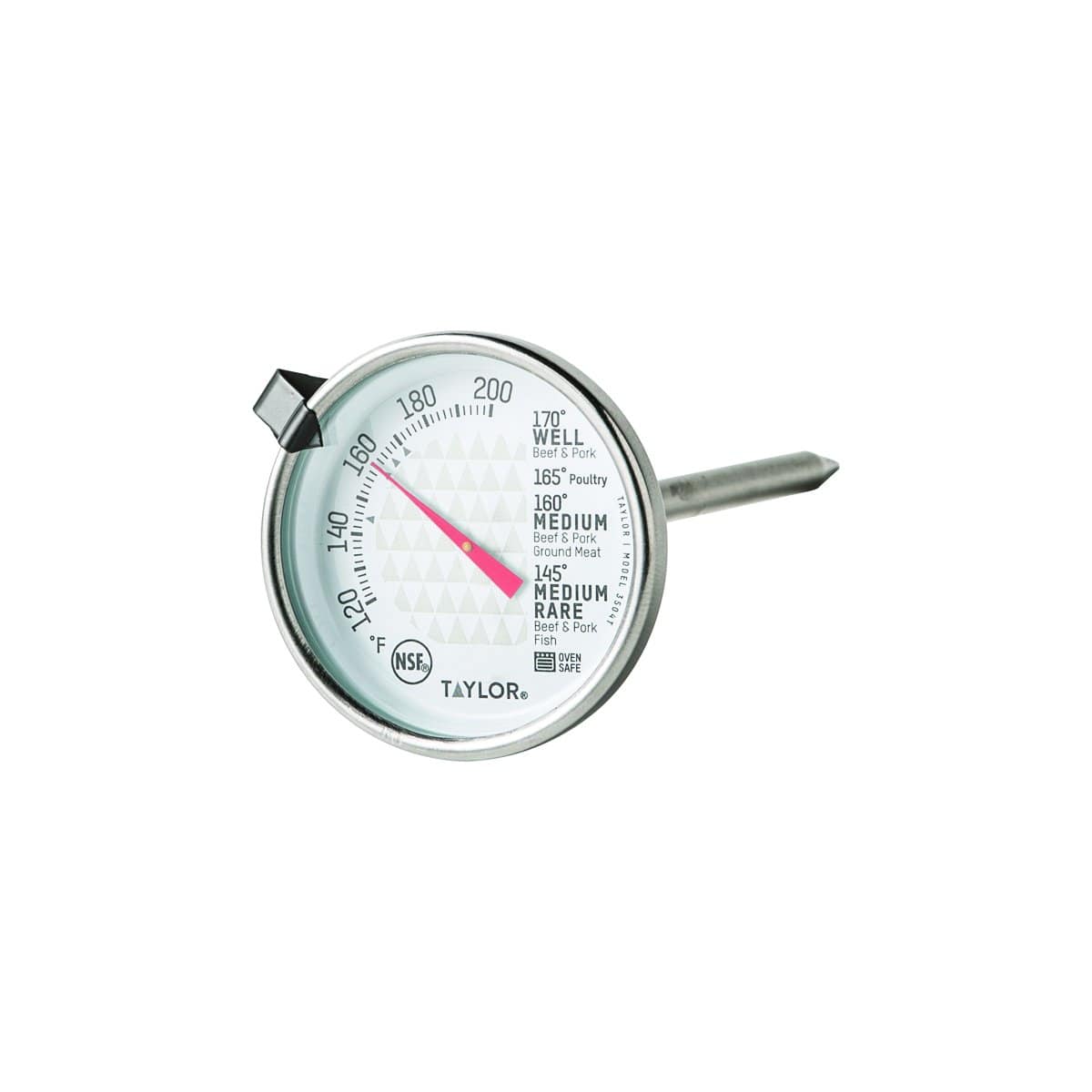
These are the most popular for home cooks. Insert them after cooking or when you think the meat is nearly done. For digital models, leave the probe in for 5–10 seconds until the temperature stabilizes. Analog versions need 20–30 seconds.
Leave-in Thermometers
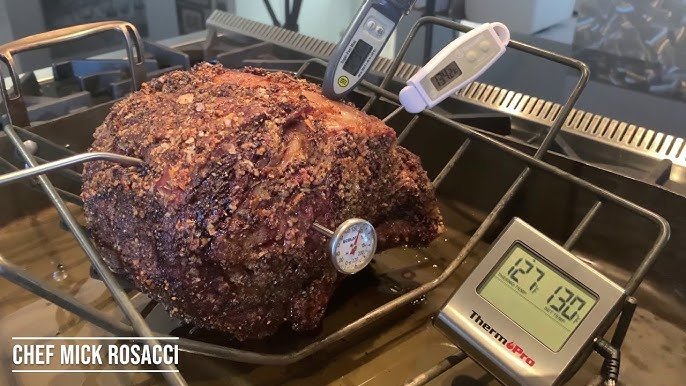
These can handle the heat and are meant to stay inside the meat throughout cooking. They are perfect for large roasts or when you want to monitor temperature changes. You only remove them when the meat is ready.
Wireless Thermometers
Wireless probes are advanced, letting you track temperature from a distance. These stay in the meat the whole time, so you don’t need to check manually.
Credit: www.taylorusa.com
Step-by-step: How To Use A Meat Thermometer Correctly
To get the best results, follow these steps:
- Choose the Right Thermometer: Instant-read for spot checks, leave-in for full-time monitoring.
- Insert the Probe Properly: Aim for the thickest part of the meat, away from bone and fat.
- Wait for the Reading:
- Digital instant-read: 5–10 seconds
- Analog instant-read: 20–30 seconds
- Leave-in: Stays until cooking finishes
- Check Temperature Standards: Compare your reading to USDA safety recommendations (for example, 165°F for poultry).
- Clean the Thermometer: Wash the probe after each use to prevent contamination.
Example: Checking Chicken Breast
If you’re grilling chicken breast, insert the instant-read thermometer into the thickest part. Wait about 8 seconds for digital or 25 seconds for analog. You want a reading of at least 165°F.
Why Not Leave Instant-read Thermometers In Meat?
Instant-read thermometers are not designed to stay in the meat while cooking. The main reasons:
- Heat Damage: The plastic parts or electronic sensors can melt or malfunction.
- Loss of Juices: Frequent poking or leaving the probe inside too long can cause juices to escape, making the meat dry.
- Inaccurate Reading: If left too long, the probe may heat up from the oven rather than the meat, leading to false results.
Leave-in thermometers solve these problems, as they are built for continuous use.
Temperature Stabilization: Getting An Accurate Reading
A common mistake is removing the thermometer before the temperature stabilizes. The display may jump up quickly, but the true internal temperature is reached when it stops changing.
Practical Tips For Stabilizing Temperature
- Insert the probe deep into the thickest part.
- Wait until the numbers stop moving.
- If using analog, rotate the dial to ensure you read from the correct angle.
Leaving the thermometer in just long enough—not too short, not too long—ensures the best accuracy and food safety.
What Happens If You Remove The Thermometer Too Early?
If you pull out the thermometer before the reading stabilizes:
- Temperature may be too low, leading to undercooked meat.
- You may cook longer than needed, making meat tough.
- You risk missing the safe temperature, which is important for poultry and pork.
For instant-read types, patience is key. Wait the recommended time.
Comparing Meat Thermometer Results: Quick Guide
Here’s how readings can vary if you leave the thermometer in for different times.
| Time Left In Meat | Reading Accuracy | Risk |
|---|---|---|
| Too Short (2–3 seconds) | Often too low | Undercooked meat |
| Recommended (5–10 seconds) | Accurate | Safe, flavorful meat |
| Too Long (30+ seconds, instant-read) | Possible overheating | Juice loss, probe damage |
| Leave-in (entire time) | Real-time monitoring | Best for roasts |
Real-life Examples And Insights
Many home cooks make the mistake of checking temperature too quickly. For example, someone grilling steak may insert the thermometer and pull it out in two seconds, seeing a reading of 120°F. They keep cooking, but the actual temperature is already higher. This leads to overcooked, dry meat.
Another common issue is poking the meat multiple times, which causes juice loss. Instead, aim to check once—insert the thermometer, wait for the reading, and remove it. If you’re unsure, try again in a different spot.
Professional chefs recommend the following extra tips:
- Always calibrate your thermometer (use ice water for a 32°F reading).
- For thick cuts, insert from the side, not the top, for best accuracy.
- Let meat rest after cooking. The internal temperature can rise 5–10°F as it sits.
Safety Standards: Usda Recommendations
According to the USDA, safe minimum internal temperatures are:
- Poultry: 165°F
- Beef, pork, lamb, veal (steaks, chops, roasts): 145°F (with 3-minute rest)
- Ground meats: 160°F
- Fish: 145°F
Always compare your thermometer reading to these numbers. For more details, see the official USDA Safe Minimum Internal Temperature Chart.
Common Mistakes When Using Meat Thermometers
Many beginners make mistakes with timing and placement. Here are the most frequent errors:
- Removing the thermometer too quickly: Leads to inaccurate readings.
- Leaving instant-read in during cooking: Can melt or damage the probe.
- Poking multiple times: Causes juice loss and dry meat.
- Not inserting deep enough: Gives false low readings.
- Ignoring thermometer calibration: Results in consistent errors.
You might find this helpful: Best Meat Thermometers for Oven
Comparing Meat Thermometer Brands And Response Times
To make your choice easier, here’s a comparison of popular thermometer brands and their average response times.
| Brand | Type | Average Response Time | Features |
|---|---|---|---|
| ThermoWorks Thermapen | Digital Instant-read | 3–4 seconds | Fast, accurate, waterproof |
| OXO Good Grips | Analog Instant-read | 20–30 seconds | Easy dial, sturdy |
| Maverick ET-733 | Wireless Leave-in | Continuous | Remote monitoring, dual probes |
| CDN ProAccurate | Oven-safe Leave-in | Continuous | High heat, easy read |
Non-obvious Insights For Beginners
- Ambient temperature can affect readings: If your kitchen is cold or hot, wait a few extra seconds for stabilization.
- Probe size matters: Large probes can damage thin cuts, so choose smaller probes for delicate meat.
- Resting meat is essential: After reaching the correct temperature, let meat rest for a few minutes. This helps the juices settle and the temperature finish rising.
Credit: www.youtube.com
Practical Advisor: Best Practices For Meat Thermometers
- Use instant-read thermometers for spot checks only. Never leave them in meat during cooking.
- For large roasts, a leave-in thermometer is safer and more convenient.
- Always insert the probe into the thickest part, away from bone and fat.
- Clean and dry the thermometer after each use.
- Calibrate your thermometer monthly for best results.
Frequently Asked Questions
How Long Should I Leave An Instant-read Thermometer In Meat?
Leave a digital instant-read thermometer in for 5–10 seconds and an analog instant-read thermometer for 20–30 seconds. Wait until the temperature stabilizes before removing.
Can I Leave A Meat Thermometer In The Oven?
Only oven-safe leave-in thermometers or wireless probes are made to stay in the meat and oven throughout cooking. Instant-read thermometers should never be left inside during cooking.
What Happens If I Check The Meat Temperature Too Quickly?
If you remove the thermometer before the reading stabilizes, you may get a low, inaccurate result. This can lead to undercooked meat, which is unsafe and less tasty.
Do I Need To Clean The Thermometer After Every Use?
Yes, always clean the thermometer after each use to avoid cross-contamination and keep it accurate. Use hot, soapy water for the probe.
Where Should I Insert The Thermometer For The Best Reading?
Insert the probe into the thickest part of the meat, avoiding bone, fat, and gristle. For chicken, use the breast or thigh; for steak, aim for the center.
Perfecting your use of a meat thermometer is simple once you know how long to leave it in. With the right timing and technique, you’ll serve delicious, safe meals every time.
:max_bytes(150000):strip_icc()/__opt__aboutcom__coeus__resources__content_migration__serious_eats__seriouseats.com__images__2016__10__20161008-meat-temp-5-e10885b8363b44bf825df1d9ae43a702.jpg)
Credit: www.seriouseats.com