A mason jar is more than just a simple glass container. People use it for storing food, crafting, canning, and even drinking. But one question often comes up: how many ounces does a mason jar hold? If you’ve ever tried to follow a recipe or organize your pantry, you know that understanding jar sizes is important.
Let’s explore the world of mason jars and get clear answers, practical tips, and a few surprises along the way.
Mason Jar Sizes: The Basics
The classic mason jar comes in several sizes. Each size has a different capacity, measured in fluid ounces. This makes them useful for various tasks, from preserving fruit to making salads.
1. Half Pint (8 Ounces)
This small jar is ideal for jams, jellies, spices, and small portions. It’s easy to hold and fits nicely on shelves.
2. Pint (16 Ounces)
Common for salsa, sauces, and drinks. Many people use this size for overnight oats or meal prep.
3. Quart (32 Ounces)
Perfect for pickles, large batches of soup, and storing dry goods like flour or sugar.
4. Half Gallon (64 Ounces)
Less common, but great for bulk storage or brewing kombucha.
5. Other Sizes
There are also unique jars, such as 4-ounce mini jars for gifts, and rare 12-ounce or 24-ounce jars used for specialty items.
Knowing these sizes helps you choose the right jar for your project. You avoid spills, wasted space, and confusion when following recipes.
Understanding Fluid Ounces In Mason Jars
Fluid ounces measure liquid volume. In the US, one fluid ounce is about 29.57 milliliters. Mason jars are labeled by their fluid ounce capacity, not by weight. This matters because the amount of liquid a jar holds is different from how much it weighs.
Why Ounces Matter
- Recipes: Many recipes use mason jars for salads, drinks, or layered desserts. If you use the wrong size, your portions will be off.
- Canning: Safe canning depends on using the correct jar size. Too big or too small can affect processing times.
- Storage: Knowing the ounce size helps organize your kitchen and pantry.
Practical Example
Imagine a recipe for homemade iced tea. It says: “Pour into two quart-size mason jars.” If you only have pint jars, you’ll need four jars instead of two. Knowing that a quart jar holds 32 ounces and a pint jar holds 16 ounces helps you adjust quickly.
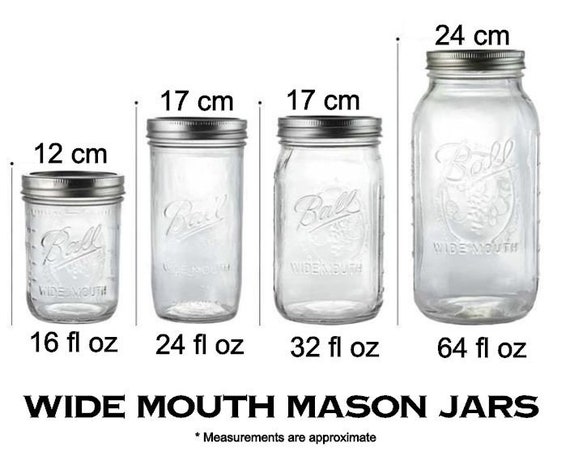
Credit: www.etsy.com
Common Mason Jar Sizes Compared
To make things clearer, here’s a comparison of the most popular mason jars and their fluid ounce capacities:
| Jar Size | Fluid Ounces | Milliliters | Typical Use |
|---|---|---|---|
| Mini | 4 oz | 118 ml | Spices, gifts |
| Half Pint | 8 oz | 237 ml | Jams, jellies |
| Pint | 16 oz | 473 ml | Sauces, drinks |
| Quart | 32 oz | 946 ml | Pickles, dry goods |
| Half Gallon | 64 oz | 1,892 ml | Bulk storage |
This table lets you see at a glance which jar fits your needs. If you want to store a full liter of soup, a quart jar is the closest match.
Standard Vs. Wide Mouth Mason Jars
Mason jars come in two main types: standard mouth and wide mouth. The mouth refers to the opening of the jar. The size affects filling, cleaning, and even how much you can fit in the jar.
Standard Mouth
- Narrow opening
- Good for pouring liquids or storing small items
- Slightly harder to clean
Wide Mouth
- Larger opening
- Easy to fill with chunky food (like pickles or salads)
- Easier to clean and scoop
Both types have the same fluid ounce capacities, but the wide mouth jars are more practical for certain foods.
| Jar Size | Standard Mouth | Wide Mouth |
|---|---|---|
| Half Pint | 8 oz | 8 oz |
| Pint | 16 oz | 16 oz |
| Quart | 32 oz | 32 oz |
| Half Gallon | 64 oz | 64 oz |
Many beginners think that wide mouth jars hold more. But in reality, the capacity is the same. The difference is in usability.
How To Measure Ounces In A Mason Jar
Sometimes, you want to check the capacity yourself. Maybe you found an old jar without a label, or you want to know how much it really holds.
Steps To Measure Fluid Ounces
- Fill the jar with water to the rim.
- Pour the water into a measuring cup that shows fluid ounces.
- Read the amount in the measuring cup.
This gives you the exact fluid ounce capacity. For dry goods, the measurement may differ because dry ingredients like rice or flour take up less space.
Non-obvious Insight
The rim of a mason jar is not always the actual fill line. When canning, you should leave some headspace (empty space at the top). This means the usable ounces are slightly less than the total jar capacity. For example, a quart jar holds 32 ounces, but you may only fill it with 28–30 ounces during canning.
Special Mason Jar Uses And Ounce Sizes
Mason jars are versatile. People use them for much more than canning. Here are some creative uses, matched to ounce sizes:
1. Meal Prep Salads
A quart jar (32 oz) fits a full lunch salad, with room for dressing at the bottom.
2. Smoothies And Drinks
Pint jars (16 oz) are perfect for smoothies or iced coffee.
3. Craft Storage
Half pint jars (8 oz) hold beads, buttons, or small sewing supplies.
4. Gift Containers
Mini jars (4 oz) are cute for homemade jams or spice mixes.
5. Fermenting And Brewing
Half gallon jars (64 oz) are used for brewing kombucha or fermenting vegetables.
Another Non-obvious Insight
Many recipes recommend mason jars for layering desserts or parfaits. Wide mouth jars work better for these because you can easily add layers and eat straight from the jar.

Credit: masonjars.com
Mason Jar Brands And Variations
Not all mason jars are created equal. The most famous brand is Ball, but there are others like Kerr and Anchor Hocking. Each brand offers slightly different shapes and markings.
Brand Differences
- Ball: Classic design, clear ounce markings
- Kerr: Often wider, good for chunky foods
- Anchor Hocking: Heavy glass, modern look
Some jars have ounce markings on the side. Others do not. If you need to measure, check for these markings before buying.
How Mason Jar Ounce Sizes Affect Canning Safety
Canning is the main use for mason jars. Safety depends on choosing the right size. Using a jar that is too big for a recipe can lead to under-processing, which can cause spoilage.
Canning Guidelines
- Jams, jellies: Use 8 oz or 16 oz jars
- Pickles: Use 32 oz jars
- Tomato sauce: Use 16 oz or 32 oz jars
Processing times are set for specific jar sizes. Changing sizes means you must adjust the time—sometimes by several minutes.
If you’re new to canning, always follow the recommended jar size. This helps prevent bacteria and keeps your food fresh longer.
Mason Jars For Dry And Liquid Storage
Mason jars are great for storing both dry and liquid items. But the ounce measurement is more accurate for liquids. For dry goods, volume may vary.
Practical Example
A quart jar (32 oz) holds about:
- 2.5 cups of rice
- 4 cups of flour
- 3.5 cups of beans
The actual weight will depend on the ingredient. For liquids, the ounce measurement is exact. For dry goods, it’s an estimate.
| Jar Size | Rice (cups) | Flour (cups) | Beans (cups) |
|---|---|---|---|
| Pint (16 oz) | 1.25 | 2 | 1.5 |
| Quart (32 oz) | 2.5 | 4 | 3.5 |
| Half Gallon (64 oz) | 5 | 8 | 7 |
This table helps you plan pantry space or meal prep. If you want to store a pound of beans, use a quart jar.
You might find this helpful: Best Mason Jars for Canning
Mason Jar Ounce Sizes For Drinks And Cocktails
Many people use mason jars for drinks. They make cocktails, lemonade, iced tea, and cold brew coffee. The ounce size matters for recipes and serving.
Drink Ideas By Jar Size
- Pint (16 oz): Single serving cocktails, iced coffee, lemonade
- Quart (32 oz): Sharing drinks, iced tea, sangria
- Half gallon (64 oz): Party punch, batch cocktails
Most recipes for drinks use pint or quart jars. If you want to serve multiple people, use larger jars and adjust the recipe.

Credit: canningcrafts.com
How To Choose The Right Mason Jar Size
Choosing the right jar is simple if you know your goal. Here are some tips:
1. Match The Recipe
Check the recipe for ounce recommendations.
2. Consider Storage
Use quart or half gallon jars for bulk storage.
3. Think About Usability
Wide mouth jars are easier for chunky foods.
4. Check For Markings
Some jars have ounce markings. This makes measuring easier.
5. Avoid Overfilling
Leave headspace when canning or freezing.
Common Mistake
Beginners often use the wrong size jar for canning. This can ruin the food or cause safety issues. Always check the recipe and follow size guidelines.
The History And Popularity Of Mason Jars
Mason jars have been around since the 1850s. Their popularity has grown because they are reusable, practical, and stylish. People use them for everything from canning to decorating.
Interesting statistic: In the US, over 100 million mason jars are sold each year. Many are used for crafts, not just food storage.
If you want to learn more about mason jar history, visit the Wikipedia Mason Jar page.
Frequently Asked Questions
How Many Ounces Are In A Standard Mason Jar?
A standard mason jar usually holds 16 ounces (pint) or 32 ounces (quart). There are also 8-ounce (half pint) and 64-ounce (half gallon) jars.
Can I Use Mason Jars For Measuring Ingredients?
Yes, if the jar has ounce markings. For liquids, the measurement is exact. For dry goods, it’s an estimate, so a measuring cup is more accurate.
Is The Ounce Size The Same For Wide Mouth And Standard Mouth Jars?
Yes, the fluid ounce capacity is the same. The mouth size affects ease of use, not the volume.
Can I Fill A Mason Jar To The Rim?
You can, but for canning or freezing, leave headspace at the top. This prevents spills and helps with safe preservation.
What Is The Best Mason Jar Size For Storing Dry Goods?
The quart jar (32 oz) is most popular for dry goods like flour, rice, and beans. It offers enough space without being too bulky.
Mason jars are simple, but understanding their ounce sizes makes them even more useful. Whether you’re cooking, storing, or crafting, the right jar size can save time and avoid mistakes. Use the tables and tips above to make smart choices.
With this knowledge, your kitchen and pantry will be more organized—and your recipes will turn out right every time.